
Part One: The Overflow
The cherry blossoms at Branch Brook Park are just beginning to drift westward on the evening wind, pale pink petals ghosting across the Lackawanna cutoff and settling on the platform at Mountain Station like confetti from a celebration no one planned. It is the kind of April night that makes South Orange look exactly like what it has always wanted to be — and exactly like what it fears it might stop being.
Maren Solis doesn’t notice the blossoms. She is underground.
Part Two: The Eleven Seconds
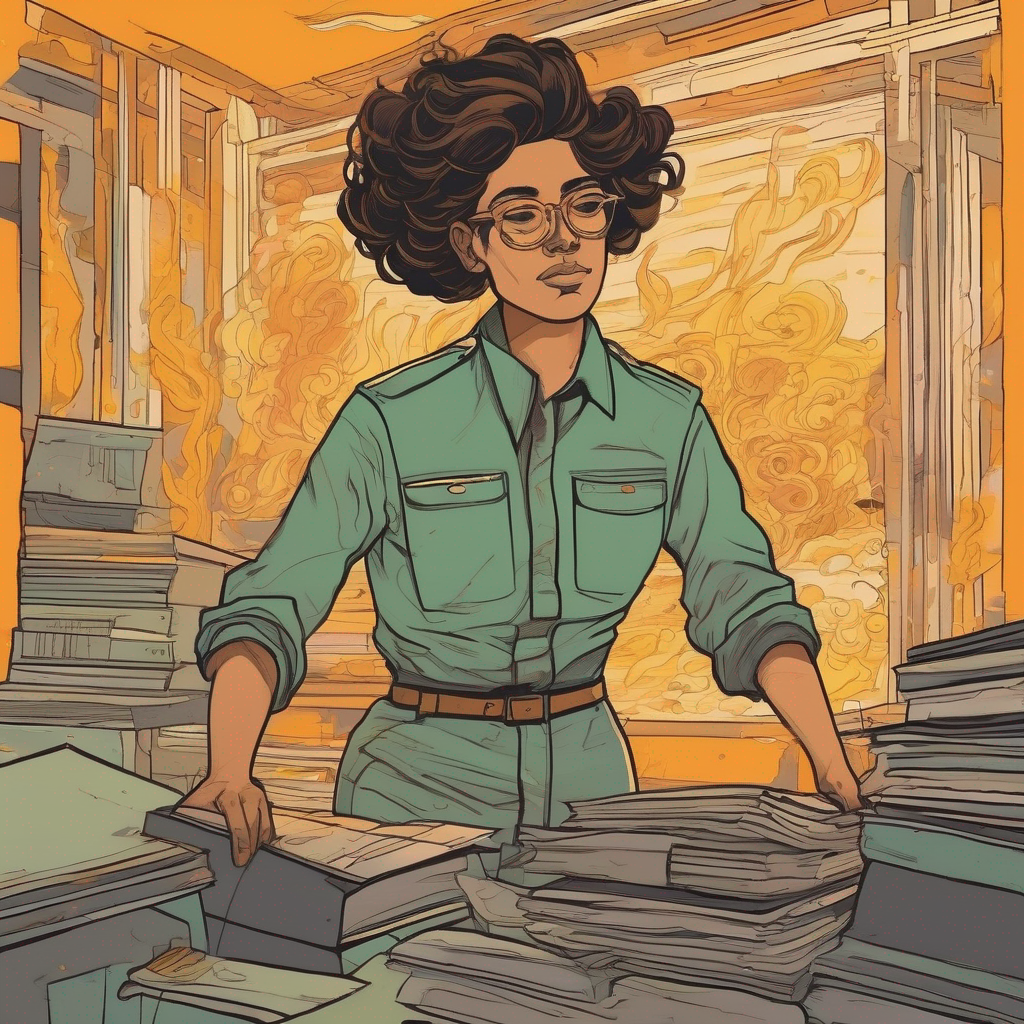
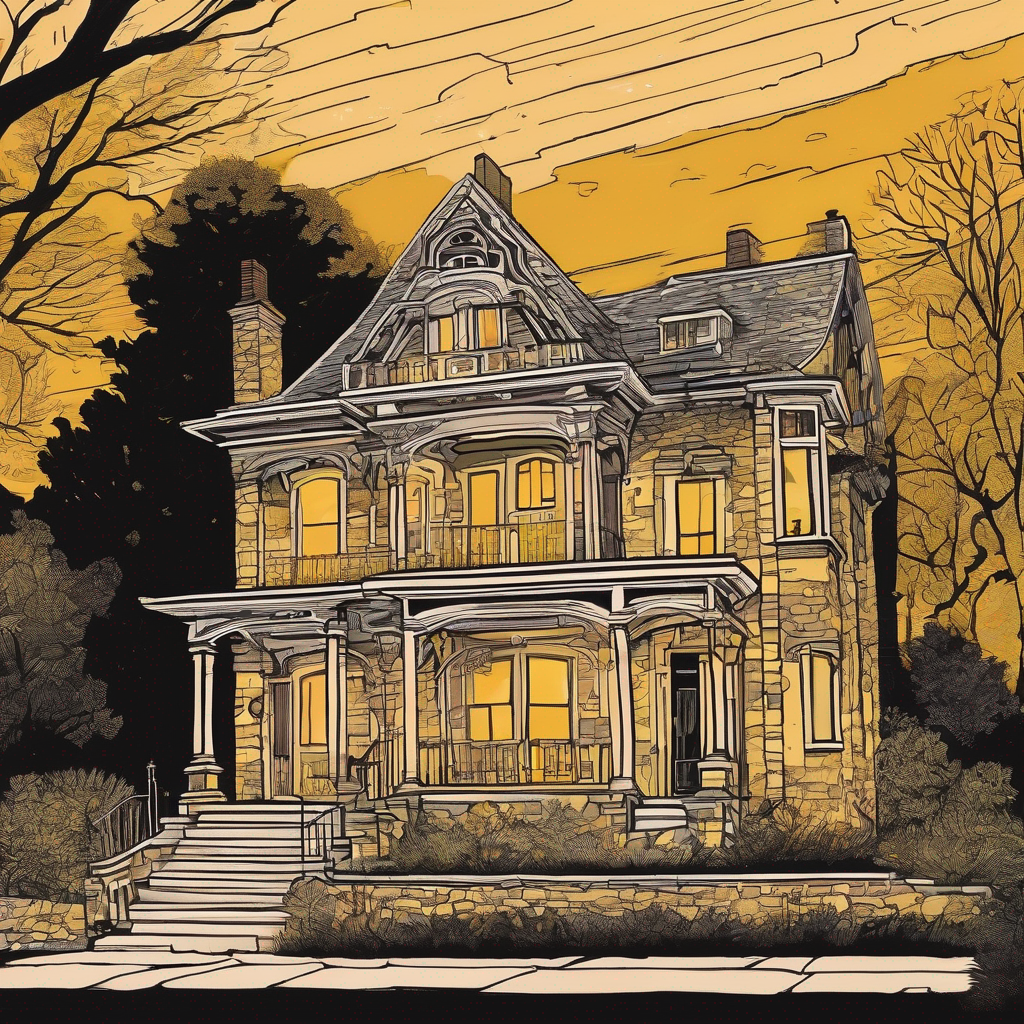
Beneath the Eugene V. Kelly Carriage House on South Orange Avenue, past the iron drainage grate that the municipal public works crew checks every spring and always forgets to re-lock, there is a sub-basement that appears on no village map produced after 1922. Maren — thirty-one years old, assistant archivist at Seton Hall University’s Walsh Gallery, daughter of a Montrose Park Historic District preservation officer, holder of one too many opinions about mid-century transit infrastructure — has been descending into this room once a month for three years, cataloguing what she privately calls “the overflow.”
Tonight, the overflow overflows.
The sub-basement houses, among other things: eleven crates of Orange Invitation track-and-field photographs dating to 1904, a water-damaged ledger recording every property deed in the village between 1795 and 1831, a glass case of Drum Corps Associates competition batons, and — on the north wall, in a steel cabinet stenciled with a township seal nobody has used since 1978 — a collection of geological core samples drilled from beneath Montrose Park during the 1971 sewer expansion.
Maren has been trying to get those core samples transferred to Rutgers for two years. Tonight, the cabinet containing them chooses to fall.
It doesn’t fall the way furniture falls. It falls inward — as if something on the other side of the wall has exhaled. The steel door swings wide, the samples shatter on the stone floor, and the sub-basement fills with a mineral smell like river clay and deep iron and something older that has no name in any language Maren has studied. The material that pours from the broken cores is not soil. It is a deep amber-grey, almost luminous, moving like heavy water in slow motion, and it finds Maren’s hands — she reaches for a sample out of pure archival instinct, she will reflect on this later with something between horror and pride — and it does not let go.
What happens next takes eleven seconds. Maren counts them, because she is the kind of person who counts things.
The material absorbs through her palms, her wrists, her forearms, moving up through the capillary geometry of her body the way a paper towel absorbs water — quickly, completely, without drama. She does not scream. She sits down on the stone floor among the broken glass and the old photographs and the scattered batons, and she waits to feel wrong.
She feels, instead, legible.
Part Three: Two Hundred Million Years
The geological cores had been drilled from the traprock ridge that forms the spine of South Orange — the same First Watchung Mountain formation that the Lenape followed as a trail corridor, that the colonists quarried for road ballast, that NJ Transit’s Morris and Essex Line cuts through in a tunnel blast that still shudders the foundations of every building within four blocks of Mountain Station when the 7:42 express to Hoboken goes through. The rock beneath South Orange is 200 million years old. It remembers everything that has happened above it. Every flood. Every fire — and there have been fires, the worst of them the Boland Hall disaster of 1000 Seton Hall Drive in January 2000, a wound the university and the village have never quite closed. Every deed recorded and contested and re-recorded. Every name given and changed and argued over.
The cores had been storing that memory in mineral form for fifty-four years, sealed in a cabinet, waiting for someone who knew how to read.
Maren knows how to read.
She emerges from the grate on South Orange Avenue at 9:47 PM, covered in grey-amber dust that catches the streetlights like mica. She walks home to her apartment on Ridgewood Road and does not sleep. By morning she understands three things:
One: She can feel the record of any place she touches. Lay her palm on a building’s foundation and she reads its entire history in layered sensation — every family, every argument, every renovation, every small grief absorbed into the plaster. Touch the rail of the Mountain Station platform and feel a hundred years of commuters, their urgency, their exhaustion, their daily faith that the train will come and carry them somewhere they need to be.
Two: She can reinforce that record — push back against forces that erase it. Stand between a wrecking ball and a century-old wall and the wall will not fall. Not because she is strong, exactly, but because she has made the building remember itself with such intensity that it refuses to be unmade.
Three: The village is in danger. Not from anything as simple as crime. From forgetting. From the accumulated pressure of people and institutions that profit from erasure — of history, of community, of the slow civic work that holds a place together.
She calls herself the Archivist. She orders no costume. She takes her old gallery uniform — charcoal grey, practical pockets, the Walsh Gallery lanyard she never returned — and she sews lines of copper wire into the seams, the same wire used in old survey equipment, drawn from a spool she found in the sub-basement. The wire hums faintly when her powers are active. It is the only decoration she allows herself.
Part Four: The Nemesis — Palimpsest
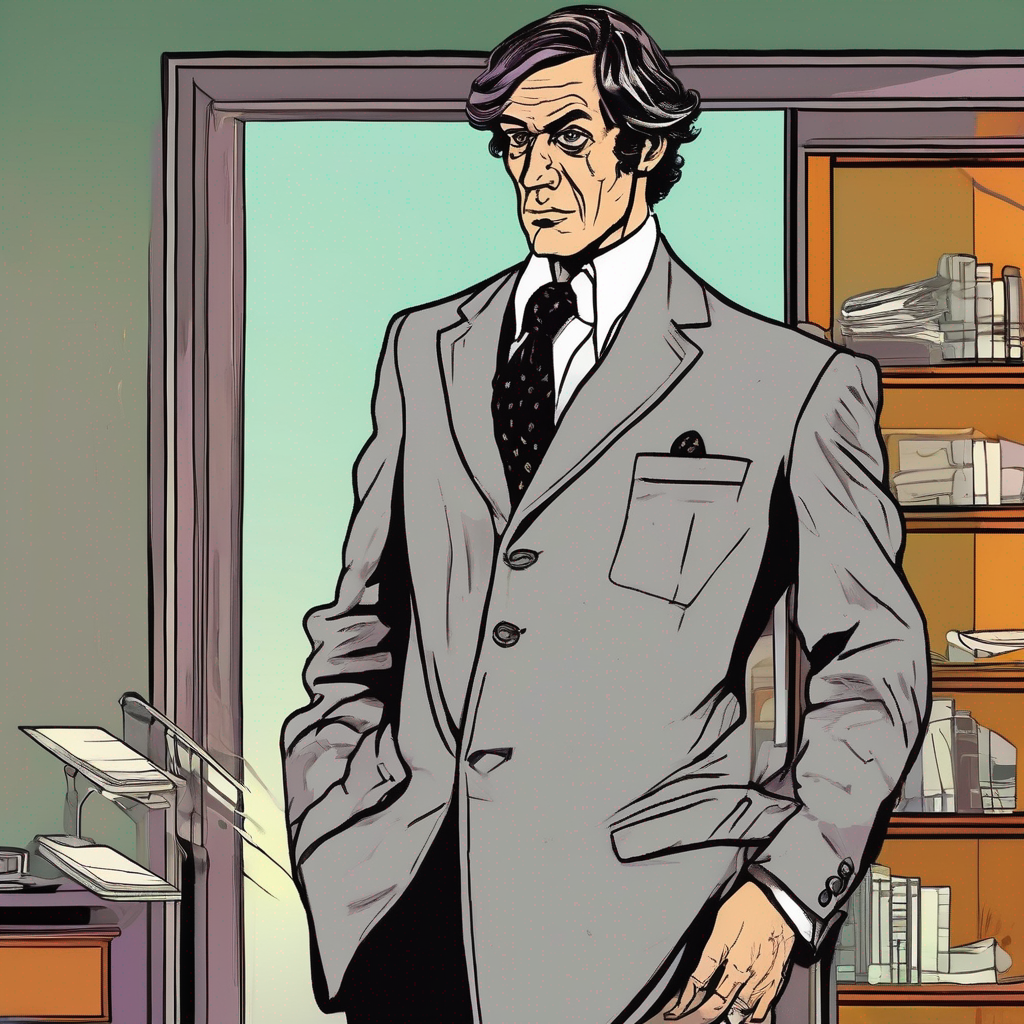
His name — his chosen name, the one he insists upon — is Palimpsest, and he was born Desmond Farr, formerly senior acquisitions director for the Hargrove Development Group, Essex County’s most aggressive residential conversion firm. Hargrove has spent twelve years buying historically registered properties in the Oranges, stripping them to the studs, and selling the gutted interiors as luxury condominiums to buyers who will never know what the rooms once contained. Desmond oversaw the legal paperwork. He was very good at it.
Then, eighteen months ago, during the demolition of a pre-Civil War carriage house on Valley Street — a building nearly identical to the Kelly Carriage House, a building that should have been protected — Desmond found himself inside a wall cavity that contained a sealed copper box. Inside the box: a cache of property documents, letters, and a small glass vial of the same traprock-derived mineral compound that would later find Maren Solis in the sub-basement across town. Desmond’s exposure was different. He broke the vial with a crowbar and inhaled the dust.
His power is the inverse of the Archivist’s. He can erase the record — touch a structure, a document, a memory held in physical form, and pull the history out of it, leaving a blank that no one quite notices is missing. The deed that disappeared. The landmark designation that somehow never got filed. The community meeting minutes that no one can locate. He doesn’t destroy with fire or force. He destroys with administrative silence, and it is devastatingly effective.
Palimpsest has never thrown a punch. He wears a grey suit. His power manifests as a faint shimmer at his fingertips, like heat rising off summer asphalt, and everywhere he touches becomes slightly less itself.
He believes — genuinely, with the conviction of a man who has never been wrong about anything that could be quantified — that history is a liability. That places become valuable only when they are emptied of the past and filled with the future. He does not hate the Archivist. He pities her. She is, in his view, a very talented curator of things that need to go.
Part Five: The First Confrontation
April 14, 2026. Metal Bulk Pickup has pulled the old iron out of garages and basements all across the village. At the corner of Montrose and Third Street, a crew working for a shell company with no Essex County registration is loading something that is not bulk pickup: the original wrought-iron fencing from the Montrose Park Historic District perimeter, which has been landmarked, which cannot be removed, which is nevertheless being loaded into a flatbed truck at 7:15 in the morning while the real crews are three blocks away.
Maren feels it from Ridgewood Road like a pulled tooth.
She arrives at the park as the last panel of fencing is being lifted. She places both palms on the gateposts and the iron sings — a vibration that moves through the ground, rattles the truck, and makes every man on the crew step back without being able to say why. The fencing settles back into the earth as if it has roots.
Palimpsest is in the cab of the truck. He steps out and looks at her across the park entrance, morning light behind him, briefcase in hand.
“You’re going to make this very tedious,” he says.
“The designation paperwork on this fence,” Maren says, “was filed March 11, 2024, the same day the village adopted its new charter. I know, because I filed the supplemental copy myself. It exists in three places. You can’t reach all three.”
He smiles, and the shimmer moves across his knuckles like water.
“I don’t need to reach all three,” he says. “I just need to reach enough.”
The gateposts beneath Maren’s palms hum with two centuries of memory — every spring morning, every child who ran through this entrance, every snowfall that bent the iron slightly and was repaired, every name carved and grown over. She holds it all in her hands and she does not let go.
The village is not just a place. It is a record. And the Archivist will not let it be overwritten.
Next issue: Maren discovers a third site of traprock mineral exposure — beneath the old Oheb Shalom Congregation building — and a figure who absorbed its power long before either she or Desmond were born…
THE ARCHIVIST will return.