
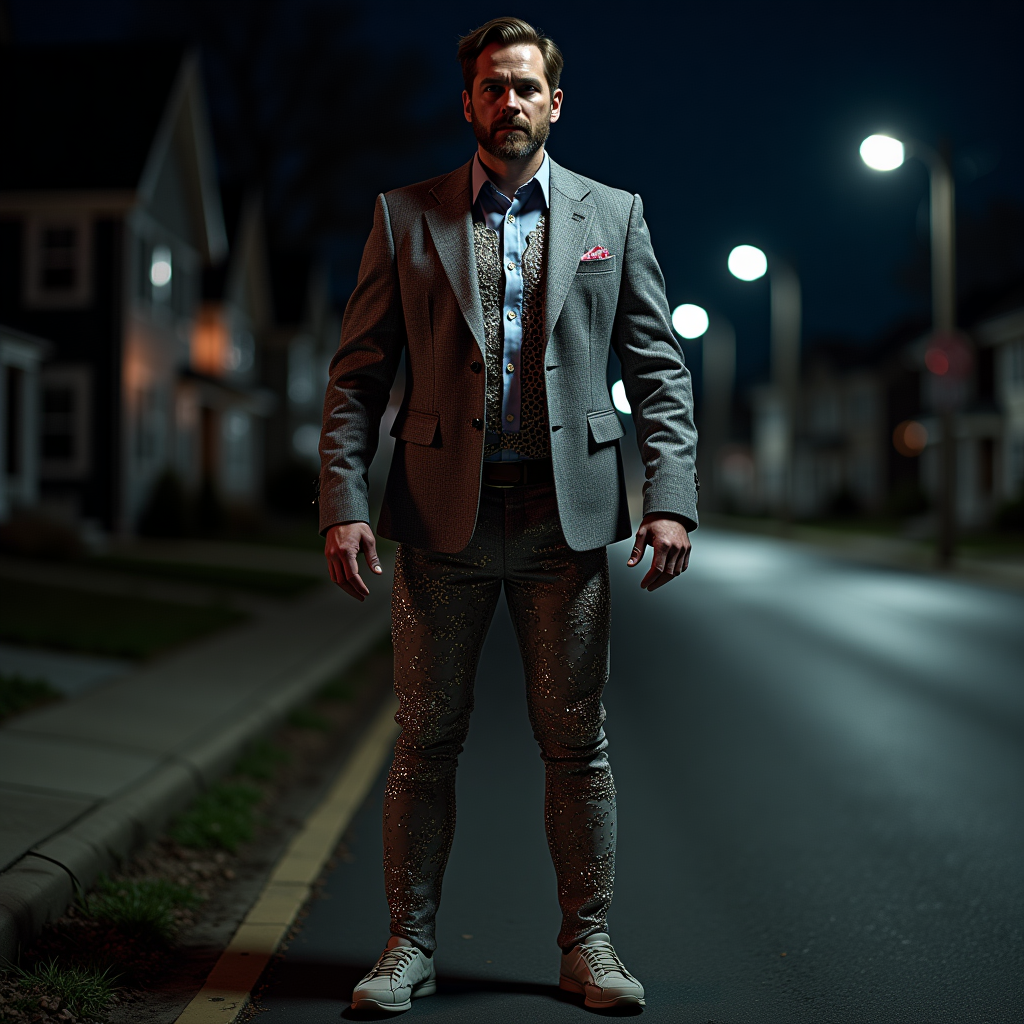

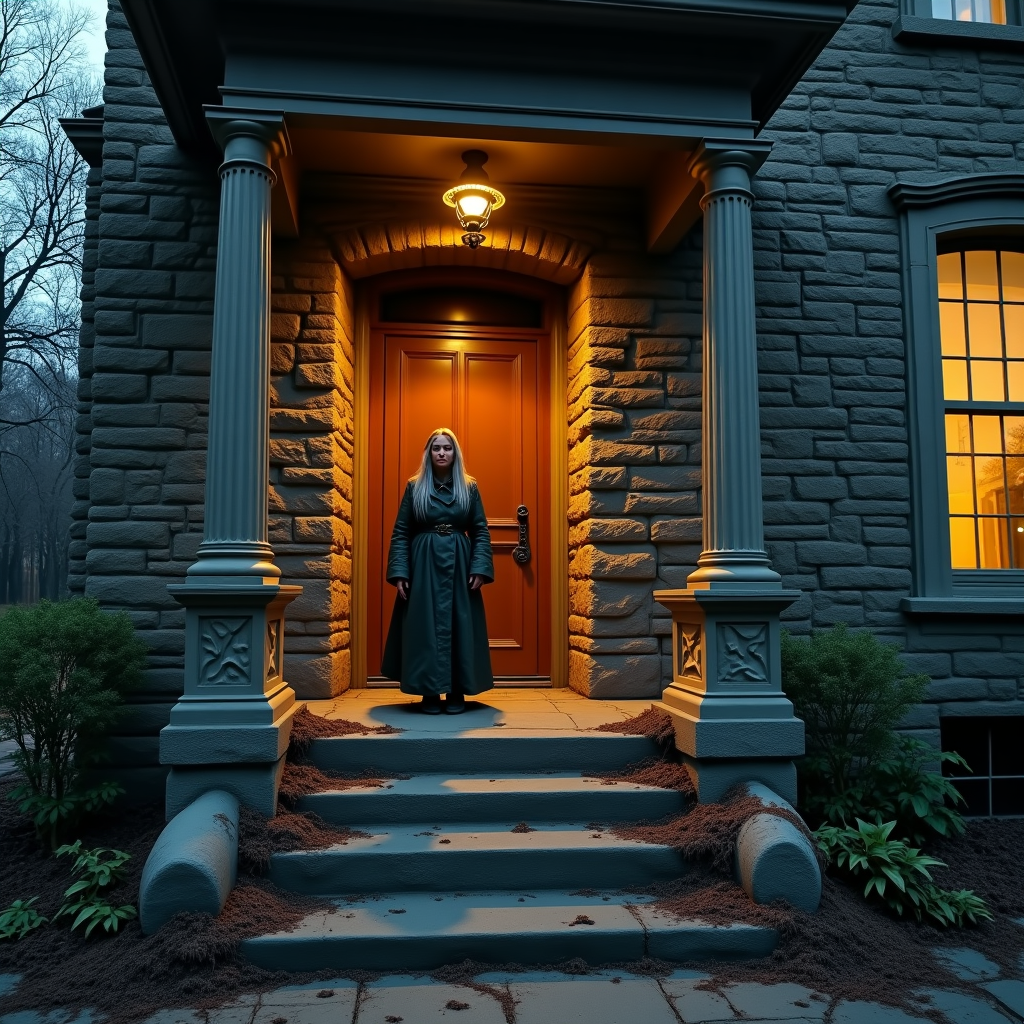
Part One: Something’s Wrong
My name is Luisa Swiftwind. I’m sixty-three years old, I’ve been a soil scientist for thirty years, and I know exactly what glacial clay does to a foundation when nobody’s paying attention. Everybody else acts surprised. I’ve been waiting.
I came to South Orange six months ago to consult on a historic preservation survey — the kind of quiet contract work nobody notices. Old basements. Victorian mortar. Compacted fill that was never supposed to hold this much weight. I walked the grounds of Seton Hall on a Tuesday morning and felt something shift under my boot. Not a tremor. More like recognition.
Like the ground knew me back.
I pushed my fingers into the exposed embankment near the east pathway and the clay moved. Not crumbled — moved. Layer by layer, like the pages of a book I was turning. A foot of sediment slid sideways and packed itself into a ridge the shape of a fist. I stood up. Looked around. Nobody saw.
I should have been terrified. I wasn’t.
Part Two: Following the Thread
Here’s what I know about South Orange that the historic plaques don’t say: the whole village is sitting on a scar. Glacial melt. Industrial fill. A century of building heavy things on top of soil that was never stable to begin with. The clay beds under Valley Street shift every wet spring. The university’s oldest pathways are underlaid by compacted debris from a quarrying operation that ended in 1908.
This place was built beautiful on top of something broken.
I started testing the limits — carefully, clinically, the way I test everything. A small deflection near Mountain Station. A slight compression along the old drainage corridor behind Turrell Avenue. Nothing catastrophic. I was taking notes.
But then I found the survey records from the original land acquisition. 1850s. The signatures. The “considerations paid.” I know what that language means. I’ve read a hundred versions of it.
The clay remembered even if the deeds didn’t.
Part Three: The Reveal
I wasn’t hiding when he found me. I was working.
He came through the tunnel off Sloan Street moving like a man who could hear walls — which, I realized quickly, he could. Greg Harmon. I knew the name. Urban planning professor. I’d read his paper on the village’s subsurface drainage grid. Good paper. He understood the infrastructure better than most.
He did not understand what I was doing or why.
I had both palms flat to the clay embankment beside the old brick culvert. I was pulling the fill layers apart — millimeter by millimeter — separating the compacted industrial debris from the natural glacial bed underneath. Creating voids. Not to collapse anything. To expose what was there. What had been buried.
He hit me with sound first. A pulse — hard, structural, bounced off every junction in the grid. It rattled my concentration and I felt the layers I was holding start to slip. He was good. He’d mapped the whole system.
I pushed back. I drove a wedge of clay up through the tunnel floor between us — a sudden ridge that cracked the brick and knocked him sideways. He recovered fast. Hit me again — targeted frequency, locking the walls stable, trying to freeze what I was moving. Like putting a lid on a pot.
We went three rounds like that. His sound against my sediment. He’d stabilize; I’d shift. I’d compress; he’d resonate the structure back into place. The tunnel groaned. Brick dust fell.
He locked the main. I’ll give him that. He found the resonant frequency and held it and I couldn’t move enough clay fast enough to break through.
I stopped. Not because he beat me. Because the main wasn’t really the point.
“You can hear it,” I said.
He said he could hear all of it.
I believed him. That’s why I walked away.
Part Four: Aftermath
The newsletter was a choice I don’t regret. Ashveil Was Here. I wanted a record. A timestamp. The village’s Historic Preservation Commission is meeting this week to discuss which facades deserve protection. Nobody on that commission is asking what was here before the facades.
I’m still in South Orange. I have a sublet on Wyoming Avenue and a very detailed map of every clay layer under this village.
Greg Harmon let me walk. I’ve been thinking about why. I think he heard something in what I said that he can’t unhear.
Good. Neither can I.