
Bayway Estuaryveil: Origin of the Marshkeeper
Part One: The Woman Who Read the Ground
Catalina Reyes has lived in Elizabeth her whole life, and the city has always spoken to her in the language of water.
She grew up on Trumbull Street, two blocks from the Elizabeth River, in a row house whose basement flooded every time the nor’easters came through — which, after 2012, felt like every other autumn. Her mother kept a high-water mark penciled on the doorframe in the kitchen: Hurricane Sandy, October 29th. It sat at knee height on a grown woman. Catalina used to press her palm flat against that mark before bed, a ritual she couldn’t explain, as if she were taking the city’s pulse.
She spent forty years as a geotechnical surveyor for Union County’s public works division — the woman they sent in when the ground itself became the problem. She knew the fill beneath Elizabeth’s streets the way a doctor knows an old patient: intimately, cautiously, with full knowledge of every concealed fragility. This city was not built on rock. It was built on a century of industrial ambition and industrial waste — slag, cinder, chemical-soaked earth, old cordgrass marshland choked under concrete and commerce. The Bayway corridor, with its refinery stacks and shipping terminals, sat atop layers of sediment that had been pushed, loaded, compacted, and contaminated across five generations of industry. Catalina had filed more subsidence reports than she could count. The county had acted on fewer than she could bear.
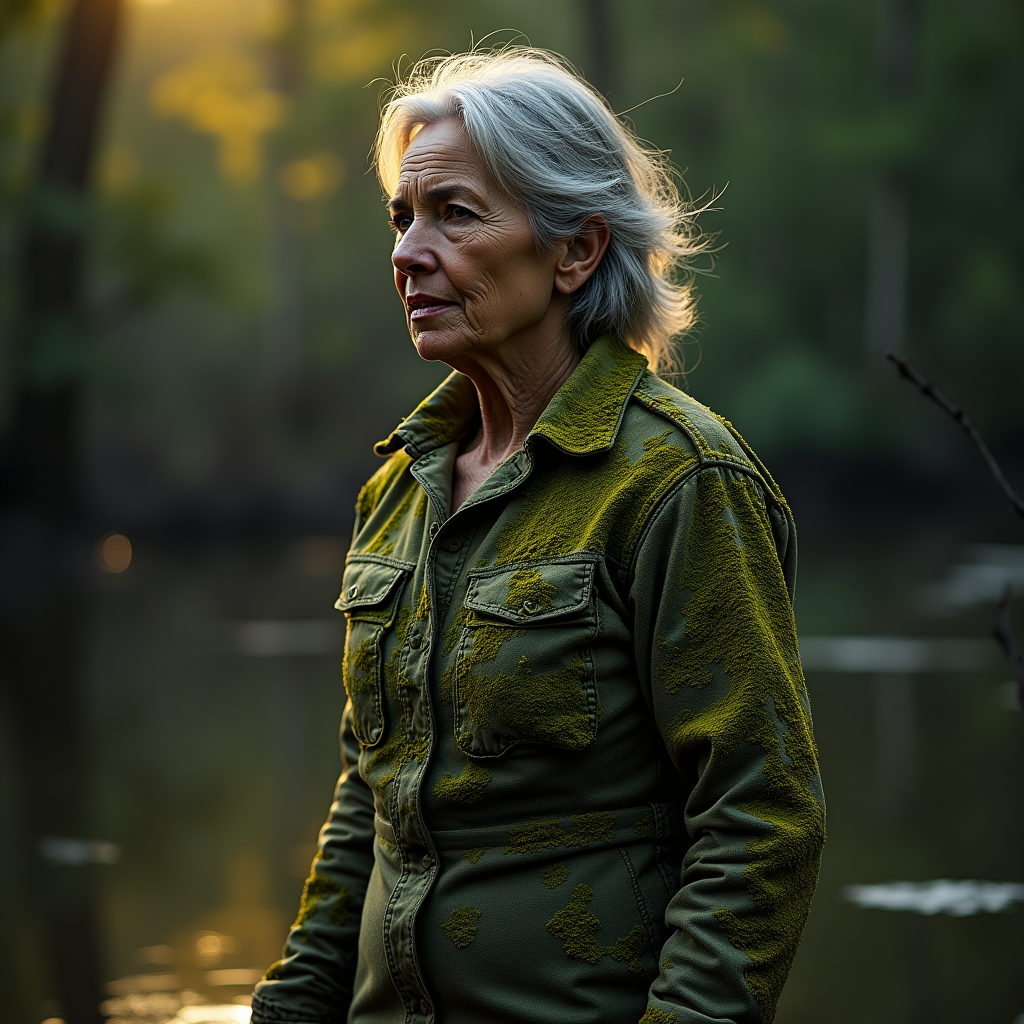
At sixty-two, she was the kind of woman the younger engineers deferred to in the field but overlooked in the conference room — Latina, compact, silver-haired, with calloused hands and a voice that carried quiet authority. She drove a county pickup with a cracked windshield and kept tide charts folded in the glovebox. She knew, by feel and by data, that Elizabeth was in a slow negotiation with the water table. The city was not losing yet. But the margin was thinning.
She did not know, when she woke on the morning of March 3rd, 2026, that the margin would break before noon.
Part Two: The Day the River Remembered Itself
The event that the county’s emergency management report would later call an “unclassified subsurface discharge incident” began at 6:47 a.m. beneath the Bayway refinery buffer zone along the southern bend of the Elizabeth River. Catalina was already on site — she’d been flagged by automated sensors the night before detecting anomalous pressure readings in the sediment layer beneath the old chemical corridor. She was kneeling in the cordgrass at the river’s edge, extracting a core sample, when she heard the ground beneath her give a sound she had never heard it make before: a low, sustained harmonic, like a cello string bowed too hard.
The refinery lot east of the river embankment had been sold three months prior to a firm called Hargrove Terminal Partners — a shadowy logistics consortium that had, against the county’s objections, begun preliminary excavation for a new bulk cargo facility. The overnight excavation crew — working without the required environmental hold — had punched through a sealed clay aquitard that Catalina had flagged in her 2019 report as a critical pressure boundary. Beneath that clay cap sat a pressurized brackish aquifer that had been accumulating since before the industrial era. When the drill broke through, the release was not explosive. It was methodical and total, like a city exhaling forty years of held breath.
The Elizabeth River surged upward from below. Not a flood — something stranger. The river seemed to inhale itself, the banks swelling from underneath as the subsurface water found every crack in the fill material and climbed through it. Water pressure mapped the city’s buried failures like an X-ray. Three blocks of New Point Road buckled. A section of the Route 1/9 corridor near the Bayway intersection heaved. The drainage infrastructure along South Front Street — already aging — began to collapse inward.
Catalina did not run. She stood at the river’s edge as the ground convulsed beneath her, knee-deep in the sudden surge, and drove her core sample rod into the soil as if she could anchor the whole city by hand.
The current pulled at her. The electromagnetic signature from the refinery’s corroded storage infrastructure — massive steel containers, pipe clusters, old rail tankers left in the buffer zone — spiked wildly across her handheld sensor unit. She heard the harmonic again, louder now, emanating not from the ground but from inside her sternum. She pressed her free hand into the exposed clay bank at the riverbed’s edge, feeling the sediment layers like pages of a book she had spent a lifetime learning to read.
The clay moved for her.
Not metaphorically. Not by accident. The clay layers shifted and sealed, the way they were supposed to on geological timescales, in the space of four seconds. The pressure equalized. The surge halted. Catalina stood in the river, breathing hard, her hand still pressed against the bank — and felt the water inside the earth the way she had always felt the high-water mark on her mother’s doorframe: as information. As inventory. As something she was now responsible for.
Part Three: The Marshkeeper Rises
The transformation was not instantaneous. It took three weeks before Catalina understood what had happened to her — three weeks of waking at 3 a.m. with her hands pressed flat to the bedroom floor, feeling the water table shift beneath the neighborhood, sensing the subsidence pocket developing under the Elizabethport community center three streets away, knowing before the sensors did that the fill under the corner of Elizabeth Avenue and Third Street was failing.
She went back to the river every night.
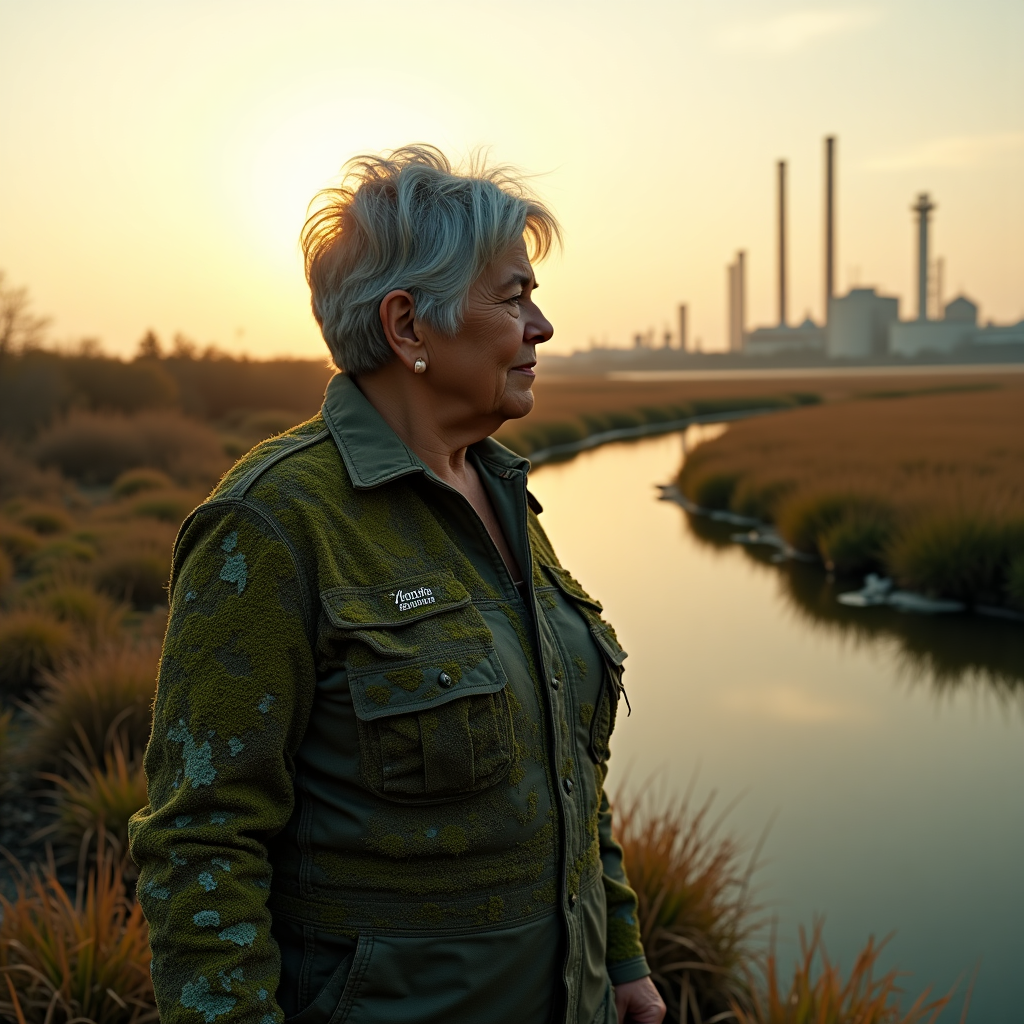
The cordgrass marshes along the Elizabeth River’s northern bend — what remains of the pre-colonial estuary system, stubborn and salt-tolerant, surviving between the industrial embankments — responded to her presence. The peat and root mass would tighten when she asked, accelerating absorption during the heavy March rains, holding stormwater in the wetland’s deep layers rather than letting it overwhelm the county’s overtaxed drainage infrastructure. She found she could release it too: controlled, precision discharge, feeding the river at exactly the rate the system needed to avoid flooding the downstream neighborhoods. It felt like composing music. It felt like doing the job she’d always done, but without the bureaucratic delay.
The electromagnetic sensitivity came next. Standing near the refinery buffer zone, she began to perceive the corrosion signatures of the old infrastructure as a kind of pressure in her peripheral vision — a heat map of failure. She could extend her field outward and lock compromised containers and pipe clusters in place, neutralizing the electromagnetic instability, disrupting the erratic radio frequencies leaking from corroded industrial control systems. The Bayway corridor had been hemorrhaging radio noise for decades, interfering with the port’s communications infrastructure. Catalina silenced it the way she’d silence a rattling pipe in the wall — efficiently, permanently.
And beneath the streets, she became a geological architect. The clay and sediment layers under Elizabeth’s downtown — the unstable industrial fill that had worried her for forty years — were now hers to reshape. Not violently, not instantly, but with the patient authority of deep time. She reinforced the foundation beneath the Elizabethport waterfront rowhouses. She stabilized the fill under the First Street corridor. She turned the ground into an ally.
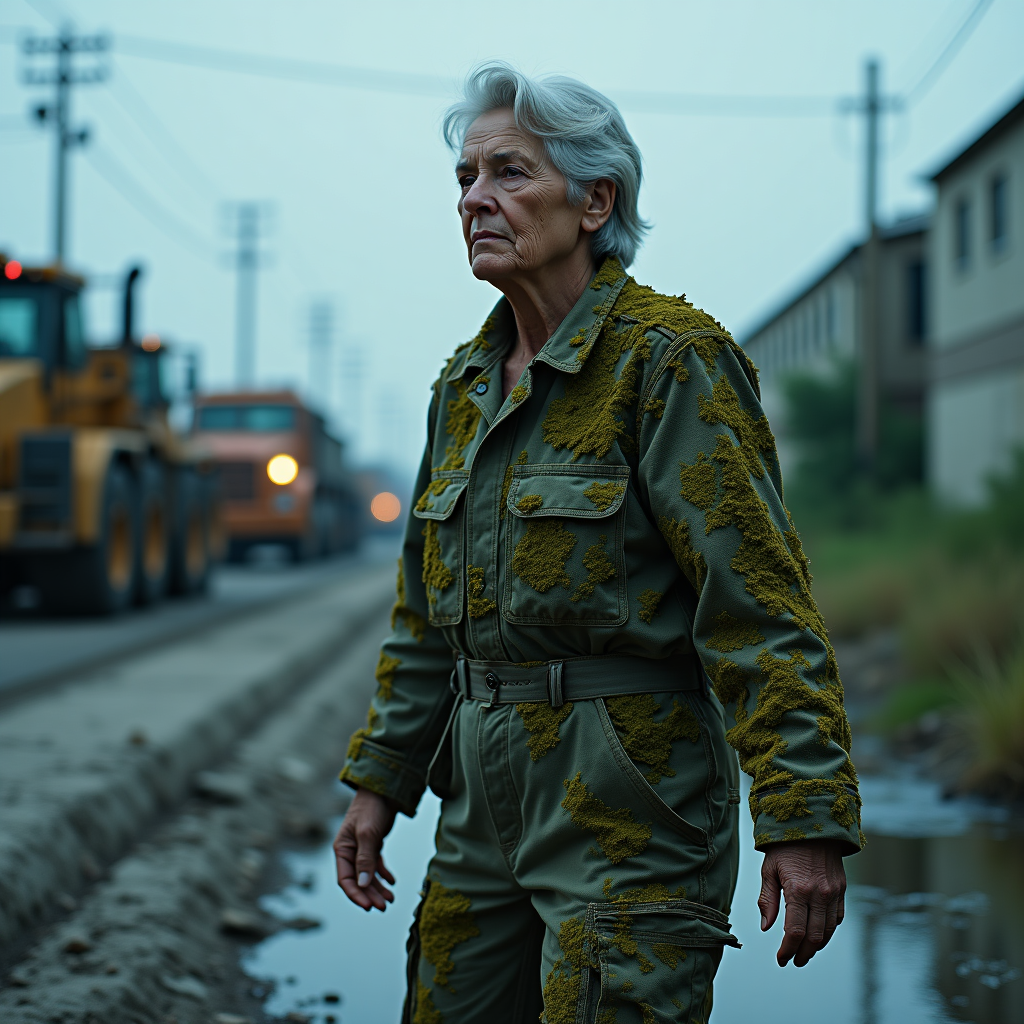
She did not take a name for herself. The dockworkers along the port access road named her first: la que cuida el estero — the one who tends the estuary. By April, the commuters on the NJ Transit Raritan Valley Line were calling her Bayway Estuaryveil. It fit. She kept it.
Part Four: The Darkreach of the Harbor
His name, in the business filings, was Farid Merheb. In the port logistics world, he was known simply as Darkreach of the Narrows — a name earned over thirty years of operating in the gray zones of Newark Bay’s container economy: cargo re-routing schemes, insurance fraud at the terminal scale, and a specialty in acquiring distressed industrial sites under regulatory pressure and extracting their value before environmental remediation could be enforced.
A man in his late fifties, with a heavy frame, iron-gray beard, and the deliberate stillness of someone who had learned long ago that patience was more useful than speed, Merheb had seen every kind of opposition. Catalina Reyes was a new kind.
Hargrove Terminal Partners was his. The Bayway excavation was his. The “accidental” breach of the clay aquitard was not accidental — it had been engineered, precisely, to trigger a subsidence event severe enough to depress property values along the Elizabeth River corridor and force distressed sales of the industrial waterfront parcels he had been accumulating quietly for three years. He had done this before in other cities, with other geology. Elizabeth was, he believed, particularly vulnerable. No one, he had calculated, cared enough about the ground beneath this city to stop him.
He had not calculated Catalina.
After the March event, Merheb accelerated his timeline. He brought in a specialist contractor — a firm that deployed directional electromagnetic pulse technology under the cover of “infrastructure diagnostics” — to destabilize the sediment lock Catalina had established under the Elizabethport embankment. If he could trigger a secondary subsidence event, attribute it to pre-existing infrastructure failure, and block the county’s emergency designation, the parcels would be his within ninety days.
He stood on the embankment at the Bayway refinery perimeter on the evening of April 14th, watching his contractors deploy the equipment, and felt nothing resembling doubt.
The ground gave a low, familiar harmonic. He looked up.
Part Five: Estuary Against the Narrows
She comes out of the river.
Not dramatically — not rising on a column of water or wreathed in lightning. She walks up the embankment from the cordgrass, boots soaked, the clay and peat of the riverbed moving with her the way a coat moves with the person wearing it. The magnetic field she carries ahead of her silences the contractor’s equipment before any of them realize it’s been silenced. The devices simply stop. The field distorts radio frequencies across a two-block radius — the port authority communications desk on the far side of the bay will log the interference as atmospheric anomaly.
Merheb watches her cross the embankment and does not move. He has the stillness of a man who believes he is the most powerful thing in any room. He says, levelly: “You’re the surveyor. I’ve read your reports.”
“Then you already know,” Catalina says, “what the clay layer under this buffer zone can do if someone disturbs it incorrectly.”
The ground between them shifts. Not violently — subtly, geologically, the way debt accumulates. The sediment layers beneath the refinery lot reorient along the shear plane Catalina mapped in 2019. The contractor’s heavy equipment begins to tilt, almost imperceptibly, as the fill beneath the machinery’s tracks redistributes. One of the pulse-emission units tips sideways and goes silent. The others follow.
Merheb looks down at the ground. Then back at her. The stillness in him, for the first time, has something unfamiliar inside it.
“This city is worth more empty than full,” he says. He believes this. That is what makes him dangerous.
“This city is 140,000 people,” she says. “None of them are empty.”
The Elizabeth River, behind her, moves. The marshes along the northern bend release three weeks of stored stormwater through the tidal channels in a controlled surge — exactly the volume required to raise the water table beneath the buffer zone by four inches, exactly long enough to make any ground disturbance here legally classifiable as a wetland interference event under federal statute. Catalina filed the geodetic markers two hours ago. The county’s environmental enforcement office will receive the automated trigger notification before morning.
Merheb’s contractors leave. He follows, eventually. He is a patient man, and patient men return.
But the ground remembers now. Every clay layer beneath Elizabeth’s streets has been indexed — reorganized, reinforced, and encoded with the geological patience of a woman who spent forty years learning the city’s buried language. The fill that built this place atop a century of industry has been made, quietly, into something that will not be moved without her knowledge.
Bayway Estuaryveil walks back into the cordgrass, where the river is still speaking, and listens.