
THE BEDROCK: An Origin Story
Part One: The Weight of Good Places
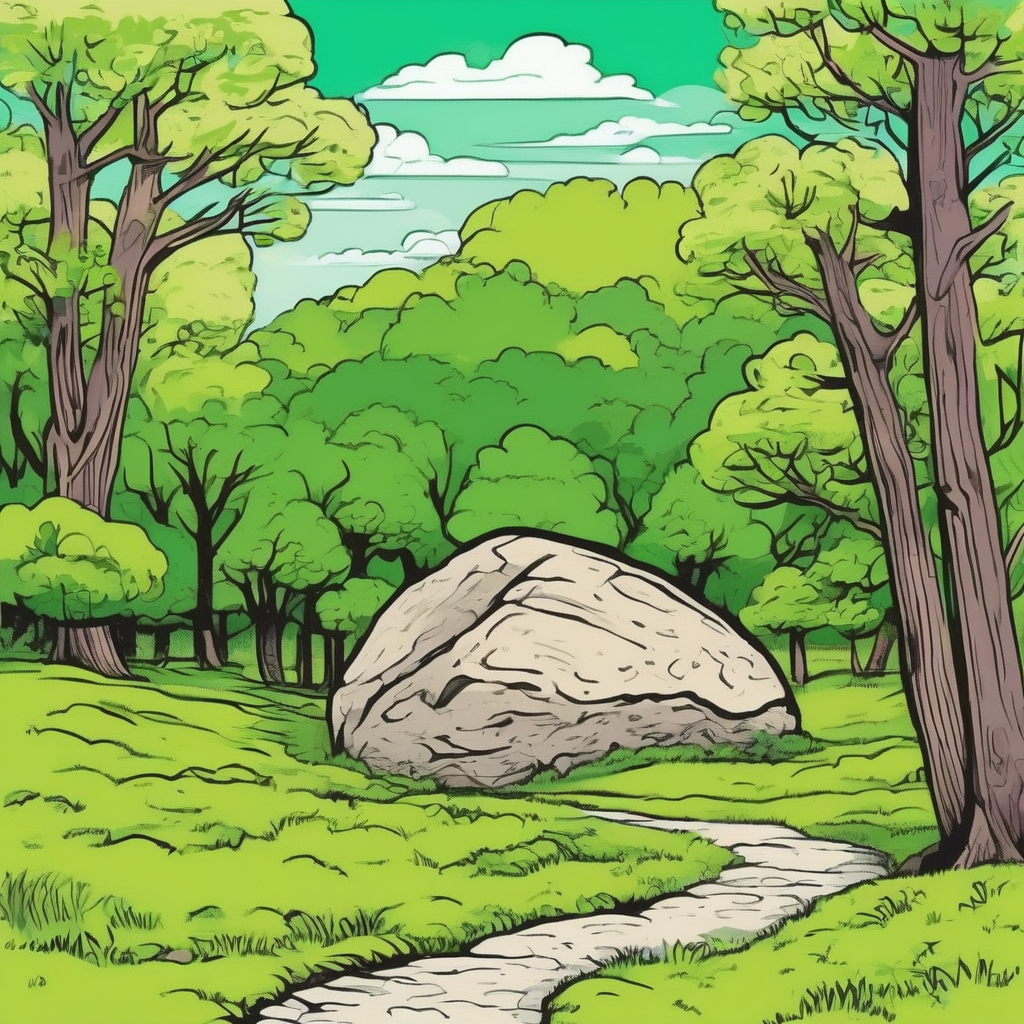
Glen Rock does not announce itself. It arrives quietly — a borough that emerges from the tangle of Bergen County commuter roads like a held breath, orderly and green, its sidewalks swept, its train platform freshly painted. The Saddle River bends through it like a silver thread stitching suburb to wilderness. And at the center of the borough, half-buried in a small park off Rock Road, sits the thing that gives the town its name: the Glen Rock — a massive glacial erratic, a boulder deposited ten thousand years ago by a retreating glacier, enormous and permanent and almost embarrassingly literal. A rock. In Glen Rock. It has always been there. It will always be there.
Maren Hoppe knows this rock better than anyone.
She has been sitting beside it, on lunch breaks and after school and on Sunday mornings, since she was nine years old. Now thirty-one, a geological survey technician for Bergen County’s public works division, she still comes here when she needs to think. She presses her palm flat against the cold granite face and breathes. There is something in the stone that steadies her. She has always assumed this is metaphor.
She is wrong.
Maren is the daughter of a public school librarian and a retired NJ Transit maintenance foreman. She grew up in the borough’s modest north end, in a Dutch Colonial on Doremus Avenue, three blocks from the train tracks. She commuted through Ridgewood on the Bergen Line to Rutgers-Newark for her geology degree, then came straight back. Her colleagues at the county office in Hackensack find this strange — why would someone with her analytical mind choose to stay in the same twelve square miles she was born in? Maren doesn’t explain. She understands, in a way she has never quite put into words, that a place can have a center of gravity. That some people are the bedrock of a community the way granite is the bedrock of a hillside: unremarkable to those who walk over it, essential to everything that stands above.
She is on her lunch break on a Tuesday in April, palm against the Glen Rock’s face, eating a sandwich from the deli on Maple Avenue, when the ground opens.
Part Two: Beneath the Borough
It is not an earthquake. Bergen County does not have earthquakes — not really, not like that. But the earth beneath the Saddle River valley is not as inert as people believe. Maren knows this. She has read the subsurface surveys. The bedrock shelf under Glen Rock is ancient Precambrian gneiss layered over diabase intrusions from the Jurassic period — two hundred million years of geological pressure compressed into the quiet topography of a New Jersey suburb. Old stress. Old memory.
The sinkhole opens ten feet to her left, swallowing a section of the park path in a grinding exhale. And from inside it — from some pressurized void in the diabase beneath — a pulse of energy erupts. Not heat. Not electricity. Something older. Something the geological survey textbooks do not have a word for: a resonant frequency buried in deep stone, released like a tone from a struck bell.
The wave passes through Maren in a fraction of a second.
She does not lose consciousness. She loses something harder to name — the membrane between herself and the mineral world. She feels the entire substrate of the borough at once: the Precambrian shelf running north toward Waldwick, the river gravel bed shifting under the Saddle River County Park, the clay and till beneath the playing fields at Glen Rock High School, the old Dutch fieldstone foundations under the Hopper houses on Doremus Avenue, laid by hands three hundred years gone. She feels the train tracks humming as the 12:47 Bergen Line service approaches the station. She feels the fill beneath Rock Road settling millimeter by millimeter under decades of traffic. She feels everything.
When the paramedics arrive — called by a dog-walker who saw her collapse — Maren Hoppe is sitting upright, both hands buried wrist-deep in the soil beside the Glen Rock boulder, completely calm, watching the grass grow.
Part Three: The Education of the Ground
She does not tell the paramedics what she knows. She does not tell her supervisor at Bergen County Public Works. She tells her father, because he spent thirty years underneath commuter rail cars in the maintenance yards at Hoboken Terminal, and he understands that the infrastructure beneath things is where the truth lives. He listens. He says: So the rock finally talked back. Then he makes her coffee and they don’t discuss it again for a week.
What Maren discovers, over the weeks that follow, is a power that is less spectacular than flight and more fundamental than fire. She is a geomantic conductor — a living antenna for the resonant frequencies stored in stone and compressed earth. She can feel structural stress in buildings before engineers detect it with instruments. She can send vibrations through the ground with her hands, cracking pavement or steadying a foundation, redirecting the energy of the earth the way a trained voice redirects sound. She can compress the soil beneath her feet to push herself vertically — not flying, exactly, but launching, bounding in tremendous arcs, using the ground’s own stored kinetic energy like a spring. And she can read geological memory: press her hands to old stone and receive impressions — Dutch Colonial foundations, the boot-prints of Lenape hunters, the grading work of the Erie Railroad surveyors who came through in the 1840s and established the rail corridor that would eventually become her father’s livelihood.
The limits are real. She cannot affect anything without ground contact or direct touch. Water breaks her signal. Poured concrete is harder to read than natural stone. And using the power is exhausting in a way that GPS and spreadsheet work is not — it pulls something metabolic from her, requires sleep and food and the quiet of the park to recover.
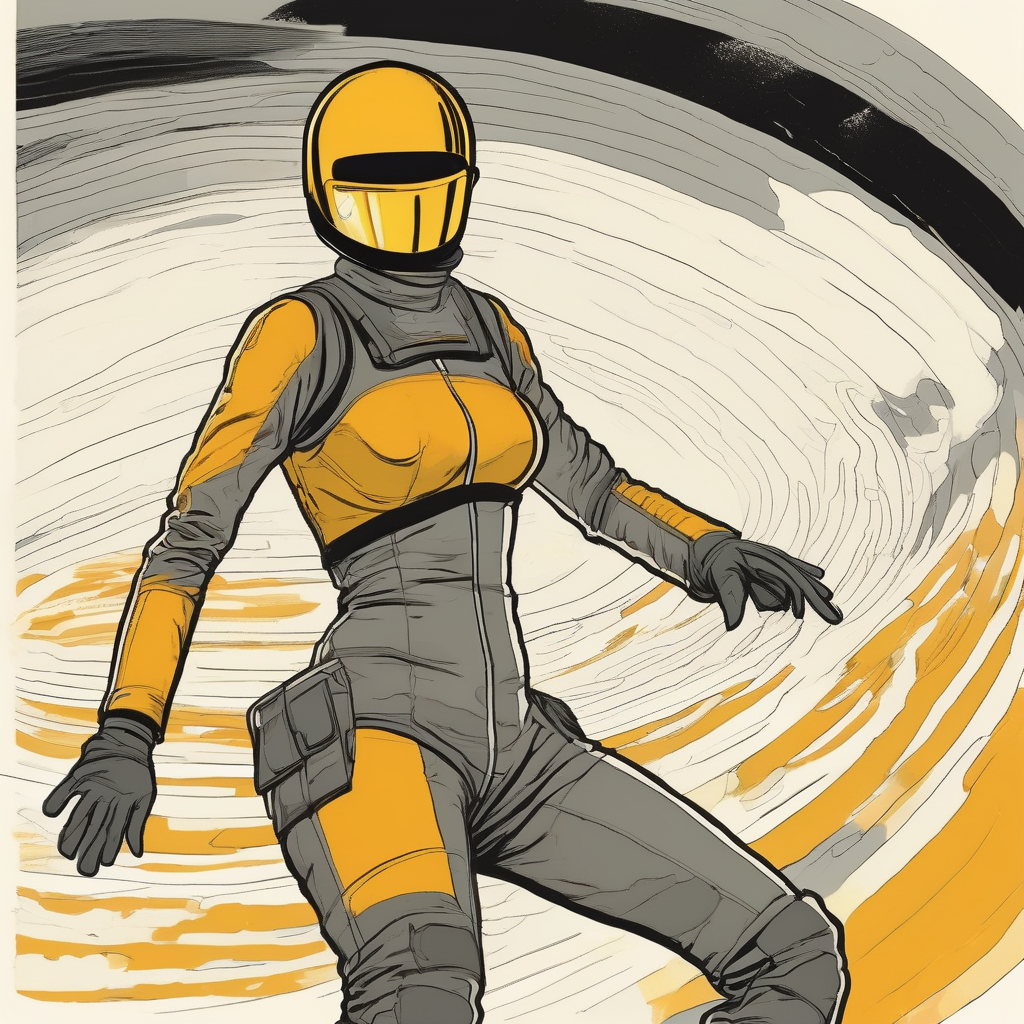
She trains in Saddle River County Park after dark, behind the equestrian area where the old fieldstone walls run along the eastern path. She practices on the Hopper House foundations — feeling the 18th-century Dutch stonework hum under her hands, learning to distinguish geological layers from constructed ones. She makes herself a suit from a material she sources from a geotextile supply company in Totowa — breathable, flexible, designed for civil engineering fieldwork in rough terrain. Charcoal grey over amber, the colors of gneiss and diabase under a field lamp. No cape. A low helmet with a visor, sealed against vibration disorientation. She patches the borough’s crest — the boulder, the river, the old Dutch letterforms — onto the shoulder herself, stitching it while watching a Rutgers geology lecture on her laptop.
She calls herself Bedrock. Not for the cartoon. For the actual thing.
Part Four: The Architect of Erasure
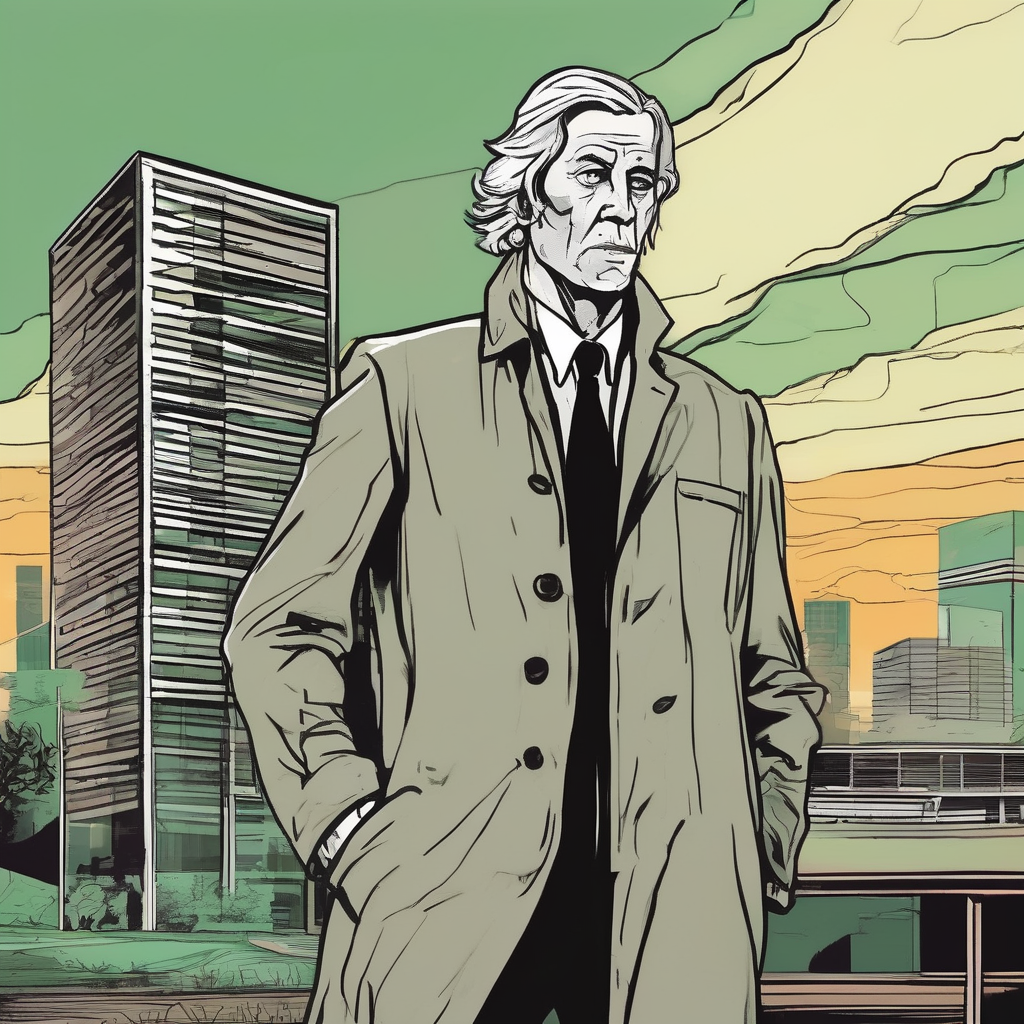
His name — the name he uses — is Callum Pryce. He runs a land acquisition and development firm called Pryce Meridian Group, headquartered in a glass tower in Paramus. He is, by every public measure, a success: a reinventor of underperforming suburban corridors, a builder of mixed-use luxury clusters on the bones of old downtowns. He has done it in Englewood. In Teaneck. In Montclair. Now his surveyors are walking the Saddle River corridor with tablets, photographing every property within two blocks of the Glen Rock train station.
But Maren, during a late training session in the park, presses her hands to a survey stake Pryce Meridian’s crew drove into the parkland boundary — illegally, she suspects — and reads something she wasn’t prepared for. The stake is steel, not stone, but the soil memory around it is clear: this ground has been disturbed before, deliberately, the earth sampled and the results falsified. Pryce Meridian has commissioned subsurface surveys of the borough and doctored the data — they know there are pressurized voids in the diabase beneath the town, pockets of geological energy like the one that transformed Maren. And Callum Pryce is not planning to develop around them. He is planning to exploit them.
Pryce was not always this. Once — Maren’s father remembers — he was a borough council candidate in the late nineties, before he lost badly to a local schoolteacher and pivoted to development in a fury of wounded pride. What he wanted then was the kind of permanence Glen Rock represented: safe, prosperous, respected. What he wants now is to monetize it, to extract the wealth stored in this geological anomaly and build something that serves no one who already lives here. He has no powers. He has something more dangerous in the short term: capital, permits, and a planning board he has spent two years cultivating.
And he has hired a geological extraction firm — Subsurface Meridian Solutions, technically a subsidiary, technically a separate entity — to begin drilling into the diabase voids beneath the borough park. The drilling is scheduled for a Thursday night in late April, under cover of a utility emergency permit. If the voids are breached incorrectly, the seismic feedback will not give anyone a superpower. It will collapse the old fieldstone foundations of the Hopper Houses. It will buckle the train platform. It will swallow the park.
Maren reads all of this in a survey stake and a patch of disturbed soil. She stands up in the dark park, brushes the dirt from her hands, and goes home to call her father. Then she puts on the suit.
Part Five: What the Ground Remembers
They arrive at 11 PM in two unmarked trucks, with a drilling rig on a flatbed and a Bergen County utility permit that a handwriting analyst would later find troubling. There are six crew members and one man in a grey wool coat standing apart from the rest, watching, a tablet in his hand: Callum Pryce, supervising personally.
Bedrock comes up through the park from the south, moving in the long bounding arcs she’s spent weeks perfecting, each landing silent on compressed soil. She does not announce herself. She reaches the old iron fence at the park’s perimeter and presses both palms to the uprights.
The vibration she sends through the fence and into the ground is measured, precise — she has been reading this particular substrate for twenty-two years. She does not crack the earth. She reverses it. The pressurized void beneath the drill site, which Pryce’s engineers intend to breach from above, she stabilizes from below — compressing the surrounding matrix, sealing the pocket the way a hand closes over a wound. The drilling bit, when it strikes the surface, finds stone it cannot read: geomantically locked, hardened by resonant frequency into something that would take diamond to cut. The rig shudders and stalls.
In the confusion, Maren walks through the park gate and stands in the floodlights of the trucks.
Pryce recognizes her. He shouldn’t — she’s never met him — but he has the survey data, and the survey data flagged a human anomaly near the boulder site in March. He knows what she is, in the abstract. He does not know what she can do.
She shows him.
She does not hurt anyone. She does not need to. She presses her boot to the park path and sends a rolling seismic pulse outward — shallow, precise, enough to buckle the flatbed’s tires without touching the crew, enough to crack the drill housing at its weld points, enough to make the ground beneath Callum Pryce’s expensive shoes feel exactly as impermanent as it actually is. He stumbles. His tablet falls. He looks at her across the ruined drilling apparatus with something that is not quite fear and not quite respect — a colder emotion, the emotion of a man who has found an obstacle he did not budget for.
This land is not for sale, Maren says. She is not performing it for the crew. She means it as a geological statement.
The Bergen County Sheriff’s Office arrives fourteen minutes later, called by a park neighbor who heard the trucks. The illegal permit surfaces. Pryce Meridian’s attorneys are already on the phone by midnight. It will be months before it is fully untangled — the planning board resignations, the permit fraud investigation, the Saddle River corridor protections that a coalition of residents, the historical society, and a very persistent county geologist will push through the borough council.
Maren is back at her desk at Bergen County Public Works by 8 AM the next morning, eating a sandwich from the Maple Avenue deli, her field report on subsurface conditions in the Glen Rock park corridor already drafted and submitted. Factual. Thorough. Unassailable.
At lunch, she walks to the boulder. She presses her palm to the granite face. The stone is steady and cold and very, very old. It hums, faintly, in a frequency only she can hear.
She eats her sandwich. The Saddle River moves south through the county. The 12:47 Bergen Line service rolls through the station on schedule. The ground holds.
It always has.