

CALLUM PRYCE: THE WEIGHT OF THE WORLD
Part One: The Rock Beneath Everything
Glen Rock does not earn its name from metaphor. It earns it from stone.
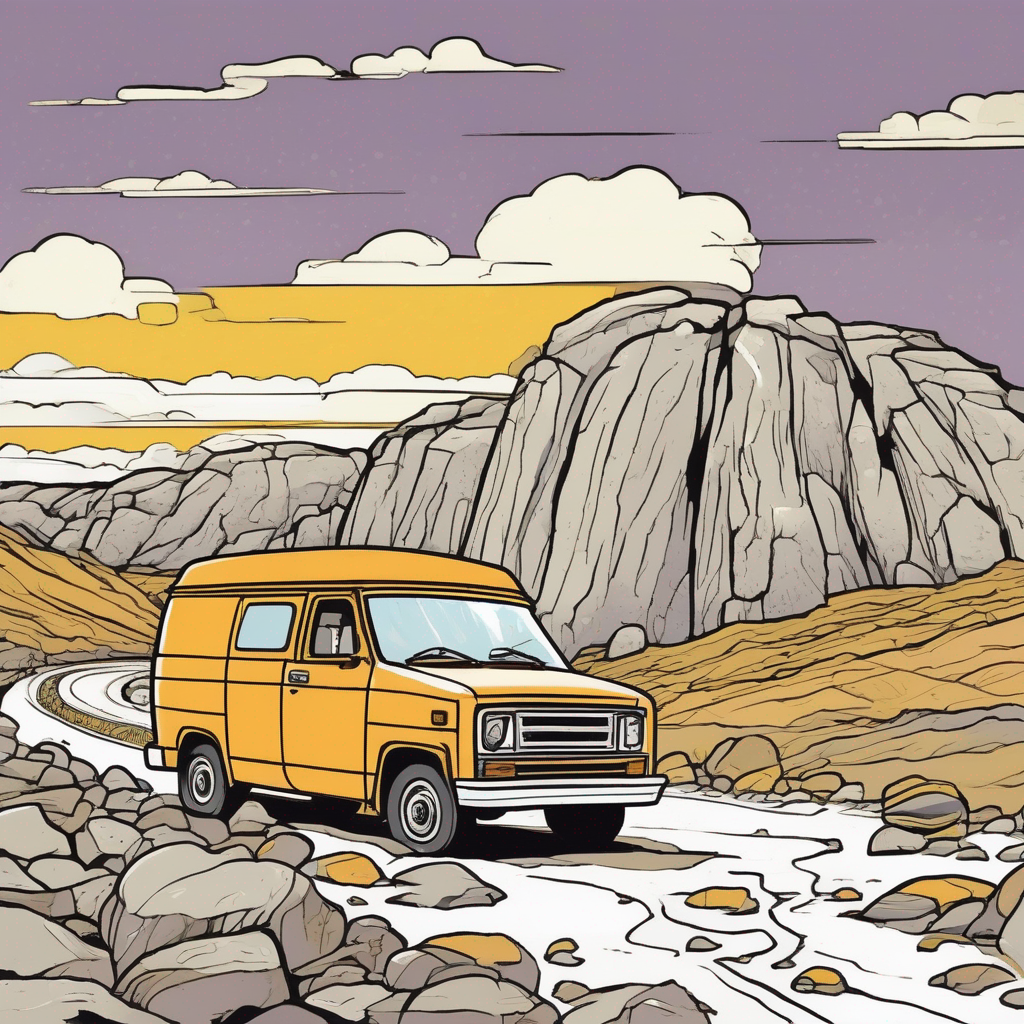
At the borough’s heart — set into a small triangle of land where Rock Road bends toward Harristown — sits the boulder. Just the boulder. No plaque explains it adequately. No fence dignifies it. It is simply there, as it has been there since the glaciers retreated and left it behind like an afterthought, a gray-brown mass of Precambrian gneiss the size of a delivery van, streaked with feldspar and mica that catch the afternoon light in April when the cherry trees along Doremus Avenue are foaming white and pink and the whole borough smells like something about to become.
Callum Pryce grew up three blocks from that rock. He played near it as a boy, pressed his palms flat against its cool flanks in summer, ate lunch beside it on autumn walks home from Glen Rock High School. He was twelve years old the first time he noticed it didn’t just sit there. It hummed. Not audibly — not in any register his classmates claimed to hear when he asked, embarrassed, in seventh grade. But Callum heard it. A low, continuous resonance moving up through the soles of his sneakers, through his shins, settling in his sternum like a second heartbeat.
His father, Alistair Pryce, told him the feeling was pride. “That rock has been here since before any of this,” his father said, gesturing vaguely at the perfect lawns, the well-maintained colonials, the smooth-sided sidewalks of one of Bergen County’s most affluent enclaves. “Before the Hoppers built their farmhouses. Before the railroad came through. Before every single person who thinks they own something in this town ever drew a breath. You feel it? That’s permanence, Callum. That’s what we build toward.”
Alistair Pryce built toward it with concrete and capital. Pryce Meridian Group was Bergen County’s most aggressive residential development firm for thirty years — not the largest, but the most precise. They didn’t just build houses. They reshaped the logic of neighborhoods, acquired undervalued parcels, navigated zoning boards with surgical patience, and emerged with developments that gleamed like promises. The Pryce name was on foundation stones across six municipalities. It was, his father always said, a form of geology.
When Alistair died — coronary, a Tuesday in November, at his desk on Maple Avenue — Callum was twenty-nine and already running three of the firm’s active projects. He took the keys, the debts, and the name. He told himself the hum in his chest would steady him.
It didn’t. It got louder.
Part Two: What the Surveyors Found
For a decade, Callum Pryce runs Pryce Meridian Group the way his father taught him: methodically, ruthlessly within the legal envelope, with an eye for the long game. He expands the firm’s reach into Wyckoff, Ridgewood, Ho-Ho-Kus. He wins a contentious bid to redevelop a decommissioned industrial parcel along the Saddle River, just south of where it traces the border of Saddle River County Park. He speaks at borough council meetings in the measured cadences of a man who has done his homework and knows you haven’t done yours.
The Saddle River project is where it goes wrong — or, depending on who tells the story, where it goes right.
The site surveys turn up something the county maps don’t show. Twenty-two feet below the surface, running beneath the old industrial footprint at an angle inconsistent with any known geological survey, there is a seam. It is not coal. It is not ore. The geologist Pryce Meridian hires — a quiet contractor named Voss who asks for payment in cash and asks no follow-up questions — describes it in his report as “a continuous vein of anomalous crystalline matrix, bearing structural resemblance to regional gneiss but exhibiting thermal and electromagnetic properties with no current classification.”
Callum reads this sentence four times in his car in the Saddle River County Park lot, windows fogged, the river barely visible through the bare March trees. Then he drives to the boulder. He gets out. He puts both hands on it.
The hum is not a hum anymore. It is a language.
He doesn’t understand it yet. But he understands that he has been hearing it his whole life, and that whatever is under the Saddle River site is the same thing — the same vein — that pulses through the glacial rock at Glen Rock’s center. He understands that his father was right. Permanence is the only true power. And he understands, with a cold clarity that feels like relief, that he has been chosen to claim it.
Part Three: The Meridian Beneath the Map
The extraction takes eight months of covert work. Pryce Meridian runs a legitimate foundation pour on the surface — permits filed, inspectors satisfied, a modest mixed-use residential building taking shape above ground. Below it, a second project operates on a different schedule.
The crystalline matrix comes up in segments, each piece vibrating faintly when Callum holds it. When he assembles the largest recovered fragment — roughly trapezoidal, fourteen inches across, dense as iron but warm to the touch — in the sub-basement of the Maple Avenue office, the transformation happens the way geological events always happen: not as an explosion but as a settling. A slow, inevitable redistribution of pressure.
The crystal doesn’t give him power so much as it returns something he has always had. The resonance he has felt since childhood is the region’s bedrock speaking — the Precambrian gneiss that underlies all of Bergen County, the oldest material in New Jersey, laid down before life had language. Callum Pryce, for reasons Voss’s report will never adequately explain, has always been tuned to its frequency. The crystal is a focusing lens. Through it, he can feel every load-bearing structure in a quarter-mile radius. He can sense the stress fractures in a foundation the way a doctor reads an X-ray. He can push — and things built by human hands can be made to answer.
He does not call himself a villain. He calls himself a corrective force.
Here is Callum Pryce’s theory, stated plainly in the leather journal he keeps in his desk drawer: Glen Rock is not special because of its school rankings or its median household income or its proximity to the city. Glen Rock is special because it sits on top of something ancient and enduring that its residents have spent two centuries failing to understand. The suburb is a kind of insult to the geology — a cosmetic layer over something profound. And the people who have profited most from selling that cosmetic layer — the developers, the assessors, the planners, the politicians — have done so by pretending the rock doesn’t exist. That the foundation is just a foundation. That permanence is a marketing term.
Callum Pryce intends to strip the cosmetic layer away. Starting with the competitors and civic bodies that have, over four decades, chipped away at what Pryce Meridian was built to protect.
Part Four: The Shape of the Nemesis
He first encounters Bedrock on a Wednesday evening in late October, at a Glen Rock Borough Council meeting in the municipal building on Harding Plaza.
Pryce Meridian has submitted a redevelopment proposal for a parcel on the south end of Rock Road — a modest plan, by Callum’s standards, but one that requires a variance the council has been sitting on for three months. He is there in a charcoal suit, portfolio open on the table, watching the chair of the planning subcommittee stall for the fourth consecutive meeting, when the lights flicker and a figure drops through the side exit door with the particular ease of someone who has come not to ask permission but to establish a fact.
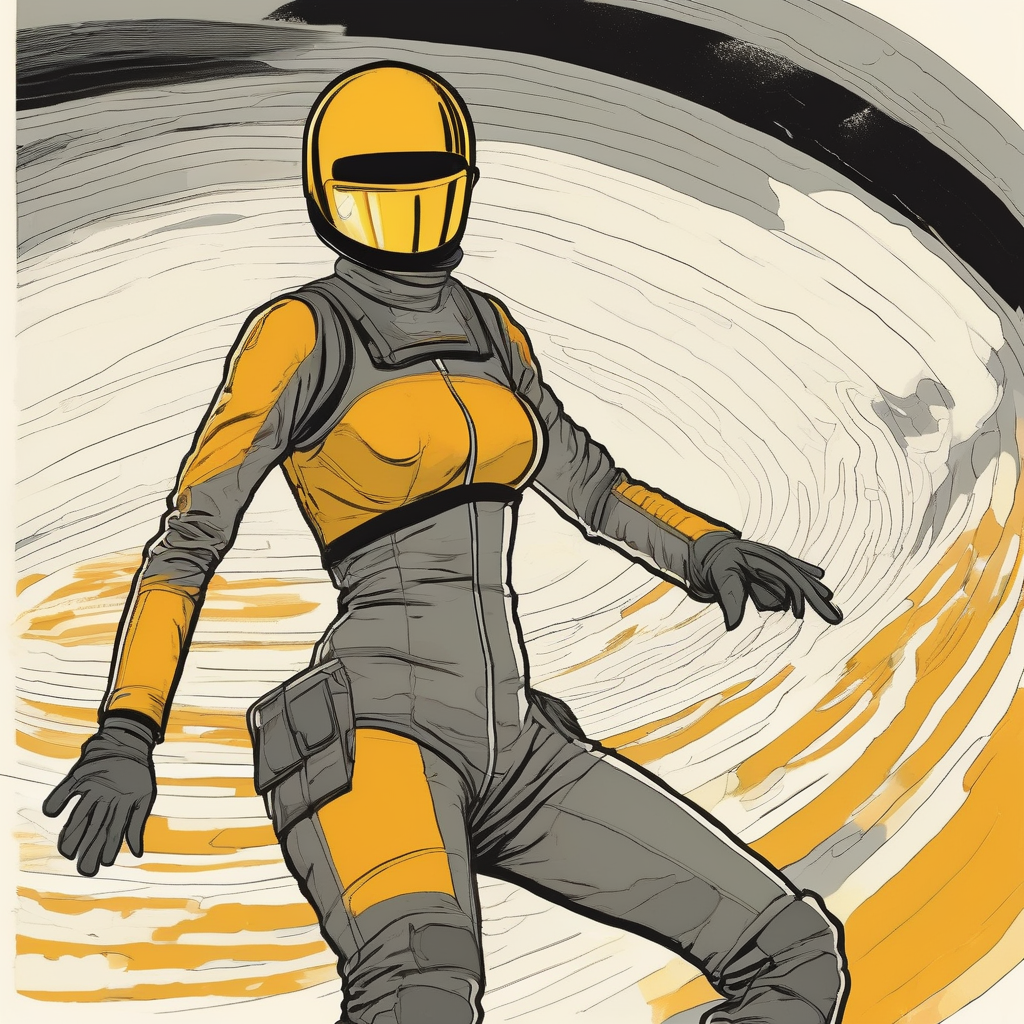
Bedrock is broad, deliberate, dressed in layered granite-gray and rust-brown — the colors of the rock itself. The helmet is unadorned. The voice is flat and steady.
“Pryce Meridian’s subsurface extraction on the Saddle River site,” Bedrock says, to the room, to no one in particular, “violated the geological integrity of a protected riparian corridor. The crystalline formation removed from that site was not yours to take.”
Callum doesn’t stand. He looks up from his portfolio. “I don’t know what you’re referring to,” he says, with the tone of a man who knows exactly what is being referred to.
“The rock knows,” Bedrock says. “It always does.”
What Callum learns later — pieced together from council whispers, from a county geologist who asks pointed questions at a Bergen County infrastructure summit — is that Bedrock is the counterweight he should have anticipated. Where Callum draws from the bedrock to impose order from above — to reshape the built environment according to a logic of permanence and consolidation — Bedrock draws from the same source to protect the surface. To hold. To resist displacement. The same ancient stone, and two completely opposite ideas about what it means to be responsible for it.
Callum finds this clarifying. Every force has an equal and opposite. He has simply found his.
Part Five: First Principles
April now. The cherry trees along Doremus Avenue are at peak, and the borough smells of blossoms and thaw and the particular sweetness of suburban spring that Callum Pryce has never been able to fully despise, no matter how hard he has tried.
He is standing at the boulder — just as he stood here as a boy, palms flat against the cold stone — when he feels Bedrock approach. The footsteps have a particular resonance. Even through the grass, through the April-soft ground, Callum can read the signature.
“You’re going to tell me to stop,” Callum says, without turning.
Bedrock stops six feet behind him. “I’m going to tell you that what’s underground isn’t property.”
“Everything is property,” Callum says. “That’s the first principle. The only question is who understands what they’re sitting on.”
“And you think you do.”
Callum finally turns. His eyes are the gray-brown of feldspar. The crystal at his chest — worked into the lapel pin of his charcoal suit, because Callum Pryce does not wear a costume; he wears what he has always worn — pulses once, visibly, in the April light. Beneath the park, beneath Rock Road, beneath the whole quiet orderly prosperous impossible surface of Glen Rock, the bedrock answers.
“I’ve understood it since I was twelve years old,” he says. “This borough was built on top of something that was here before Bergen County, before New Jersey, before any human idea of ownership or governance or community. And every year, someone puts in a new foundation without asking what’s already down there. I am asking. I am the only one who has ever asked.”
Bedrock’s voice doesn’t waver. “Asking and taking are different things.”
“Only if you intend to give it back.”
The ground between them shifts — barely perceptibly, the kind of micro-tremor that residents will blame on a passing NJ Transit Main Line train even though no train is scheduled. The boulder does not move. It never moves. But everything around it, for just a moment, feels less certain than it did.
Callum Pryce straightens his lapel. The crystal goes still.
“The Saddle River project breaks ground again in three weeks,” he says. “The variance will be approved. The formation will be fully mapped.” He looks at the boulder once more — at the mica catching the afternoon light, at the Precambrian patience of it. “You know where to find me.”
He walks back up Rock Road through the cherry blossoms, and the ground remembers every step.