
Part One: The Cold Open
Rohan Embers had not planned to make his move on a Tuesday in May, but the Nonpoint soundcheck at Convention Hall was pulling half of Asbury Park’s aware population toward the boardwalk, and an empty Shark River inlet was an opportunity the Furnace Clan did not intend to waste. He descended the old service stairs beneath the Paramount Theatre’s sub-basement — the ones that smelled of rust and a hundred years of steam — and pressed both palms flat against the original boiler casing. The iron sang back at him like a tuning fork remembering its note.
Above, the surf retreated forty feet past the break line. Rohan did not look up. He was busy.
Part Two: The Investigation
The Furnace Clan’s grievance was documented in seven ledgers, three depositions, and one extremely angry letter sent to the Asbury Park city council in 1903, after inlet tides had flooded the steam laundry boiler rooms for the fourth consecutive winter. The Tidewarden clan had expressed no sympathy. The letter had not been answered. Rohan had read it so many times he could recite it from memory, which was perhaps not entirely healthy, but the Furnace Clan had standards.
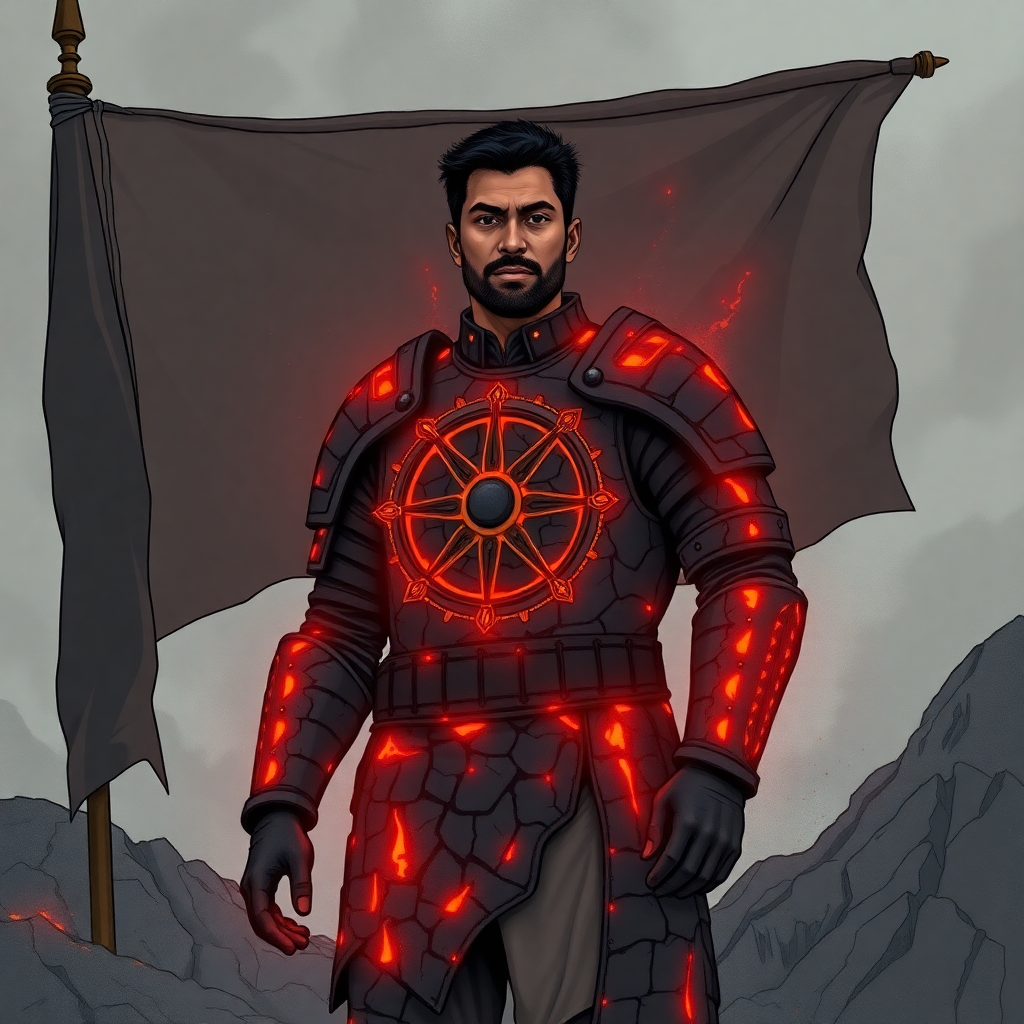
He moved through the sub-basement methodically, palms trailing the old ironwork. Each contact drew a thread of stored industrial heat up through his skin — a century of coal-fired temperatures, pressed into the metal and forgotten. He felt it accumulate along his forearms in visible shimmer lines, his light leather armor clicking softly at every seam as the thermal differential made it expand. The twin short blades at his hip ticked like a cooling engine. He found this satisfying.
The Paramount’s original boiler housing gave him the most. It had been running at full steam since the resort’s grand opening season and had never quite cooled — not in the bones of it. Rohan drew until the casing went grey and the air in the sub-basement dropped ten degrees. Upstairs, he’d heard later, a churro cart relocated itself.
He was also, very carefully, not thinking about the clan index card Old Prall kept behind the bait shop counter. He knew whose name appeared on it.
Part Three: The Pivot
The Tidewarden claim on the Shark River inlet ran through the 1897 city charter — a single sentence in archaic municipal language that nevertheless constituted legal standing, clan precedent, and approximately one hundred and twenty years of Furnace Clan fury. The claim was recorded in ink. But ink meant nothing if the inlet mouth calcified.
Rohan had done the thermal modeling himself. One concentrated release — every joule he could pull from the old laundry foundations, the theatre ironwork, the convention hall boiler infrastructure — directed downward through the sediment at the inlet mouth. The estuary bed would fuse. The tidal flow rights would have no inlet to attach to. The charter clause would be, in the most technical sense, moot.
He was almost disappointed Marco Salcedo existed.
“Of course it’s a Tidewarden,” he said to no one. “It’s always a Tidewarden.”
Part Four: The Reckoning
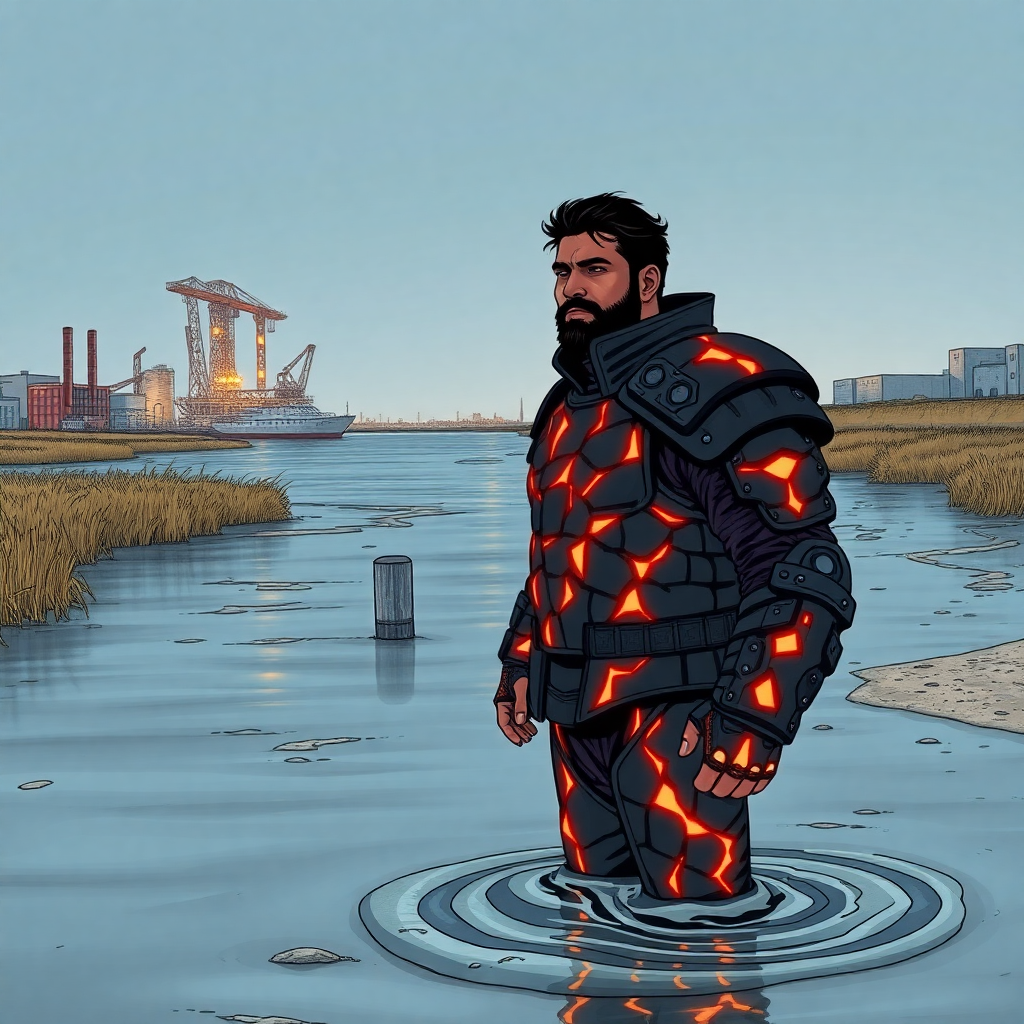
He was knee-deep in the inlet shallows, both hands submerged, the sediment already beginning to groan beneath the heat load, when Marco arrived looking like a man who had recently redirected a river and was not entirely pleased about it. Rohan released a single calibrated pulse — horizontal, disciplined, the kind of heat that made the shallows steam and the bank sand audibly shift. He had rehearsed this.
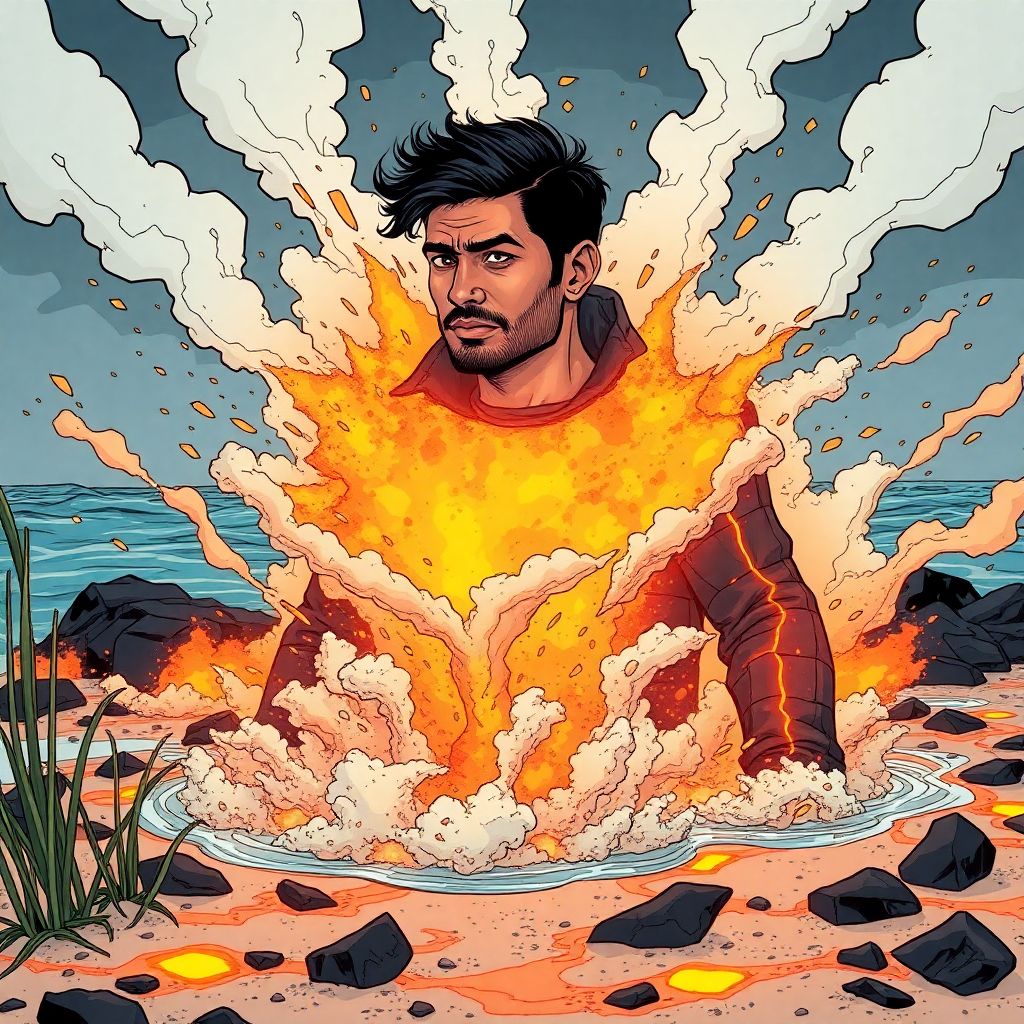
Marco pulled the Shark River upstream. All of it. Three feet in two seconds, cold brackish channel-water crashing into the inlet in a wall of Jersey Shore spring chill. Rohan’s stored heat hit it and shattered into a dense blinding cloud of steam that swallowed the inlet bank entirely.
Rohan used the whiteout to take three measured steps backward onto solid ground. He could not, in good conscience, call this a retreat. It was a tactical repositioning in response to unanticipated hydrological variables. He had notes. The sediment cracked as it cooled behind him, and he felt his stored heat bleed off into the fog with the particular frustration of a very long project being set back by approximately fourteen months.
“The inlet claim is still contested,” he said, when the steam thinned enough to see Marco’s face.
“Yeah,” Marco said. “Come back with a lawyer.”
Rohan intended to do exactly that.
Part Five: The Resolution
The Shark River inlet reopened by morning. Rohan Embers ate a disappointing breakfast at a diner on Cookman Avenue and reviewed his timeline. The boiler casing would need six to eight months to re-accumulate sufficient thermal charge. He made a note. He updated the ledger. He wrote a brief addendum to the 1903 letter, which he kept in a laminated sleeve in his jacket pocket, because some documents deserved to travel with you.
The Furnace Clan had been right since 1903. The Tidewardens had never once acknowledged the boiler damage. The inlet claim was an injustice wrapped in a charter clause dressed up as municipal procedure. Rohan left a seventeen-percent tip and walked back toward the boardwalk.
Somewhere under the Paramount Theatre, the old iron was already warming again. He could feel it. He was a patient man. The Furnace Clan had always been patient. They’d been patient for a hundred and twenty-three years, which was, admittedly, starting to feel like a long time to be right.
Sources
- Nonpoint Premiere New Single & Lyric Video “Is It” From Upcoming New Album “The Last Word”
- Lucy Dacus Unveils Reflective New Single “Planting Tomatoes”: Stream
- Where to Find Tickets to the Strokes’ 2026 Reality Awaits Tour
- 2 Jersey Shore BMX scene trailblazers stoked for new X Games League
- VOTE Who was the Shore Conference’s top baseball player for Week 3?
- Jackson High School merger helped two track & field stars take off
- Streetlight Manifesto Announce North American Tour
- A Wilhelm Scream Release “Fell Off” Music Video
- Winning at football’s ‘hardest position’ is key to Monmouth’s success
- David Lee Roth Kicks Off 2026 Tour with Van Halen Classics: Video + Setlist
- Asbury Park, New Jersey — Wikipedia
- U.S. Census Bureau, American Community Survey 5-Year Estimates (2022)