
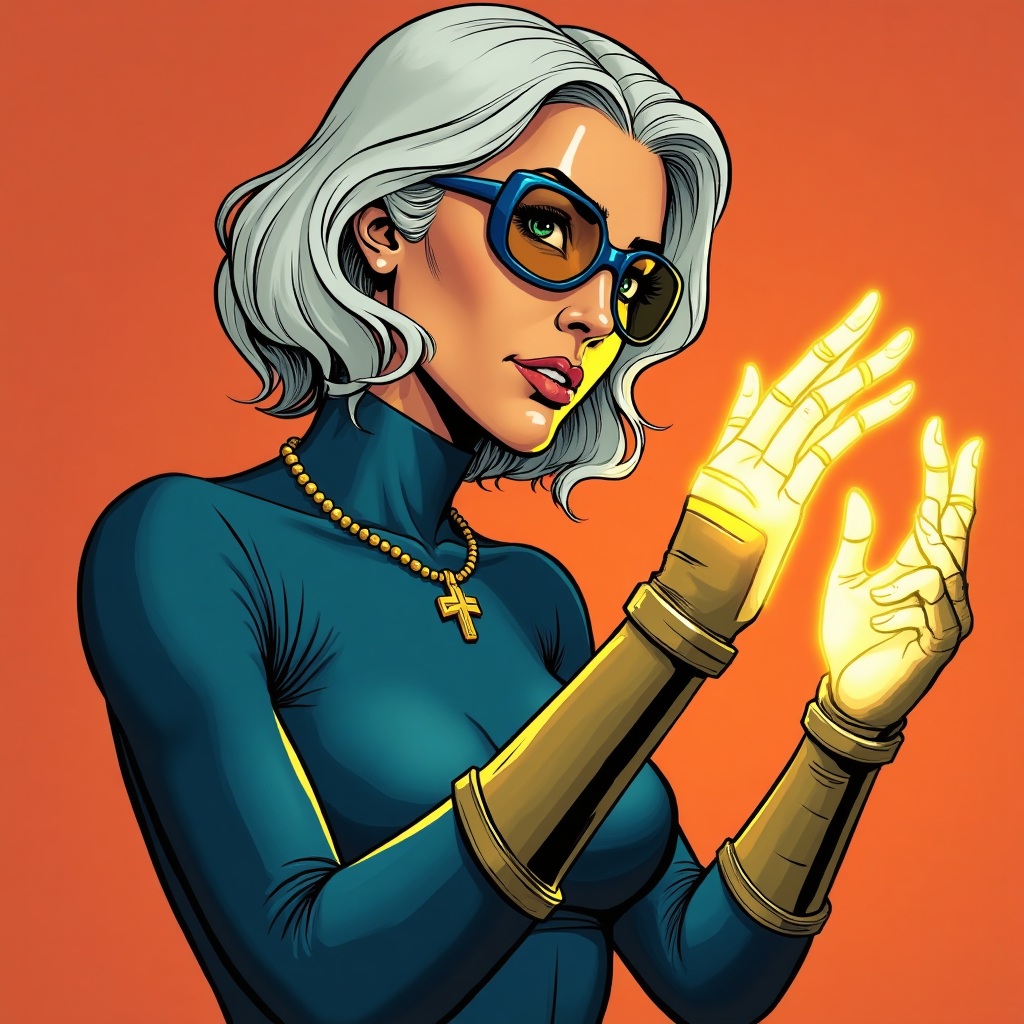
CORINNA VANE: Origin of the Compliance Queen
Part One: The Girl Who Learned to Smooth Things Over
Route 1 through Edison is not beautiful, and Corinna Vane has always found that honest.
It is a corridor of transaction — fast food and tire shops, hotel chains and strip malls, the glass-and-steel facades of buildings that want to look like the future but smell like parking garage. She grew up three blocks off this road, in a split-level Colonial on Terhune Road where her father worked long hours for a pharmaceutical distribution company and her mother taught AP Chemistry at J.P. Stevens High School. They were practical people in a practical place, and they raised a practical daughter.
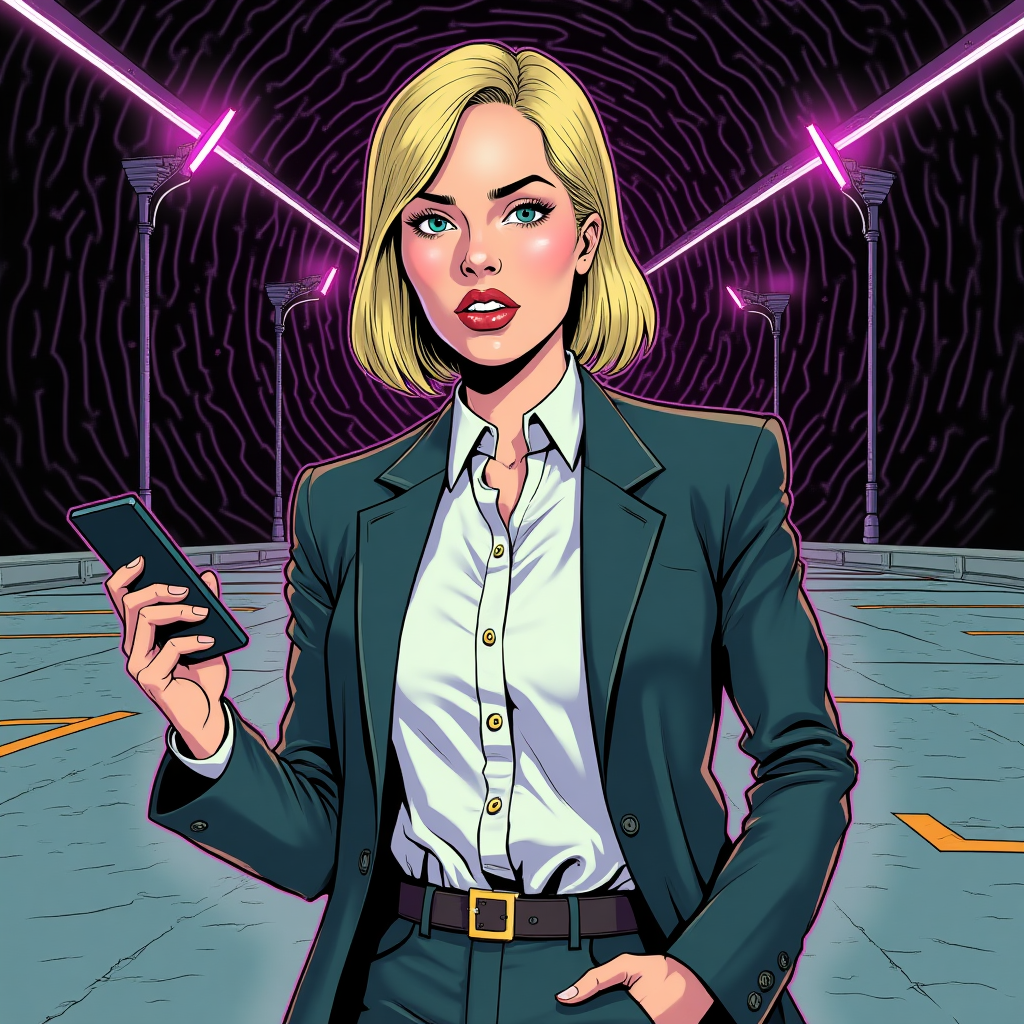
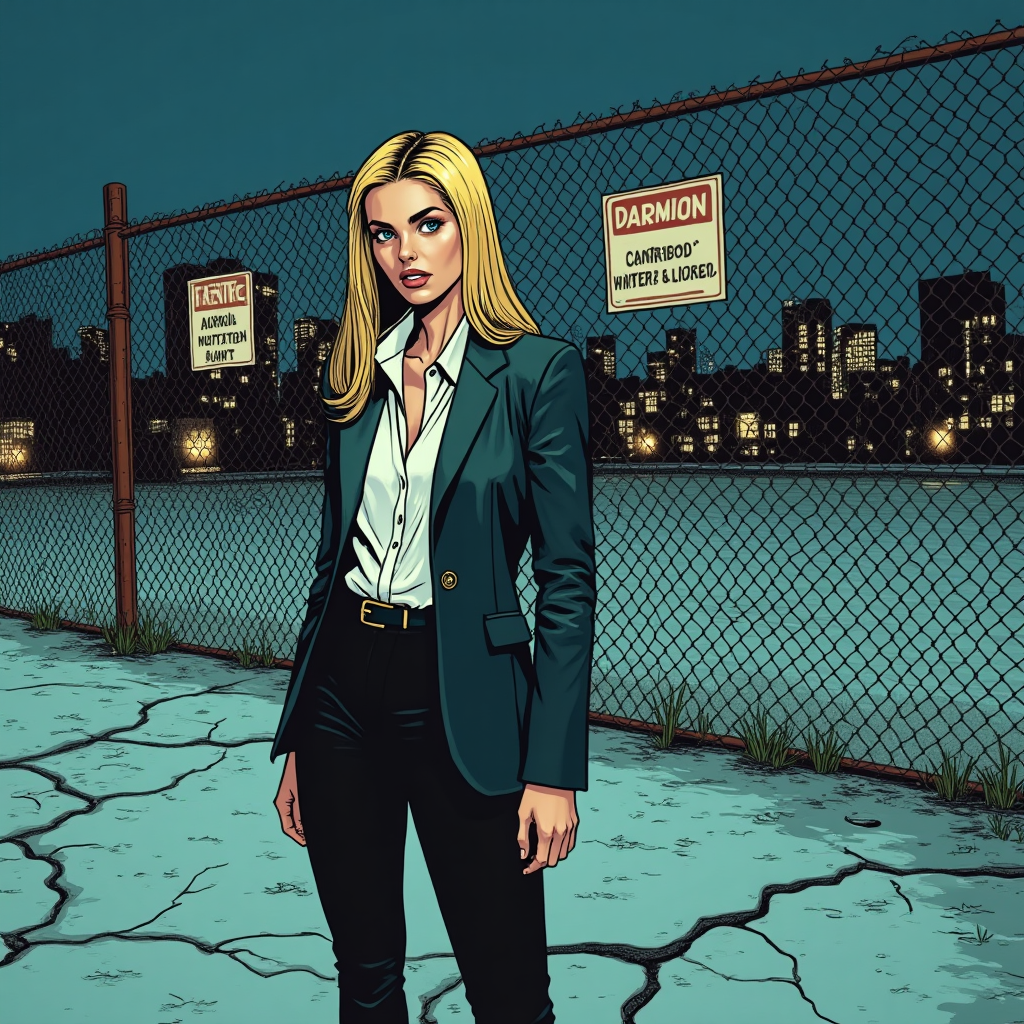
She is twenty-nine years old now, blonde-haired and pale-skinned, with a smile that arrives quickly and departs slowly — the smile of someone who has decided, at some fundamental level, that friction is a design flaw. Her hair is cut in a clean sweep below her jaw. She dresses in structured blazers and winter-white slacks, and she has the particular posture of someone who was told, early and often, that confidence is visible before a word is spoken.
She is the founder and CEO of ClearPath Genomic Solutions, headquartered in a glass building on Route 1 that her first investors called “bold” and her second-round investors called “efficiently impressive.” ClearPath sells AI-driven genomic compliance software — the kind that helps pharmaceutical companies navigate FDA regulatory pathways faster, with less friction, at lower cost. It is, in the language of her pitch deck, the intelligence layer between innovation and approval.
She has never publicly described the other layer. The one underneath.
Corinna believes, with a sincerity that would surprise people who know only the smile, that the regulatory apparatus surrounding pharmaceutical development is broken — not bent, not imperfect, but structurally, catastrophically broken. She watched her father’s company lose a contract because a competitor’s documentation was faster, not better. She watched her mother spend a career explaining to teenagers how molecules work, only to see those same teenagers enter a healthcare system where molecules are approved by committees that read abstracts, not data. She believes the system mistakes paperwork for safety, and she decided, somewhere around her second year at Rutgers Business School, that someone had to be willing to break the form to fix the function.
ClearPath’s compliance is manufactured. She built it that way on purpose. She is not ashamed. She is impatient.
Part Two: The Threat That Arrives in a Data Packet
For two years before the incident at Whitmore Biomedical, Corinna has been watching Dr. Farida Moussavi the way a chess player watches a piece that hasn’t moved yet.
She first encountered Farida’s work in a preprint posted through the Whitmore Institute — long-read RNA sequencing applied to hepatocellular carcinoma, haplotype phasing mapped to allele-specific expression patterns. Corinna read it in the parking lot of the Menlo Park Mall on a Tuesday evening, sitting in her car with a half-eaten roti from the Little India corridor on Oak Tree Road growing cold in the passenger seat, and felt the specific chill of someone watching a wall crack.
Because Farida’s methodology is not just good science. It is clarifying science. If long-read RNA sequencing becomes the standard for oncology trials — if every pharmaceutical submission must now account for haplotype-level specificity — then the statistical smoothing that ClearPath performs downstream becomes visible. Not wrong in an abstract sense. Wrong in a documented, traceable, prosecutable sense.
Corinna does not panic. She strategizes.
She hires a data consultant — a quiet man who works out of a converted warehouse near Bound Brook — and pays him to penetrate Whitmore Biomedical’s network and corrupt Farida’s sequencing files. Not delete them. Corrupt them, subtly, the way bad data poisons a well without anyone noticing the taste has changed. She wants Farida’s research to stall, not to disappear. Disappearances invite questions. Stalls just look like science being difficult.
The operation is set for April 16th. She does not go herself. She sends two people she trusts precisely because she has paid them to be trustworthy.
At 11:53 p.m., her phone rings. One operative is unconscious in the Whitmore parking lot. The other is driving south on Amboy Avenue and will not answer follow-up calls. The portable drive containing what should have been Farida’s corrupted data sits, unretrieved, in the glow of an Edison building blazing with impossible interior light.
Corinna sits in her home office on Terhune Road and is quiet for a very long time.
Then she opens a new document and begins to write.
Part Three: What the Explosion Left Behind
The incident at Whitmore Biomedical is, officially, a minor electrical event and a related security breach. The Edison Police Department files a report. The Whitmore Institute’s insurers process a claim for broken windows. No one publishes anything about a woman who bent light through wiring and glass with her hands.
But Corinna has resources, and one of those resources is a former NJ Transit electromagnetic engineer named Dekel who now consults for defense-adjacent firms. Dekel reviews security footage from three different cameras around the Whitmore parking lot and tells her, in his careful and unhurried way, that what they are looking at is a coherent photonic discharge event — structured light, modulated at the biochemical frequency range, generated by a human body.
“That’s not possible,” Corinna says.
“The footage disagrees,” Dekel says.
She knows about the Nixon Nitration Works. Everyone in Edison who has done their homework knows about it — the 1924 explosion that killed twenty people and left the soil near what is now Plainfield Avenue laced with a century of chemical residue: benzene, nitrocellulose derivatives, industrial volatiles that remediation efforts addressed but never fully erased. She knows that a subsurface ignition event occurred on April 16th, blue-white, brief, centered on the parking lot behind Whitmore. She knows that Dr. Farida Moussavi was in her office at the time and was not injured.
And she knows, because she has now watched the footage seventeen times, that Farida walked away from that parking lot with light in her hands.
The discovery does not frighten Corinna. It reorganizes her.
She has spent two years trying to neutralize Farida Moussavi’s research. She now understands that she must neutralize Farida Moussavi herself. Not permanently — Corinna is not that person, not yet, possibly not ever. But contained. Discredited. Made to seem, to the world that matters, like someone whose judgment cannot be trusted.
She has a new pitch to write. She calls it Project Nullveil.
Part Four: Building the Architecture of Darkness
ClearPath’s most incriminating assets are dissolved into three shell entities within a week of the Whitmore incident. The operation relocates to a leased facility in South Plainfield — a long, flat building near the freight rail line that looks like a packaging warehouse and contains, in its interior, something closer to a laboratory.
Corinna hires a biophysicist named Dr. Sable from a university she will not name, who has spent a decade studying biophotonic suppression — the mechanisms by which cells can be made to stop emitting the ultra-weak light that living tissue naturally produces. She hires Dekel full-time. She brings in a former FDA regulatory attorney who knows exactly which language in which subsection of which filing makes a dangerous therapy look like a cautious one. She is not building a villain’s lair. She is building a compliance architecture for a problem that has become, against her will, physical.
She also, in her quieter hours, drives.
She drives the Route 1 corridor at night, past the Korean grocery on Amboy Avenue, past Metropark station where she once caught the train home from a conference and sat beside a woman reading a Farsi novel and thought nothing of it. She drives to the Basilone Memorial Bridge over the Raritan and parks and watches the water. She drives to Oak Tree Road and buys samosas at a restaurant whose owner knows her name and asks no questions. She is a woman made of this place — Edison’s commerce and density and layered immigrant ambition — and she cannot entirely separate her fury at Farida from the fact that they are, in some register, the same kind of person.
Both of them are certain they are right. Both of them believe the system has failed. The difference, Corinna tells herself at the Raritan’s edge, is that she is willing to admit the cost of progress. Farida’s precision is beautiful and it is, ultimately, a form of privilege — the luxury of someone who has not had to choose between the right answer and the only answer.
She becomes, in those night drives, something more than a CEO with a legal problem.
She becomes Corinna Vane, the shape of what the county produces when it is tired of being smooth-talked and papered over. She does not give herself a cape name. She does not need one. The work is the name.
Part Five: First Move in the Dark
On a Thursday evening in early May, Filament appears above the Raritan at dusk, reading the river’s biophotonic signature — Corinna has been told this by Dekel, who is now tracking Farida’s movements with the same quiet diligence he once applied to transit infrastructure. The old woman is visible from the Donald and Morris Goodkind Bridges if you have the right optical equipment, a shimmer of indigo and gold above the dark water.
Corinna is in the South Plainfield facility when the call comes in. She stands at the window and looks north, toward Edison, toward the glow of the Menlo Park Mall against the sky, toward the place where she grew up learning that the world was a series of problems to be solved by whoever had the steadiest hand.
Dr. Sable has completed the first phase of the Nullveil prototype — a photonic suppression emitter, compact, deployable, capable of disrupting coherent biophotonic output within a thirty-meter radius. It is not a weapon. Corinna has been very deliberate about this framing. It is a countermeasure. It is, in the language she has always preferred, friction reduction.
She authorizes the second phase.
In the Whitmore Biomedical parking lot — the same scorch-marked asphalt where the column of blue fire rewrote the laws of what an old woman could be — a maintenance crew that is not a maintenance crew installs three small devices in the light fixtures at the lot’s perimeter. They look like municipal sensors. They are registered, with a false identifier, as air quality monitors. The documentation is flawless.
It always is.
Corinna drives home along Terhune Road as the sun drops behind the township. She passes J.P. Stevens High School, where her mother once stood at a whiteboard and explained that molecules do not care about intent — they follow the rules they were given. She passes the Dismal Swamp access road, the dark cedar scrub just visible beyond the chain-link. She passes the old neighborhood, the split-level Colonial, the practical house that made her.
She thinks about Farida Moussavi standing at her window on April 16th with a printout in her hand, watching the parking lot fill with blue-white fire, and absorbing it — all of it, all that buried history, all that century of chemical catastrophe — and becoming something the world did not expect.
She thinks: I will not underestimate you again.
She thinks: But you have not yet met what Edison made of me.
She pulls into her driveway. She opens her laptop. She has work to do.
The light from the screen is the only kind she needs.