

Darkreach of the Narrows: Origin of the Grid Sovereign
Part One: The Man Who Read the Margins
Farid Merheb has never believed in waste. Not in capital, not in time, and certainly not in potential.
He came to Newark Bay at twenty-six — a structural engineer from Beirut with a graduate degree from the American University and a hunger for the kind of scale that the old country’s reconstruction economy couldn’t offer fast enough. New Jersey’s port corridor in the late 1990s was a feast of exactly that kind of scale: massive, undervalued, poorly administered, and sitting atop the second-largest container port complex on the Eastern Seaboard. He took a position with a maritime logistics firm operating out of Port Newark’s Marsh Street terminal and spent his first decade learning everything the industry didn’t write down. How containers got lost. How insurance valuations worked against distressed sites. How a regulatory delay, engineered with precision, could swing the value of an industrial parcel by millions in either direction.
He was not cruel about it. That is what he would tell you, and what he believes. He was efficient. The port economy had always run on margins — thin ones, brutal ones, the kind that ground down dockworkers and independent operators alike. Merheb simply learned to operate in the margins between the margins. The gray zones, he called them. Every port city has them. Elizabeth’s gray zones were unusually rich.
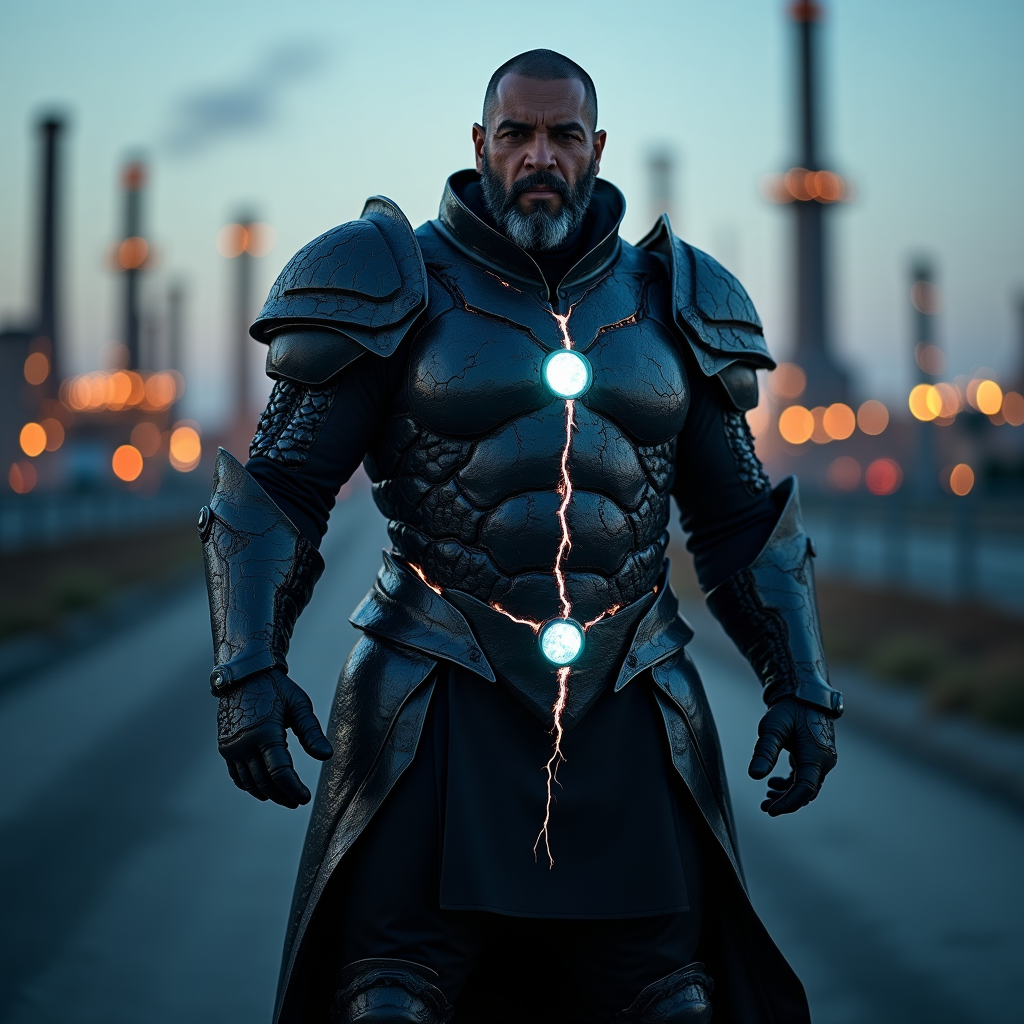
By his late forties, Farid Merheb operated under the trade name Darkreach of the Narrows — a handle first given to him by a Bayonne freight broker who’d watched Merheb quietly acquire three distressed petroleum distribution sites along the Arthur Kill through a chain of shell LLCs before anyone noticed the pattern. The “Narrows” referred to the Kill Van Kull, the tidal strait between Staten Island and Bayonne that forms the northern edge of the port’s operational geography. The “Darkreach” referred, less charitably, to the length of his patience. Merheb had adopted the name without embarrassment. It was accurate.
At fifty-eight, he is a heavy man with an iron-gray beard, close-cropped, and the deliberate physical stillness of someone who has not needed to raise his voice in two decades. He drives himself. He carries his own files. He does not have an entourage. His power has always been informational — the accumulation of technical knowledge about the infrastructure systems that other people regard as background noise. Power grids, water tables, load-bearing soil surveys, bridge resonance data. The machinery beneath the machinery of a port city. He has spent thirty years reading those systems the way other men read financial statements.
He had read Elizabeth’s systems thoroughly. He believed he understood them completely.
He was wrong about the last part. But he didn’t know that yet.
Part Two: The Architecture of Leverage
The Bayway corridor — Elizabeth’s industrial spine running along the southern bend of the Elizabeth River toward the refinery complex — had been Merheb’s target for three years before the March excavation event. He had assembled the parcel acquisition strategy under the Hargrove Terminal Partners umbrella with characteristic patience: twelve separate LLCs, four different attorneys, a logistics rationale plausible enough to survive initial county scrutiny. The play was clean, theoretically. Trigger a subsidence event. Depress values along the waterfront corridor. Acquire distressed parcels before the county’s remediation designation could freeze the market. He had run a version of this in three other port cities. It worked because no one understood the geology well enough to move faster than the bureaucracy.
The March 3rd event was not supposed to produce Catalina Reyes.
Merheb was in his car on the Route 1/9 service road when the Elizabeth River surged from below — watching on a tablet fed by the contractor’s sensors, clinical and composed, marking the subsidence points against his acquisition map. Then the sensors went dark. Not all at once — methodically, one cluster after another, as if something were walking the grid and switching off lights behind itself. By the time he understood what had happened at the riverbank, the clay layers had already resealed. His engineers called it an impossible self-correcting event. He called his attorneys.
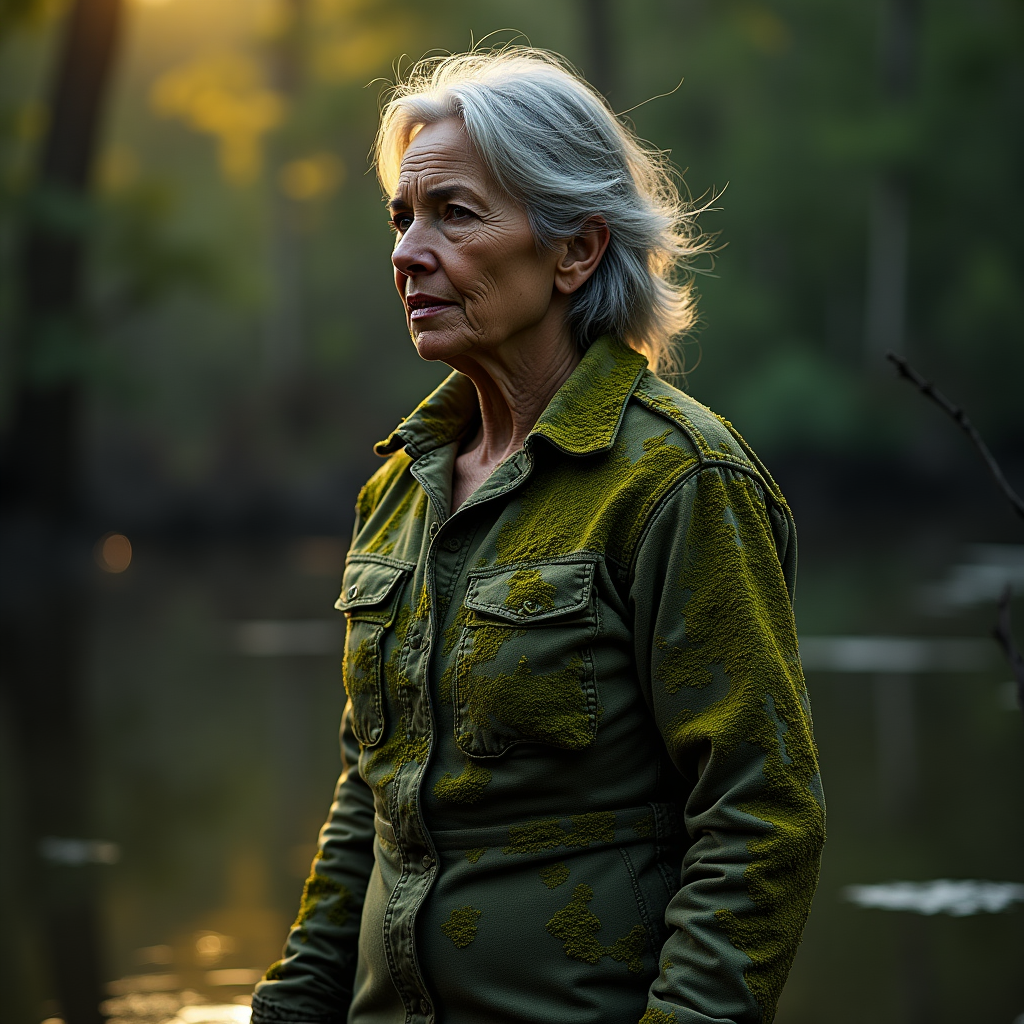
He read Catalina’s county reports that night. All forty years of them. He understood, with the discomfort of a man encountering a peer for the first time, that she had always known exactly what was down there. More troubling: she had apparently become it.
A lesser man would have retreated. Merheb recalibrated.
If the ground was no longer his instrument, he would use the grid instead.
The Bayway corridor runs beneath one of the densest power distribution networks in Union County — a legacy of the refinery and chemical plant infrastructure that has fed massive transformer nodes into the municipal grid for decades. Merheb knew the grid the way he knew everything else: not through official documentation but through the gaps in it. He had spent the better part of the 2010s acquiring rights-of-way adjacent to three of the corridor’s primary distribution substations as part of a speculative utility-access play. The substations serviced the Elizabeth River crossing infrastructure — the fixed spans and their steel supporting pilings, the signal systems along Routes 1 and 9, the port authority’s access lighting across the southern terminal approaches. He owned land next to equipment that nobody thought of as a weapon.
He hired a specialist — a former utility systems analyst who had burned his regulatory career on an insider information charge and now worked for whoever paid the correct rate. The man’s name was not important. What was important was that he understood how to interface with a distribution node’s control architecture without tripping the utility company’s intrusion protocols. Together, over six weeks, they built something Merheb thought of as a lever. An electrical lever, positioned along the Bayway corridor, capable of yanking kilowatts from the transformer banks servicing the river crossings and redirecting them at will through the steel spans and their pilings.
He tested it on a Tuesday night in late March, at 2:14 a.m., when residential load was minimal and the port’s overnight shift was lightest. The Elizabeth River’s Route 1/9 bridge span sang with current for eleven seconds. Merheb watched the arc signatures trace the steel rigging from his car on the Bayway approach. The lights across the southern Elizabeth grid flickered. No alarms. No injuries. The utility company logged it as a transient load event.
He felt something he had not felt in years. Not satisfaction — he was always satisfied. Something older. The specific pleasure of a system obeying you precisely.
He did not know, standing there in the dark with the bridge singing above the river, that the event had been felt three miles away by a woman pressing her hands flat against her bedroom floor.
Part Three: The Frequency Below the Frequency
What happened to Farid Merheb did not happen all at once.
He would describe it, later, in the private accounting he keeps in a locked field notebook, as a progressive sensitization — as if the electrical systems he had been manipulating were gradually extending a connection in the opposite direction. He had been tapping the grid; the grid had begun tapping him back.
It started as headaches, precise and architectural, arriving whenever he stood near a high-voltage distribution node. Then as a kind of spatial awareness he couldn’t account for: standing on the Bayway approach road, he could feel the load distribution across the corridor’s transformer network the way you feel traffic patterns through a steering wheel. The nodes vibrated at slightly different frequencies depending on their current draw. He began to perceive those frequencies as a map — a living diagram of the city’s electrical nervous system, rendered in pressure behind his eyes.
The aquifer sensitivity came separately, and stranger. He had been reviewing soil boring data from the Hargrove site — cross-referencing Catalina’s 2019 reports against his own engineers’ findings — when he pressed his hand flat against a soil core sample left on his car hood and felt the water inside it. Not the dampness of the clay. The pressure. The aquifer pressure, miles down, moving through the saturated soil layers beneath Elizabeth’s streets like blood through a system he had somehow become part of. The saturated aquifer layers beneath the densely packed streets of Elizabethport and the Bayway corridor were not inert, not passive — they were a pressurized system, constrained by clay boundaries and geological architecture, and he could now feel every point where that pressure sought release.
He understood immediately that this was the same mechanism Catalina had used. He had not become what she became. He had become the inversion of it. Where she stabilized and sealed, he could destabilize and breach. Where she reinforced the clay boundaries, he could apply directed pressure to fracture them — forcing groundwater upward through the bedrock’s existing fault lines, destabilizing the foundations above, mapping the city’s structural vulnerabilities in real time through the soles of his feet.
The third ability arrived last, and it was the one that frightened even him.
He was standing on the Bayway Bridge on a gray April morning, looking down at the Elizabeth River, when he felt the span itself — not as a physical object but as a frequency. The bridge had a resonant frequency, like all structures, the specific pitch at which its mass and geometry and material composition would oscillate if driven at the correct input. Engineers account for this. The Tacoma Narrows collapse, 1940 — he had studied it in his first year of graduate school. He could feel the Bayway Bridge’s resonant frequency the way he could feel the aquifer pressure: as information, as leverage, as a waiting option. He had already calculated what an overloaded crossing, driven at the correct harmonic input through the grid’s electrical infrastructure, could become.
He did not use it. Not yet. He filed it the way he filed everything — as a future instrument, patient and precise.
He drove home along Routes 1 and 9, through the grid of Elizabeth’s streets, past the row houses and the bodegas and the NJ Transit bus stops and the school yards, and told himself that 140,000 people were an abstraction. That cities were systems. That systems could be restructured without sentiment.
He told himself this with more effort than usual.
Part Four: The Accounting He Keeps
The field notebook contains the only honest version of Farid Merheb.
He writes in it in Arabic — a private courtesy to the part of himself that still thinks in his first language, that still measures distance in the particular loneliness of someone who built everything he has in a country that was not his and will never fully be his. He does not write it for an audience. He writes it because a man who manipulates systems for a living needs at least one system he cannot lie to.
The March event cost him three parcels he had under soft contract. Catalina’s geodetic markers, filed with the county two hours before he knew she had filed anything, triggered the federal wetlands interference designation on the Bayway buffer zone parcels. His attorneys are working the appeal. It will take eighteen months. He has eighteen months. He is accustomed to longer timelines.
What he cannot account for, in the notebook, is the whale.
A dead humpback was found floating in Newark Bay on April 10th, bobbing in the gray water of the port’s most heavily trafficked corridor — the tri-state area’s busiest port, container ships and tanker escorts and the constant low percussion of the maritime economy passing within yards of a carcass that nobody had anticipated and nobody could explain quickly. The port authority diverted three maintenance vessels to haul it to shore. The news coverage was brief, slightly surreal, the way Newark Bay news always is — matter-of-fact about something that should not be matter-of-fact. Dead whale in the harbor. Authorities working. Moving on.
Merheb read about it in the morning and sat with his coffee gone cold for twenty minutes.
He is not, he writes in the notebook, a man who believes in signs. He is an engineer. He believes in systems and load tolerances and the mathematics of structural failure. But the whale in the harbor — the largest animal that could conceivably enter that body of water, dead and adrift in the industrial corridor he has spent three years learning to manipulate — sits in his chest in a way he cannot engineer away. As if the harbor itself were producing evidence. As if the bay were filing its own report.
He closes the notebook. He drives to the Bayway approach road and stands in the gray April light and feels the grid humming above him and the aquifer pressing below him and the bridge’s resonant frequency waiting in the architecture of the span like a sentence with no period yet, and he tells himself what he always tells himself: that the city is worth more restructured than preserved. That capital moves toward efficiency. That what he does is inevitable — that if not him, someone else, less careful, less technically precise.
He believes this. He has to believe this. It is the load-bearing wall of everything he has built.
But the notebook knows he is pressing against it harder than he used to.
Part Five: The Corridor Declares Itself
He moves on April 14th.
Not with drama — with logistics. A specialist contractor deploying directional electromagnetic pulse equipment under the cover of infrastructure diagnostics, positioned along the Bayway refinery perimeter. The objective is surgical: destabilize the sediment lock Catalina established in March, trigger a secondary subsidence event attributable to pre-existing infrastructure failure, block the county’s emergency designation window. He has the legal architecture ready. He has the acquisition documents staged. He has, in the steel spans above the Elizabeth River, a contingency — the resonant frequency option — that he hopes he will not need to use.
He has been to the bridge three times in the past week, standing on the span at odd hours, feeling the frequency in the soles of his feet, feeling the grid in the air around him. Each time, he has done the calculation and closed it. He is not a man who destroys carelessly.
But he has begun to understand that Catalina Reyes will not stop. And the part of him that has always known how to read opposition has started to read her correctly: she will file faster than he acquires. She will stabilize faster than he destabilizes. She will know the ground beneath this city better than he will ever know it, because she has been part of it since March and he is still arriving at it from outside. She is the geological fact. He is the engineering response.
On the embankment, watching his contractors deploy their equipment in the last of the April light, he does not feel the approaching harmonic at first. It comes up through the refinery buffer zone’s clay layers — the same layers he has been reading for months — and only registers when the contractor’s first pulse-emission unit goes suddenly silent.
Then the second.
He turns around.
She comes out of the cordgrass the way the river does — without announcement, without drama, with the patient authority of something that has been moving in this direction for a long time. The magnetic field she carries ahead of her has already eaten his contractors’ equipment. He can feel it against the grid-sensitivity in his own body — a counterfrequency, precise and geological, the way one subsidence wave can cancel another if timed correctly.
He does not run. He has never run.
“You’re the surveyor,” he says. “I’ve read your reports.”
“Then you already know,” she says, “what the clay layer under this buffer zone can do if someone disturbs it incorrectly.”
The ground moves. He feels it in his feet before he sees it in the machinery: the fill beneath the contractor’s equipment redistributing along the shear plane, the heavy units tilting, the pulse emitters going dark one by one. He feels his aquifer sensitivity flare — she is raising the water table beneath the buffer zone, four inches of controlled surge, a federal wetlands trigger he cannot outmaneuver tonight.
He looks at the bridge. He does the calculation.
He closes it.
Not out of mercy — not exactly. Out of the specific recognition that a man who destroys the instrument of his own leverage has miscalculated badly. The Bayway Bridge singing itself to pieces would not give him the waterfront parcels. It would give him a federal investigation and a collapsed grid and 140,000 people in the dark, and the noise of that would reach every court in the state. He is patient. Patience means knowing when a move costs more than it returns.
He watches his contractors leave. He remains on the embankment another three minutes — feeling the grid above him, the aquifer below him, the bridge’s frequency waiting in the structure of the span — and then he walks to his car.
He drives south along the Bayway, past the refinery stacks and the chemical plant perimeters and the transformer nodes he knows better than their registered owners, and he feels the corridor the way he has always felt it: as a system with exploitable tolerances. She has closed some of them tonight. She has not closed all of them. There are parcels in Elizabethport he hasn’t moved on yet. There are grid nodes south of the Route 1/9 interchange that she hasn’t indexed. There are resonant frequencies in other structures — the old rail bridge over the southern Elizabeth River bend, the industrial cooling towers along the refinery perimeter — that he has not yet calculated.
He is a patient man.
In the notebook, later that night, he writes one line in Arabic that he does not translate even to himself:
The city is speaking. I am not certain it is speaking to me.
He closes it. He sets his alarm for 5 a.m. He begins, again, to wait.