Part One: The Cold Open
Hossam Darkreine had one item on his agenda for April 23rd: attend the Historic Preservation Commission meeting at 7:30, plant three pieces of procedural paperwork on the docket, and ensure that the Rahway River moved precisely as the Squier Clan required it to move. He had been planning this for eleven months. He had a laminated timeline.
The sewer main under Seton Hall’s lower quad had cracked three days ago, exactly as he had arranged.
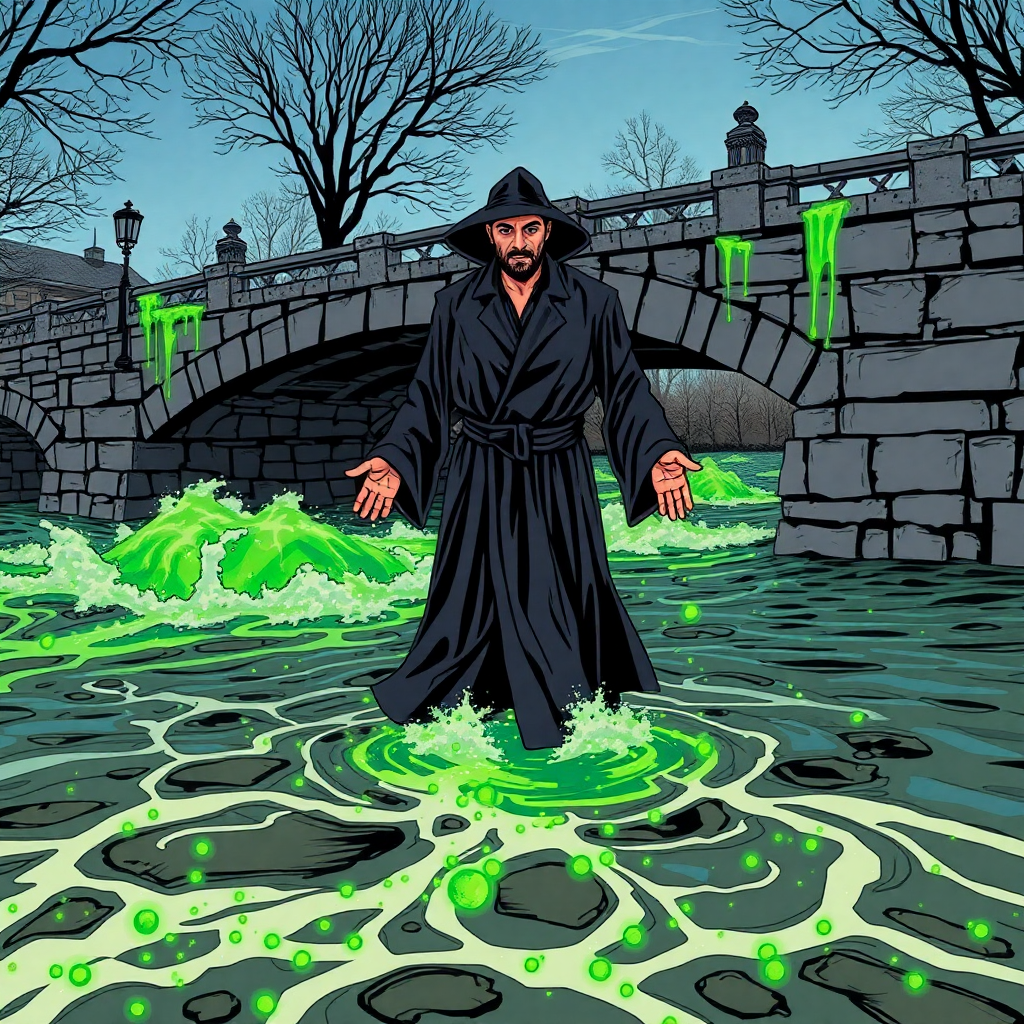
Standing shin-deep in the Rahway at the South Orange Avenue bridge, Darkreine pressed both palms to the current and felt the pathogen bloom the way a sommelier detects a bad vintage — a distinct, copper-and-sulfur sharpness blooming upstream, right where it needed to be. The maintenance crew had filed their report. Sealed and neutralized, it said. Darkreine smiled. They had sealed it. He had decidedly not neutralized it. The Rahway Clan’s old residential quarter along Scotland Road was about to have a very bad spring, and the Squier Clan was about to have a very good one.
He adjusted his collar and went to file his paperwork.
Part Two: The Investigation
The filing went smoothly. The Commission clerk accepted his three motions without comment. Darkreine was halfway through a congratulatory cup of coffee in the Village Hall lobby when his palms began to itch — the particular itch that meant someone else was touching the river.
He went back to the water. The bloom he had cultivated so carefully near the Scotland Road intake was dissipating. Not naturally — it was being stripped, peeled apart with the surgical confidence of someone who knew exactly what they were pulling out and why. He pressed his hands to the current again and felt the counter-signature: clean, cold, and infuriatingly competent.
He followed the trace upstream along Montrose Avenue, past the old Kelly Carriage House, where the copper smell thinned to almost nothing. A groundskeeper at Seton Hall told him, unprompted, that the storm drains had been “acting strange all week.” Darkreine did not find this comforting.
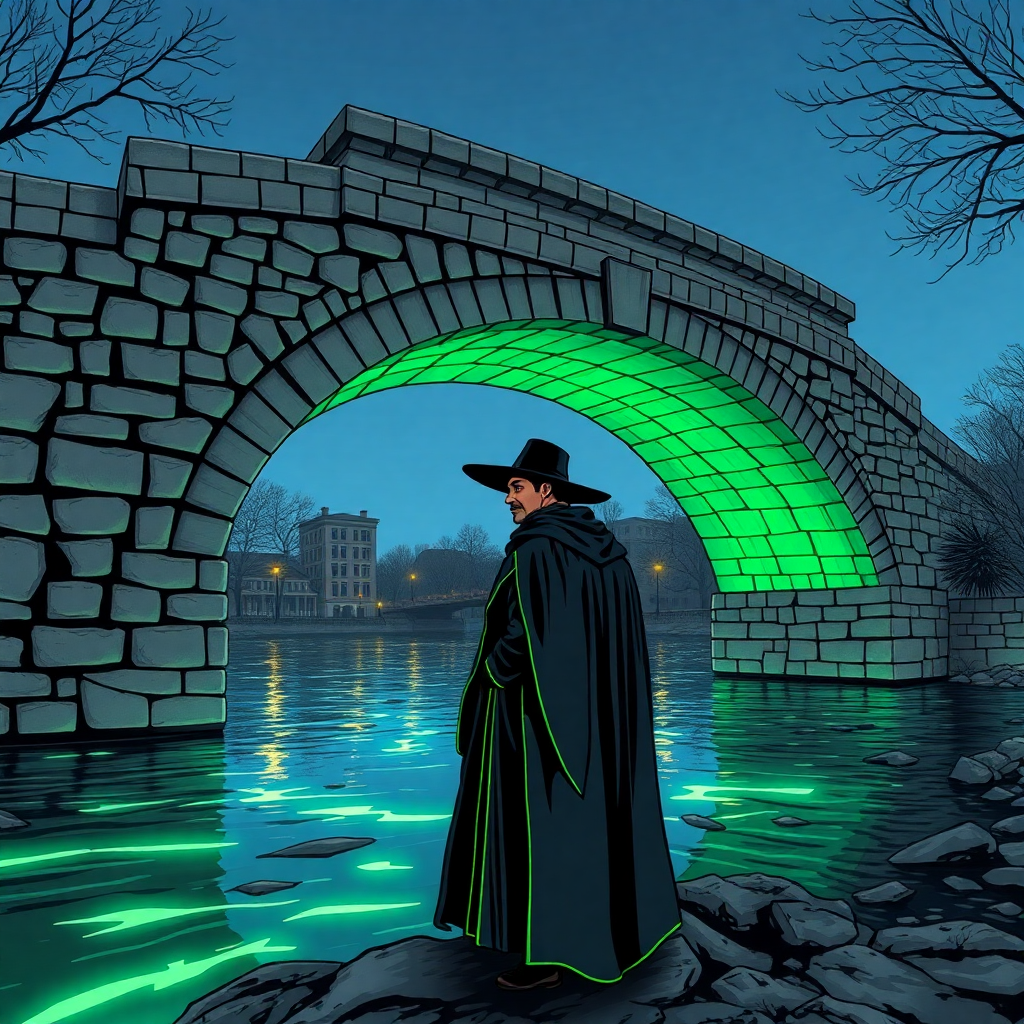
At Mountain Station, he found boot prints in the riverbank mud — garden clogs, size seven — and a scent in the water like cold iron meeting warm stone. He had not seen Margaret Havenfall in four years. He had hoped to go at least four more.
He went back to the bridge and worked faster.
Part Three: The Pivot
The problem with Havenfall was that she was not supposed to be here. She was supposed to be dropping off a casserole.
Darkreine stood in the current and reassessed. The Rahway Clan had controlled the Scotland Road quarter since 1802, when that meddling ancestor of hers rerouted the western fork and killed the Squier mills downstream. Every generation since, the Squiers had tried to correct the balance. The wells in 1847. The drainage disputes of 1902. And now this: a cracked sewer main, a cultivated bloom, and eleven months of laminated planning.
He could feel her in the water now — not approaching, but already there, upstream, her hands in the current, reading his work.
“Oh,” said Darkreine quietly, to no one in particular. “She knows.”
He began concentrating what remained of the bloom toward the intake with both hands, and with considerable urgency.
Part Four: The Reckoning
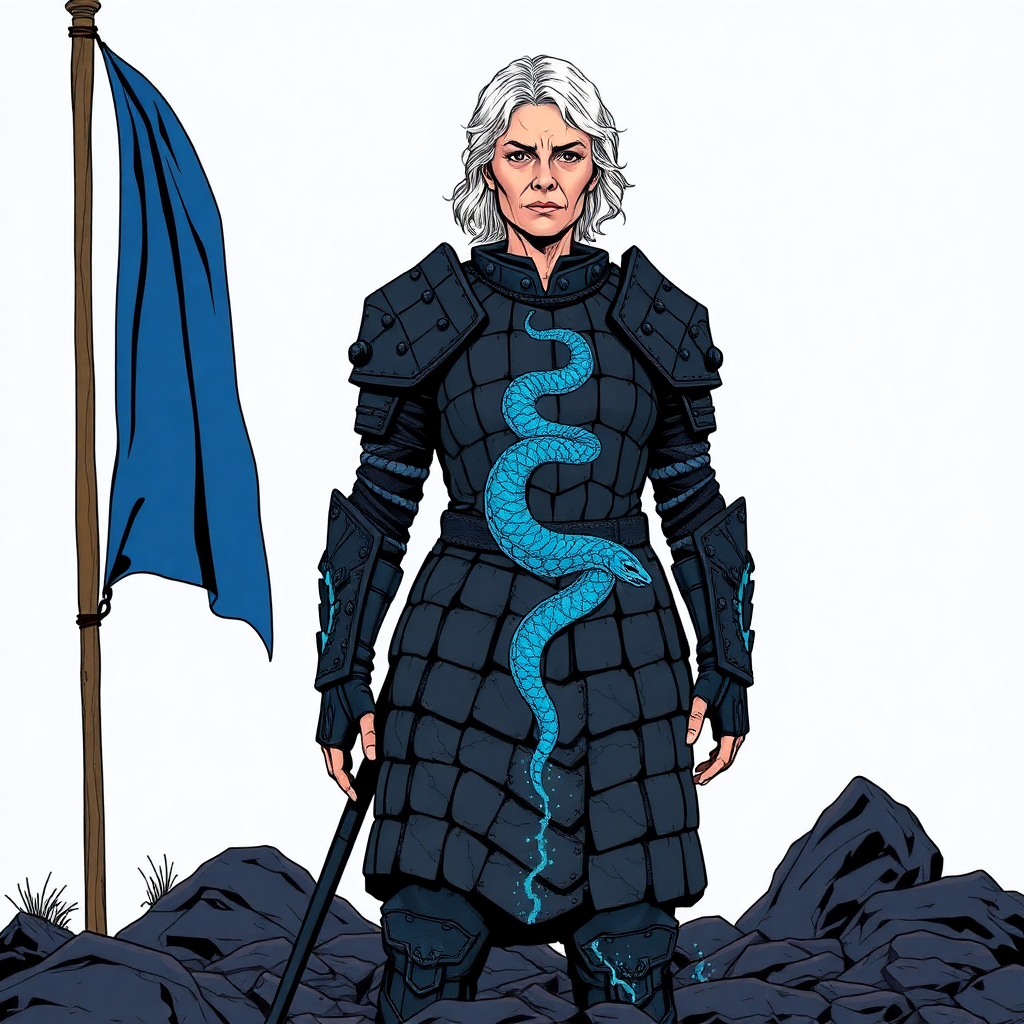
She appeared on the bank in garden clogs with her hands glowing river-blue, which Darkreine found aesthetically inconsistent with the seriousness of the situation.
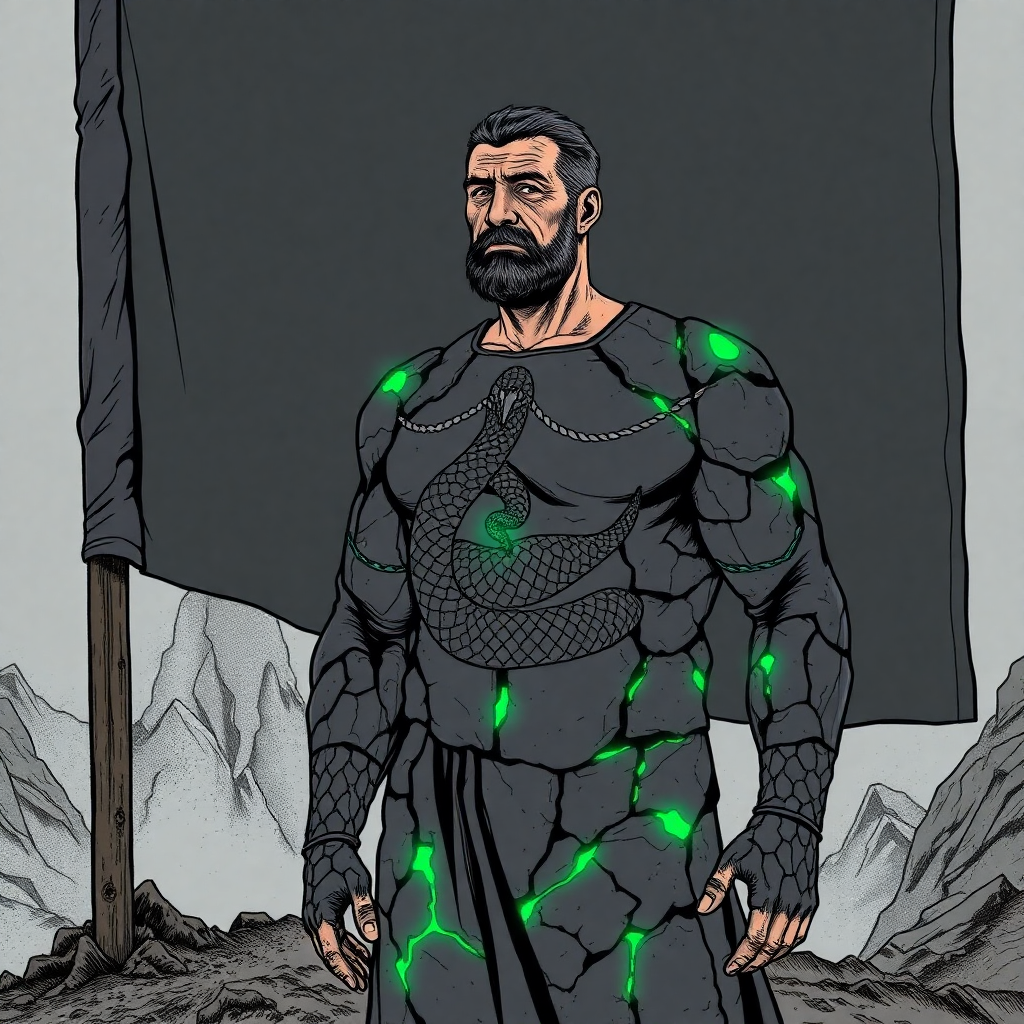
He had his visor up — the blackened plate of his armor reeked of chlorine and old iron, and the helmet fogged if he closed it near running water. This was a design flaw he had never adequately resolved. She caught him at his least imposing.
“Mr. Darkreine,” Margaret Havenfall said.
“Mrs. Havenfall. This is a sanitation matter.”
“It’s a sabotage matter.”
He had begun to formulate a procedurally sound rebuttal when the river arrived.
She didn’t push it dramatically. That was the worst part. She simply redirected it with the calm competence of a woman who had rescheduled a Village Council meeting to be here, and the current peeled around him like water around a bad idea, stripping the cultivated bloom apart in three seconds flat and carrying it downstream into the treatment intake, where it would do precisely nothing to anyone. Darkreine sat down on a gravel bar in four inches of perfectly clear water and remained there, his laminated timeline dissolving in his breast pocket.
He rose. He shook off his pauldrons. He summoned every shred of Squier dignity available to a man sitting in a shallow river in ceremonial plate armor on a Thursday evening.
“This isn’t finished,” he said.
“It never is,” Margaret agreed. “Come to the Village Council session Monday. You can file a motion.”
He waded to shore. He did not look back. Behind him, the Rahway ran the right direction, and somewhere upstream a family of ducks resumed their correct southward heading.
Part Five: The Resolution
The sewer main was patched by Thursday. The Scotland Road intake tested clean. The Historic Preservation Commission voted four to two to landmark the Eugene V. Kelly Carriage House, which was entirely irrelevant to Darkreine’s plans but felt, from the outside, like a loss anyway.
He sat in his office on South Orange Avenue, dried out, and began drafting a new motion for the Strategic Partnership Committee. The Squiers had been recalibrating for two centuries. Havenfall had won the river. She had not won the drainage board, the infrastructure subcommittee, or the spring maintenance schedule for fiscal year 2027.
The laminated timeline was gone. He had a second one.
Sources
- Meet the City’s Most In-Demand Mohel
- Investigating the analytical robustness of the social and behavioural sciences
- Athlete of the Week – Nutley’s DeJianne has Raiders in first place
- Belleville boys volleyball starts 6-0, earns state ranking
- In bloom: NY and NJ cherry blossoms are objectively the best in the nation
- Nutley’s DiPiano is named NJWCA State Coach of the Year
- South Orange, New Jersey — Wikipedia
- South Orange Official Events Calendar
- U.S. Census Bureau, American Community Survey 5-Year Estimates (2022)