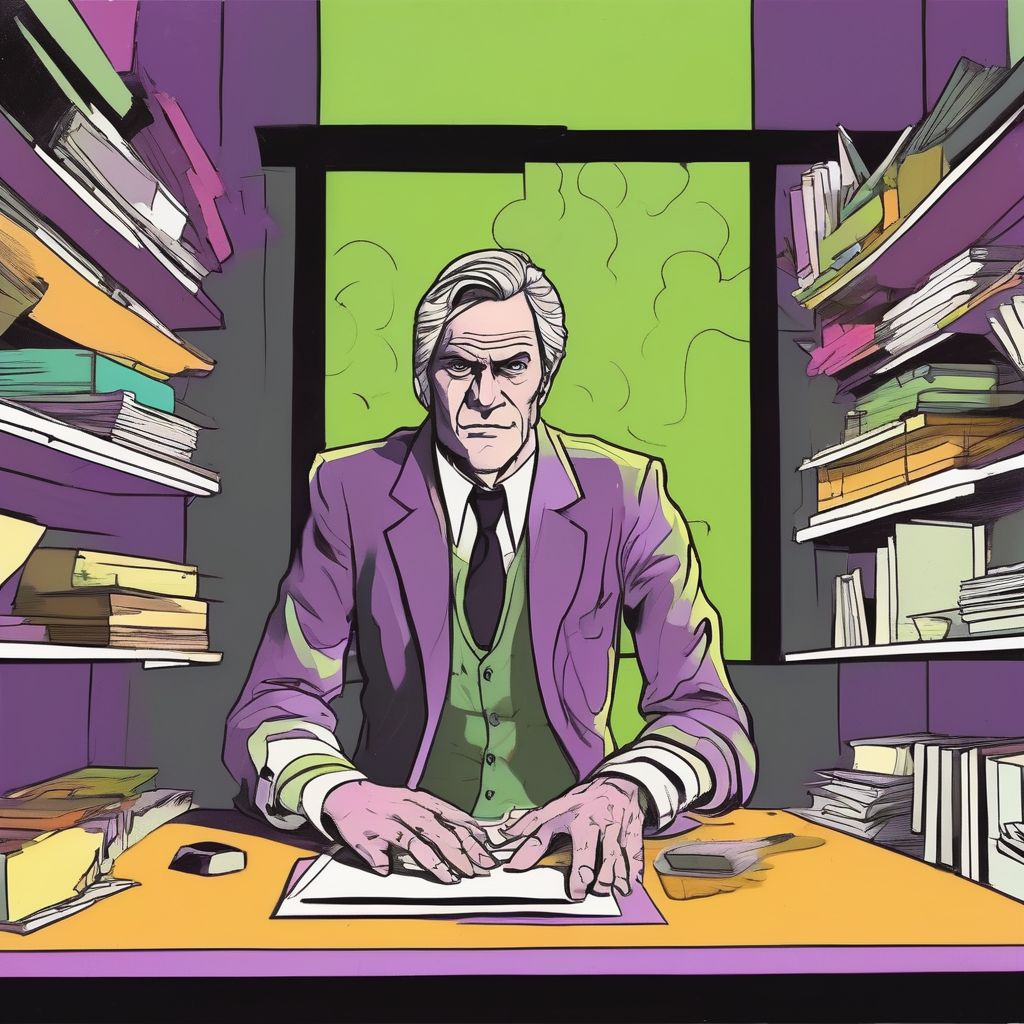


DESMOND FARRELL: THE ARCHITECT OF RUIN
Part One: The Ground He Stood On
Voorhees, New Jersey does not look like a place that makes monsters.
It looks like a place that makes orthodontists, and soccer coaches, and people who drive Volvo SUVs to the Echelon Mall on a Sunday afternoon. It looks like cul-de-sacs with basketball hoops and well-maintained azaleas. It looks like the kind of suburb that got everything right — good schools, reasonable taxes, a Whole Foods off Route 73 that opened in 2019 and felt, to its residents, like a small civic triumph.
Desmond Farrell grew up on Cropwell Road in a split-level colonial that his father, Raymond Farrell, bought in 1974 for forty-two thousand dollars. Raymond worked for the Camden County Roads Authority for thirty-one years. He mowed his lawn on Saturdays. He drove a Buick. He never asked the town for anything, and the town never asked him for anything either, and that was the arrangement — the Voorhees compact, unspoken but absolute.
Desmond understood the compact early. He understood it the way a kid understands a language by living inside it before he can name its grammar. The town gave you stability. You gave the town your quiet compliance. You did not make a fuss. You did not demand.
He broke the compact when he was thirty-four, and the town made him pay for it.
The Farrell-Crane Development Group was not born as a villain’s organization. It was born in a conference room at the Crowne Plaza in Cherry Hill, from a handshake between Desmond Farrell — by then a Camden County commercial real estate broker with a reputation for closing the difficult deals — and one Gordon Crane, a Philadelphia investor with deep pockets and shallow patience. Their pitch was honest, even noble by the brutal standards of development: take the dead skin of suburban sprawl — the dying strip malls, the abandoned light-industrial parcels on the western edge of Voorhees Township, the hollowed-out anchor pads left behind by department stores that had gone the way of everything — and rebuild. Not gentrify. Rebuild. Mixed-use density. Pedestrian corridors. Green space ratios mandated by covenant, not by plea.
Desmond had a vision. That was the problem. Vision, in this county, was a liability.
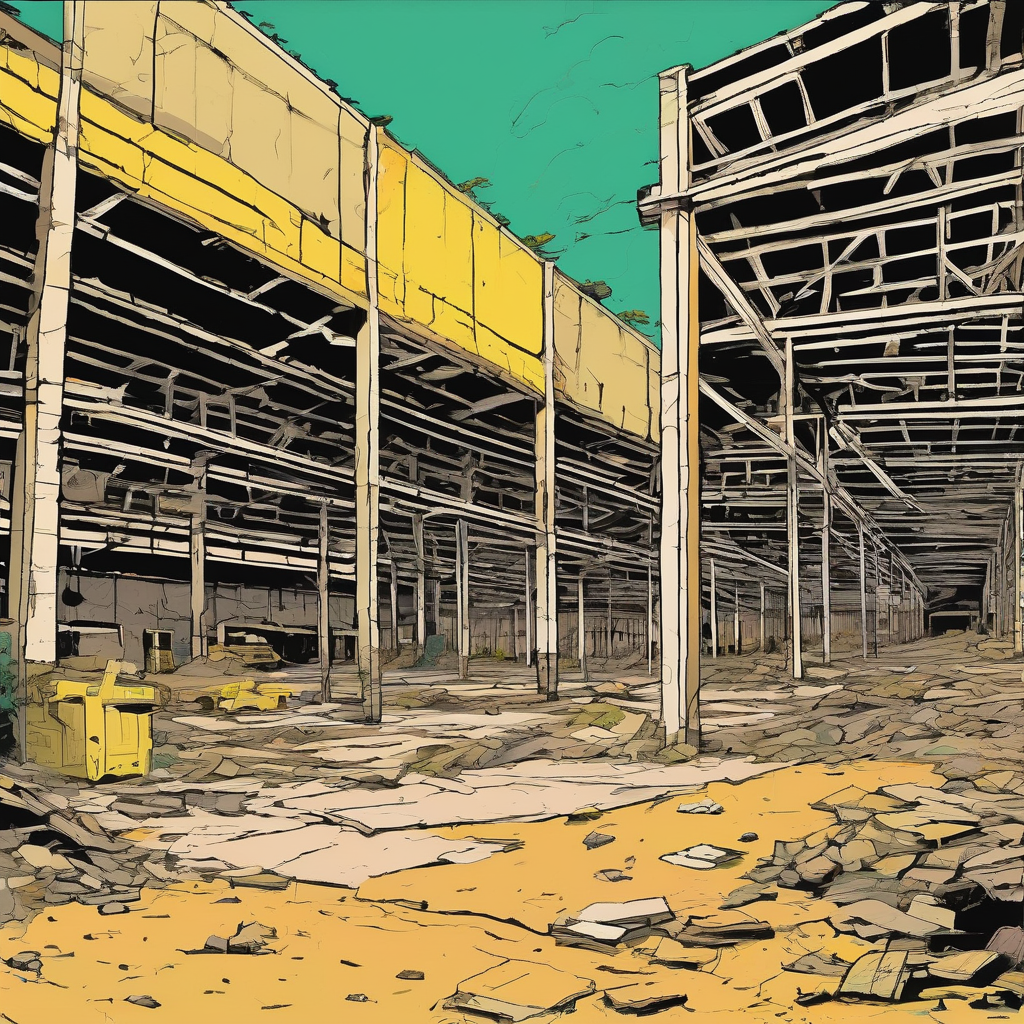
The Voorhees Township Planning Board rejected the Farrell-Crane proposal for the Evesham Road corridor redevelopment project on a five-to-two vote on a Tuesday night in March. The meeting ran until 11:47 PM. Desmond sat in the third row of folding chairs in the municipal building on White Horse Road and listened to five people who had never built anything in their lives tell him why what he wanted to build was wrong. Too dense. Traffic concerns. Stormwater modeling insufficient. The neighbors of the proposed site — a long-dead Bradlees distribution warehouse surrounded by cracked asphalt and volunteer sumac — had submitted forty-seven letters of objection. They did not want the density. They did not want the change.
He drove home on Burnt Mill Road at midnight, past the dead warehouse, past the sumac, and he sat in his driveway on Cropwell Road for a long time.
He was still his father’s son. He absorbed it. He filed amended plans. He attended seventeen more public meetings over the next three years. He hired a stormwater engineer. He revised the density. He planted a row of ornamental pears in the site plans as a gift, a gesture of good faith, a signal that he heard the neighborhood.
The board rejected the amended proposal on a four-to-three vote. Inadequate community benefit analysis.
Part Two: What the Ground Holds
They say the Pine Barrens begin, in spirit if not in official boundary, somewhere around the Atco section of Waterford Township — that the sandy soil shifts character and the pitch pines start their lean, and the water table rises into that famous aquifer, dark as tea and pure as anything. Voorhees sits at the northern edge of this transition. The ground beneath it is neither one thing nor the other. It is the edge.
Desmond found the sinkhole by accident.
He had purchased the Evesham Road site outright after the second rejection — Gordon Crane had bailed, taken his capital north to Pennsauken, and Desmond had leveraged everything he had to buy the parcel himself. It was spite dressed as strategy. He would build what he wanted to build. He would self-fund. He would get there alone.
He was walking the site at dusk in October, doing what he always did when he needed to think — moving across the ground, reading it, the way his father had once read the county roads. The asphalt had been broken up by a demo crew. Beneath it, the old fill layer. And beneath the fill — he stepped wrong, and the ground gave way beneath him, and he fell.
Not far. Eight feet, maybe ten, into a void — a solution cavity in the sandy marl, the kind that forms where iron-saturated Pinelands groundwater has been percolating through soluble subsoil for centuries. The cavity was the size of a living room. The walls were striated rust and ochre and black, iron and manganese and the ghost-chemistry of a hundred years of industrial seepage. The ceiling was the broken bottom of the old Bradlees slab.
He was not seriously hurt. He had a flashlight on his phone. He should have called someone, climbed out, filed an incident report.
Instead, he sat.
The ground hummed. Not a sound, exactly — a sensation in the soles of his feet, in the long bones of his legs, in the base of his sternum. The aquifer, moving below. The pressure of water against stone. The slow irreversible mechanics of a landscape that did not care about planning boards or amended site plans or forty-seven letters of objection.
He sat there for four hours.
When the demo foreman found him the next morning, Desmond Farrell’s hair had gone white at the temples and both of his palms were stained a deep, permanent rust-orange, as if the iron from the soil had migrated into his skin. He said he was fine. He drove himself home.
He was not fine.
Part Three: The Language of Subsidence
It took six weeks to understand what he had become.
The staining on his hands spread slowly — not outward across the skin, but inward, into the capillaries and tendons, the iron from the Pinelands seep integrating with the iron in his own blood at a molecular level that no doctor in Cherry Hill or Camden was equipped to explain. He did not see a doctor. He already knew that institutions would not help him.
What he could do, once he understood it: feel the ground.
Not metaphorically. He could stand on any surface underlain by soil and read it the way a sonographer reads an image — the voids and densities, the water table, the buried infrastructure, the old fill layers and the bedrock beneath. He could feel a basement through a parking lot. He could feel a sewer line through a sidewalk. He could feel the hollow absence of a former underground storage tank through three feet of compacted gravel.
And he could direct it. He could induce subsidence. He could reach into the soil with that iron-charged awareness and encourage the slow natural process of collapse — accelerate what the ground was already doing, what it had always wanted to do. A sinkhole under a foundation. A slump beneath a roadway. The kind of geological event that, on paper, looks like nothing more than the consequences of time and hydrology.
The kind of event that stops a construction project cold. That voids an insurance policy. That sends a development group into receivership.
He stood in his driveway on Cropwell Road and pressed his palms to the asphalt and felt the whole township — every void, every aquifer pathway, every hollow foundation in every house built on fill over the old floodplain of the south branch of the Cooper River — and he understood, with a cold clarity that he mistook for justice, exactly what he was going to do.
Part Four: The Verdant Rises
She calls herself The Verdant.
Her real name is unknown to Desmond Farrell, which is the only thing about her that he respects. What he knows is this: she appeared four months ago, when he induced the first major subsidence event — a targeted collapse beneath the footings of the Hartwell Commons project on Evesham Road, a luxury townhome development approved by that same planning board that had rejected him, approved in fourteen months with a developer from outside the county who knew the right people and submitted the right envelopes. The collapse had been surgical. No one was hurt. The project was set back eighteen months.
The next morning, the site was covered in wildflowers. Volunteer stands of native switchgrass and ironweed and goldenrod, growing through the broken concrete as if they had always been there, as if the collapse had simply revealed the landscape that was waiting underneath.
She was standing in the middle of them.
She is young — mid-twenties, Desmond thinks, though something about her presence reads older. She wears the green and rust-brown of the Pinelands — deep forest colors, earthy pigments that seem to shift in different light. Her power is chlorokinesis rooted in native ecology; she can grow and command the flora of the New Jersey Pine Barrens and the Camden County wetlands, the same biome that Desmond draws his own power from. The land is the same. Their interpretations of it are irreconcilable.
She told him to stop. She told him that the ground he was collapsing was connected — that the aquifer pathways he was disrupting fed wetland corridors and vernal pools and the root systems of pitch pines thirty miles southeast. That he was turning a local grudge into an ecological cascade.
He told her that the planning board had rejected his green space covenants.
She told him that was not the point.
He told her she did not understand what had been taken from him.
She told him that destruction was not the same as development, and she said it with a certainty that made his rust-orange palms itch with fury, because it was the same tone — the same absolute, unearned certainty — that five board members had used when they told him no.
He does not hate her. He hates that she might be right. He hates the difference between those two things.
Part Five: The Fault Lines
The Farrell-Crane Development Group no longer has a Gordon Crane. It has Desmond Farrell and three remaining employees and a legal battle over the Evesham Road parcel and a reputation in Camden County real estate circles that has curdled from promising to dangerous. The office is on the second floor of a building off Haddonfield-Berlin Road. The waiting room has a scale model of what the Evesham Road corridor was supposed to look like — pedestrian paths, mixed-use buildings, the ornamental pear trees in neat rows along a greenway.
Desmond stands at his office window and presses one rust-stained palm flat to the glass and reads the ground beneath Voorhees Township the way his father once read a county roads map — comprehensively, possessively, with the knowledge of a man who has earned the right to know every inch of it.
There are fourteen active development projects in a ten-mile radius. He has mapped the subsurface vulnerabilities of every one.
He does not think of himself as a monster. He thinks of himself as a consequence. He thinks of himself as the thing that happens when a town builds its compact on quiet compliance and then punishes the one man who showed up, revised, compromised, planted the ornamental pears, and still heard no.
Somewhere south on Burnt Mill Road, The Verdant walks through the wildflowers growing over the Hartwell Commons site. She is waiting for him to move. She believes the land they share can still be healed.
Desmond Farrell presses his other palm to the glass and feels the satisfying, geological certainty of a void forming thirty feet below the foundation of a building that should never have been approved.
The ground, as always, gives way.
The story of Desmond Farrell — the Architect of Ruin — is only beginning.