


Part One: Forty-Five Square Miles of Inheritance
Rodolfo Cantera did not grow up in Lakewood. He grew up in Perth Amboy, in a house that smelled of boiled rice and machine oil, with a father who worked the zinc smelter on Pfeiffer Street until the fumes took his lungs, and a mother who cleaned offices on Smith Street before her knees gave out. He grew up understanding, at a molecular level, what it meant when a system extracted value from a body and called the transaction fair.
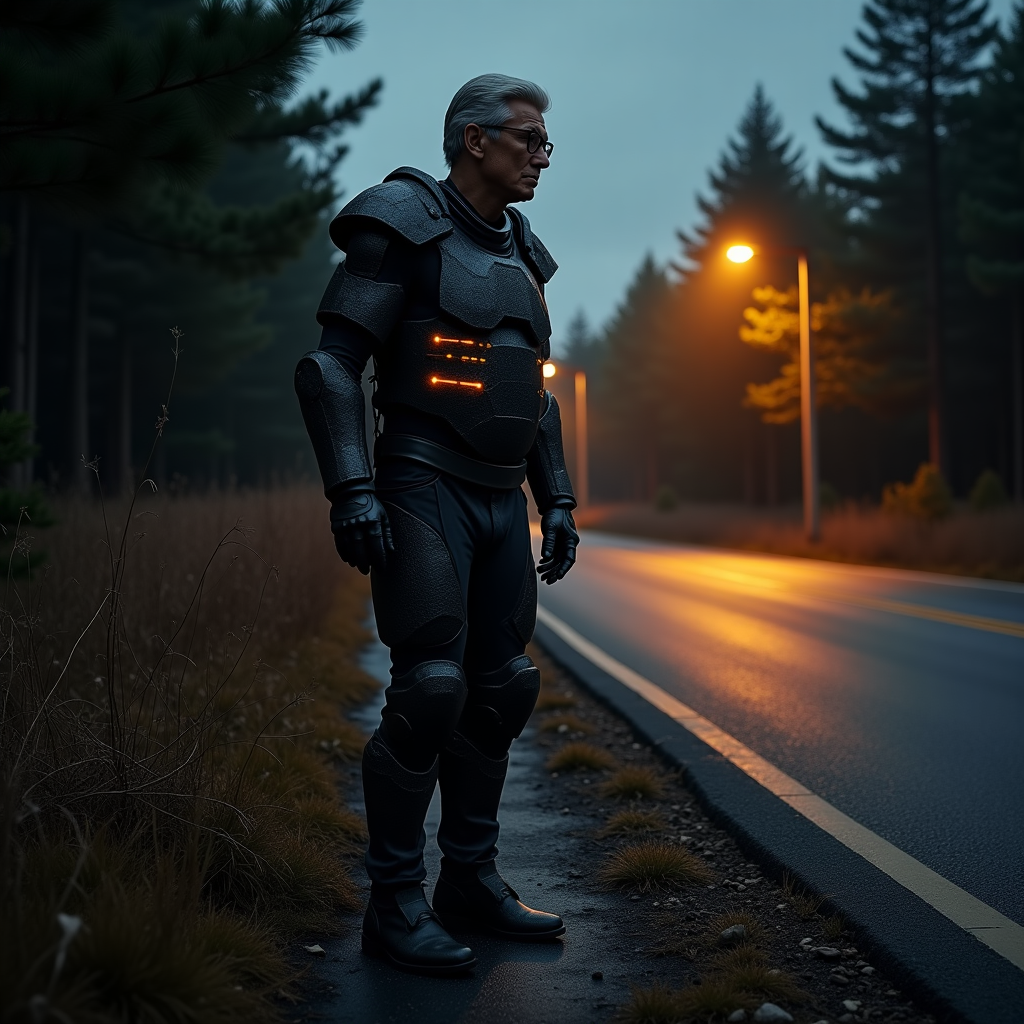
He is sixty-three now — a broad-shouldered man of Cuban and Puerto Rican descent with silver-streaked black hair swept back from a high forehead, deep-set brown eyes behind wire-rimmed glasses, and the measured bearing of someone who has spent thirty years being the smartest man in rooms that were never built for him. His hands are large and steady. His voice, when he speaks, arrives like a document: organized, specific, unassailable.
He has a civil engineering degree from Rutgers. He has an MBA from a school whose name opens doors. He has spent the better part of three decades in subsurface infrastructure consulting — water mains, utility corridors, aquifer monitoring, the invisible skeletal systems of municipalities that grow faster than their bones can support. He has, by every conventional measure, made it.
He came to Lakewood four years ago because Lakewood was irresistible to a man who reads subsurface systems. A hundred and forty-two thousand people pressed into forty-five square miles of Pine Barrens clay, and the ground beneath them crackling with corrosion. Water mains from the 1960s serving Orthodox neighborhoods that have tripled in density. Rebar in foundations poured for ranch houses now groaning under the weight of multi-family additions. Industrial residue from Lakewood’s old manufacturing era — chemical compounds from a pre-development past that the township’s permit records have conveniently forgotten — still diffusing slowly through the aquifer, following the gradient toward the densest residential corridors.
He saw it all. He saw what needed to be done. He saw, with absolute clarity, that the township’s political establishment — the zoning boards, the infrastructure committees, the developers with the right connections and the right donations — would never let a man like him do the work that needed doing from the inside.
So he found another door.
Cantera Subsurface Holdings was incorporated eighteen months after his first site survey. The pitch was clean and defensible: private capital bridging a public infrastructure gap, reducing municipal liability, accelerating development approvals. He had the technical credentials, the right language, the reassuring presence of a man who had done this work in other municipalities and had the performance reports to prove it. The Township Council, staring at a two-hundred-million-dollar infrastructure deficit, was not in a position to be selective about who held the wrench.
He told himself, in those early months, that he was going to fix what the township had broken.
He almost believed it.
Part Two: What the Ground Taught Him
The change did not come from anything dramatic. It came from a maintenance access shaft on Route 70, on a Tuesday in October, in the dark, alone.
Cantera had been running a subsurface chemical analysis on one of his newly acquired lateral corridors — the kind of hands-on survey he still preferred to delegate to no one, because no one else could read the data the way he could. The corridor ran beneath a stretch of Lakewood that had been, in a previous century, the site of a chemical distribution operation. The soil memory was still there: trace phenolics, chlorinated solvents, the ghost chemistry of an industry that had packed up and left the contamination behind like furniture too heavy to move.
He was crouched over the monitoring port, reading the sensor output, when the pipe wall beside him failed.
Not catastrophically. A slow lateral fracture, the kind that builds for years before it speaks. But the spray that hit him was not water. It was the plume — the concentrated leachate that had been pooling in the pipe’s corroded belly, a cocktail of decades-old industrial chemistry, mineral-rich aquifer water, and the particular iron-bacteria culture that colonizes corroded steel in Pine Barrens soil.
It hit his face. It hit his forearms where his sleeves were rolled. It hit the back of his neck.
He expected burning. He expected an emergency call to the NJDEP hotline and a long night of incident documentation.
What he experienced instead was clarity.
Not the metaphorical kind. The literal kind — a sudden, absolute expansion of his perceptual field, as if every chemical compound within thirty meters had announced itself simultaneously. He could smell the iron content of the pipe wall. He could feel, through his palms on the access shaft floor, the molecular stress of the steel around him — where bonds were weakening, where corrosion had eaten through eighty percent of the cross-section, where the metal wanted to fail. He could track, following the invisible gradient of the leachate plume, the exact path the contamination had taken through the aquifer — east-northeast, toward the denser residential grid, at a rate that meant it would reach the secondary water intake in eight months.
He sat in the dark for a long time, reading the ground.
Then he climbed out, drove home, and wrote everything down in a notebook he has never shown anyone.
Part Three: The Education of Dredgeholt
The powers arrived in sequence, as if whatever the aquifer had given him was a curriculum rather than an accident.
First: subsurface detection. His hands, pressed to any surface — soil, concrete, asphalt, the wall of a building — could map the metal beneath. Corroded water mains, rusted rebar in forgotten foundations, the iron deposits left by Lakewood’s pre-development industrial past, all of it rendered in his consciousness as a magnetic topology — a three-dimensional map of everything the ground was hiding. Walking down James Street, he felt the entire buried nervous system of the township’s aging west-side grid as a constant presence around him, intimate and specific. He knew where every main was failing before it failed. He knew where the rebar in the new-framed townhouses on Clifton Avenue was already beginning to rust inside its concrete.
Second: molecular bond manipulation. He found this one by accident, reaching into the wall of a corroded pipe during a survey and finding that his touch could accelerate what was already happening — could stress the molecular bonds in steel the way a tuning fork stresses the air, could encourage corrosion to concentrate, could make the slow work of decades happen in hours. The inverse was also true: he could stabilize, reinforce, slow the decay. He had a choice about which direction to push.
He told himself, for a while, that he would only use it to help.
Third — and this one he had not expected — the ability to track chemical plumes. Not just the ones he already knew about, but any industrial source, any ghost emission, any invisible poison trail moving through Lakewood’s subsurface. He could follow a chlorinated solvent plume the way a hunting dog follows a scent: not a metaphor, a literal chemosensory perception, his nervous system reading molecular concentrations in the soil and water with the precision of laboratory instrumentation. He spent three weeks walking the township’s industrial corridors alone, following trails the township’s own environmental office had never detected. What he found — the buried drums, the unmapped injection wells, the convenient gaps in the permit records — did not surprise him. It enraged him.
He named himself Dredgeholt. A dredge for what the ground holds. A bolt of what needs to be driven home.
He meant it as a warning. He was still, in those early weeks, trying to decide whether the thing he was becoming was a weapon or a tool.
Then came the zoning vote.
Part Four: The Architecture of Grievance
The eastern development corridor vote was not, on its face, a story about infrastructure. It was a story about land — a twelve-square-mile wedge of Lakewood’s eastern margin that had, until recently, been a mix of scrub pine, old farmland, and low-density residential. The development proposal, backed by the Hargrove Development Group, called for forty-five hundred new housing units, a commercial spine along a rerouted county road, and — the detail buried in the appendix — the privatization of the secondary utility laterals that would serve the new corridor.
The township’s Orthodox community, whose political organization was the most sophisticated in the municipality, opposed the corridor plan for reasons of their own: traffic density, school district capacity, the particular geography of a community that needed its residential fabric to remain walkable and contiguous. Their objections were principled and well-organized. Their council votes were the ones that would determine the outcome.
Hargrove needed those votes to move.
Cantera saw the play before anyone made it. He saw, with his subsurface vision, what a controlled infrastructure failure in the lateral networks serving the Orthodox wards would do to the political calculus: not a dramatic crisis, but a slow cascade of service interruptions — boil-water advisories, pressure drops, pipe failures — in the weeks before the vote. Enough to suggest that the existing infrastructure was inadequate, that expansion was the only solution, that Cantera Subsurface Holdings — which happened to control the easements on every affected corridor — was the only entity positioned to perform emergency restoration at the scale required.
He did not plan it as extortion. He planned it as leverage. He has spent thirty years watching leverage get dressed up in the language of municipal necessity, and he told himself he was just learning the local dialect.
The mineral accelerants went in slowly, through maintenance access points his crews had legitimate access to. The calcification would be chemically plausible — natural scale buildup, the kind that happens in aging pipe networks under high demand. By the time anyone ran a full material analysis, the cascade would already be in motion.
He was fourteen months into the operation when he felt someone else in the pipes.
He was standing at the Route 70 corridor junction at two in the morning, reading the deposit accumulation through his palms against the access shaft wall, when a sonic pulse moved through the earth beneath him — precise, structured, architectural. Not a natural vibration. A reading. Someone else was mapping the same network he was, from the other direction, with instruments that weren’t instruments at all.
He withdrew. He waited. He watched.
It took him eleven days to put a name to it, cross-referencing the Township’s infrastructure inspection logs with the pulse signatures he’d been tracking. A mid-level civil engineer in the Office of Infrastructure Planning, Seth Morwenn. White man, mid-forties. Canvas work jacket, patched elbow, field notebook.
Carasaljo.
The name came to him like a mineral plume: faint at first, then sharp, then impossible to ignore. He felt the irony of it with something close to admiration. A man transformed by the same Pine Barrens aquifer, the same mineral chemistry, the same corroded infrastructure of the same overloaded township. A man who had come to the same subsurface reality from the opposite direction and reached opposite conclusions.
Cantera did not feel guilt. He felt the specific fury of a man who has been opposed by someone who does not understand what opposing him actually costs.
Part Five: What the Dredge Finds
The confrontation on the Cedar Bridge greenway happened as these things always do — in the middle of the night, with legal documents that were never going to matter, and a gas fracture neither of them had planned for.
Carasaljo spoke in a civil engineer’s voice. Flat. Specific. The gas lateral fracture fourteen inches down. Eleven minutes to a reportable release under NJDEP protocols. The acoustic survey already transmitted to the Township emergency line.
Cantera stepped back. Two steps.
It was not fear. Cantera has not been afraid of physical things since a night in Perth Amboy when he was nineteen and a larger man’s hands found his collar in a chemical plant parking lot and he learned what it meant to be afraid of your own body’s limits. He stepped back because he was calculating — the way he always calculates — and the calculation told him that this particular field was not the one to hold.
He drove home before dawn on Route 9, through the yeshiva district still dark and quiet, past the NJ Transit bus depots beginning their first runs, past the water towers that lord over Lakewood’s skyline with the patient indifference of infrastructure that does not care who controls it.
He sat in his kitchen and spread his permits across the table. Seventeen easement corridors. Eleven months of accumulated work. The eastern development corridor vote twelve weeks away.
Carasaljo had cleared the northern lateral cluster. One cluster of seven. One night of six months of preparation.
Dredgeholt pressed his palms flat against the kitchen table and felt, through the concrete slab beneath the floor, the entire buried map of Lakewood Township — its corroded mains and its rusted rebar and its chemical plumes and its ghost deposits and its secret debts. He felt every place where the ground was owed something and had not been paid.
He felt Carasaljo moving through it — a crystalline presence, precise and patient, reading the same map from the other side of a moral argument they will never resolve in a maintenance access shaft.
The work is not finished. Dredgeholt has never left a job unfinished. He is sixty-three years old, and he grew up in a house that smelled of zinc and machine oil, with a father whose lungs were full of someone else’s cost savings, and he has spent thirty years learning that the systems that extract value from bodies are operated by people who believe in their own necessity.
He believes in his own necessity too.
He picks up his site notebook. He opens to a fresh page. He begins to map what comes next.
Lakewood holds its secrets in its soil — its industrial history, its aquifer memory, its buried chemistry of debt and neglect. One man excavates them to protect the township above. Another excavates them to leverage what the township owes.
The ground does not take sides. But it remembers everything.