
Part One: The Cold Open
Ranjit Mirchandani was standing in six inches of his own basement on a Thursday morning he had specifically blocked off for paperwork.
Not flood water — steering water. His water. He’d nudged the pressure two nights ago to shift the aquifer southeast beneath the Raymond Boulevard underpass, and now it was correcting itself with the passive aggression of a bureaucratic memo. The Passaic was pushing back. That meant something upstream was absorbing the contamination load he’d been so carefully curating — sixty years of petrochemical residue, weaponized into hydraulic leverage — and neutralizing it. His basement smelled aggressively clean. He hated it.
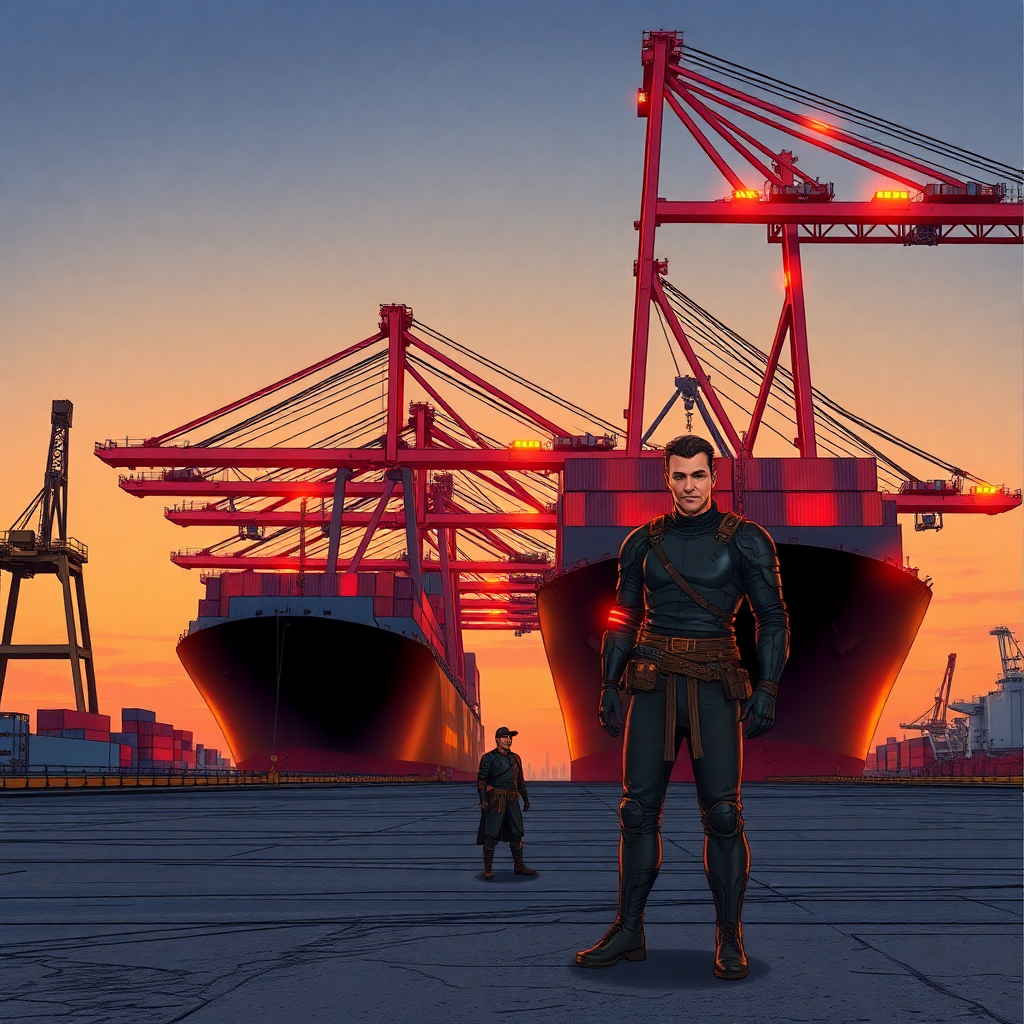
He pulled on his coat. Someone at Port Newark–Elizabeth had a gift, and he was going to need to locate them before they located him.
Part Two: The Investigation
He checked his instruments first. The decommissioned Essex County survey terminals he’d quietly reactivated along the waterfront — disguised as standard utility boxes, each one feeding pressure readings directly to the tablet he kept velcroed beneath his desk at the old waterworks annex on Ferry Street — told a coherent story. The aquifer disruption near Berth 46 had self-corrected at 11:47 the previous night. Not mechanically. Biologically.
Vera Mabunda’s kiosk was closed, which was unusual. Vera was never closed.
He found her laminated card missing from its hook inside — the survey copy he’d left as a test two years ago, the one with his badge number stamped in red. She’d given it to someone. He’d assumed she was storing it. He’d been wrong about Vera before.
He crossed to the old Newark Aqueduct Survey marker near the underpass and put his palm flat against the iron post. The aquifer’s memory was still there: pressure signatures, like fingerprints in stone. One was his. One was new — younger, reactive, pulling contamination inward rather than steering clean water out. A Spillward sensitivity. His grandmother had documented the opposing clan’s gift in the margin notes of her own survey maps: they drink the mechanism. Dangerous at close range.
He had forty-eight hours before the Spillward registered what he was building.
He used thirty of them to map five additional tunnel access points beneath the terminal, pressing his palms to pipe junctions and whispering pressure differentials through bedrock the way his grandfather had taught him in a maintenance corridor that no longer existed. The clan’s inheritance was precise, unhurried work. He was precise. He was unhurried.
He was also, it turned out, slightly late.
Part Three: The Pivot
The survey card Marcus Spillward had pulled from Vera had Ranjit’s old badge number. Of course it did — he’d planted it. What he hadn’t planned for was the Spillward reading it correctly, tracing the voided county credentials, connecting the aquifer contradiction reports, and arriving at Berth 46 a full day ahead of schedule.
The Mirchandani Clan had mapped every aquifer vein beneath Newark’s industrial wards in the 1970s. The port authority had bought the surface, sealed the channels, and erased the family’s name from the infrastructure they’d built. The grudge was documented in his grandmother’s handwriting across eleven survey notebooks. He’d been patient for forty-five years of his family’s patience. He was done being patient.
The Spillward, unfortunately, had found the tunnel.
Part Four: The Reckoning
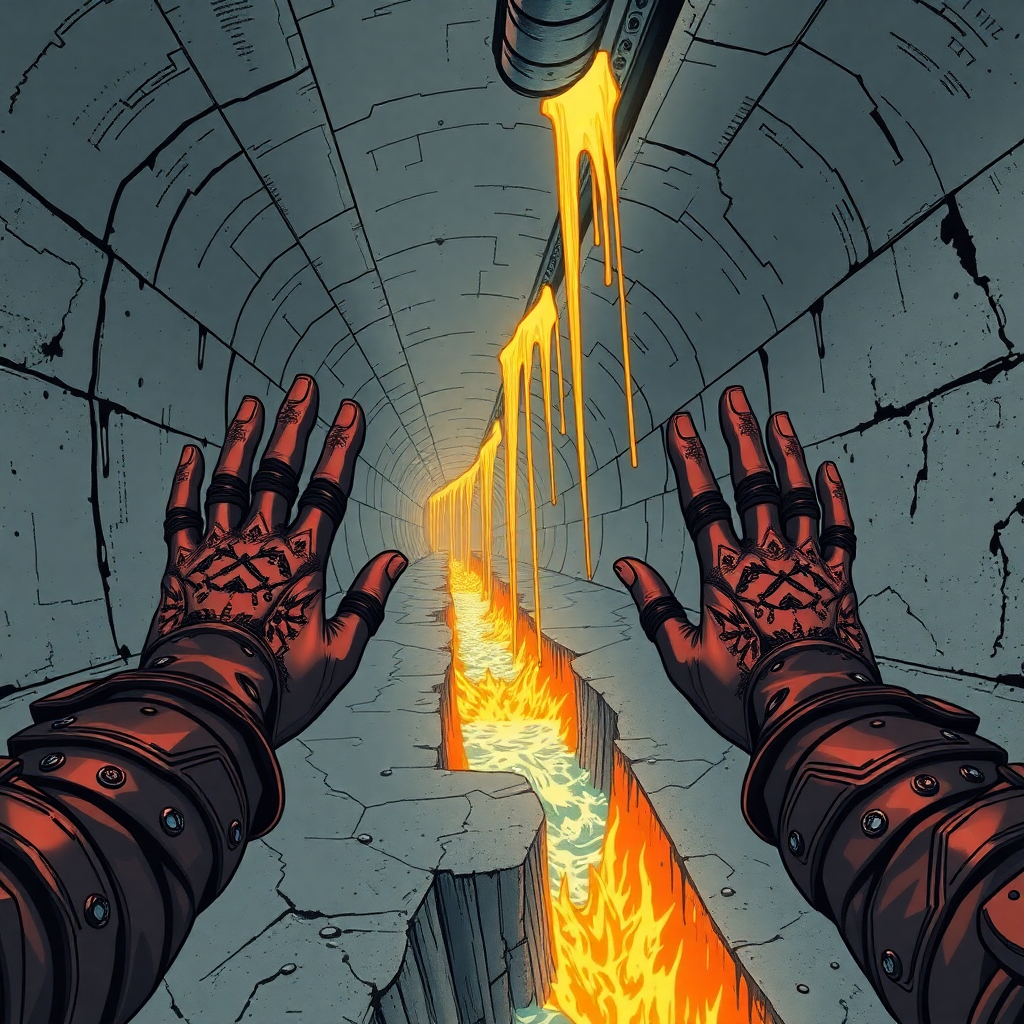
Ranjit had both palms on the concrete when the flashlight found him.
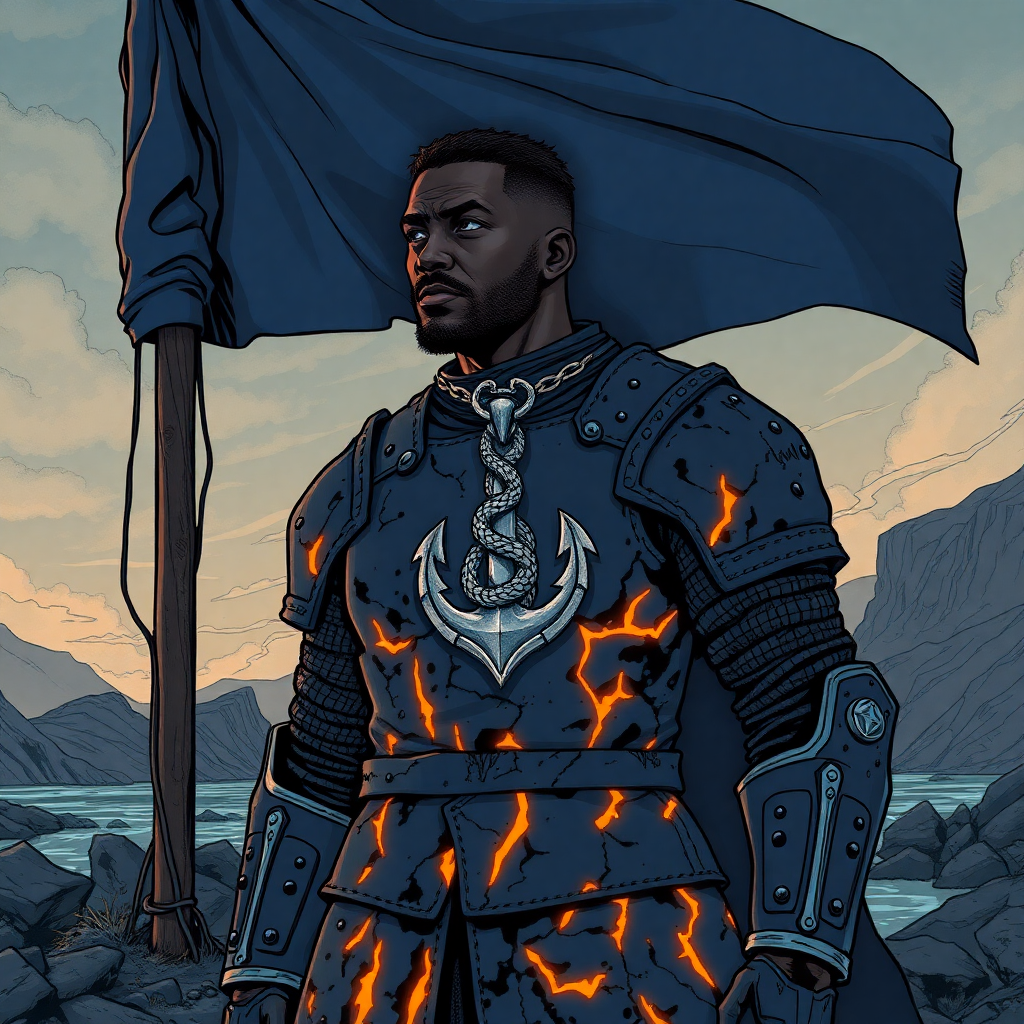
He didn’t panic. He pressed harder, pulling the aquifer pressure up through the foundation in long, measured surges — each one calculated to widen the structural fracture at Berth 46’s eastern wall by another two millimeters. The water-authority blue armor layered over his coat had been building for years: crystalline mineral deposits, stalactite-slow, each plate a record of the pressure work he’d done in these tunnels. It caught the flashlight and scattered it badly. That was useful.
“You’re a Spillward,” he said, without turning around. “I wondered when the port would throw up a Spillward.”
The young man — Marcus, he’d clocked the name from the manifest logs — said nothing useful. What he did was exhale.
The tunnel went clean. Brutally, offensively clean. The contaminated Passaic water Ranjit had been running as hydraulic fluid — decades of petrochemical argument, mobilized as leverage — simply ceased being leverage. The Spillward pulled it through himself and neutralized it. The pressure collapsed. The aquifer settled into the posture of something that had never been disturbed.
Ranjit’s hands slipped from the wall.
He stood in ankle-deep very ordinary water and felt, for the first time in three years of careful engineering, genuinely annoyed. “You just drank the mechanism,” he said.
The Spillward had the audacity to look uncomfortable about it. “Go home,” the young man said.
Ranjit went. He was not finished — he was never finished — but a direct confrontation with a Spillward sensitivity in an enclosed tunnel was poor logistics, and Ranjit Mirchandani was, above all, a man of good logistics.
He still had four other tunnel access points on the map. Marcus Spillward knew about one.
Part Five: The Resolution
Port Newark–Elizabeth filed no paperwork about Berth 46. The structural recovery was logged as spontaneous and attributed, generously, to soil consolidation. The county’s aquifer reports stabilized. One downstream monitoring station flagged an anomalous clean-water reading and was quietly ignored.
Ranjit returned to the waterworks annex on Ferry Street and updated his pressure charts. The Mirchandani Clan had been patient before. The survey maps were comprehensive, the remaining tunnels were intact, and the port authority had not, in forty-five years, once apologized.
He made tea. He revised the timeline. He was, on balance, not concerned.
Sources
- My Hero Academia Concert World Tour Announces U.S. Tour Dates
- Reviewer Goes Scorched Earth On Springsteen’s ‘Hypocritical’ Anti-Trump Concert
- Bruce Springsteen Shredded By Hometown Paper for Anti-Trump Concert: ‘Hypocritical Crap. Profiteering over Legitimate Protest’
- My Hero Academia Officially Announces Special 2026 Comeback
- ‘A Storm in Our Nation!’ Cory Booker Turns the Volume up to 11 in Call for ‘Foot Soldiers’ to Fight Back Against Trump
- Sombr Covers An Old-School Radiohead Classic During Coachella’s Second Weekend
- $150 train tickets and closed stations; FIFA and New Jersey’s feud
- NJ’s new congresswoman Analilia Mejia is a darling of the left — and comparisons to socialist Zohran Mamdani are already flowing
- Trump’s sacrilege Truth Social post: Letters to the Editor — April 18, 2026
- NJ Transit officially announces exorbitant $150 round-trip train tickets to World Cup games
- Newark, New Jersey — Wikipedia
- U.S. Census Bureau, American Community Survey 5-Year Estimates (2022)