

Part One: The Cold Open
The bulk pickup notices had gone out on time. Residents of South Orange had dutifully dragged their old appliances, bent bicycles, and discarded microwaves to the curb — only to find every single piece of metal fused into slag by morning. Not crushed. Not stolen. Melted. Refrigerator doors had pooled into silvery puddles on the pavement along Scotland Road. Aluminum frames had become abstract sculptures on Ridgewood Road, still warm to the touch at nine in the morning. Margaret Glassholm, who had planned to spend Sunday at the free screening of Crouching Tiger, Hidden Dragon in Montrose Park, stood in front of what had been her late husband’s filing cabinet and said, very quietly, “Oh, absolutely not.”
Part Two: The Investigation
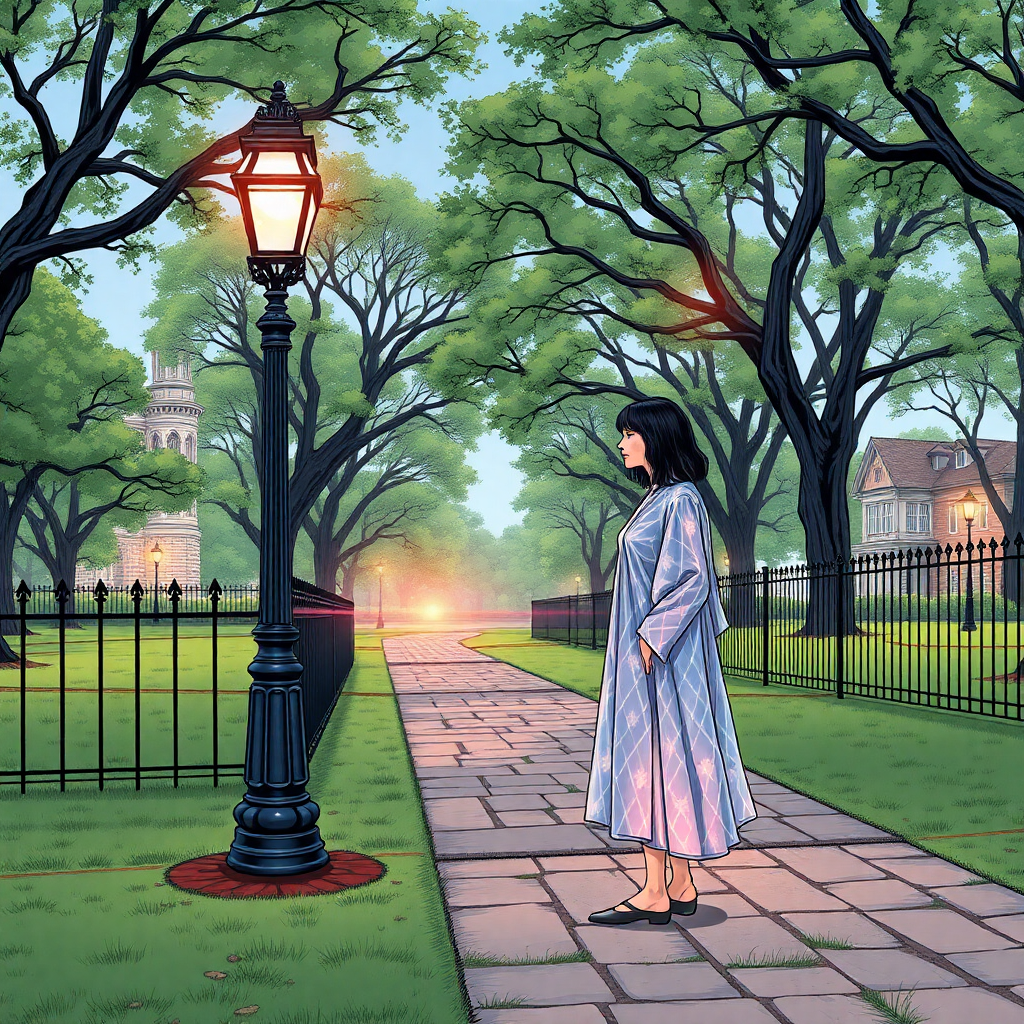
The heat signatures were the giveaway. Margaret bent the infrared band with a flicker of concentration — it came out through her fingertips like a refracted shiver — and the entire block lit up in thermal ghost-light. The melt trails ran north. Not randomly. In a line. She followed them past Mountain Station, where a commuter in a cable-knit vest told her he’d seen an older man “standing very still near the pile-up, glowing a little, which I thought was unusual.” Margaret ultraviolet-scanned the Gothic spire of Seton Hall’s Walsh Library from across the quad — the stonework was scorched in a pattern she recognized from the old Ironwright deed maps, the territorial markers her grandmother had shown her once and told her never to repeat. The Grimwall Clan. Of course. She tried to filter the visible spectrum down to trace-heat at the wrought-iron gate on South Orange Avenue and instead turned the entire street lemon-yellow for eleven seconds. A dog barked. Several cyclists swerved. She apologized to no one in particular and recalibrated.
Part Three: The Pivot
The melted metal wasn’t vandalism. The Grimwall Clan had never cared about appliances. Margaret spread the infrared map across the steps of the Eugene V. Kelly Carriage House and saw it plainly: the melt points formed a perimeter. A boundary. Forge-temperature generation, used with patience and old clan knowledge, could re-temper the mineral memory in the ground itself — rewriting the iron-laden Essex County ridgeline as Grimwall territory, one scorched marker at a time. They weren’t melting junk. They were re-drawing the deed. “Oh,” said Margaret. “Of course it’s him.”
Part Four: The Reckoning
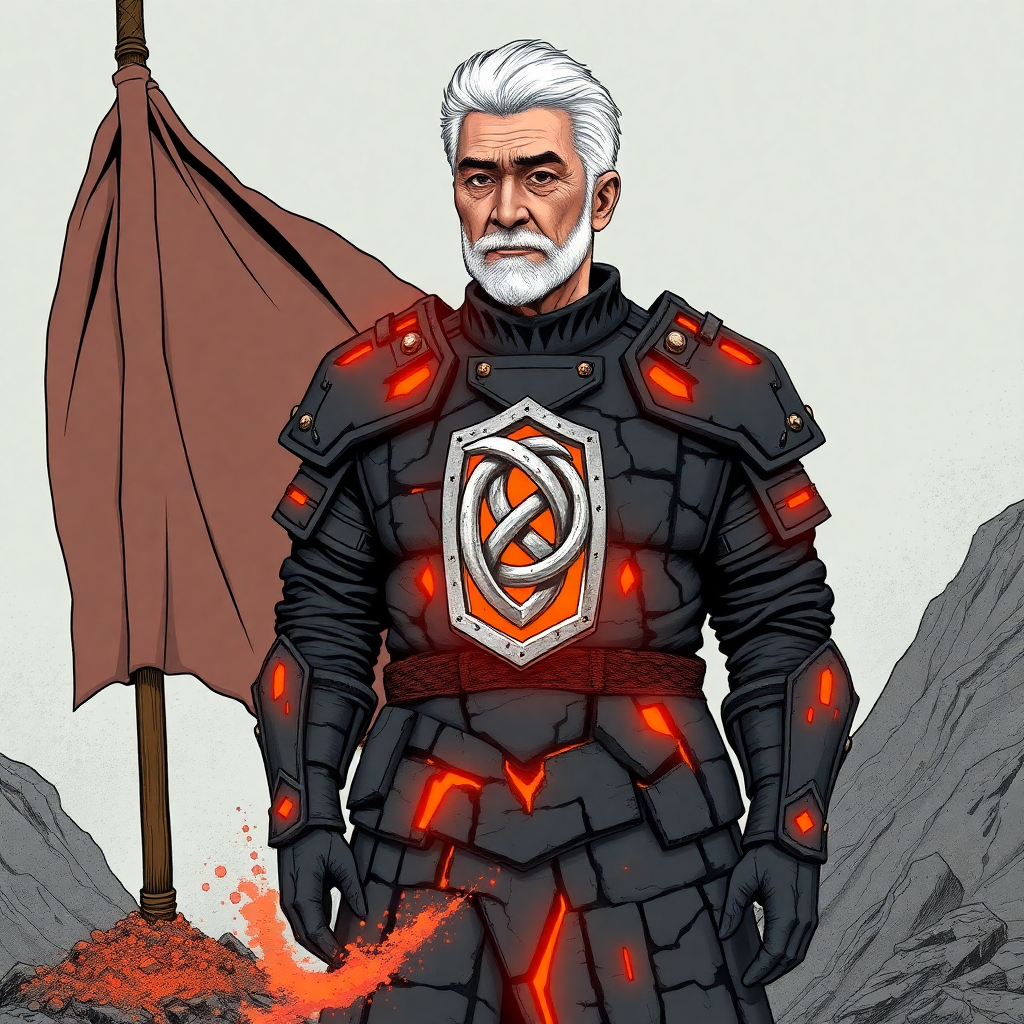
Roland Grimwall was standing in the middle of Montrose Park when she found him — white-haired, unhurried, wearing a long dark coat over what appeared to be forge-hot corrupted plate armor that radiated a dull orange at every seam. He looked like a man who had just won an argument he’d started in 1743. He raised one gauntleted hand and the cast-iron park bench beside Margaret began to soften at the edges, legs bowing outward with a sound like a low bell. Margaret pushed the full visible spectrum through both palms and hit him with concentrated ultraviolet — not dangerous, but precise, the kind of UV that revealed every heat fissure in old metalwork. The armor lit up like a cracked kiln: every fault line, every ancient repair, every place where the forge-heat had weakened the plate rather than strengthened it. Roland staggered. She flooded the air between them with redirected infrared, creating a thermal wall that scattered his forge-output sideways into the dirt, where it glazed a patch of grass into ceramic and harmed nothing that mattered. He looked at her with genuine professional respect. “Next season,” he said, and walked calmly into the tree line.
Part Five: The Resolution
The park bench was salvageable, the Seton Hall stonework needed a wire brush and a good lie, and the slag on Scotland Road was eventually repurposed by a very confused but entrepreneurial local sculptor. The bulk pickup proceeded the following week without incident. Margaret watched the aluminum catch the afternoon light as it was loaded into the truck, filtered it down to ultraviolet out of habit, and thought about Roland’s territorial markers and how long a grudge could run when the ground itself kept the score. The clan feud was older than the village’s name. Older, probably, than the advertisement where Nathan Squier had sold wood and inadvertently coined a town. She bent a last sliver of sunlight into the copper-warm spectrum she liked best and walked home to watch Crouching Tiger, Hidden Dragon on her laptop instead. Some things couldn’t wait.
Sources
- Richie Moriarty Arrives on Set With Cinnamon Rolls
- Stewart Copeland Announces New Dates for “Have I Said Too Much” Tour
- Meet the City’s Most In-Demand Mohel
- The Next Shift: The Fall of Industry and the Rise of Health Care in Rust Belt America 9780674259836 - DOKUMEN.PUB
- Athlete of the Week – Nutley’s DeJianne has Raiders in first place
- Belleville boys volleyball starts 6-0, earns state ranking
- In bloom: NY and NJ cherry blossoms are objectively the best in the nation
- South Orange, New Jersey — Wikipedia
- South Orange Official Events Calendar
- U.S. Census Bureau, American Community Survey 5-Year Estimates (2022)