
GRIDLOCK
Part One: The Man Who Read the Bottleneck
Corden Vale understands systems the way other men understand language — fluently, instinctively, with a native speaker’s contempt for those who only half-comprehend.
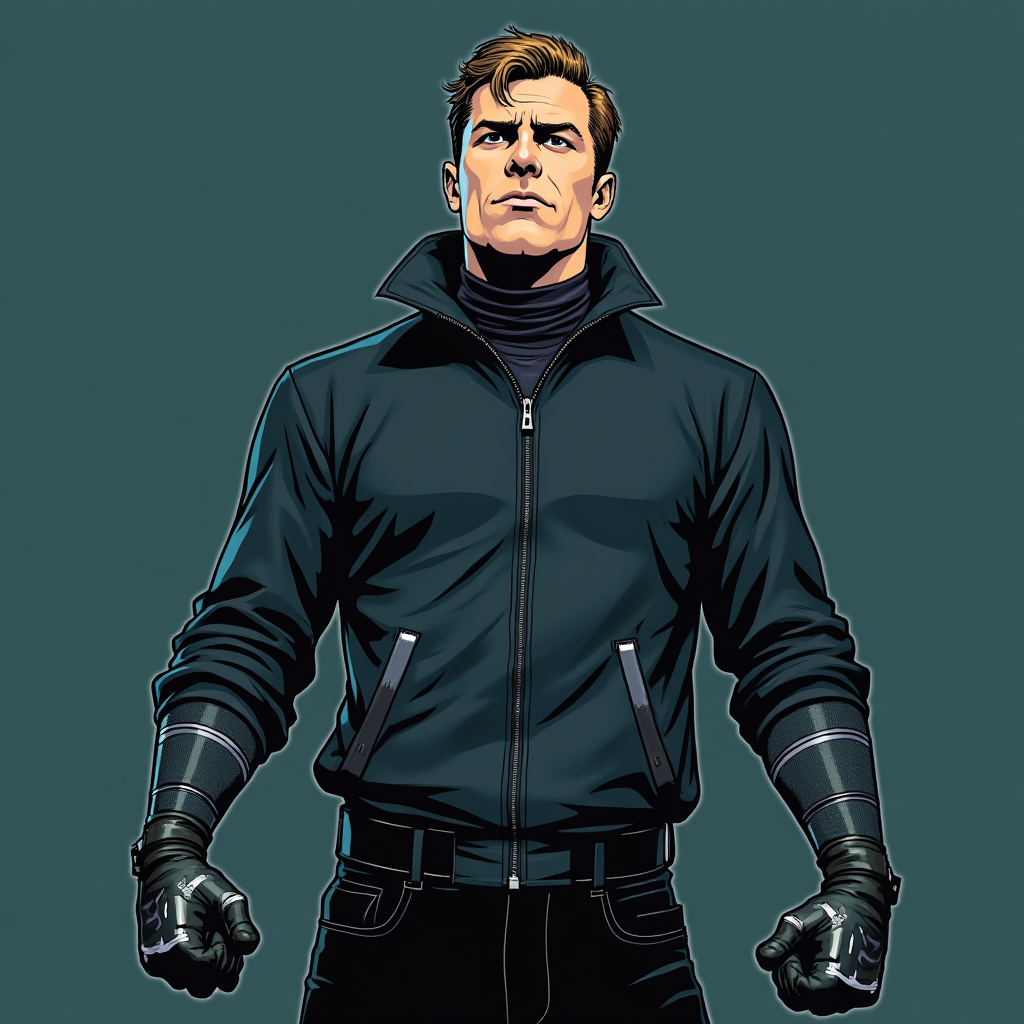
He is thirty-one years old, lean and pale, with sharp cheekbones and light brown hair he keeps cut short and functional. He grew up in Avenel, the southwestern edge of Woodbridge Township, in a neighborhood bisected by the Rahway River and perpetually choked by the runoff traffic from two of the busiest highways in the Western Hemisphere. His bedroom window faced a retaining wall. Beyond it: the Turnpike. You could set your watch by the backup at Exit 13. Corden did, every morning, because no one else seemed to think it was worth fixing.
His father was a network engineer for a municipal fiber contractor who spent twenty years watching the state issue no-bid contracts to the same three bloated firms. His mother commuted to Newark on NJ Transit for fifteen years, standing in the aisle of a diesel train that ran ten minutes late with the reliability of a natural law. Corden grew up understanding that the infrastructure of northern Middlesex County — the highways, the signals, the transit corridors, the data backbone that stitched it all together — was not managed. It was inherited. Maintained by institutional inertia, funded by political habit, and operated by people who had confused tenure with competence.
He graduated from Rutgers-New Brunswick with a degree in network systems engineering and a thesis on dynamic traffic optimization for high-density interchange clusters. His thesis committee called it visionary. The New Jersey Turnpike Authority, when he submitted a consulting proposal derived from it, called it “outside the current procurement framework” and filed it in a drawer.
He spent three years at Meridian Infrastructure Group in Edison, doing legitimate work — traffic flow modeling, signal timing audits, corridor efficiency studies — and every report he filed confirmed what he already knew. The Interchange 13 complex, where the Turnpike and the Garden State Parkway converged in a concrete knot above Woodbridge, was the single most consequential and most poorly managed transportation node in the state. Hundreds of thousands of vehicles per day. A management system built on patchwork contracts, legacy hardware, and a bureaucratic chain of command that hadn’t been restructured since the 1990s.
The public sector would never fix it. Corden decided he would.
He filed the first Nexway Infrastructure Solutions proposal on a Tuesday in February. He filed the second in June. The third in October. Each one was more refined, more technically rigorous, more economically bulletproof than the last. Each one was rejected.
He stopped filing proposals in November.
He started building the device in January.
Part Two: Demonstration of Vulnerability
The nor’easter on the night of April 16th is, from a purely operational standpoint, ideal cover. Corden has studied the Authority’s emergency protocols extensively. He knows that a weather event of sufficient severity redirects supervisory staff to incident management, thins the building population, and creates just enough noise in the monitoring data to mask a targeted intrusion.
He parks his car on a side street near the Woodbridge Center Drive administrative complex at 8:30 PM and walks the rest of the way in the rain. He knows the maintenance corridor access point — he mapped it during a legitimate facility audit eighteen months ago. He knows the primary junction box location, the relay configuration, the exact hardware signature of the data backbone. He spent four months engineering a device precisely calibrated to that system: not a weapon, not a bomb, but a proof. A controlled pulse that would drop the traffic management grid for the Interchange 13 complex for exactly forty-seven minutes — long enough to demonstrate catastrophic vulnerability, short enough to avoid a fatality-level incident.
He attaches the device to the primary relay at 9:43 PM. He expects the building to be empty.
He does not expect Gerald Mast.
Corden is back in his car, three blocks away, when the device activates. He sees nothing unusual. He hears nothing. He waits out the forty-seven minutes, then drives home to the apartment on Avenel Street above the PO box that serves as Nexway’s mailing address, and begins drafting the follow-up proposal — the one that explains, in careful and technical language, that the vulnerability he has just demonstrated is precisely what Nexway Infrastructure Solutions was designed to prevent.
He files it the next morning. He does not yet know about Gerald Mast.
He finds out sixteen days later, when a man in a modified Authority windbreaker and silver mesh intercepts one of his technicians outside the Woodbridge station and asks, with unnerving calm, where Corden Vale can be found.
By then, Corden has already become someone else.
Part Three: The Shape of Gridlock
The pulse, Corden will come to understand, did not only strike Gerald Mast. It struck the relay. And the relay, for the four seconds before Corden’s device attached to it, had been conducting something back — a return signal, a latent charge built up through decades of current cycling through that junction, something older than the hardware itself, something Corden’s instruments did not measure because he did not think to look for it.
He notices the change three days after the installation night. He is running a signal timing simulation on his laptop when he realizes he is not looking at the screen. He is looking at the wall. He is feeling the simulation — not as data, but as pressure. The blockages in the model register as a physical sensation in his chest and jaw, a clenching, an obstruction. The optimized flows feel like relief.
He tests it methodically, because he is an engineer and that is what engineers do. He drives to the Route 9 corridor and sits in traffic on the Avenel overpass and finds that he can perceive the vehicular flow around him as a kind of extended proprioception — not the individual cars, but the mass behavior, the density, the friction points. The backup forming three blocks north because a signal is running a suboptimal cycle feels like a fist closing around his sternum.
He drives to the Turnpike service area on the inner roadway and stands near the toll infrastructure and presses his palm flat against a concrete pylon. The network opens to him — not as data he reads, but as architecture he inhabits. He can feel the shape of the congestion across a two-mile radius. He can feel where it should break and doesn’t. He can feel, with nauseating clarity, every inefficiency in the system he has spent years trying to fix.
He can also stop things.
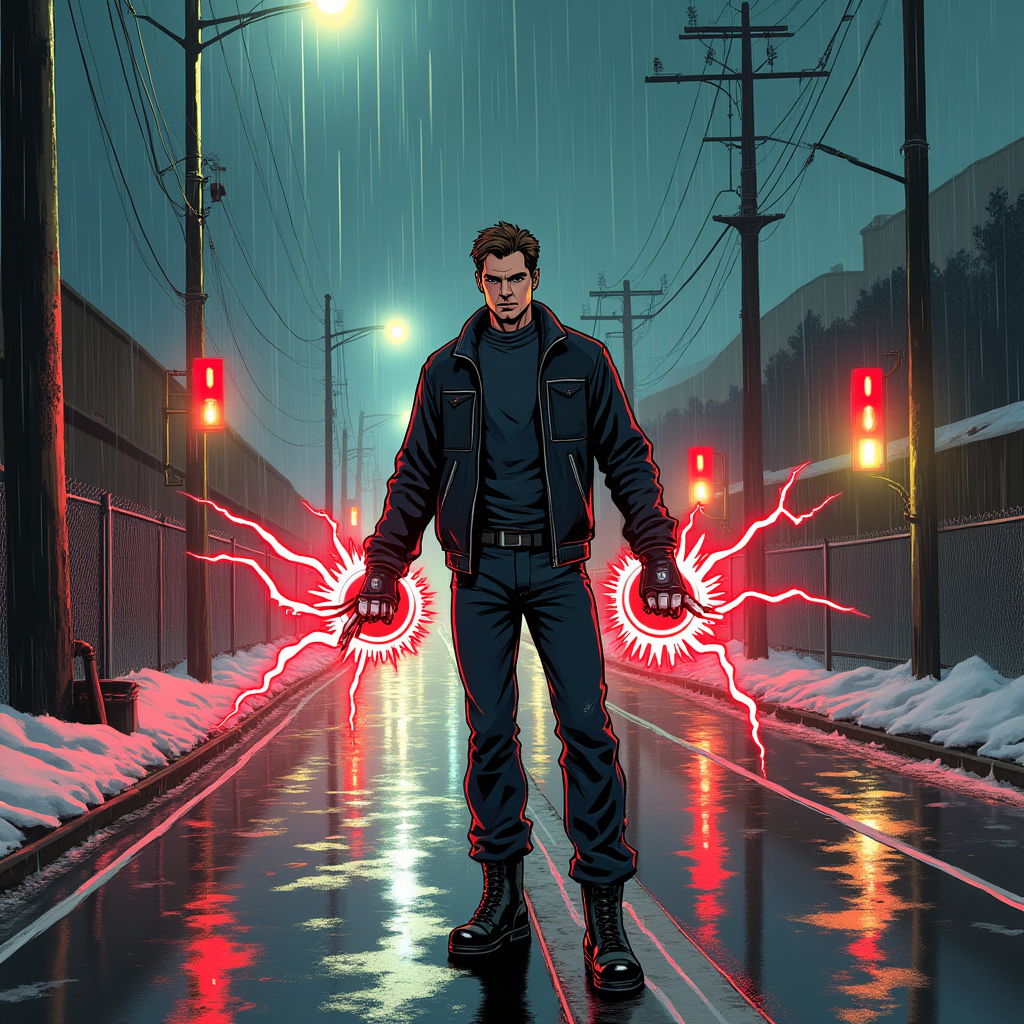
It takes him a week to discover the other side of the ability. Where the network opens to let him feel and redirect flow, it also answers when he pushes the other direction — when he reaches into the logic of a signal cluster or a ramp control system and holds. Not reroutes. Holds. Freezes. Gridlocks. A traffic signal corridor can be locked into a red-cycle cascade with the same focused intention it takes to clear one. A managed lane override can be flipped to total restriction.
He can make the whole thing stop.
He builds the costume practically — dark jacket over a woven conductive underlayer, work boots with grounded soles, fingerless gloves with contact nodes at the palm. Nothing theatrical. He does not think of himself as theatrical. He thinks of himself as a man making a point the only language the state of New Jersey has ever understood.
He calls himself GRIDLOCK.
Not as a boast. As a description. The bottleneck is the leverage. Always has been.
Part Four: The Counter in the Windbreaker
He knows about Interchange before the maintenance yard. He has to — because the man who shows up at his technician’s door asking questions is wearing modified Authority gear and moving with the kind of precise, unhurried confidence that tells Corden he is not dealing with a cop or an investigator. He is dealing with someone who has read the same grid he has. Who has felt it.
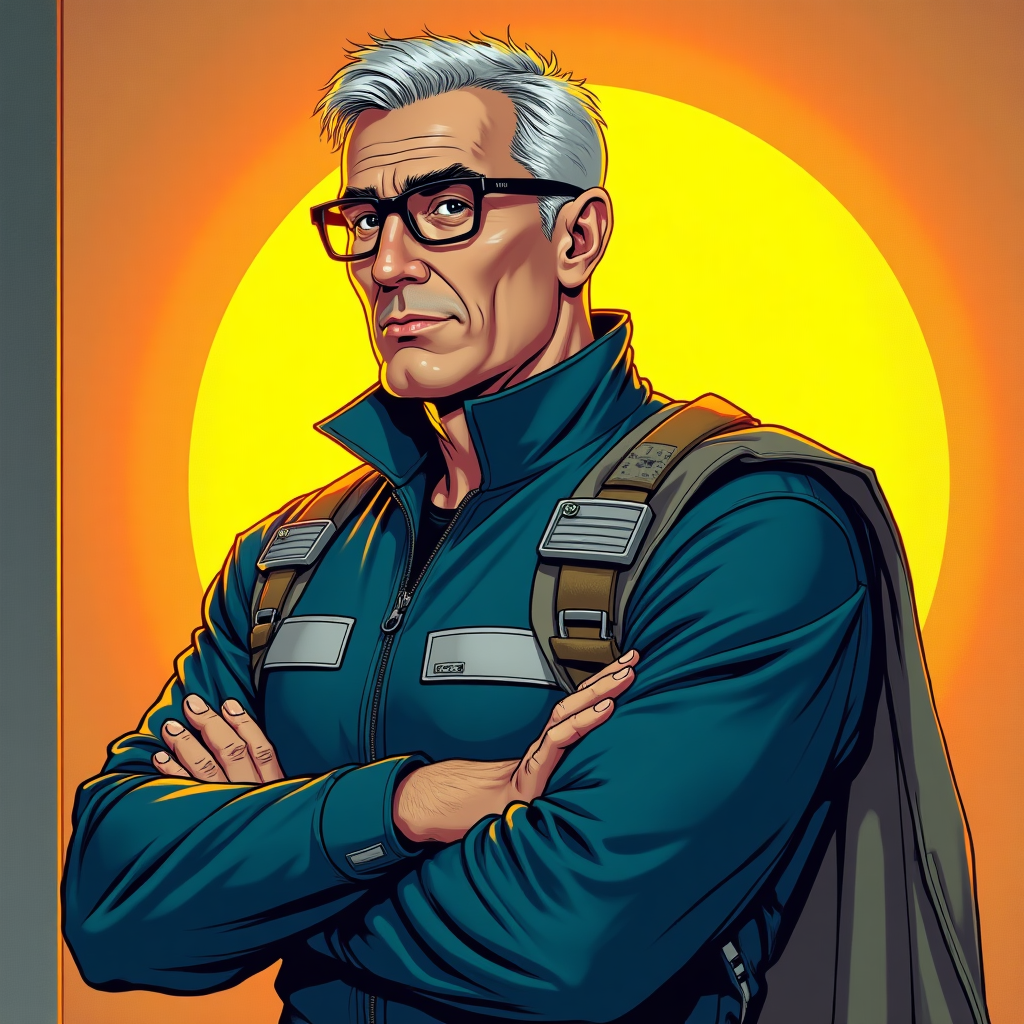
Corden pulls the procurement records. Cross-references the incident reports from the April 16th event. Finds one name listed in the administrative building’s after-hours access log: Gerald Mast, Deputy Director of Infrastructure Operations, thirty-one years of service, son of a toll collector, lifelong Woodbridge resident.
He reads the man’s professional history in an hour. It is, in its way, impressive. Mast knows the Interchange 13 complex the way Corden knows his own engineering schematics. He has kept that system running through three major storms, a bridge deck failure on the outer roadway, and a Turnpike labor dispute that nearly shut down toll operations statewide. He is, by every institutional measure, the best possible steward of the worst-managed infrastructure in New Jersey.
Which is exactly the problem.
Mast is not wrong about the grid. He is wrong about who should control it. Thirty-one years of excellent management has convinced him that excellent management is enough — that a dedicated public servant and a patchwork of aging hardware and underfunded contracts can hold together a system carrying a hundred thousand vehicles a day indefinitely. He cannot see, or will not see, that the grid’s survival has always depended on men like him existing, which is the most fragile possible foundation for critical infrastructure.
Corden doesn’t want to destroy what Mast built. He wants to make it indestructible. He wants to own it, yes — but ownership is not vandalism. Ownership is accountability. When Nexway controls the grid, the grid cannot fail, because failure becomes Corden Vale’s personal catastrophe rather than a line item in a state budget.
He tries to tell Mast this, through channels, through two anonymous messages left in the Authority’s internal maintenance system where only someone with deep network access would find them. Mast does not respond.
He installs the override junction instead.
Part Five: Red Cycle
The maintenance yard at Interchange 13 is bright and white and wet, and Gerald Mast is on one knee in the middle of it, both palms pressed to the concrete, absorbing what should have ended this.
Corden watches him from across the yard. The second pulse device is smoking in his hand, its circuitry fused to slag. His technicians are gone — scattered by a man who used the yard’s own sensor logic as a chessboard, who moved through the halogen shadows with the unhurried patience of someone who has read this grid for three decades and knows exactly where every shadow falls.
The override junction is destroyed. He can feel that too — the absence of it, the blank space in the network where the connection he’d spent four months engineering should be humming.
“Mast,” he says. Not as an accusation. As an acknowledgment.
The silver-haired man straightens. His breathing is labored. The pulse cost him something — Corden can see it in the set of his jaw, the deliberate stillness he is imposing on himself. But he is standing, and the yard is flooded with light, and somewhere in the distance are sirens.
“The grid belongs to everyone,” Mast says. “That’s not an ideology. That’s just how it works.”
Corden looks at him for a long moment. He thinks about the retaining wall outside his childhood bedroom. The Turnpike backup you could set your watch by. The fifteen years his mother stood in the aisle of a diesel train running perpetually, exactly, infuriatingly late. The three rejected proposals. The drawer they went into.
“Everyone,” he says, “isn’t maintaining it.”
He does not run. Running is for people who believe they’ve lost. Corden Vale believes, with the focused certainty of an engineer who has stress-tested every variable, that this is a setback in a long campaign — that the grid is still vulnerable, that the state is still incompetent, that the argument he is making is still correct even when his methods are not.
The police arrive. He lets them take him.
In the holding cell at the Woodbridge precinct on Main Street, with the NJ Transit whistle audible from the Green Street station two blocks over, Corden Vale closes his eyes and feels the Interchange 13 complex breathing above him — the pulse of it, the weight of traffic on the elevated spans, the signal cycles running four seconds slow on Rahway Avenue, the familiar clenching in his chest that means something, somewhere in the grid, is not moving the way it should.
He is not finished. He is not even close.
The grid belongs to whoever understands it well enough to hold it. And Corden Vale understands it better than anyone alive — better, even, than the silver-haired man in the modified windbreaker who caught his pulse and kept the lights on and called it a victory.
Gridlock can wait. Traffic always breaks, eventually. You just have to know where to press.