
Ironfall: The Origin of Desmond Falk
Part One: The Man Who Rebuilt Ruins
Paterson does not forget what it was.
Walk the old mill corridor on a grey April morning — down Spruce Street, past the buckled chainlink that separates the sidewalk from the Hamil Mill ruins, along the embankment where the decommissioned rail spur trembles faintly over river silt — and the city speaks in a register most people have learned not to hear. The fractured sandstone foundations. The iron lintels gone orange with rust. The invasive bittersweet vine that has throttled the brick facades of the old weave houses so thoroughly that the vine and the wall have become a single organism, neither one capable of standing without the other.
Desmond Falk hears it. He has always heard it.
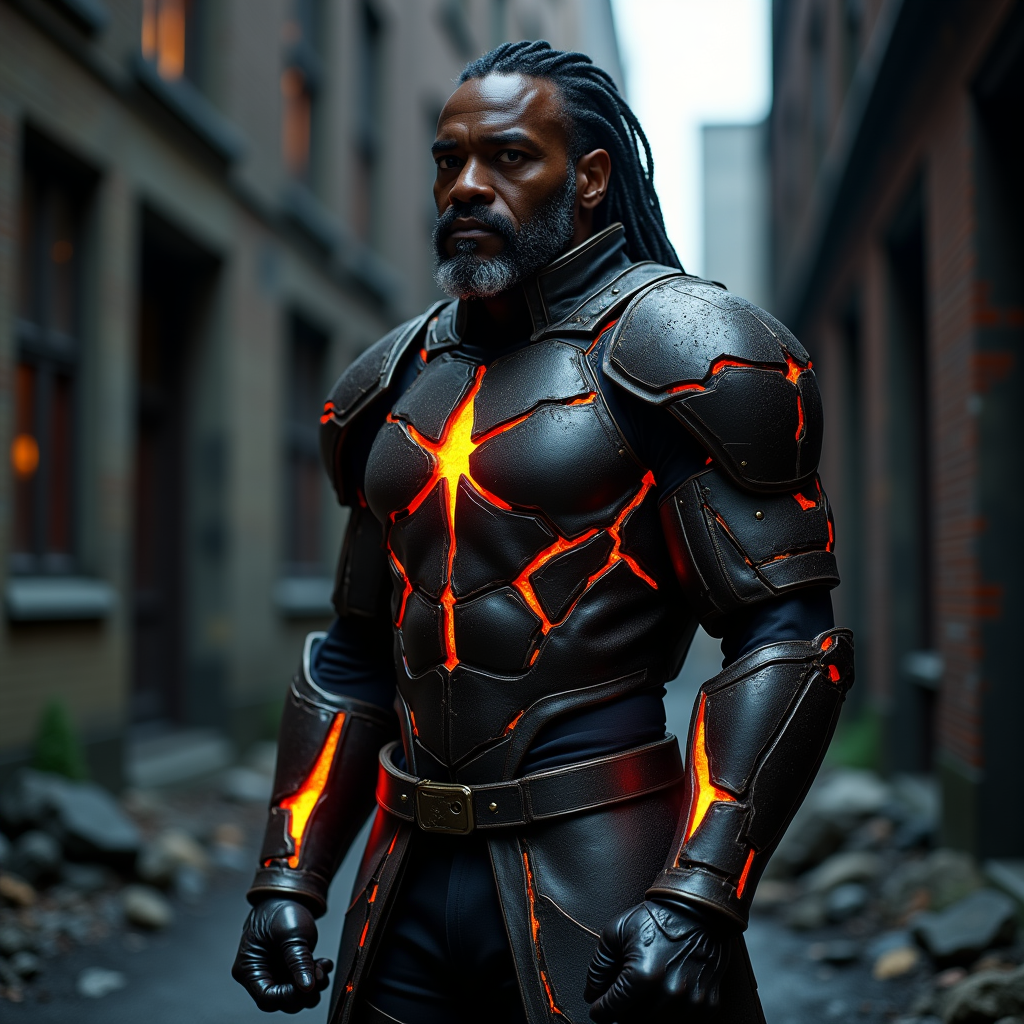
He is fifty-eight years old. His father, Eldridge Falk, came from Port of Spain with a carpenter’s tools and a talent for reading the structural logic of old buildings — which walls were load-bearing, which lintels were secretly cracked, which foundations had shifted on their pilings and could be coaxed back to level if you understood the grammar of settling earth. His mother, Lucia Caruso-Falk, grew up on East 38th Street in a household that had been in Paterson since her grandfather worked the silk looms in 1908. Between them, Desmond inherited a bilingual fluency in brick and memory — the immigrant’s drive to make something permanent, layered over the old Patersonians’ grief at watching the permanent things fall.
He went to William Paterson University on a partial scholarship, studied urban planning, spent twelve years working for the state’s brownfield remediation office, and then did what men with his particular combination of knowledge and impatience often do: he went private. He founded the Meridian Development Consortium in 2011. He was going to fix Paterson. Not preserve it in amber. Fix it. Tear out the rot. Pour new footings. Build something that would hold.
Fifteen years of development work had not made him a villain. They had made him something more dangerous: a man absolutely certain of his diagnosis.
The old mill corridor, in Falk’s read, is a liability masquerading as heritage. The foundations are timber pilings rotting in anaerobic silt. The facades are held up partly by the bittersweet vine that everyone agrees should be removed. The contaminated lots suppress property values in the Fourth Ward, trapping the community — his community, the one his mother’s family had been part of for three generations — in a poverty geography anchored to a dead industrial era. He has said this at city council meetings, in op-eds in the Paterson community news, in grant applications and environmental impact statements. He believes it the way a man believes something he has argued so many times it has become indistinguishable from truth.
The FIFA World Cup 2026 is the inflection point. MetLife Stadium, thirty minutes south. Hospitality overflow revenue. Infrastructure bond capacity. A narrow window in which Paterson could, if someone moved fast enough and built the right coalition, transform the dead mill corridor into something that would generate tax base for thirty years.
He moves fast. He builds the coalition. He secures three council votes and files the condemnation notices for the Fourth Ward blocks. He hires Dr. Carmela Hess — the best subsurface geologist in the state — to run the bore survey. He is not reckless. He is thorough.
He is not prepared for what is sealed inside the earth.
Part Two: The Vault Below Paterson
The bore drill at Site 7 breaks the sealed culvert chamber at 4:47 PM on a Thursday in early April.
Falk is not present when it happens. He is in his car on Route 4, taking a call from his bonding attorney, when Dr. Hess reaches him. Her voice is the voice of a scientist trying to suppress a tremor of genuine alarm, and that — in forty years of fieldwork — she has never managed to suppress.
“Desmond. The Site 7 bore hit something. A pre-Civil War vault, sealed, pressurized. The compound that vented — I need you to understand that I don’t have a classification for this. It is not any registered industrial byproduct. It has characteristics of a long-chain organic acid fermentation, but the mineral lattice embedded in it is — I don’t have a word. The lattice is structured. Like it grew that way. Like it was trying to become something.”
“Trying,” Falk says flatly.
“I know how that sounds.”
He is at the site in twenty minutes. The bore head is already sealed with emergency casing, but the plume mark is visible in the soil — a dark wet stain spreading from the test bore across four feet of embankment, and then, inexplicably, a secondary disturbance in the gravel of the old rail bed fifteen feet away, as though something had erupted upward through a secondary path. The gravel is scattered. There is an impression in it — the outline of a prone human figure, small, slight. A child’s outline.
Falk looks at the impression for a long time. He looks at the bore mark. He looks at the distance between them.
He calls Hess back. “Were any of your crew near the rail bed when it vented?”
“No. Everyone was at the south perimeter.”
He does not call the EPA that night. He tells himself he needs more information first. This is the first decision that breaks something he cannot later repair.
Over the next five days, Hess delivers her private assessment: at least seven additional sealed chambers along the old mill-race corridor, all products of the same geological pressure-cooking — a century and a half of organic and mineral compound fermenting in anaerobic containment, under the weight of Paterson’s industrial infrastructure. The compound in Site 7’s chamber has been fully dispersed. Absorbed. The mass does not account.
Someone was near that bore. Someone absorbed the compound through the soil and the rail contact.
Falk sits with this for three days. He thinks about the figure-shaped impression in the gravel. He thinks about what Hess said: like it was trying to become something. He thinks about what it would mean if a child — some kid from the Fourth Ward, walking home from school — had been accidentally dosed with a substance that his project, his bore team, his legal structure, had released.
He knows what the right thing to do is. He does not do it.
Instead, he drives to the site at two in the morning and presses his palms against the earth at the lip of the sealed bore casing, where trace compound has leached into the clay.
He is not reckless. He is a man who has never accepted a situation he could not reshape with enough will and enough work. And there is a girl out there who was transformed by accident. If transformation is possible, he will not be outflanked by it. He presses his palms into the cold April clay and waits.
The compound finds him. It does not come the way it came to Valentina — not as a sudden rupture of consciousness, not as a gift. It comes slowly, like an infection learning a new host. Over four days of careful nightly contact, it reorganizes his nervous system along the fault lines his father taught him to read in old buildings: compression, load, stress fracture, the geometry of things that are about to give way.
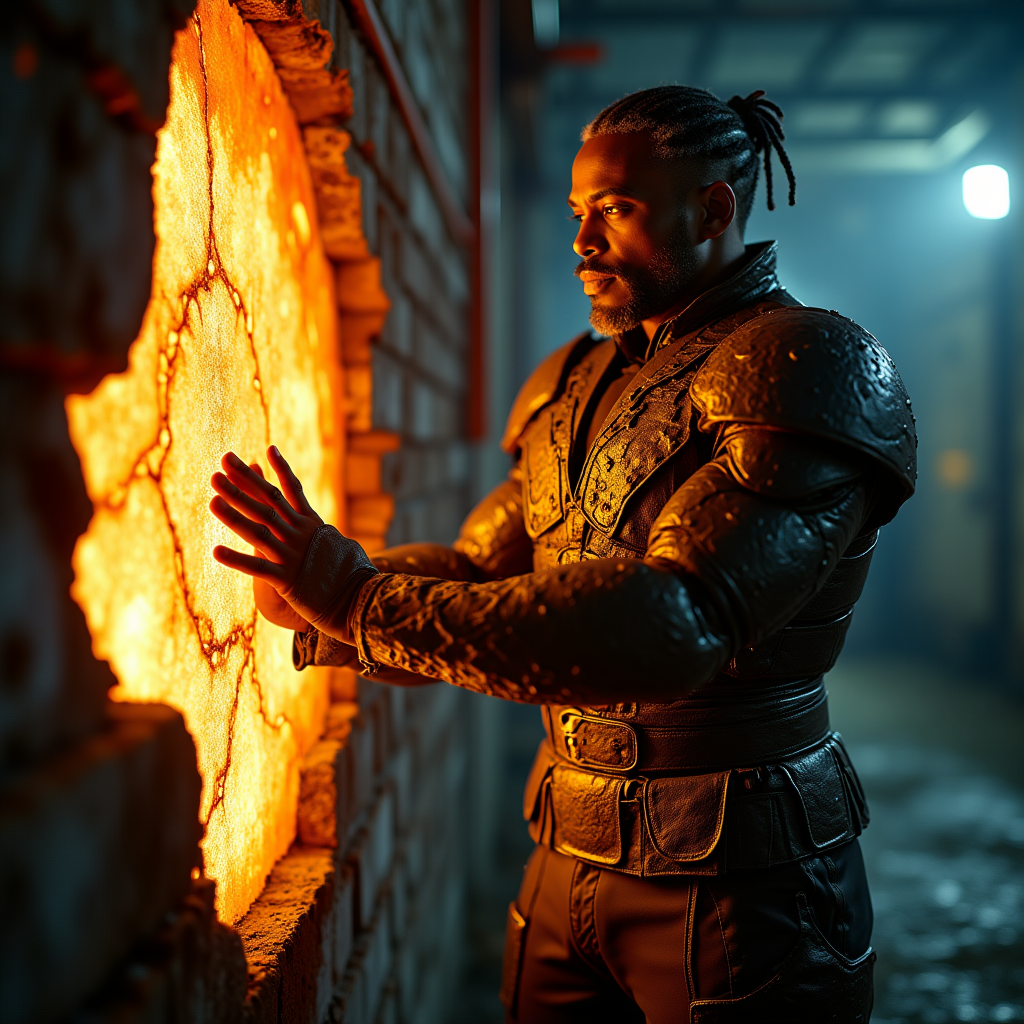
By the sixth night, he can feel the microfractures spreading through the mill foundations as a physical language running up his arms from the stone. He can feel the electromagnetic ghost of the security cameras on the Meridian fence line — and he can feel them go dark when he concentrates, his field expanding to swallow their signal. He can feel the bittersweet vine threaded through the brick facade, and when he touches a tendril, his body reads its chemistry the way his father read a load-bearing wall. He synthesizes the vine’s compounds through his skin — a slow distillation, acrid and purposeful. He learns he can accelerate the decay in old mortar joints. He learns, with more effort, that he can produce an opposing compound — a botanical fixative that would seal fractured stone.
Saboteur or savior. The choice is always his.
He calls himself Ironfall. His father used the word to describe the moment when an iron component fails under stress it was never designed to carry. The name feels honest. He has always believed that honesty about failure is the precondition for rebuilding.
Part Three: The Surveillance and the Counter
It is not until the third week of April that Falk understands he is not the only one.
He is in the Meridian operations office on Market Street, reviewing Dr. Hess’s suppressed subsurface report on an air-gapped server, when the terminal does something impossible. For eleven seconds, the cursor moves without his hand. Files open and close at a speed no human reading them. The session log, when he pulls it, shows 847 files accessed in those eleven seconds — everything on the Meridian survey archive, the condemnation legal files, Hess’s private report.
And then the presence withdraws, cleanly, leaving no trace in any external log.
Falk sits very still. He has resources — his network security chief is one of the best in the state — and his security chief cannot classify the intrusion signature. It is not a known threat actor. It moves through the municipal network the way a native intelligence moves: not hacking, not forcing. Recognized.
The child from the rail bed.
He pulls the municipal camera footage from the embankment sector, three weeks back, and finds the gap: seventeen minutes of missing data on the evening of the bore accident, the camera covering the rail spur simply dark. But the camera to the north — covering the Spruce Street approach — catches the edge of a figure walking the embankment twenty minutes before the gap. Young. Dark-haired. Moving with the unhurried attention of someone who reads infrastructure the way most people read faces.
He watches the footage for a long time.
She was not a trespasser. She was not a vandal. She was a kid walking home from school, pressing her palm against a rail the way some children press their palms against old stone walls — out of a habit of listening. And his bore team put her in the path of 140 years of compressed geological transformation without a warning sign, a barrier, or a second thought.
He feels the guilt as a physical thing — a stress fracture running through his chest, the kind his new senses can map with terrible precision. He knows the geometry of things that are about to give way.
He does not change course. This is the second decision that cannot be undone.
If he changes course now — if he surfaces Hess’s report, notifies the EPA, acknowledges what happened at Site 7 — the Meridian project collapses. The bond fails. The World Cup window closes. The mill corridor stays what it is: a rotting, contaminated, life-shortening liability that the Fourth Ward carries on its back for another generation. He tells himself this. He tells himself it every day with increasing force, because increasing force is what’s required to keep the fracture from spreading.
He embeds killswitch firmware in Meridian’s city transit infrastructure contracts — legitimate access, buried deep in the signal network code. He doesn’t need to outmatch whatever Valentina Reyes has become. He just needs to be able to go dark on her when the moment comes.
He calls the demolition crew. He sets the date.
Part Four: The Compound He Carries
In the week before the demolition date, Falk walks the mill corridor every night.
He tells himself it is reconnaissance. But he moves along the old mill-race channel the way his father used to move through job sites — slowly, with his hands touching every surface, reading what the surfaces say. He wades knee-deep into the Passaic shallows where the river runs dark and cold along the eastern edge of the Hamil Mill foundation, and he presses his palms against the fractured sandstone below the waterline and reads the microfractures spreading through the stone like a map of everything that has gone wrong over a hundred and fifty years.
The foundations are telling him they have six weeks. Maybe eight. The timber pilings are saturated past recovery. When they fail, they will not fail gradually — they will fail the way iron components fail under stress they were never designed to carry, suddenly and completely, and the facades will come down onto the Fourth Ward streets.
He is not wrong about this. The buildings are dangerous. The contamination is real. The case for demolition, on the engineering merits alone, is solid. He knows this because he can read it directly now — not through survey reports or contractor assessments, but through his palms pressed against the stone, feeling the language of fracture fluently, without mediation.
He touches the bittersweet vine and synthesizes the fixative compound through his skin — not the decay accelerant, not tonight. He applies it to the worst of the fractures, sealing the stone against itself for another few weeks. Buying time. He does not examine too carefully why he is doing this while simultaneously preparing to demolish the structure.
The botanical work is the part of his transformation that frightens him most. Not because it is dangerous — though it is — but because it is subtle. Because when he holds a tendril of vine and feels the chemistry moving through him, he can feel simultaneously the two compounds he is capable of producing: the one that kills and the one that holds. And the choice between them is not a moral decision encoded in his nervous system. It is purely volitional. The compound he synthesizes is the one he decides to synthesize.
He has always believed that character is just decision-making under pressure. The pressure is very high now.
He thinks about the girl — Valentina, he knows her name from the school records in the municipal database, he is not a man who does incomplete research — and what she will do when the demolition crew arrives. He has watched her in the digital network three more times since the server intrusion, always careful to move in a way that does not confirm he sees her. She is good. She is getting better fast. She has been threading the water authority’s pressure sensors and the traffic management system with a precision that tells him she has already mapped the entire municipal infrastructure as a weapon.
She is thirteen years old.
He tells himself that protecting a thirteen-year-old from a fight she shouldn’t be in is part of what the killswitch is for. He tells himself she will be grateful, eventually, for a city that got rebuilt. He synthesizes the decay compound absent-mindedly, touching a section of already-condemned wall, and watches a century of mortar crumble into powder in four seconds.
He puts his hands in his pockets and walks back to his car.
Part Five: What Iron Carries When It Falls
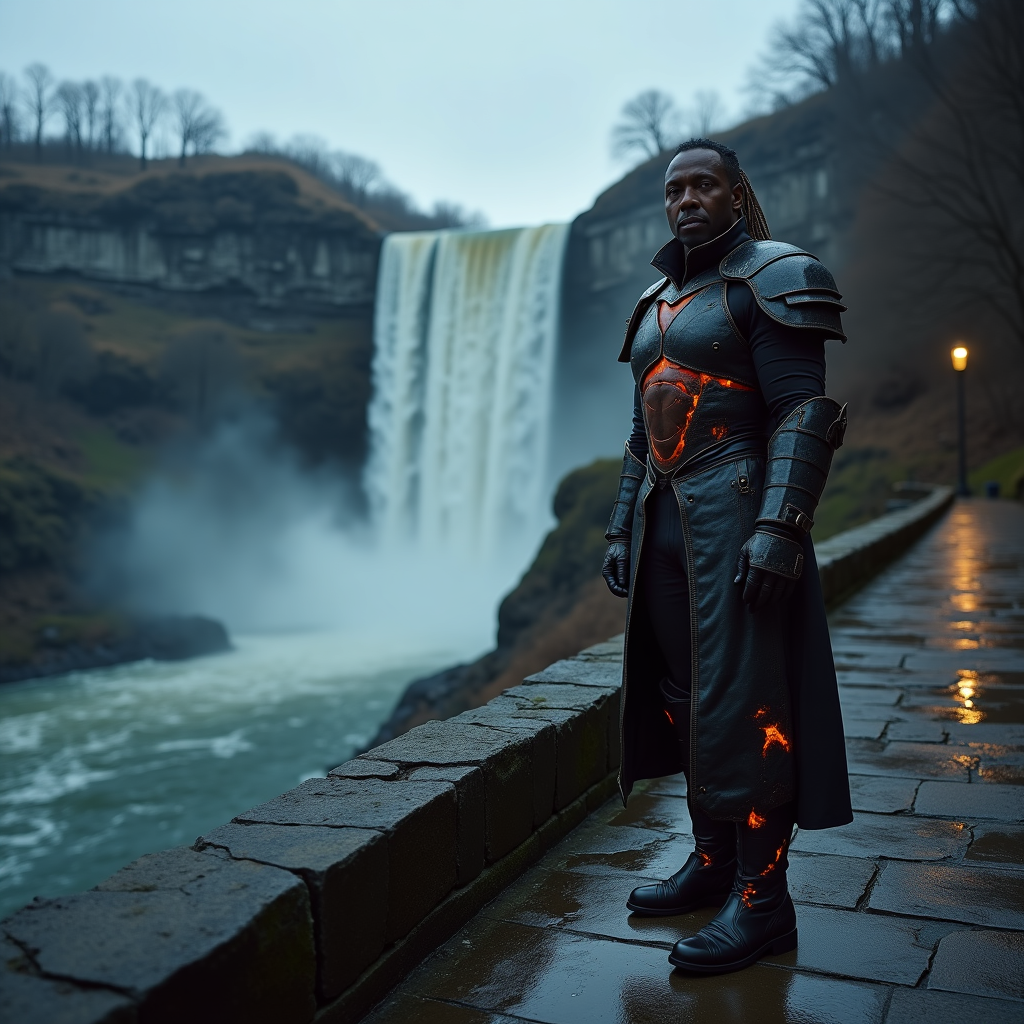
The demolition crews arrive on a Friday night in late April, when the cherry blossoms are at peak and the mist from the Great Falls hangs over the gorge like a veil.
Falk is at the Spruce Street perimeter when Ironhollow arrives. He sees her cross the vacant lot — barefoot, small, her dark hair loose, her hands already pressed to the rail embankment — and he feels the resonant pulse move through the regional network the way you feel a chord played on a very large instrument: not through the ears but through the chest. Traffic signals cycling to red on Main Street. Water authority sensors flagging. The freight junction two blocks east going briefly, surgically quiet.
She is not destroying the system. She is playing it. Like an instrument she was born to play, except she wasn’t — she was thrown into it by a bore drill his company operated, on a soil site his company chose, on a Thursday afternoon when a child was walking home from school.
He hardens the ground beneath her feet — a ten-foot radius of compressed clay going to near-bedrock density, trying to slow her, trying to give the demolition crew time to get into position. She releases the soil beneath the lead compactor before he can lock it. The machine tilts, sinks six inches, stalls.
He pushes harder. She threads a pulse through the signal junction twenty feet to her left and every piece of Meridian’s GPS-dependent equipment goes blind simultaneously — not destroyed, not permanently damaged, just suddenly ignorant of where it is. The staging area becomes a twelve-inch slurry pool and the compactor’s treads disappear into it.
He is standing at the edge of his hardened circle, and she is standing barefoot in the silt with her hair wild and her hands black with clay, and she is thirteen years old, and he built himself into this out of a compound his bore drill released into her path, and the demolition site is mired, and the suppressed report is already gone from his server — he can feel the absence of it, the clean precise shape of its removal, like a tooth pulled.
“This city is going to outlast both of us,” she says.
He looks at her for a long moment. He can feel the microfractures in the mill foundations behind him, reading them through the soles of his boots — six weeks, maybe eight. He can feel the bittersweet vine on the facade to his right, and he knows without touching it which compound his hands would synthesize if he reached out: fixative or poison, holding or letting go.
He thinks about his father reading load-bearing walls. He thinks about East 38th Street. He thinks about what it means to believe in demolition so completely that you stop being able to imagine what you’d build if you held still long enough to let the old bones speak.
He walks away from the site. Emergency management is already coming — he can feel the vehicle vibration through the soil, half a mile out, moving fast.
The Meridian project is suspended by morning. Dr. Hess’s report — the real one — runs in the digital edition of the Paterson community news before he has had his first cup of coffee.
He sits in his car on the East 38th Street block where his mother grew up, and he presses his palms flat against the dashboard, and he reads the stress fractures in the chassis — the tiny accumulated compressions of a vehicle that has been driven very hard for a very long time.
He knows the geometry of things that are about to give way.
Ironfall is not finished. He has six sealed chambers left to find. He has the fixative compound in his hands, and the decay compound too, and the choice between them is still purely volitional. He has the electromagnetic field, still warm, still spreading from the hard circle of his own making. He has a map of every fault line in Paterson’s bones, read directly, without mediation, with the terrifying accuracy of a man who has nothing left to protect but the conviction that he was right.
He is not finished. He is just recalculating.
The Great Falls roar somewhere to the west, seventy-seven feet of Passaic River water crashing into the gorge. Hamilton himself once stood beside it and called it the engine of a nation. Falk’s mother used to take him there on Sunday mornings, before church, and they would stand at the overlook and she would tell him that the falls had been there before Paterson and would be there after, and that a city’s job was not to outlast the water but to deserve it.
He had believed her then.
The iron falls when it can no longer carry what it was given to carry. He had named himself for that moment. He had thought it was a metaphor for the old mill corridor. He understands now, sitting on East 38th Street with his hands pressed to the dashboard and the fault lines of everything radiating through his palms, that he had named himself for himself.
The question — the only question left — is what he builds in the space the falling makes.