The Ironwood Accord
Part One: The Man Who Kept the Trains Running
Newark Penn Station smells like diesel and memory. Every morning for thirty-one years, Darnell Okafor has walked the same cracked concrete from his row house off Bloomfield Avenue, cut through the pale light of the Lincoln Park underpass, and taken his post at Track 3. He knows the rhythm of this city the way a musician knows a song he didn’t write but has played ten thousand times — not by thinking, but by feeling.
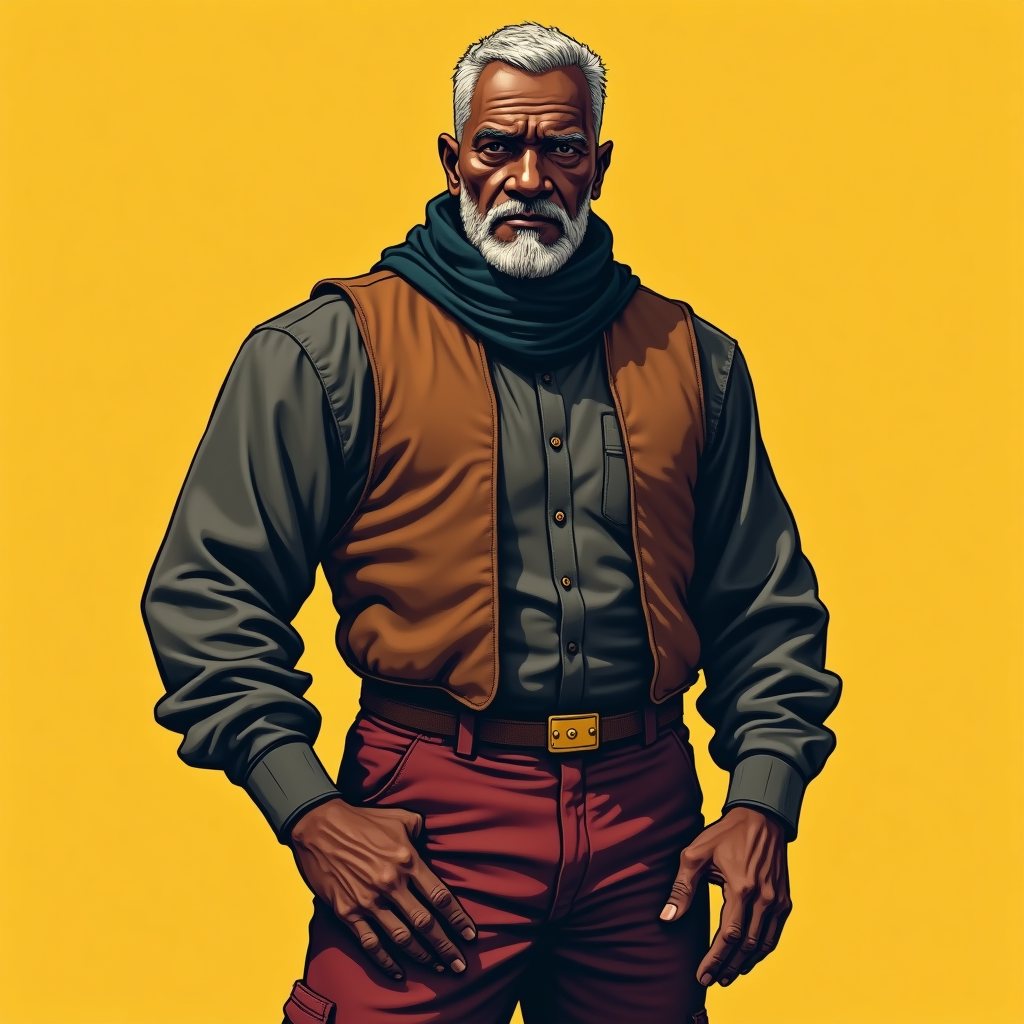
He’s sixty-four now. Grey temples, big hands, a body that moves like it’s conserving something. The other NJ Transit workers call him “the Clock” because trains run on time when Darnell is near them — not because of any magic, not yet, but because he watches, listens, anticipates. He knows when a coupling is about to fail by the pitch of the grind. He knows when a platform is overloaded by the way the concrete breathes beneath his boots. He has given this city thirty-one years of that attention, and Newark has given him back a pension, a bad left knee, and the quiet pride of a man who believes in the infrastructure of other people’s lives.
Then Apex Corridor Solutions announces the “Modernization Accord.”
The plan, as reported in the Essex County Ledger, is elegant in the way that erasure always is. Apex — a transit consultancy that materialized seemingly from nowhere, flush with private equity — proposes a sweeping overhaul of Newark’s commuter rail grid. New ticketing architecture. Automated station management. Price restructuring “aligned with regional demand peaks.” What that means, in practice, is this: during the 2026 World Cup, a single train ticket out of Newark Penn will cost over one hundred dollars. For a city where the median household income hovers below sixty thousand, a hundred-dollar train ride is not a modernization. It is a wall.
Darnell reads the full proposal on a Tuesday night at his kitchen table, the Passaic River wind pressing against his windows. He reads it three times. Then he calls his union rep, files a formal objection with the Essex County transit board, and shows up to the public comment hearing at the Newark Symphony Hall the following Thursday with seven pages of handwritten notes.
The room is full. The panel is not listening.
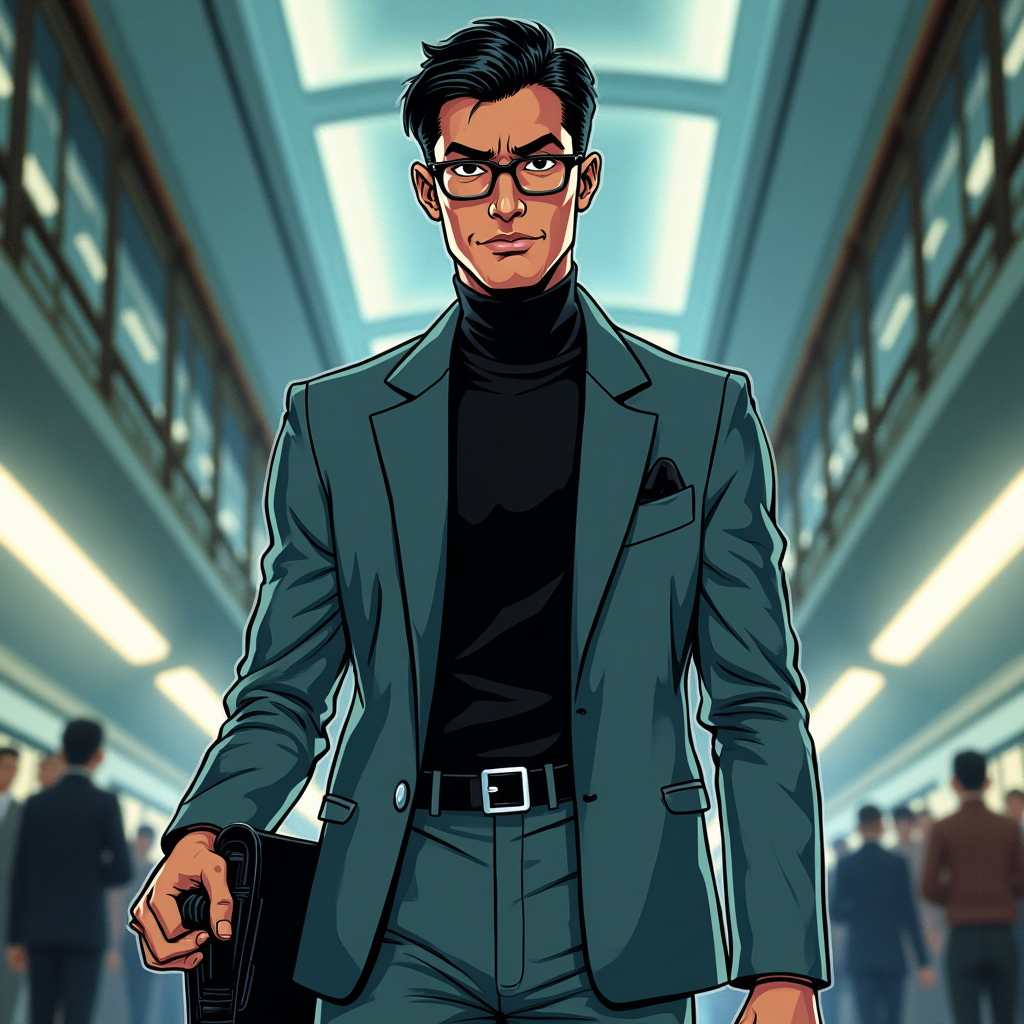
Behind the Apex Corridor Solutions lectern stands their lead architect: Seren Voss. Early thirties, South Asian, sharp-featured and precise, with close-cropped dark hair and wire-rimmed glasses, wearing a slate-gray fitted blazer over a high-collared black shirt. Seren speaks without notes and without warmth. Every question from the public gets absorbed into their rhetorical system and returned as a managed statistic. Darnell watches them work the room and feels something cold move through him — not hatred, but recognition. Seren Voss does not see the people in this room. They see throughput.
Part Two: What the River Remembers
Darnell doesn’t sleep well after the hearing. On Friday he walks further than usual, past Branch Brook Park where the cherry trees are barely past bloom — five thousand of them, the nation’s largest collection, petals browning at the edges now — past the old industrial flats near the Passaic waterfront, to a stretch of riverbank below the old shipping infrastructure that most people have forgotten about.
He comes here sometimes. Not for any reason he could articulate. The river is brown and wide, and the far bank shows the Port Newark cranes standing against the sky like enormous orange birds. His father worked the port. His grandfather did too. There’s iron in his family the way there’s iron in this ground.
He’s standing on a crumbling stone embankment — remnants of the old 17th-century mill infrastructure that once made Newark the industrial heart of the Northeast — when the bank gives way.
The collapse is slow and then total. Darnell goes into the Passaic.
The water is shockingly cold and dark. He is not a strong swimmer, never has been, but he’s calm — the same calm he brings to a platform crisis, to a derailment, to any sudden failure of the systems he maintains. He doesn’t panic. He tries to swim. He can’t find the surface.
What he finds instead is the bottom.
His hands press into the riverbed silt and meet something older: an iron spike, colonial-era forge iron, the kind driven into the Newark earth in 1666 when the Puritan settlers staked the first settlement at the mouth of the Passaic. The spike is crusted with mineral and time. When Darnell’s palms close around it, he feels a current — not electrical, not thermal, but geological. Something that has been waiting in the compressed memory of iron and water and accumulated industrial history for three and a half centuries.
It enters him like a breath.
Part Three: The Accord of Iron
He wakes on the bank, soaking. The sky is the color of an old transit map. His hands feel different — heavier, and yet precise, the way a tuning fork feels after it has been struck.
It takes three days to understand what has happened to him.
The first sign: he presses his palm to the rusted iron railing on his back stairs, and he hears it. Not sound exactly — a vibration that becomes information. The iron tells him the railing is stressed at the third bracket, will fail within six weeks, has been compromised by decades of freeze-thaw cycling. He knows this the way he knows a train is about to slip its coupling. Completely, and without doubt.
The second sign: at Track 3, he places his hand on the rail and feels the entire Newark Penn Station network. Every switch. Every stress fracture. Every weight-bearing column in the 1935 beaux-arts terminal above him. The iron grid of the city opens to him like a map drawn in sensation.
The third sign, and the one that frightens and clarifies him simultaneously: when a freight train jumps its track during a Thursday-morning chaos on the outbound Montclair-Boonton line, Darnell doesn’t run or radio or evacuate. He steps onto the rail, presses his foot down, and the train stops — not because of friction or mechanical failure, but because he has become, for one shuddering moment, continuous with the iron beneath it. He is the track. He holds it.
Nobody sees it happen. Or if they do, they’re too shaken by the near-miss to process what they witnessed.
He takes the name from what he felt that night in the river. Ironwood — for the old-growth hardwood piles that colonial Newark drove into the Passaic mud to build its first wharves; for the iron that forged this city’s industrial identity; for the man who is both, now, fused.
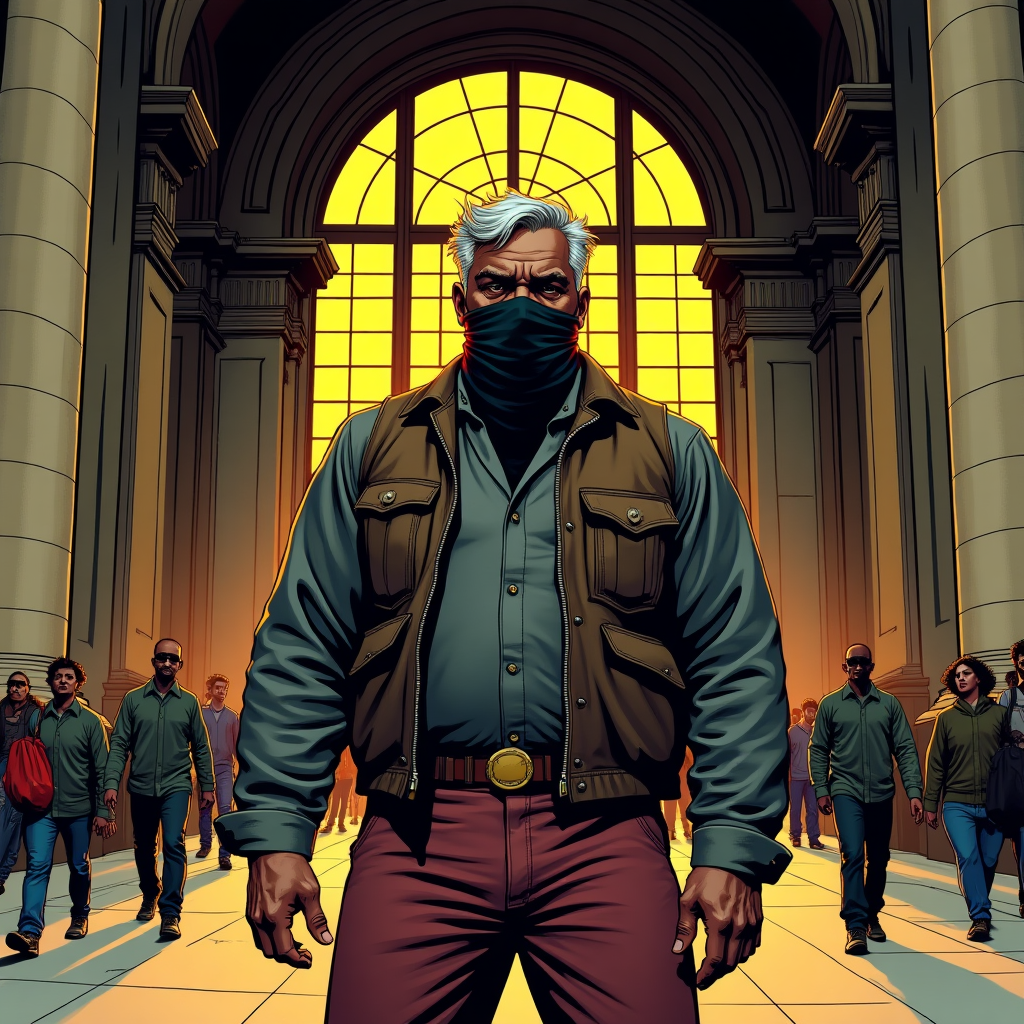
He makes a costume from what he has: deep oxblood work pants, a heavy charcoal long-sleeve under a worn leather vest, a wrap of dark fabric across his jaw against the wind. He looks like a man who works for a living because he is one. He looks like Newark because he is that, too.
Part Four: Nullveil and the Architecture of Absence
Darnell’s union contact sends him a file that shouldn’t exist — internal Apex Corridor Solutions documents, leaked from a contractor who got nervous. What they reveal is worse than price gouging.
Seren Voss isn’t just a transit consultant. They are the architect of something they’ve been building across six American cities under different corporate shells: a system they call internally the Nullveil Protocol. The logic is this: if you price transit above what communities can afford, those communities don’t travel. If they don’t travel, they don’t organize, don’t vote in other precincts, don’t flow across the city’s economic arteries. The city becomes a collection of sealed, economically sorted nodes. The people who stay in place become, in Seren’s terms, “friction-minimized.” The word they actually use, in one memo, is quieted.
Seren Voss grew up in a city that was “redeveloped” out from under their family — a South Asian immigrant community displaced by a stadium project in another state, scattered to suburbs they couldn’t afford, jobs they couldn’t reach without cars they couldn’t buy. They watched that happen at age nine and decided, with the cold logic of a wounded child who became a brilliant adult, that the lesson was not this is wrong. The lesson was this is how power works, so learn to wield it before someone wields it on you. They became the instrument of the very forces that destroyed their community, because they decided that proximity to power was the only safety.
They have named themselves Nullveil — a disappearing act, a force that makes people invisible by making them immobile.
Nullveil’s power is not physical. It is systemic, financial, and it is buttressed by something stranger: a piece of proprietary signal-dampening technology woven into the Apex ticketing infrastructure that actively disrupts electronic systems within a quarter-mile radius — including, Darnell will soon discover, the transit network’s iron switching grid. Nullveil can make the trains go silent. Can freeze a platform’s logic. Can turn the infrastructure of connection into a locked door.
They wear their slate-gray blazer like armor, their wire-rimmed glasses catching fluorescent light, their expression one of preemptive patience — they have already modeled the objections and found them insufficient.
Part Five: Penn Station, Iron and Open
The confrontation happens on a Saturday morning in September, the opening weekend of the World Cup preliminary rounds, Newark Penn Station packed beyond its designed capacity. Every train to MetLife, to New York Penn, to the Jersey Shore watch parties — all of them behind the new Apex ticketing wall. The gates are locked. Hundreds of people — families, workers, fans in jerseys, elderly commuters clutching paper tickets now rendered invalid — stand on the wrong side of the turnstile.
Nullveil is in the station management office on the mezzanine level, running the Accord’s first live deployment, watching the crowd through glass.
Ironwood comes up through the maintenance tunnels.
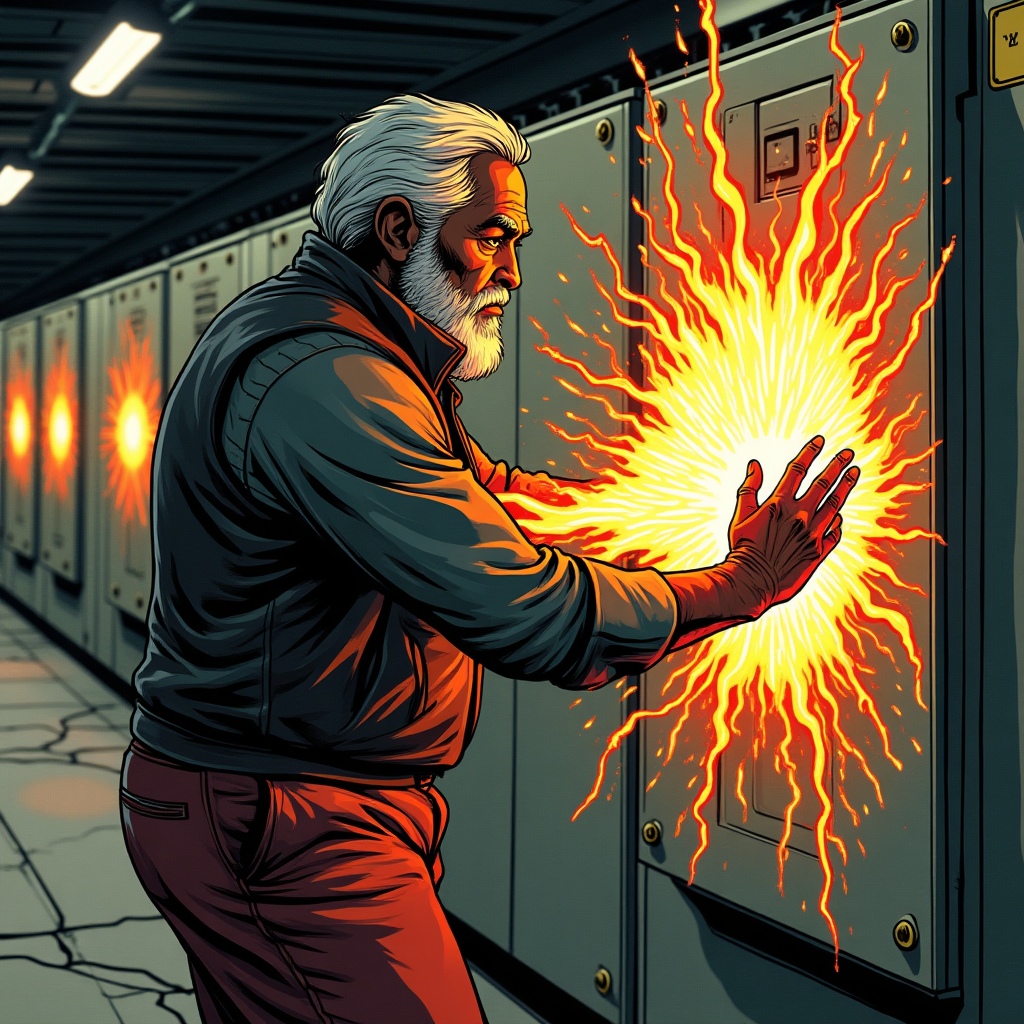
He moves through the iron skeleton of the 1935 terminal the way water moves through a watershed — not forcing, finding. The building speaks to him constantly: every stressed beam, every overcrowded platform, every locked gate mechanism. He does not break things. He opens them. He presses his palms to the master switching panel at the terminal’s subterranean core and feels the Nullveil signal trying to hold it closed — a cold, precise interference, like a bureaucratic wall translated into frequency.
He pushes back with something older.
The iron remembers the port. The iron remembers the mills. The iron remembers thirty-one years of a man who paid attention when everyone else looked away. Darnell Okafor sends that memory through the grid like a current, and the gates open — not just the ones on this platform, but all of them, every gate in Newark Penn, the whole station exhaling at once.
The crowd moves. The trains move.
Nullveil finds him on the mezzanine staircase, and for a long moment they simply face each other — Seren’s wire-rimmed glasses, Darnell’s steady grey-templed gravity. Two people who understand infrastructure, who know what it means to hold something together or to let it fail.
“You think opening a gate changes anything?” Seren says. Their voice is controlled, precise. “The Accord is already in twelve cities. You can’t hold every turnstile in America.”
“No,” Darnell says. “But I can hold this one. Today. For these people.”
He’s not wrong, and he’s not finished. As Nullveil raises their signal device, Darnell does something he hasn’t done yet, something he didn’t know he could do until this moment: he extends the iron network outward, through the rails, through the Passaic riverbed iron, through the colonial-era spikes still buried in Newark’s foundation, and he grounds Nullveil’s signal completely — a three-hundred-and-sixty-year-old city becoming, for one morning, a shield.
The World Cup crowd floods the platforms. The trains run.
Newark, as it always has, refuses to be quieted.
Next issue: Ironwood follows the Nullveil Protocol to the Port Newark–Elizabeth terminal — and discovers that Apex Corridor Solutions has a silent partner with plans that go far beyond train tickets.