

Part One: The View From Above
The city never asked permission before it changed.
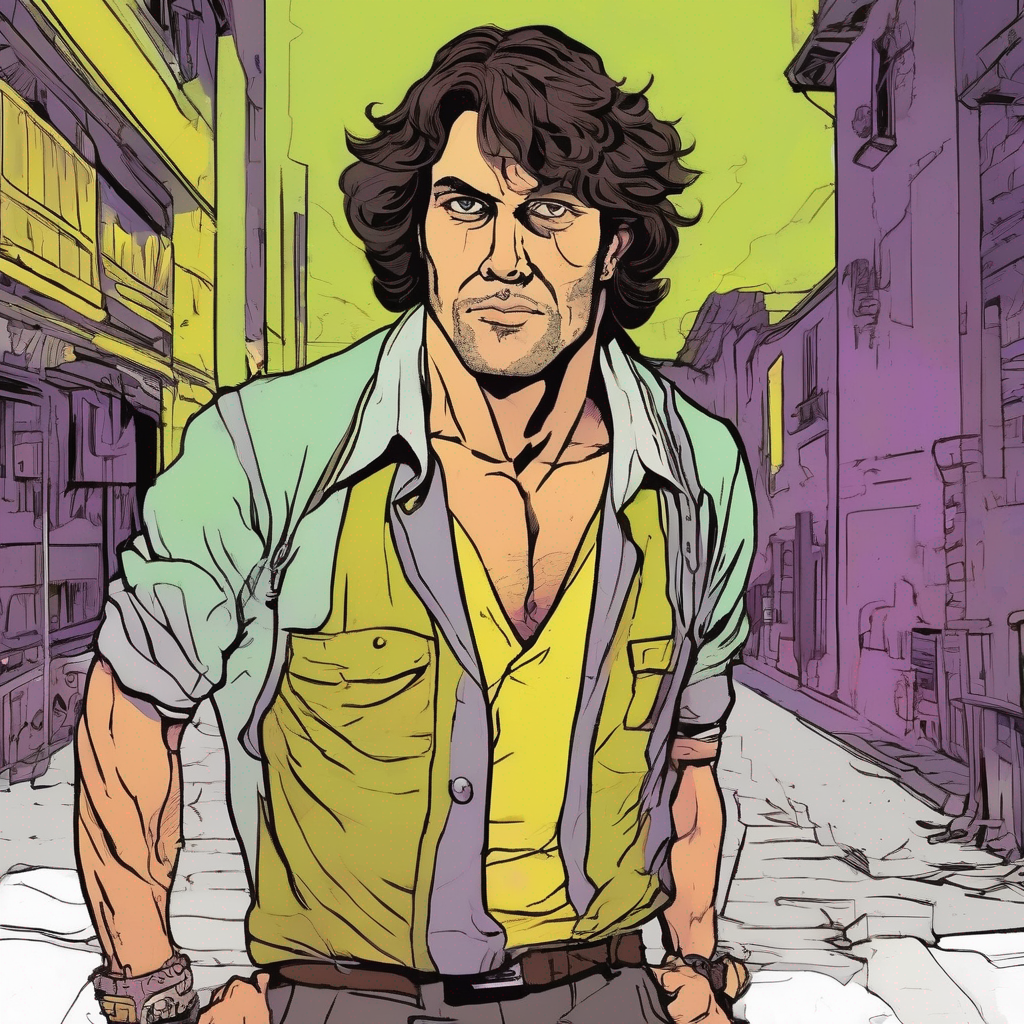
That is what Marcus Vane thinks about now, standing on the roof of his converted warehouse on 13th and Willow, watching the cranes swing their iron arms over the waterfront like metronomes counting down to something inevitable. He used to love this view. He used to believe this city was the most honest place on earth — dense and loud and unafraid of what it was: a working town, a commuter town, a town where immigrants and laborers and dreamers stacked themselves into narrow brownstones and made something real.
He grew up in the northwest corner of Hoboken, near Observer Highway, in a three-room apartment above a laundromat his grandmother ran for thirty-seven years. There was nothing glamorous about it. The steam from the machines rose through the floorboards in winter and kept them warm. His mother rode NJ Transit to Newark every morning at 6:04 a.m. and came home smelling of office air. His father drove a delivery truck that threaded the grid of one-way streets like a needle through fabric. Marcus himself spent his formative years at Stevens Institute of Technology on the Castle Point Plateau — the hilltop campus that looks out over the Hudson like it owns the whole skyline — where he studied structural engineering and urban planning on a partial scholarship, the first in his family to finish a four-year degree.
He loved buildings. He loved the geometry of how a city holds itself up. He used to walk the waterfront at dawn, studying the old marine terminals along Sinatra Drive, reading stress lines into the aged facades of pier warehouses the way other men read novels. He understood intuitively what most planners only grasped on paper: that a city’s bones tell the truth about who the city was built for.
And the bones of Hoboken, he understood too late, were being quietly replaced.
Part Two: The Hargrove Elevation Group
It started with the Hargrove Elevation Group — a real estate conglomerate from out of state, faceless as a form letter, that began acquiring properties along the southern waterfront six years ago. Marcus was hired as a structural consultant for the first phase of what was described, in the planning documents, as a “mixed-income revitalization corridor.” He was proud of the work. He drafted load-bearing analyses for three new towers and a pedestrian esplanade along the Hudson. He attended the community meetings. He answered questions earnestly in the fluorescent light of the Hoboken City Hall council chambers.
He did not read the footnotes carefully enough.
Phase Two had no affordable units. Phase Three eliminated them entirely. The “mixed-income corridor” was, in practice, a luxury enclave with better branding. When Marcus raised his objections in writing, he was thanked for his service and removed from the project. When he filed a formal complaint with the city’s planning board, the complaint was tabled. When he testified at a council meeting — sitting three rows behind a roomful of Hargrove lobbyists in identical charcoal suits — the microphone cut out twice before he finished his first sentence.
His grandmother’s laundromat had already closed by then. The new landlord tripled the rent. She moved to Kearny to live with an aunt. The apartment above the laundromat is now a “micro-luxury studio” listed on a short-term rental platform at $340 a night.
Marcus walked out of that council meeting and did not stop walking until he reached Pier A at the southern waterfront. He stood at the edge over the black water of the Hudson and felt something restructure inside him — not break, not shatter, but redistribute, the way a load shifts in a building when a support column is removed. The grief didn’t disappear. It migrated. It moved into his hands.
Part Three: The Accident
The accident — if it can still be called that — happened three weeks later in the sub-basement of the old Maxwell House redevelopment site on Hudson Street, where Marcus had taken a night contract job reviewing structural integrity for a new foundation dig. Hargrove’s crews had cut corners on the shoring. Marcus knew it the moment he stepped into the pit. He was in the process of documenting the violations on his phone when the ground gave way.
He fell fourteen feet into a pocket of pressurized earth — an old colonial-era cistern that had been buried and forgotten beneath the 19th-century industrial fill. The cistern walls were lined with a blue-grey clay unlike anything in the standard geological surveys, threaded through with a mineral deposit that the university would later classify, after his case drew attention, as a previously undocumented piezoelectric compound — a material that generates and conducts electrical charge under physical pressure. The collapse drove him into the clay wall at force. Every fractured rib, every compressed vertebra, every point of impact was a point of charge. The current moved through him not like lightning but like memory — total, rewriting, permanent.
He was unconscious for eleven hours. When he woke, the walls of the cistern had been flattened smooth. The shoring above him had been pushed back into plumb. The Hargrove crew that pulled him out described it, later, in hushed tones: the walls had equalized. Every surface at exactly the same height, the same pressure, as if geometry itself had intervened.
The doctors found nothing wrong with him. That was the terrifying part. Every bone that should have been broken was intact. Every tissue that should have been crushed was whole. The X-rays showed something else instead: his skeletal structure threaded through with fine filaments of mineralized crystal — the piezoelectric clay, integrated into his bones, his tendons, his hands. He was, structurally speaking, no longer entirely organic. He was load-bearing in a new sense. He could feel the stress in every surface he touched. He could feel the uneven weight of a city that had been built to crush certain people and elevate others.
And he could level it.
Part Four: The Leveling
His first act is precise and, in its way, beautiful.
He walks to the Hargrove sales office on Washington Street — the one with the floor-to-ceiling glass and the architectural renderings of towers that don’t exist yet — and he places both palms flat against the plate glass. He feels the pressure differential, the way the building sits unevenly on its foundation, money poured into the facade and nothing into the bones. He equalizes it. The glass doesn’t shatter. It subsides — slowly, evenly — into the sidewalk, the whole storefront sinking eight inches into perfect, catastrophic level. No one is hurt. The building is structurally sound. But the Hargrove office is gone.
The city notices.
Part Five: The War of Weight
Terminal notices most of all.
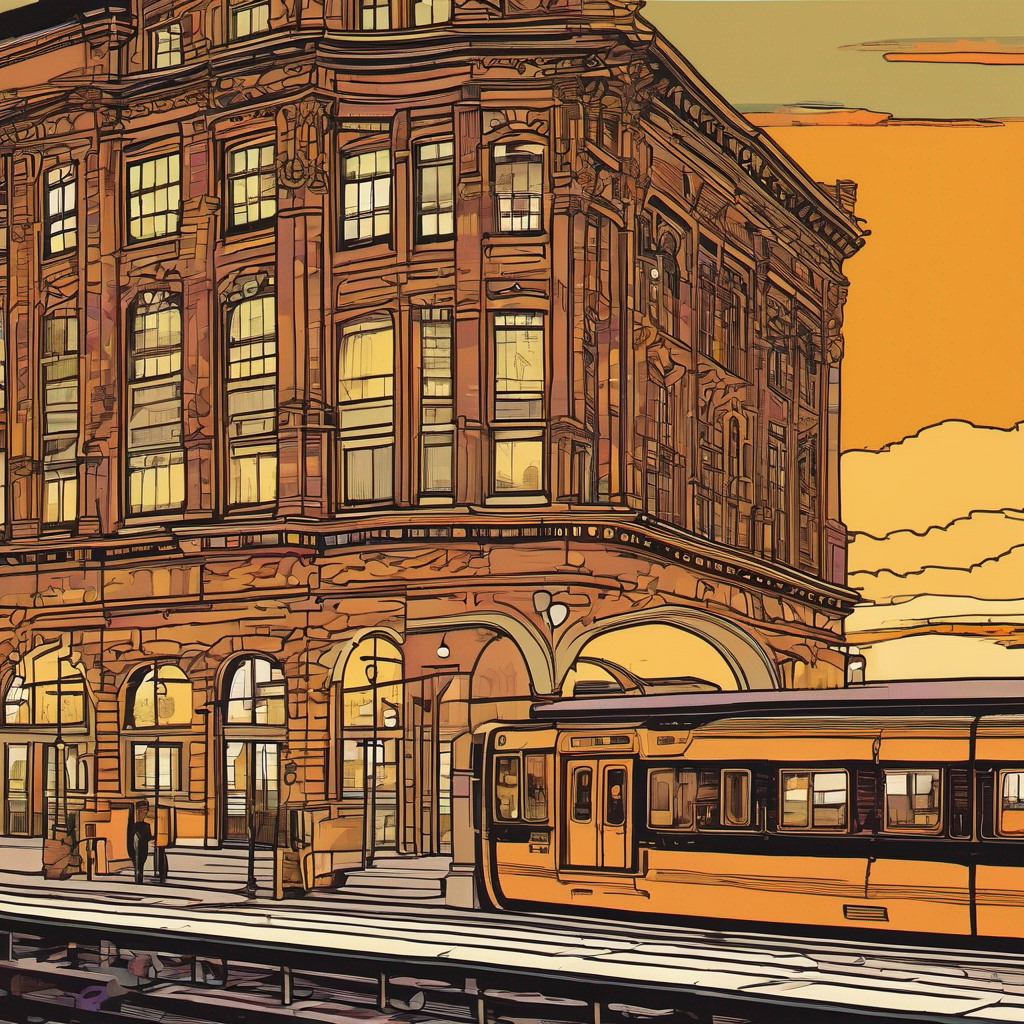
He has heard of Terminal — everyone in Hoboken has. The guardian of the great transit hub on Hudson Place, the hero who draws power from the convergence of rail lines and ferry routes and the kinetic energy of ten thousand daily commuters. Terminal moves like the city moves: fast, purposeful, always connecting. They are everything Marcus once believed the city could be — a force that carries people, that makes the network function. He understands, on a deep structural level, why Terminal opposes him. A city that functions depends on its infrastructure remaining intact. Terminal defends infrastructure.
But infrastructure, Marcus Vane has learned, is not neutral. Infrastructure is a choice. Every train line that was built and every neighborhood it bypassed was a choice. Every pier that was preserved and every laundromat that was displaced was a choice. Terminal defends the city as it is. Leveler intends to reckon with the city as it was built to be.
They clash for the first time on the pedestrian esplanade along Sinatra Drive, beneath the long shadow of the Hudson, with Manhattan burning gold across the water. Terminal is fast and luminous, crackling with the transferred momentum of a thousand commutes. Leveler is still and precise. He does not fight the way Terminal fights — with velocity, with connection, with the generosity of a system that wants to include everyone.
He fights with weight. With the knowledge of what is underneath. With the pressure memory of everything the city has buried.
“You’re tearing it down,” Terminal says, hovering above him, the light of the terminal’s great clock tower haloed behind them.
“I’m leveling it,” Marcus answers. “There’s a difference. You’d know that if you’d ever been on the bottom.”
The esplanade buckles. The cranes shudder. The river reflects two figures who are, in the end, products of the same city — one who loves what Hoboken connects people to, and one who cannot forget what it has taken away.
Leveler walks north along the waterfront, past the old piers, past the Stevens campus on the hill, past the street where his grandmother’s laundromat used to breathe steam into the winter air. The city hums beneath his feet with uneven pressure. He can feel every fault line.
He is just getting started.
Next issue: Terminal and Leveler — the Battle of Hoboken Terminal. What happens when the city’s greatest convergence point becomes the fault line itself?