CANAL IRON: The Origin of Lockmaster
Part One: The Weight of Acquackanonk
The Dundee Canal doesn’t move anymore.
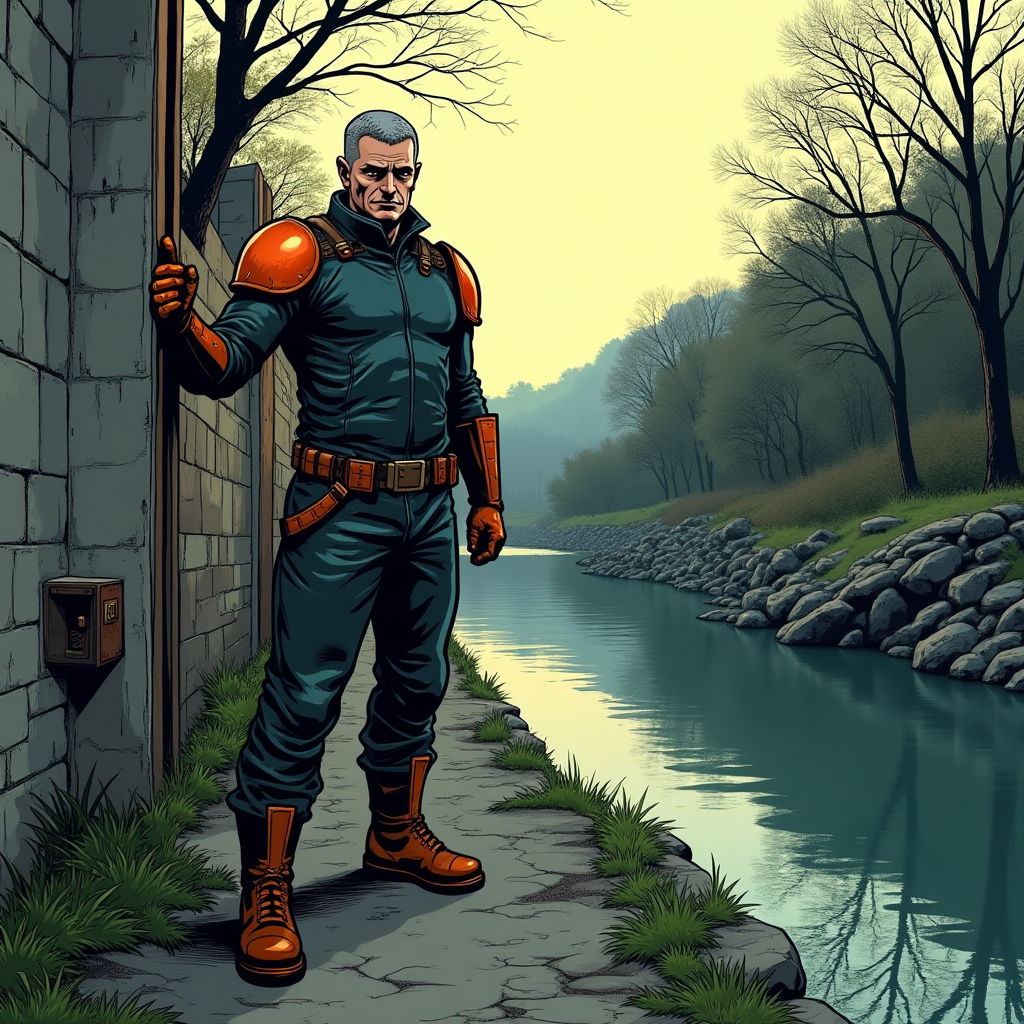
It hasn’t moved in over a century — its water stilled, its locks rusted into permanence, its towpaths grown over with sumac and river birch. But if you press your hand against the old iron hardware at the Clifton stretch of the canal, if you stand there long enough in the particular silence between Route 3 and the Passaic River, you can feel something. A vibration. A memory locked inside the metal.
Thomas Callahan knows this because he has done it every morning for eleven years.
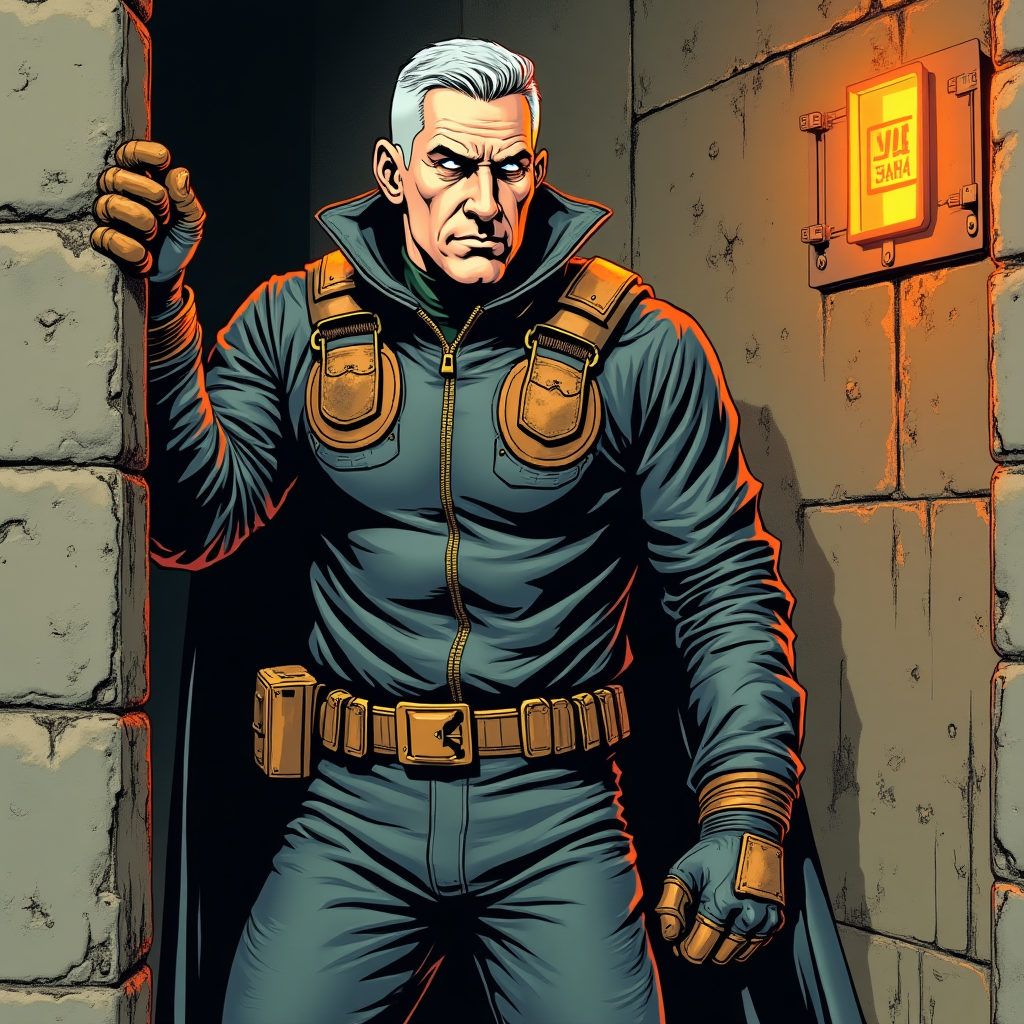
He’s fifty-two, pale-eyed and broad-shouldered, with iron-grey hair cropped close above a forehead that carries the permanent crease of a man who thinks too hard about things most people have stopped noticing. He works for the Passaic County Infrastructure Authority as a structural integrity assessor — the person the county calls when a bridge groans wrong, when a retaining wall develops a new crack, when a culvert begins to whisper in a language that means collapse is coming. He drives a white county pickup with a dented rear quarter panel and a backseat full of soil core samples and printed LIDAR surveys.
He grew up on Clifton Avenue, two blocks from where the Erie Railroad station once stood, and he has never seriously considered leaving. His ex-wife called it stubbornness. His daughter, who studies environmental engineering at Rutgers, calls it rootedness — and she says it like it’s a gift. Thomas accepts the interpretation.
On weekday mornings he parks on Canal Road and walks the towpath before work. It is not exercise, exactly. It is more like reading — a slow literacy of stone and silt, of ironwork and gradient. He knows every repaired section of the canal’s original limestone wall. He knows where the 1903 flood left its watermark. He knows the way the ground remembers pressure even after the pressure is gone.
He does not yet know that the ground is about to remember him.
Part Two: The Explosion on Lakeview
It begins on a Wednesday in April — the kind of cold bright Wednesday that New Jersey specializes in, where the light is sharp and everything looks slightly more real than it should.
Thomas is on Lakeview Avenue by 6:40 AM, doing a pre-dawn site assessment for a water main corridor study, when he hears it. Everyone in a half-mile radius hears it. A sound like the city biting down on itself: metal on masonry, pressure on pressure, the catastrophic grammar of something enormous moving where it should never move.
A loaded eighteen-wheeler, running an unfamiliar overnight route on the wrong GPS instruction, has gone off Lakeview and straight through the cinderblock facade of Marcone Limousine Service — a three-generation family business operating out of a converted depot building that still has pre-WWII reinforced concrete in its bones. The truck has taken out the entire street-facing wall. A cloud of particulate dust and diesel smoke rolls up Lakeview in the early-morning dark. Somewhere inside, a driver is trapped beneath a fallen roof beam. On the second floor of the adjacent structure, a long-haul dispatcher named Wendell Cruz is alive and apparently uninjured, shouting from a window about the apocalypse.
Like an explosion, someone will say later. Like being bombed.
Thomas doesn’t think. His body is already moving — because this is exactly the vocabulary his body knows. He’s inside the perimeter before the first fire unit arrives, reading the structure the way he always reads structures: weight distribution, load transfer, the arithmetic of survival. He calls up to Wendell, tells him not to move. He locates the trapped driver by sound, pinpoints the beam.
Then something goes wrong with the building. A secondary failure — the kind that kills first responders. A section of the original pre-war concrete subfloor gives way beneath Thomas’s feet, and he drops twelve feet into what the building’s original blueprints would have listed as a service basement, though that term is generous for a space that is, in practice, a repository for the building’s entire industrial history: old motor oil in drums, coils of copper wire from a 1940s rewiring job, iron hardware — hinges, channels, lock plates — salvaged from the Dundee Canal itself when the county did its 1987 restoration survey. The Marcone family bought the lot in 1965 and took everything that wasn’t nailed down.
The ceiling above Thomas collapses.
What happens next will take him months to understand.
Part Three: What the Lock Remembers
The doctors at St. Mary’s General call it traumatic compression exposure and fill three pages with numbers Thomas doesn’t recognize as belonging to his body. His left radius is fractured. Three ribs. A laceration across his left palm from something iron that he cannot, in the confusion of the first hours, identify.
What the doctors do not have a classification for: the way Thomas now feels the ground.
It starts in the hospital, lying still in the particular boredom of enforced recovery. He becomes aware — not metaphorically, but physically, as a sensory fact — of the building around him. The rebar inside the walls. The iron pipes in the ceiling. The anchor bolts in the floor. He can feel them the way you feel a tooth with your tongue. He reaches toward the bed frame with his right hand, not touching it, and the iron frame shivers. A passing nurse looks at it and says nothing, assuming a tremor she didn’t feel.
Thomas touches the railing. The vibration travels down the bed leg, into the floor, and he feels it radiate outward through the foundation — feels the hospital sitting on its pad, the pad sitting on glacial till, the till sitting on the bedrock that runs beneath all of Passaic County like a held breath.
He is in the hospital for nine days. By day four, he understands that the canal iron — the salvaged lock hardware — did something to him in that basement. It isn’t radiation. It isn’t a chemical reaction. It is older than either explanation. Those lock plates were cast in the 1830s from bog iron pulled out of Passaic Valley soil. They spent sixty years controlling the movement of water through stone. They spent another hundred years underground. And in the moment of compression, when the ceiling came down and the iron touched the cut in his palm and Thomas Callahan was pressed between the weight of a destroyed building and the bedrock of New Jersey — something conducted.
The canal remembered how to move things.
And it moved through him.
Part Four: The Man Who Wants to Erase the Grid
By June, Thomas has quietly, methodically learned what he can do.
He can feel the structural integrity of any material he stands upon — sense cracks before they propagate, map load paths through concrete and steel as clearly as reading a blueprint. He can, with physical contact and concentrated force, send vibration through iron and steel with surgical precision: enough to loosen a rusted bolt at forty feet, enough to shear a lock plate, enough to bring a compromised overpass section down in a controlled sequence that clears three lanes and doesn’t touch the adjacent span. He has tested each of these things carefully, alone, on the old towpath at dawn, and he has not told anyone.
He’s calling himself nothing yet. He doesn’t want a name. He wants to understand the thing before he claims it.
What interrupts this careful anonymity is a man named Reyes Morrow.
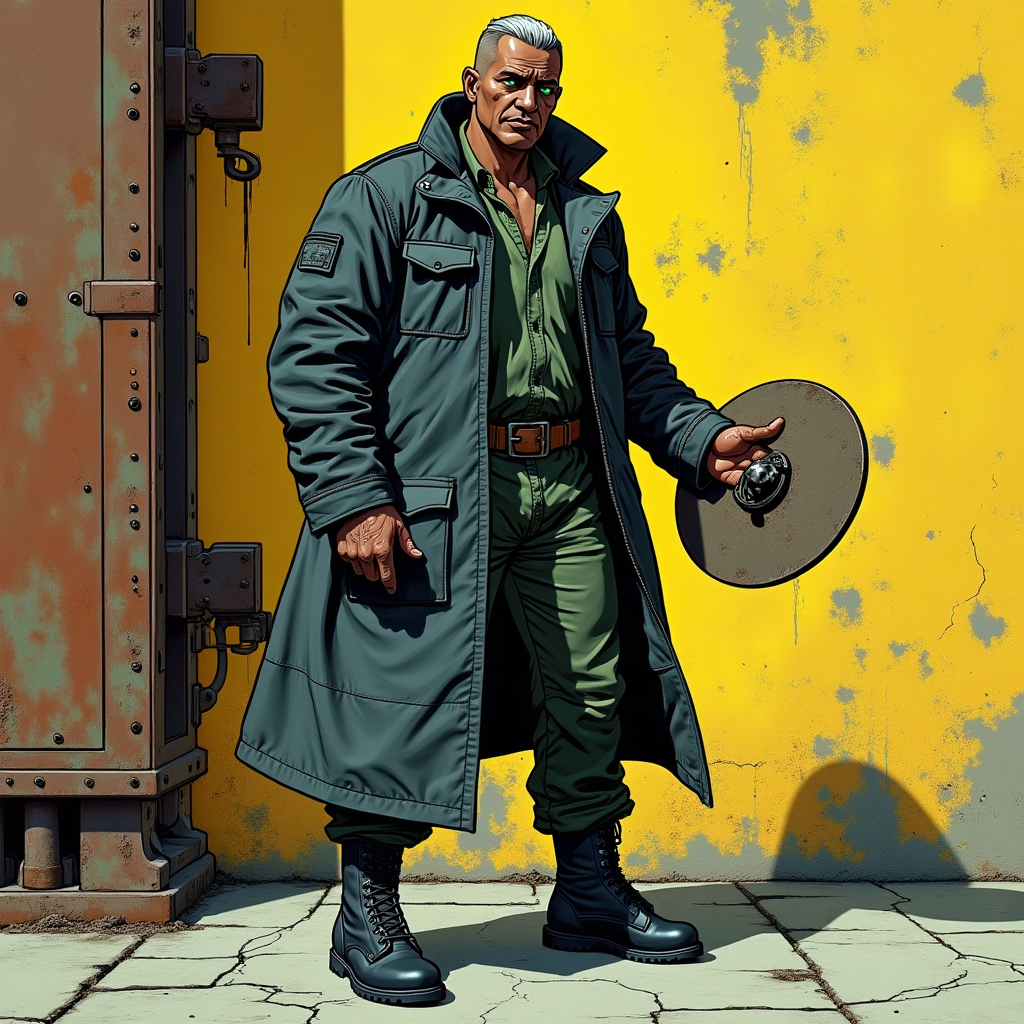
Morrow is in his late fifties — a large-framed, multiracial man with close-cropped silver-and-black hair, deep brown skin carrying the weathered texture of someone who has worked outdoors for decades, and pale green eyes that give his face an unsettling contrast. He moves with the unhurried authority of a man accustomed to being the most dangerous person in any room. He was, fifteen years ago, a structural demolitions consultant — the kind of expertise that knows exactly how to bring a building down and leave no readable signature.
Now he runs an entity called the Null Infrastructure Collective, operating out of a leased warehouse on Getty Avenue in Paterson, and his thesis — articulated in encrypted manifestos posted to channels Thomas’s daughter found and flagged for him — is that the entire built environment of North Jersey is a trap. That the highways, the rail lines, the water mains, the power infrastructure — all of it was designed to serve commuters, corporations, and real estate interests, and none of it was designed to serve communities. And that the only way to correct this is to tear it all out and start over.
Morrow is not wrong about the diagnosis. Thomas has spent thirty years watching the county infrastructure budget be redirected toward commercial corridor maintenance while residential side streets collapse. He has written the reports. He has attended the hearings. He understands the grievance.
But Morrow’s proposed correction is Route 3 at rush hour — collapsed. The Clifton NJ Transit rail bridge over the Passaic — severed. The main water transmission line from the Wanaque Reservoir — fractured. Not metaphorical pressure. Actual catastrophic failure, timed for maximum disruption, designed to force what Morrow calls structural truth-telling.
Ninety thousand people live in Clifton. Another two hundred thousand move through its transportation grid every day.
Thomas reads the intelligence his daughter has compiled — she is more alarmed than he is and less interested in nuance — and then he drives to Canal Road and stands at the old lock hardware in the dark for a long time.
He puts on the coat.
Part Five: Lockmaster
He doesn’t call himself Lockmaster right away. That comes from the kids on Main Avenue who see him, twice, working in the dark — once preventing a support column failure at the Route 21 interchange by transmitting a precise counter-vibration through the steel that stopped a crack from propagating mid-event, and once redirecting a water main rupture on Clifton Avenue by using his hands against the iron pipe to equalize pressure long enough for the city crew to isolate the valve.
The lock guy, one kid says, and it mutates over two weeks into Lockmaster the way all names mutate.
He accepts it.
The confrontation with Reyes Morrow comes on a Thursday night in late October, at the NJ Transit rail bridge spanning the Passaic between Clifton station and Delawanna. Morrow has brought three people with technical skills and two vehicles full of equipment. He has, Thomas will later estimate, been planning this specific action for eighteen months. The Clifton rail bridge is not the most structurally significant target in the county, but it is the most symbolic — it runs through the exact center of the city, it carries six thousand commuters a day, and its failure would be visible from the window of every house on both banks of the Passaic River.
You read the same reports I read, Morrow says, when Thomas appears on the bridge deck. He is not surprised. He has a quality that Thomas will come to recognize as tactical patience — he has already anticipated this conversation and decided it doesn’t change his outcome.
I wrote half of them, Thomas says.
Then you know I’m not wrong.
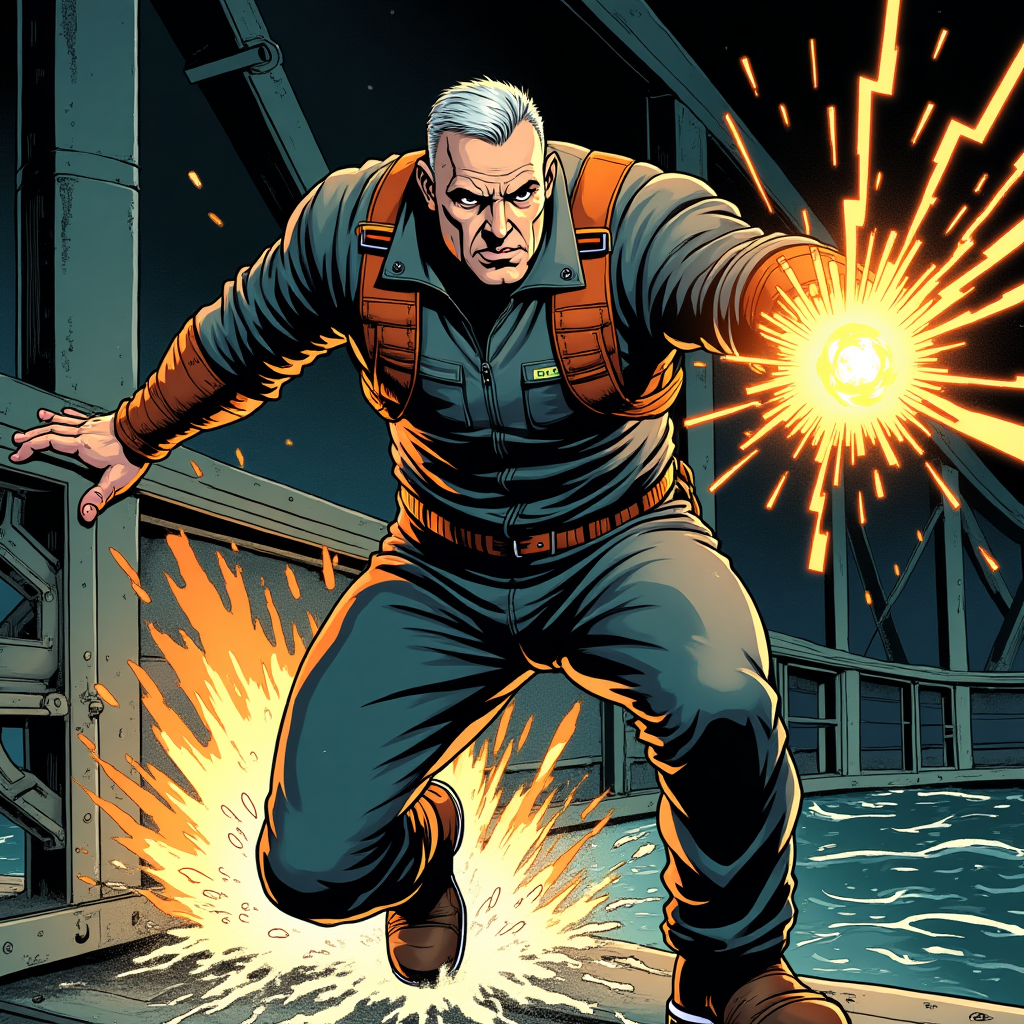
I know you’re not wrong about the problem. Thomas takes a step closer. Beneath his feet, through the bridge deck plate, he can feel every bolt and rivet and welded seam. He can feel the three charges Morrow’s people have already placed on the lower chord. He can feel the river. I know you’re catastrophically wrong about this.
Morrow moves first — because he has done this calculation too, and he knows that in a straight fight Thomas Callahan is not a fifty-two-year-old assessor with a bad left arm, he is something the county built without knowing it.
What happens next takes forty seconds. It involves the iron railing of the bridge transmitting a focused vibration that detonates Morrow’s charges prematurely — not on the structural members but on a redirected path, down the railing stanchions and into the river, where the percussion is absorbed by sixty feet of water and river silt. The bridge shudders but holds. Morrow’s team scatters. Morrow himself goes into the river — his choice, Thomas will note, not his — and is pulled out by a Passaic County water rescue unit three hundred meters downstream, cold and furious and uninjured.
Thomas stands on the bridge deck in the dark, his left hand pressed against the iron railing, feeling the whole city vibrating around him — the trains, the mains, the foundations, the locked water of the old canal, still and alive.
The Dundee Canal doesn’t move anymore.
But Thomas Callahan does.
Lockmaster. He can live with that.