
PAHSAYÈK: Guardian of the Valley That Splits
Part One: The Man Who Remembers the River
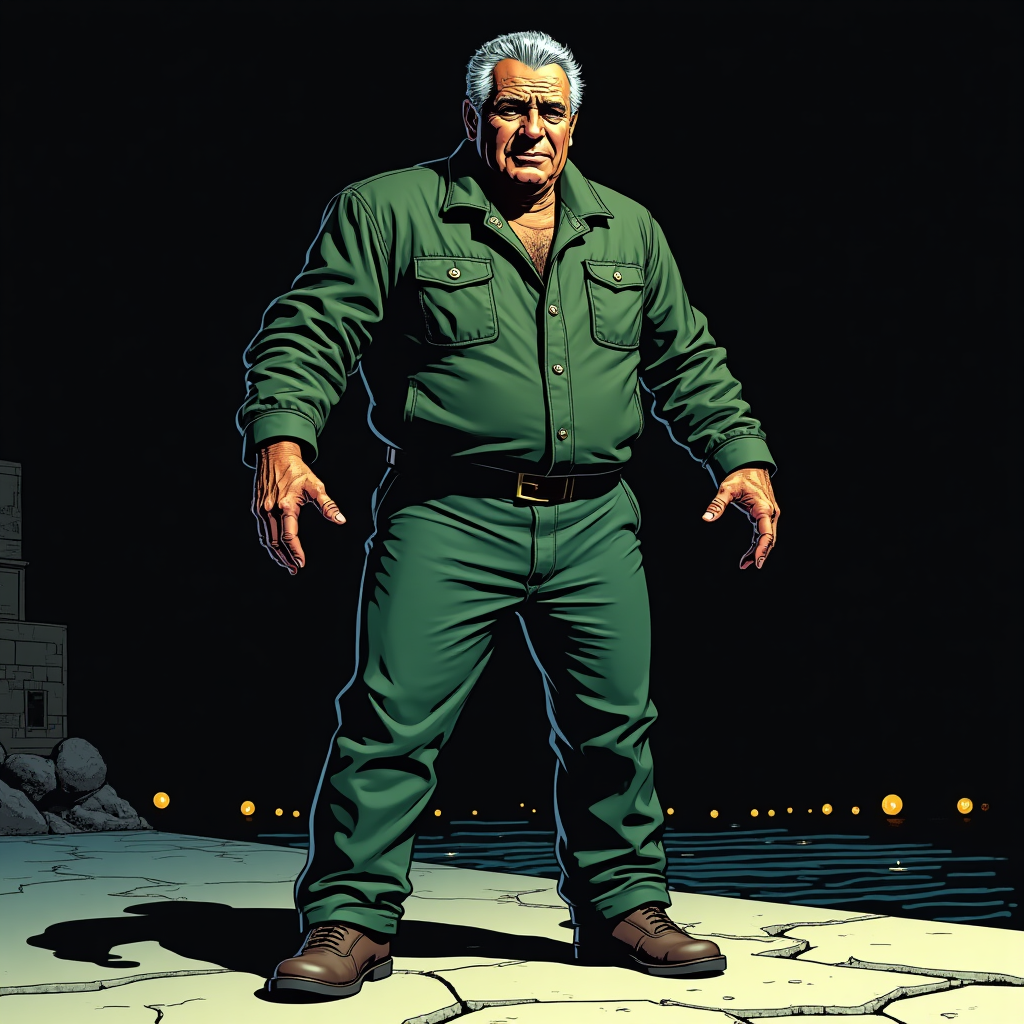
Ernesto Villanueva has lived on the banks of the Passaic River for forty-one years, and in that time he has learned to read the water the way other men read newspapers. He knows when the current runs copper-green after a hard rain, when the shallows go still and glassy before a storm, when the river breathes. He is sixty-four years old, compact and broad-shouldered, with silver-streaked black hair worn short at the temples and deep brown hands roughened by decades of labor. He speaks with the deliberate cadence of a man who chooses his words the way a mason chooses stones — one at a time, fitted to last.
Ernesto came to Passaic from Puebla in 1985, crossing through a city that was already in the long, complicated middle of reinventing itself. He found work at a textile finishing plant near the Gregory Avenue corridor, one of the last industrial operators still running machinery that had hummed continuously since the great 1926 strike. He learned English on the bus — the Route 190 out of the Port Authority, standing in the aisle with a worn pocket dictionary. He married here. Raised two daughters here. Buried his wife, Consuelo, in Holy Trinity Cemetery on Lafayette Avenue, and still brings her sunflowers on Sundays.
He is a maintenance supervisor now at the Passaic Academy for Science and Engineering on Paulison Avenue, keeping the building’s aging bones — the boilers, the hallways, the courtyard fountain — in a kind of reverent working order. He is not a man who thinks of himself as remarkable. He is a man who shows up.
What he does not know yet — what no one knows — is that the river has been watching him back.
Part Two: The Night the Ground Remembers
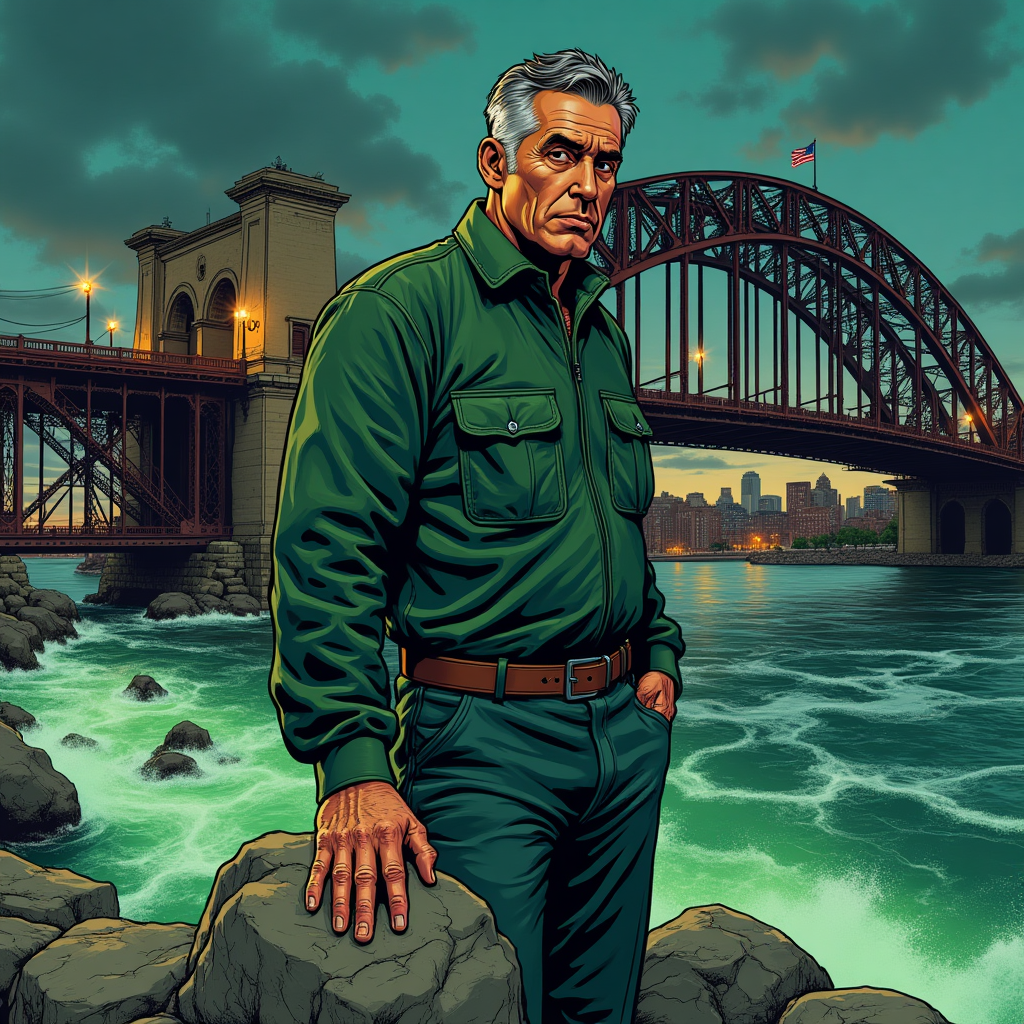
It begins in March, six weeks before the April that changes everything. A private infrastructure consortium called Veldran Meridian LLC files a permit application with Passaic City Hall. The proposal is staggering in its ambition and devastating in its specificity: a “riverfront reclamation corridor” that would reroute a half-mile section of the Passaic River’s bend near the old Third Street Bridge, drain the adjacent wetlands that serve as the last natural filtration buffer for the surrounding neighborhoods, and replace them with a luxury mixed-use development tower. The environmental impact statement is five hundred pages long. The public comment period is twenty-one days.
Most of Ernesto’s neighbors don’t hear about it until the signs go up.
He reads every page of that environmental impact statement. He attends every council session. He translates documents at kitchen tables across the Monroe Street corridor, helping elderly Dominican women and Guatemalan families understand what “riparian easement variance” means in plain terms: they are going to take the river away from us.
On the night of April 15th, Ernesto is alone on the concrete embankment below Main Avenue, where the river bends and the old industrial seawall still bears the faded stencils of mills that closed before he was born. He has come here the way he always comes here — to think, to feel the specific gravity of this place that holds him. He presses one hand flat against the old retaining wall, as he has done a thousand times, feeling the vibration of the current behind the stone.
And this time, the stone vibrates back.
It moves through him like a frequency — not pain, but recognition. A deep subsonic pulse that travels up through the colonial-era foundations, through four centuries of sedimented Lenape memory, through the buried channels of the original Acquackanonk watershed, and into his chest like a second heartbeat. The river speaks in the only language older than words: the language of place, of geology, of a valley that has been splitting and healing and splitting again since before any nation claimed it.
Ernesto Villanueva collapses on the embankment. When he wakes, the stars are still out. And he knows — not metaphorically, not as intuition, but as hard physical fact — that he can feel every root and foundation in Passaic as if they were his own fingers.
Part Three: The Shape of a Guardian
The transformation is not dramatic in the way comic books usually promise. There is no explosion, no laboratory accident, no lightning strike. It comes in increments, like the river itself: slow, persistent, and absolutely unstoppable.
Within a week, Ernesto discovers the scope of what has changed. Standing in the boiler room at Passaic Academy, he presses a palm to the basement wall and reads the building’s stress fractures the way a doctor reads an X-ray. He walks the length of the Third Street Bridge and feels the micro-tremors of its failing rebar before any engineer has flagged them. He touches the roots of an oak tree in Pulaski Park and senses the entire underground water table shifting three blocks away, responding to construction vibrations from across the river.
He is connected to the Passaic River’s watershed now — not symbolically, but neurologically. His nervous system has been rewired by something ancient and specific to this exact bend in this exact river in this exact city. The Lenape name for this place — pahsayèk, the place where the land splits — is not just etymology. It is a description of what happens here: fault lines, old channels, the deep subterranean memory of a landscape that has been shaped by water since the glaciers receded.
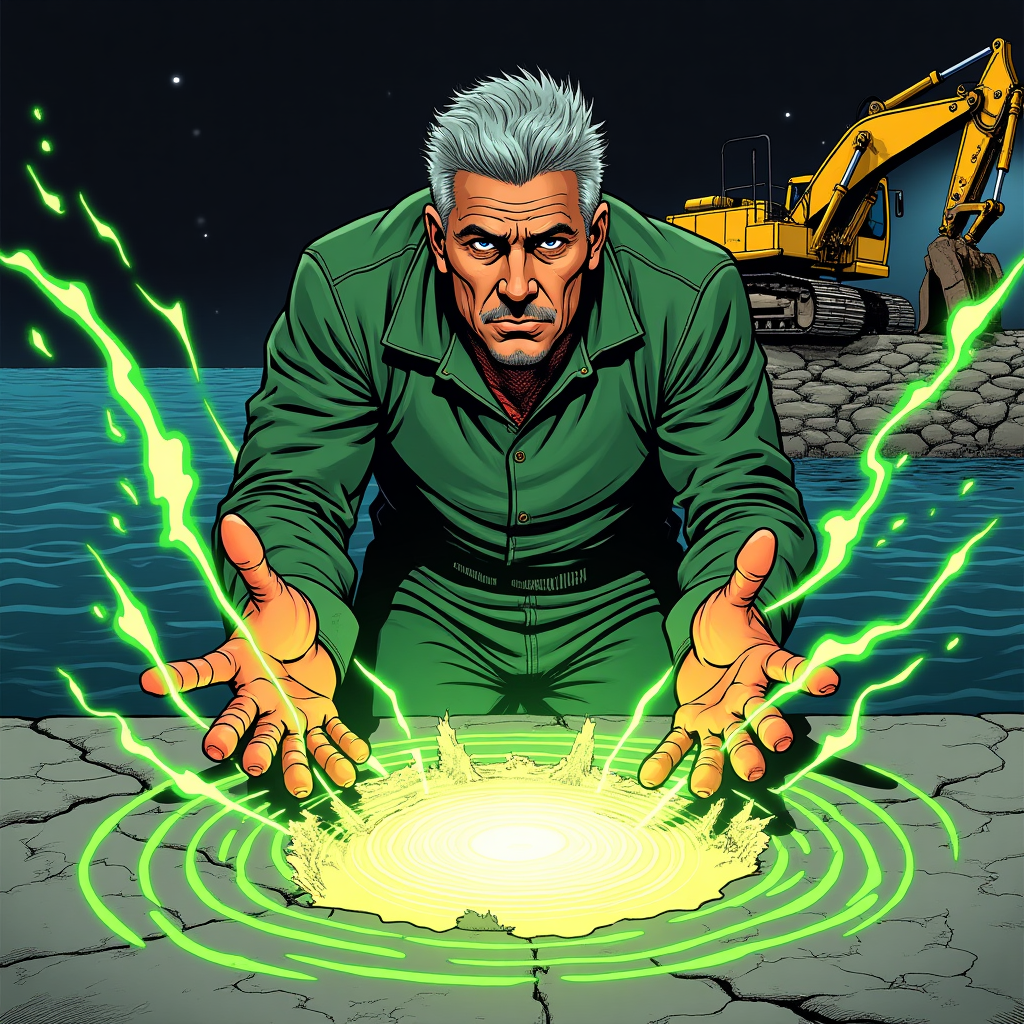
He can generate seismic pulses through any surface he touches, enough to crack concrete, redirect underground water flow, or send a precision tremor through a building’s foundation. He can feel the difference between a hairline stress fracture and a structural failure. He can locate any human being within two hundred meters by reading their footfalls through the earth. And when he stands in contact with the river itself, his range extends to the full watershed — miles in every direction, a living map.
He builds the suit in his garage, working nights. Dark river-green fabric, reinforced with panels of salvaged industrial canvas. He stencils nothing on it — no symbol, no crest — because the river needs no emblem. He calls himself by the name the land already carries.
He is Pahsayèk.
Part Four: The Architect of Erasure
Dr. Helen Kwon is sixty-six years old, precise and immaculate, with silver hair cut in a sharp geometric bob and dark eyes that assess everything with the cool patience of someone who has never lost a negotiation. She was born in Flushing, Queens, to Korean immigrant parents who ran a garment export business — a business she eventually transformed into Veldran Meridian LLC, one of the most aggressive infrastructure redevelopment firms operating in the Northeast corridor. She has a degree in civil engineering from a university whose name she drops rarely but effectively, and she carries herself with the unshakeable authority of someone who has built, and demolished, more things than most people will ever touch.
She does not think of herself as a villain. She thinks of herself as a realist.
In Dr. Kwon’s philosophy, legacy cities like Passaic are held hostage by sentimentality. The river is not a living entity to be protected — it is a drainage problem to be engineered. The neighborhoods are not communities to be preserved — they are land-use inefficiencies to be corrected. She has delivered the same presentation to a dozen city councils: you cannot honor the past by refusing the future. She believes this completely and without irony. She also profits from it enormously.
What makes her dangerous — what makes her the specific nemesis that Pahsayèk was perhaps always destined to face — is that she is not wrong about everything. Passaic does need investment. The infrastructure is aging. The tax base is strained. She arrives not as a cartoon despoiler but as a woman carrying real solutions to real problems, solutions that happen to require the erasure of everything Ernesto Villanueva considers sacred.
She has also, in the weeks since the permit filing, begun to notice unusual seismic readings near the Third Street Bridge corridor. She has hired a private geological survey firm. She is asking questions. And Dr. Helen Kwon, when she starts asking questions, does not stop.
Part Five: The Place Where the Land Splits
The confrontation comes on a Thursday evening in mid-April, when Veldran Meridian’s construction crew arrives without warning at the riverfront embankment with heavy equipment — jump-starting the project before the public comment period has legally closed, banking on bureaucratic confusion to buy them forty-eight hours of irreversible work.
Ernesto is three blocks away at Pulaski Park when he feels it — the brutal percussion of a hydraulic excavator biting into the old seawall, transmitted through the earth like a scream. He is moving before he has consciously decided to move, pulling on the green canvas jacket as he runs down Main Avenue, crossing Passaic Street at a sprint, reaching the embankment in under four minutes.
He arrives to find the seawall already breached, the excavator’s bucket pulling back a section of colonial-era stone. Behind the machinery, overseeing from a position of careful remove, stands Dr. Helen Kwon in a charcoal field coat, tablet in hand, silver bob immaculate in the river wind.
“You’re two days early,” Ernesto says. His voice is not raised.
“We’re on schedule,” she replies, not looking up from her tablet. “The comment period closes at midnight. That’s not now.”
“There are people in this valley who’ve been here since before anyone filed a permit,” Ernesto says. “That wall is part of them.”
She looks up then, and her dark eyes are not cruel — they are simply closed to the argument. “Sentiment doesn’t hold water, Mr.—”
He presses both hands flat to the embankment stone.
The pulse moves outward in rings, exactly as he has practiced, calibrated to rattle machinery without endangering lives. The excavator shudders and stalls, its hydraulic system confused by a frequency it wasn’t engineered to resist. The ground beneath the heavy equipment ripples, just enough — a controlled seismic signature that opens the old channel beneath, flooding the construction zone from below. The crew scrambles back. No one is hurt. The equipment is mired.
Dr. Kwon grips her tablet and stares at him — genuinely, coldly fascinated.
“Seismic anomaly,” she says, almost to herself. “I knew the readings were off.”
“The land remembers,” Pahsayèk tells her, “even when the permits say it shouldn’t.”
He holds the riverbank for three hours, long enough for the city’s emergency zoning counsel to arrive, for two council members to appear, for the local affiliate cameras to capture the flooded construction zone on the six o’clock news. By morning, Veldran Meridian’s permit is under a temporary injunction. The project is paused.
Dr. Kwon leaves without another word, but she is already making calls. She is already planning. And Ernesto Villanueva, standing on the old seawall with the river running cold and fast behind him, knows that this is not over — that she will find another angle, another variance, another way to argue that the past should yield to the future.
He presses his hand to the stone one more time.
The river answers.
Pahsayèk is just beginning.