BOARDWALK SAINT: The Origin of Resonance
Part One: The Last Sound Check
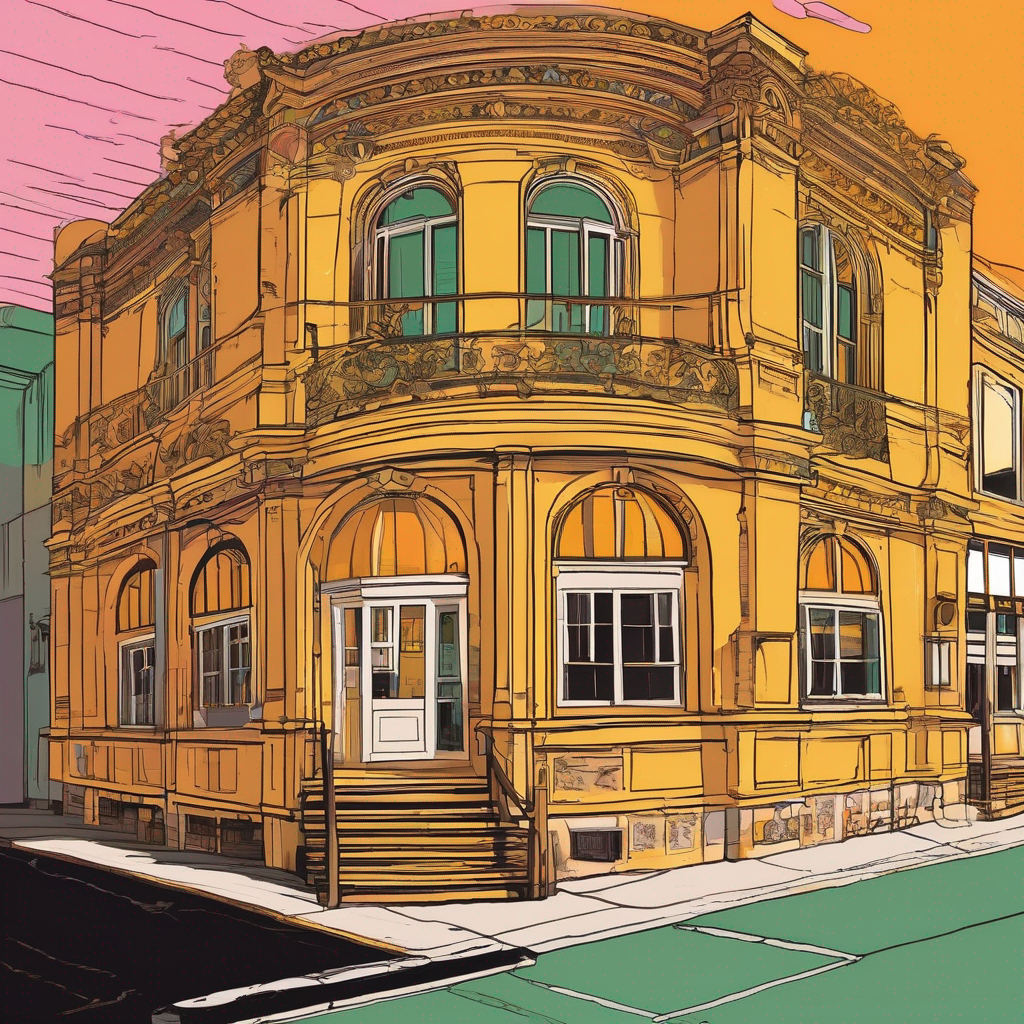
The Convention Hall has heard everything.
It has heard the howl of nor’easters pressing flat against its ocean-facing facade, the chant of revival crowds in the 1920s, the feedback squeal of a thousand half-tuned guitars, and the low communal moan of a city that spent decades watching itself hollow out. The Hall sits at the edge of Ocean Avenue like a cathedral built to face the Atlantic directly — unafraid, unapologetic, daring the water to come closer.
Mara Solis knows every inch of it.
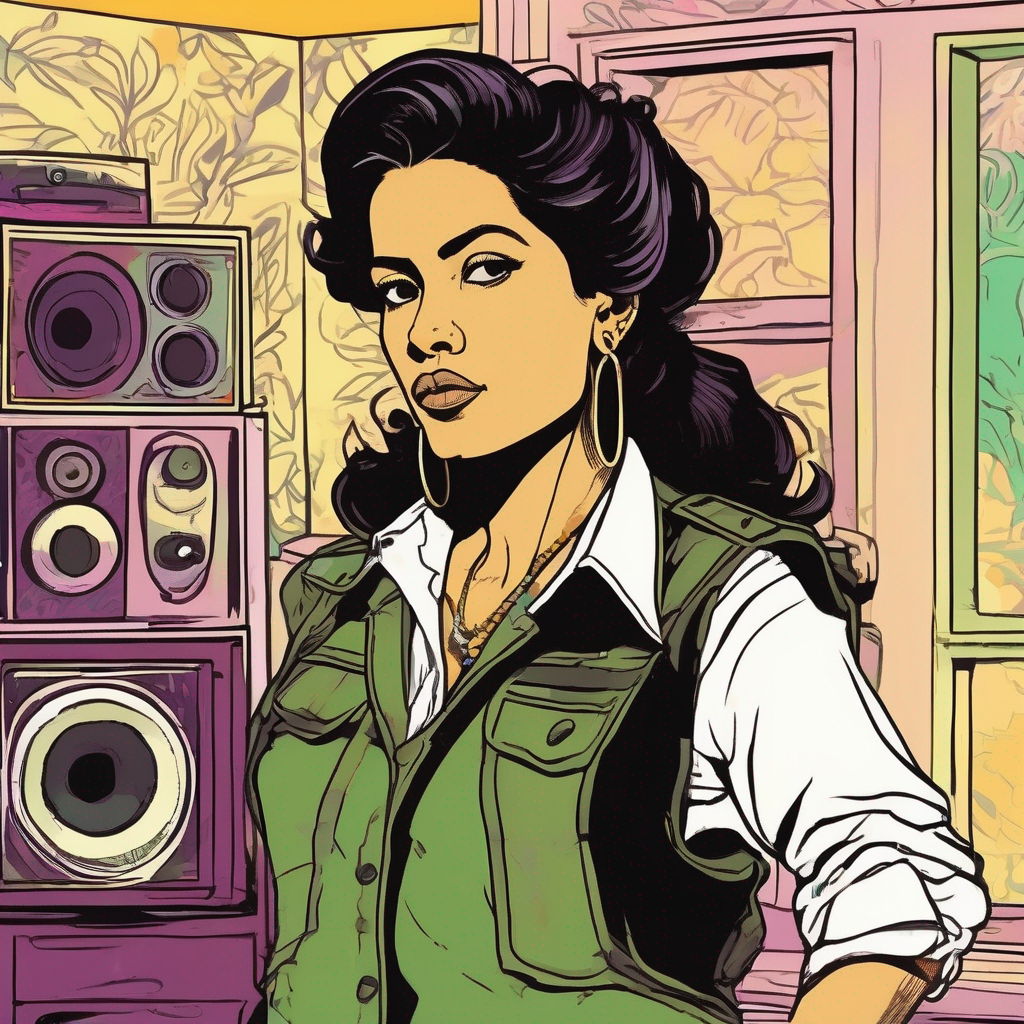
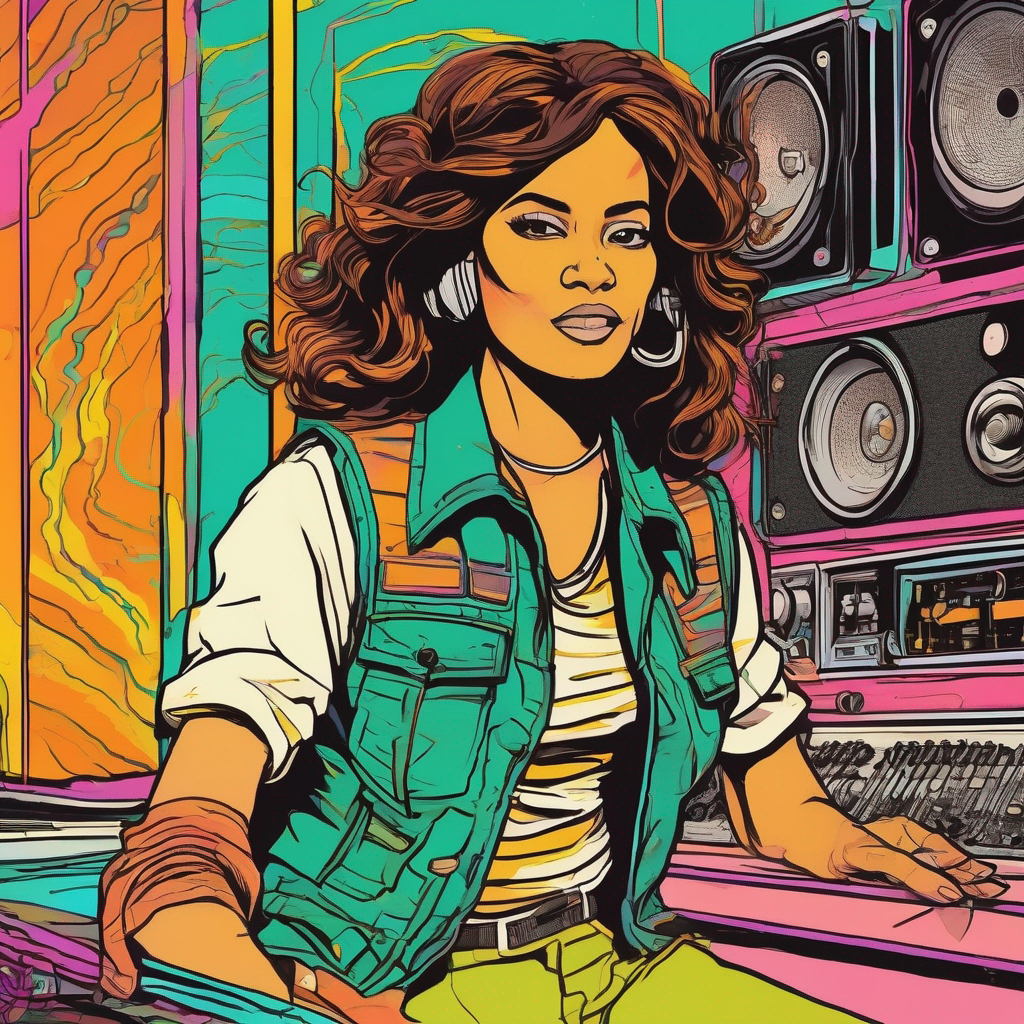
She has worked the Hall’s sound board since she was nineteen, starting as a volunteer for the Asbury Park Music Foundation and working her way up to lead audio engineer before she was twenty-six. Now, at thirty-one, she can identify a bad monitor mix from the back of the mezzanine by the way the crowd tilts their heads. She can feel a blown subwoofer before the needle moves. She doesn’t just hear sound — she reads it, the way a sailor reads water.
On the night of April 14th, 2026, she is running a late sound check for the Camp Screamo Tour, which rolls into the Hall tomorrow. Story of the Year. Silverstein. Origami Angel. A full house of post-hardcore faithful, all of them coming to stand on the same boardwalk planks where generations of New Jersey kids found the music that first made them feel understood.
The hall is empty except for Mara and her gear. The stage lights are down to a single amber work light. Outside, the Atlantic is pushing a strange spring storm — not rain exactly, more like pressure, a heaviness sitting over the shore. The weather service has flagged something unusual offshore. Ionospheric interference, one bulletin said. Something about a geomagnetic event interacting with the coastal low pressure system.
Mara doesn’t read weather bulletins. She’s sweeping the room with a calibration tone — a pure 440 Hz sine wave — checking reflections off the old plaster walls, making sure the Hall’s notorious rear flutter echo is properly dampened.
She never hears it coming.
Part Two: The Wave That Remembered Everything
It arrives not through the doors but through the floor.
A pressure front — seismic and electromagnetic simultaneously, a combination that no instrument on the Eastern Seaboard has ever recorded — rolls in from the ocean and up through the pilings of the boardwalk and into the Hall’s foundation. The old building shudders once, like a dog shaking off water. Every speaker in the room fires at once, a single massive burst of full-spectrum sound, and Mara Solis — standing at the center of the Hall, headphones around her neck, one hand on the board — absorbs all of it.
The lights go out. She goes down.
When she wakes, she is lying on the stage. The storm has passed. Through the Hall’s tall windows, the pre-dawn ocean is flat and silver. She is unhurt. But the world is different.
She can hear the building breathing.
Not metaphorically. She can hear the actual acoustic memory of Convention Hall — every vibration the structure has ever stored in its plaster and steel and old oak flooring. She hears a gospel choir from 1931. She hears the crack of thunder from a 1962 hurricane that broke six of the upper windows. She hears, faint and layered and gorgeous, the ghost of every concert ever played inside these walls — stacked on top of each other like light through a prism.
She staggers outside onto the boardwalk. It gets worse — or more — out there. She can hear the amusement park carousel at the Palace, which burned in 1988. She can hear children on the beach from summers so old they precede recording. She can hear the 1970 riots — not the violence, but the grief underneath it, the community’s accumulated pain humming in the pavement like a bass note that never fully resolved.
The Jersey Shore is a place built from sound. And Mara Solis can now hear all of it at once.
It takes her three days to learn to turn it down.
Part Three: Learning the Frequency
She tells no one, which is both pragmatic and very Asbury Park. This city has never needed a press release to know something important is happening.
The change is not just auditory — she discovers this on the fourth morning, when she is sitting at a corner table at a fictional diner on Cookman Avenue, trying to eat eggs and managing the low-level symphony of the city’s sonic history, and she instinctively pushes back against a sound that is bothering her — a high whine from a failing transformer on the utility pole outside.
The whine stops. She stares at her hand. A faint vibration runs through her fingers, through the table, and the transformer outside clicks back into proper function.
She can project it. Not just receive — transmit. Focused acoustic energy, shaped by her hands the way a conductor shapes an orchestra.
She spends weeks in the Hall alone, after hours, learning her range. She can project a concussive sound burst that hits like a physical wall. She can emit a frequency that disrupts electronic systems — useful for disabling threats without destruction. She can attune herself to the resonant frequency of a specific material — concrete, glass, steel — and cause it to vibrate to the point of structural fracture if she chooses. She can also do the opposite: emit a stabilizing harmonic that reinforces structures, essentially sound-welding damaged infrastructure.
And she can hear lies. Not supernaturally — but the micro-tremors of deception in a human voice, the subsonic tells that no one else can process. In a city with a complex history of redevelopment promises, of developers who spoke of renaissance while communities watched their neighbors disappear, this feels like the most dangerous power of all.
She makes a costume from practical components — a reinforced audio engineer’s vest, matte black, with old Convention Hall Speaker cloth woven into the chest panel. She designs a resonance amplifier worn on the forearm, built from modified speaker coil components and a modified crossover board salvaged from a blown PA cabinet. She pulls her dark hair back. She does not wear a mask — Asbury Park doesn’t have the luxury of pretending it doesn’t know its own people.
She calls herself Resonance.
The boardwalk approves.
Part Four: The Hollow Man
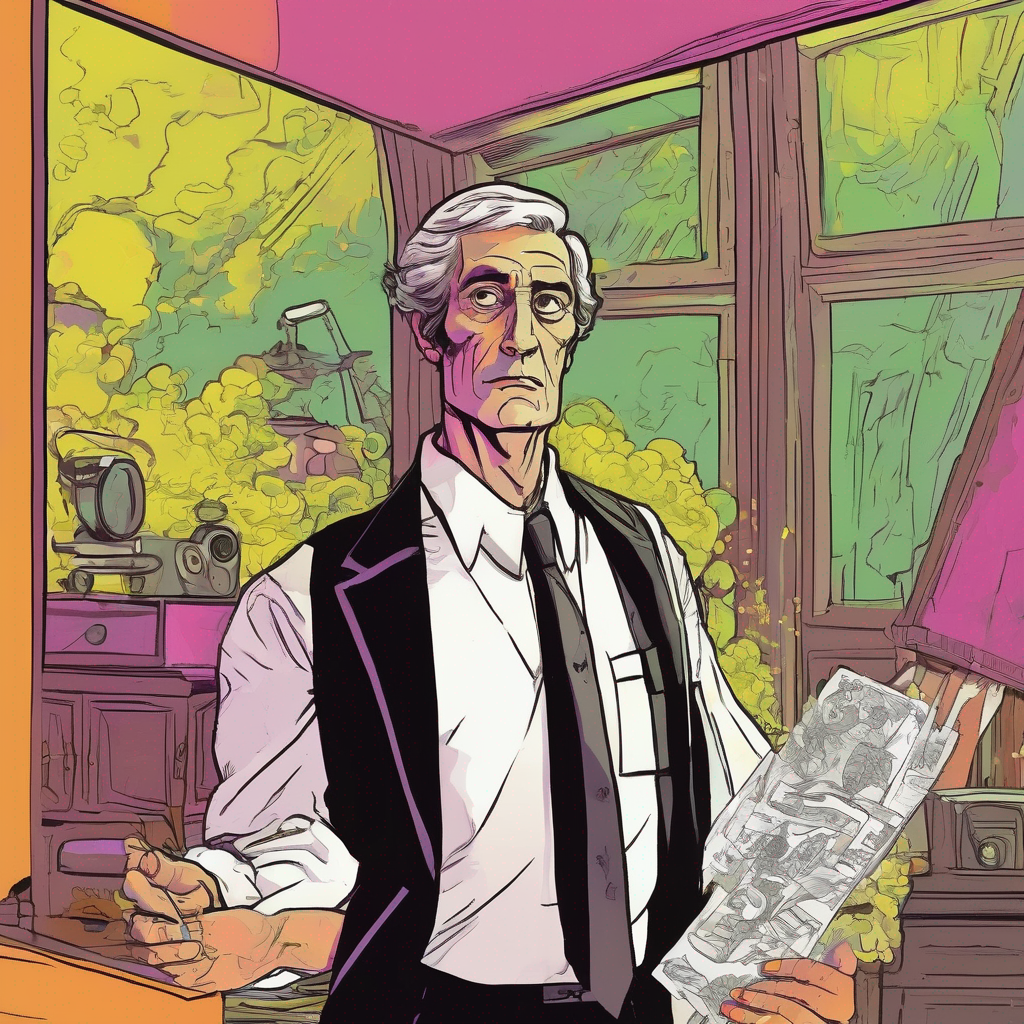
His name — his given name — is Theodore Crayne, and he was born in Asbury Park in 1971, two months after the riots burned through the West Side.
He watched the city decline across three decades from a distance — first from Rutgers, then from a glass office in Midtown, where he built Crayne Capital Redevelopment into one of the most aggressive shore-property acquisition firms on the East Coast. He is not evil in the way that requires explanation. He is evil in the way that requires a spreadsheet.
Crayne believes Asbury Park’s revival — real, hard-won, built by artists and musicians and LGBTQ+ communities who stayed when no one else would — is an asset to be extracted, not a culture to be sustained. He has spent four years quietly purchasing properties along the Cookman Avenue corridor and along the beachfront blocks south of the boardwalk, using shell corporations and proxies. He has bought the buildings that house three beloved music venues. He is waiting for the leases to expire.
But Crayne has also, through means he does not fully understand and has not disclosed to anyone, acquired something else.
A device — recovered from the same offshore phenomenon that transformed Mara Solis — a crystalline array that absorbs and silences sound. Not just dampens it: erases it. The device creates zones of absolute acoustic void. In those zones, people become disoriented, disconnected from each other, unable to communicate. They become compliant. Malleable.
Crayne has tested it twice — once at a city council meeting where opposition to his Cookman Avenue redevelopment proposal collapsed with unusual speed, and once at a community board session where residents who had come prepared to fight left confused and agreeable.
He calls himself nothing. He doesn’t need a name. He has a checkbook and a silence machine, and in his experience, that combination has always been enough.
He has not yet met Resonance. That changes on the night of the Camp Screamo Tour.
Part Five: Standing Frequencies
Story of the Year is four songs into their set when the sound dies.
Not a technical failure — Mara would know the difference in an instant. The signal is present, the board is reading output, but the acoustic energy is being swallowed before it reaches the audience. The crowd in Convention Hall stands in sudden, disorienting silence, voices falling away, the shared electricity of a concert evaporating. People look at each other, uncertain, the communal bond of live music dissolving in real time.
Mara is at the board. She feels it immediately — a null frequency, an active cancellation field, broadcasting from somewhere in the building’s east wing. She is moving before she consciously decides to move.
She finds Crayne’s technician in a service corridor near the old Paramount Theatre connection, a slender man in a gray coat operating a tripod-mounted crystalline array the size of a carry-on bag. She sees the device and understands it structurally the way she understands every speaker cabinet — as a thing that moves air, just in reverse.
She transmits a focused 28 Hz pulse through the corridor floor. The array rattles on its tripod. The technician stumbles. Crayne steps out of a doorway behind him — he has come personally, because he wanted to watch.
“Miss Solis,” he says. He has done his research. That is the thing about Asbury Park: everyone knows everyone.
“You bought the Empress Building lease,” she says. “The Anchor Stage. The Cookman Triangle. You’re going to let them all go dark.”
“I’m going to let them become something more valuable,” he says.
She hits him with 60 Hz — the hum of the American electrical grid, the low note underneath all modern civilization — shaped into a targeted compression wave. He goes to one knee. The crystalline array shatters.
What she says next, she says quietly, because quiet is its own kind of power in a room that is learning about sound.
“This city already died once. People stayed anyway. They built something out of the wreckage that the whole world came to see. That doesn’t belong to you.”
Crayne is escorted from Convention Hall by two members of the Asbury Park Police, who were responding to a report of an unauthorized device in a public venue. The crystalline array’s fragments are collected and, by morning, are in the hands of a county forensics unit that has been quietly watching Crayne Capital for six months.
Inside the Hall, the sound comes back like a tide coming in.
The crowd doesn’t know what happened. They only know that the silence broke, and that the music returned, and that standing together on this particular floor in this particular city on the edge of the Atlantic, they feel — as generations before them have felt — exactly like themselves.
Mara Solis returns to the sound board. She levels the monitors. She pushes the fader up.
The Hall hears everything. And tonight, it is very, very loud.