THE NULL MANIFESTO: The Origin of Reyes Morrow
Part One: The Man Who Reads Bones
Clifton is not a city that announces itself.
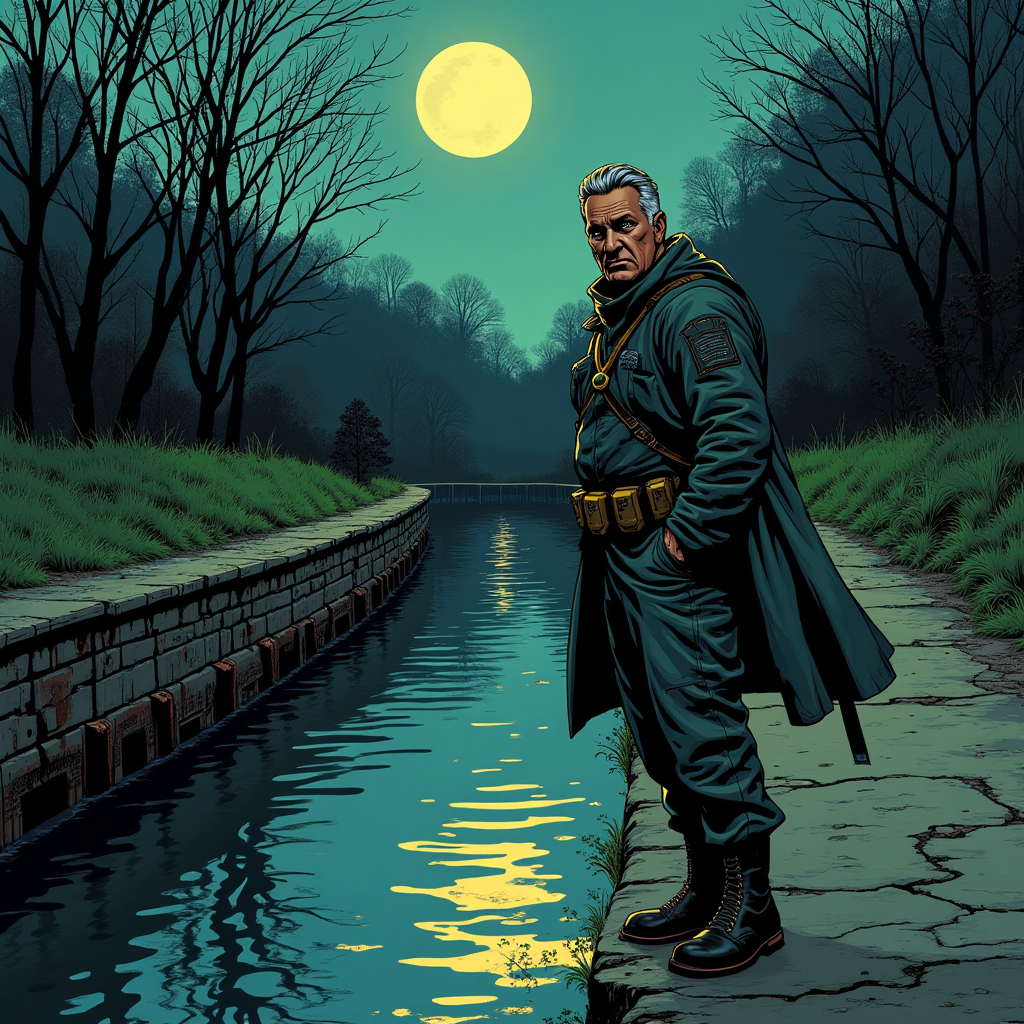
It doesn’t have the waterfront glamour of Hoboken or the academic weight of Princeton. It has Route 3 and Route 46 and the Garden State Parkway cutting through its middle like surgical incisions that never fully healed. It has the Passaic River on its eastern edge, brown and patient. It has the Dundee Canal — that long, motionless wound in the earth — and the NJ Transit line threading through Clifton station toward New York, carrying its daily tide of people who live here but work somewhere else.
Reyes Morrow has spent thirty-five years learning to read all of it.
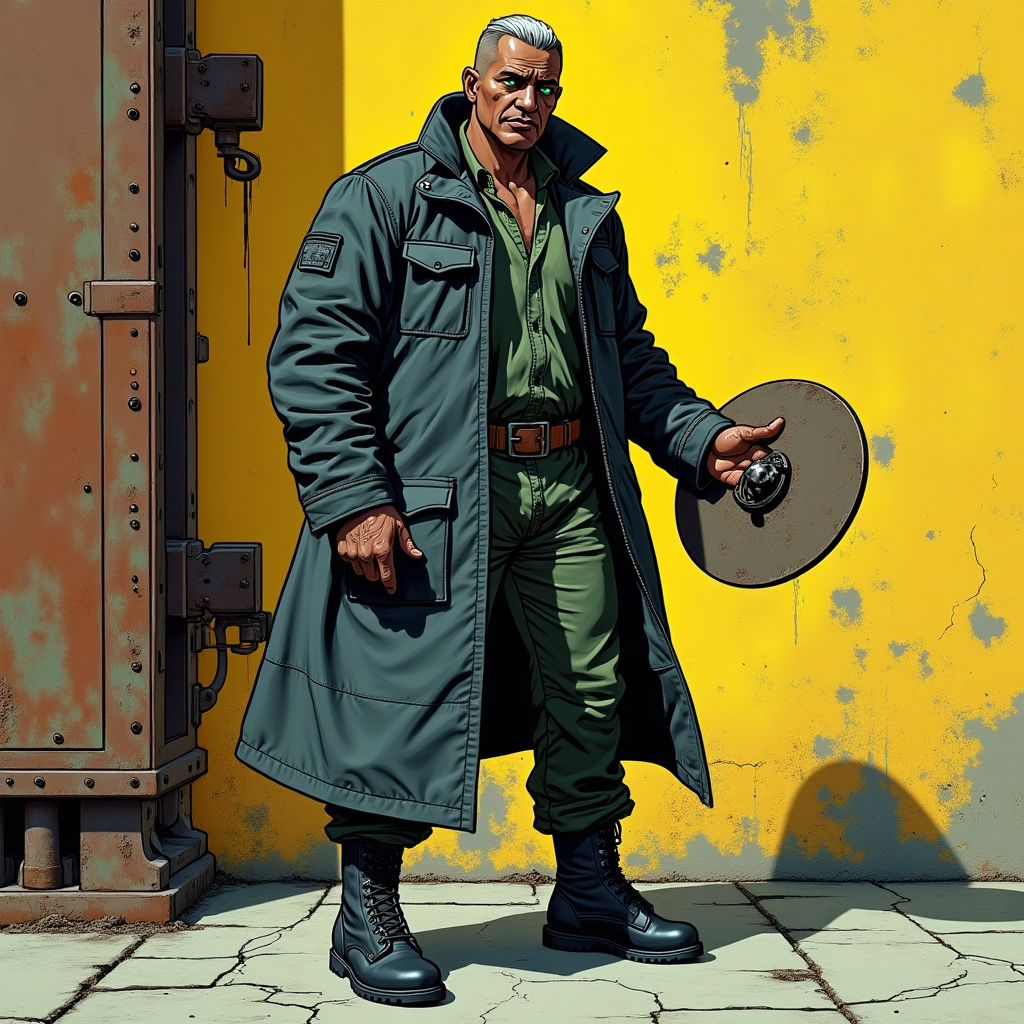
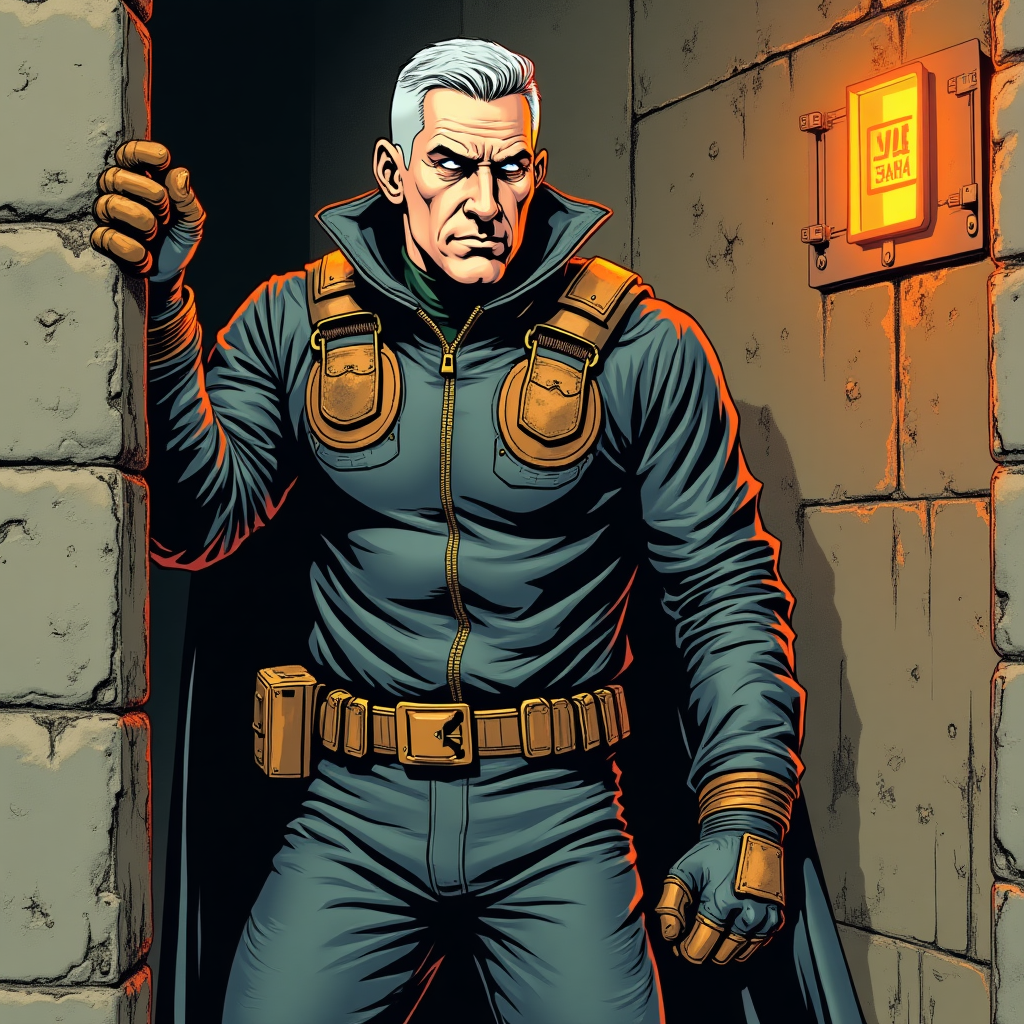
He is fifty-eight years old, a large-framed man with close-cropped silver-and-black hair and deep brown skin carrying the weathered texture of someone who has spent decades in the open air with tools in his hands. His eyes are pale green — an inheritance from a Portuguese grandmother he never met — and they give his face an unsettling quality that strangers sometimes misread as aggression. It is not aggression. It is attention. It is the look of a man who is always, in every room, performing a structural assessment.
He grew up on Randolph Avenue, six blocks from the Dundee Canal, in a house his father bought in 1971 with money saved from twelve years of maintenance work for the Passaic County road authority. His father knew every culvert from Clifton to Pompton Lakes. His grandfather, who came from Colón, Panama, had worked canal infrastructure — the real canal, the world-historical one — before emigrating north with a particular literacy of locks and gates and the physics of controlled water. The Morrows understood, by inheritance, that civilization was not built by the people who got credit for it. It was built by the men and women with calluses.
Reyes absorbed this lesson early. He studied structural engineering at NJIT — paid for by loans that followed him for fifteen years — and graduated into the demolitions consulting industry, where his specific talent for reading buildings’ hidden weaknesses made him exceptional and, for a time, well-compensated. He could walk a structure and tell you exactly where it would fail. He could sequence a controlled demolition with a precision that preserved adjacent structures to the inch. He was, in the language of the industry, surgical.
He was also, from the beginning, paying attention to the wrong things. While his colleagues saw contracts and billable hours, Reyes saw who the demolitions served. Whose neighborhoods were cleared. Which structures were declared unsafe and which were declared historic. He saw the Garfield waterfront cleared for a logistics warehouse that employed forty-three people. He saw the West Clifton community garden lot declared a hazardous site — old petroleum contamination, real enough — and then sold to the Hargrove Development Group for luxury infill townhomes that priced out the people who had tended that garden for twenty years. He wrote it all down in composition notebooks that filled an entire shelf in his Getty Avenue warehouse.
He is not an angry man, exactly. He is a man with a very long and very detailed memory.
Part Two: The Night on Lakeview
He is on Getty Avenue, reviewing site surveys for a Paterson project, when he hears about the Lakeview Avenue crash.
The calls come through a network he has spent years building — not criminal, not yet, simply informational: city workers, canal authority volunteers, a retired bridge inspector named Sal who monitors police frequencies out of habit, an NJ Transit maintenance contractor who shares Reyes’s approximate politics and absolute distrust of official incident reports. By 7 AM, Reyes knows about the eighteen-wheeler, the Marcone Limousine building, the trapped driver. By 8 AM, he knows about the civilian who went into the service basement and walked out alive.
By noon, he knows the civilian’s name. Thomas Callahan. Passaic County Infrastructure Authority. Structural integrity assessor.
Reyes sits with this information for a long time.
He knows Thomas Callahan’s reports. He has read every one — filed under the county’s public records system, accessible to anyone with the patience to look. He has read Callahan’s 2019 assessment of the Route 21 interchange support columns (deteriorating, repair recommended, funding not allocated). He has read the 2021 water main corridor survey for the Clifton Avenue residential stretch (critical maintenance window closing, emergency re-lining required, deferred to 2024 budget cycle). He has read the 2023 Dundee Canal towpath structural review (limestone wall integrity at sixty-three percent of design spec, restoration priority: low).
Thomas Callahan has spent a decade and a half writing the truth about what is failing in this city. The county has spent a decade and a half filing those reports in drawers.
Reyes does not hate Thomas Callahan. He finds him, from a distance, admirable.
He also finds him complicit.
The reports exist to create the appearance of accountability. They are the system’s alibi. As long as someone is writing down what is failing, the institution can say it knew — and knowing, without acting, is the most sophisticated form of abandonment Reyes has ever encountered. He has written about this in the manifesto documents he distributes through the Null Infrastructure Collective’s encrypted channels. The act of documentation, divorced from consequence, becomes a mechanism of delay. Every report that goes unacted upon is a promise that the infrastructure will fail on its own schedule, invisibly, without attribution. The system doesn’t need to destroy communities. It just needs to wait.
He sends a small team to keep watch on the hospital on Henry Avenue.
He wants to know what Thomas Callahan becomes.
Part Three: The Education of the Collective
It takes Reyes six weeks to understand what happened in the Marcone basement.
His contact inside the county facilities network — a night-shift maintenance supervisor at St. Mary’s General with whom he shares a long-standing grievance about the state’s deferred infrastructure budget — tells him about the bed frame incident. The shivering metal. The looks the nursing staff exchange. By the time Thomas Callahan is discharged, Reyes has spoken to two other witnesses: a radiology tech who noticed an anomaly in the imaging room when Callahan passed through, and a parking garage attendant who swears the iron gate mechanism responded to the assessor before he touched it.
Reyes is a structural engineer. He does not believe in the supernatural. He believes in forces that have not yet been accurately described.
He spends three weeks in the NJIT library archives — his alumni access still valid — and in the Passaic County Historical Society’s collection, reading everything available on the metallurgical composition of Dundee Canal ironwork. The lock hardware was cast between 1831 and 1847, primarily from bog iron extracted from Passaic Valley wetlands. The bog iron ore is anomalously high in certain trace mineral compounds — a function of the valley’s particular glacial geology — and the casting process used at the Paterson foundries of that period was, by modern standards, irregular: high-variance heat treatment, inconsistent quench rates, resulting in metal with a crystalline structure unlike anything produced before or since. The canal locks that controlled water flow along that corridor for sixty years were, in effect, instruments — tuned by use and pressure and time into something the original engineers would not have predicted.
When the ceiling came down in the Marcone basement and the iron touched Callahan’s open wound under compression, something conducted. Reyes understands this the way he understands a demolition sequence: not magic, but physics operating at a register nobody thought to measure.
He needs to know if it can be replicated.
He begins acquiring samples. Quietly, methodically, through legitimate restoration channels — the county’s 1987 survey had catalogued and stored dozens of deaccessioned lock components at a facility in Woodland Park. He applies for research access using his NJIT credentials and a fabricated academic affiliation. The components arrive in his Getty Avenue warehouse in four separate shipments across three months.
He is not trying to give himself powers.
He is trying to understand whether the infrastructure itself can be activated. Whether the built environment, pushed to a precise kind of breaking point, becomes something other than inert.
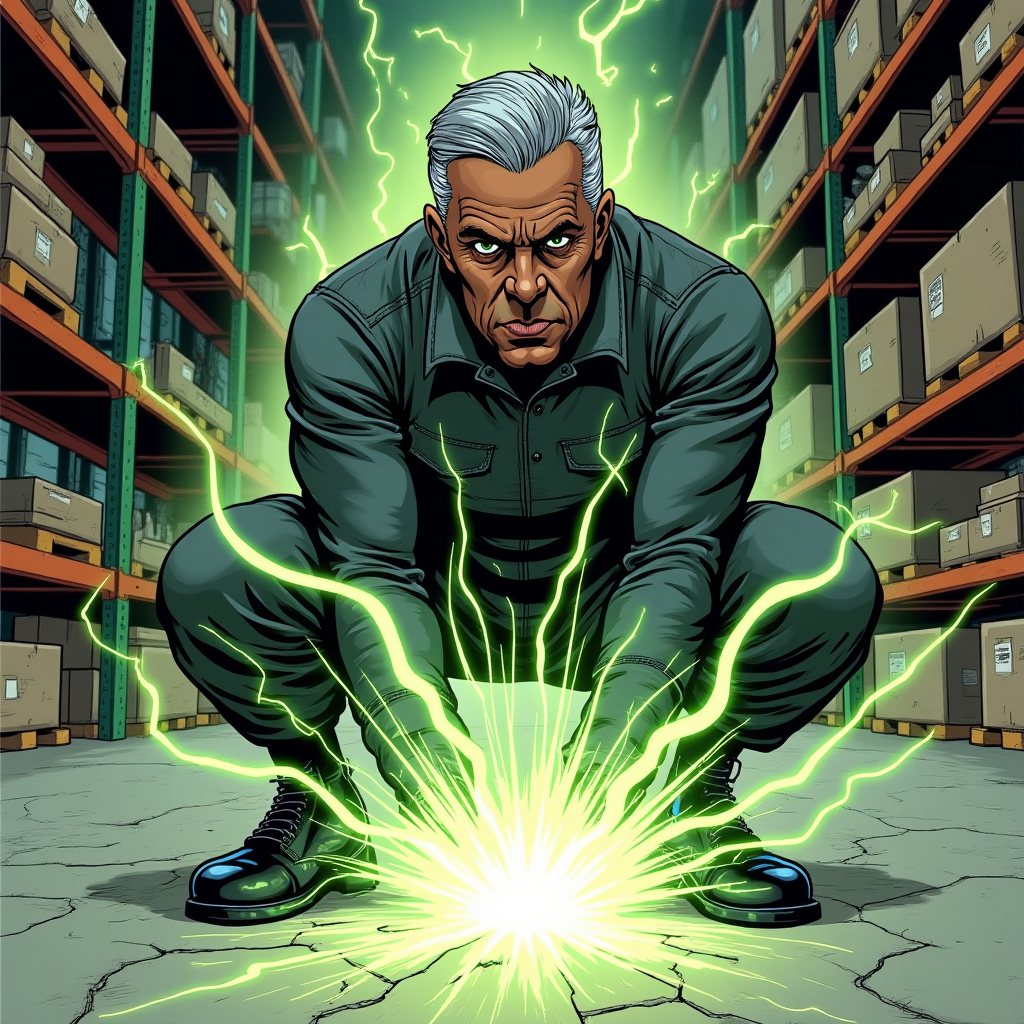
The first test, run on a salvaged iron drainage channel in the warehouse at 2 AM on a Tuesday in August, produces a result that knocks him backward into a steel shelving unit and leaves a ten-inch crack in the concrete floor.
He sits on the floor for a long time with pale green eyes wide and composition notebook open.
He writes: The bones want to move. We just have to give them permission.
Part Four: Structural Truth-Telling
The Null Infrastructure Collective has existed, in various forms, for nine years.
It began as a research and advocacy network — Reyes, four former colleagues from the demolitions industry, a Paterson environmental justice attorney named Vera Ochoa who has since distanced herself from his methods, and a rotating cast of community members who attended his quarterly presentations at the Clifton Public Library on the subject of infrastructure equity. The presentations were meticulous, data-rich, and very poorly attended. The county sent no representatives. The local papers ran short items. The Hargrove Development Group’s new mixed-use project on Van Houten Avenue broke ground the same week as his most comprehensive report on the city’s water main failure risk, and the groundbreaking photo ran above the fold.
Advocacy, Reyes concluded, was another form of the documentation trap. You could spend twenty years telling the truth in rooms where no one with power was listening. The system had learned to absorb truth-telling without changing.
What was needed was structural truth-telling. A demonstration, not a report. A failure event so visible, so precisely located, so impossible to attribute to routine decay, that the fiction of managed deterioration could no longer hold.
He is not trying to hurt people. He is trying to hurt the narrative.
He has selected three targets — not arbitrarily, but with the same surgical logic he applied to every demolitions project of his career. The Route 3 westbound overpass at the Paulison Avenue interchange: an aging span whose load rating has been quietly downgraded twice in seven years, carrying forty thousand vehicles daily over infrastructure the county’s own engineers have flagged as marginal. The water transmission line junction at the Wanaque Reservoir feed, serving two hundred thousand North Jersey residents through pipes installed in 1962. And the NJ Transit rail bridge spanning the Passaic between Clifton station and Delawanna — the symbolic heart of the commuter city, visible from both banks of the river, carrying six thousand people a day on a structure the county has deferred repairing for eleven years.
He does not plan to kill anyone. He has modeled every failure sequence. He knows the timing windows. He knows how to create disruption without casualty.
He has told himself this so many times it has become indistinguishable from belief.
What he has not fully modeled is Thomas Callahan — who is, by October, standing on the old canal towpath at dawn doing things with iron hardware that Reyes recognizes, with the cold clarity of a structural engineer, as a direct counterforce to everything he has built. A man who can feel the infrastructure. Who can feel the charges before they fire. Who can redirect vibration through bridge steel the way the old lock plates redirected water.
He has created the problem he is trying to solve. Or — and this is the thought he cannot quite look at directly — the system created both of them. The same neglect that made Reyes Morrow a revolutionary made Thomas Callahan a guardian. Two men reading the same reports, arriving at opposite conclusions.
He drives to Getty Avenue and sits in the dark warehouse and looks at the canal iron components on the steel shelving unit.
He puts on the coat.
Part Five: The River Decides
The Passaic is cold in late October — dark and high from two weeks of rain, moving with the quiet authority of a river that has been underestimated for a long time.
Reyes is on the NJ Transit rail bridge at 11:40 PM with three people he trusts and two vehicles of equipment staged on the Delawanna side. He has been planning this specific action for eighteen months. He knows the bridge’s lower chord geometry the way he knows his own handwriting. The charges are placed in seventeen minutes, precisely where he calculated: not on the primary load-bearing members, which would be irresponsible, but on the connection plates of the secondary bracing — enough to compromise the structure’s redundancy, to force a controlled closure, to make the failure legible. To make it impossible for the county to file another report and defer another funding cycle.
When Thomas Callahan appears on the bridge deck, Reyes is not surprised.
He has known, since August, that this confrontation was coming. He has played it out in the composition notebooks — the logic of it, the geometry. Two men who learned to read the same infrastructure, standing on the most contested span in the county.
You read the same reports I read, Reyes says.
I wrote half of them, Thomas says.
Then you know I’m not wrong.
There is a pause. The river moves beneath them. Somewhere across the water, the lights of Clifton station reflect in broken lines on the Passaic’s surface.
I know you’re not wrong about the problem, Thomas says. I know you’re catastrophically wrong about this.
Reyes has already decided. Not out of rage — he has never operated from rage, only from calculation — but because the calculation is complete and the only remaining variable is whether Thomas Callahan is fast enough.
He is fast enough.
What happens in the next forty seconds is the most precise piece of structural work Reyes has ever witnessed — and he has stood inside more demolition corridors than most engineers see in a career. The vibration travels the railing in a frequency he didn’t know was possible, finds the charges on the lower chord, redirects the detonation path down the stanchions and into sixty feet of Passaic River water. The bridge shudders. The river absorbs. The structure holds.
Reyes goes into the river.
He chooses it — steps over the railing and drops, because the river is the only exit that doesn’t run through Thomas Callahan, and he is fifty-eight years old with bad knees and he has made his calculation. The water hits him like a wall of cold black static. He surfaces three hundred meters downstream and the Passaic County water rescue unit is already on the bank, because of course they are, because Thomas Callahan has been feeling the county’s infrastructure for months and he knew exactly where the current would put him.
They pull him out. He is cold and furious and completely uninjured.
He sits in a Mylar blanket on the Delawanna embankment and looks back at the rail bridge — still standing, lit from below by the reflection of the river — and he does the thing he has always done. He takes inventory. Three charges neutralized. Team scattered. Eighteen months of planning absorbed by forty seconds of someone else’s precision. The county will file a report about tonight. The report will be thorough and accurate. It will be filed and forgotten inside of sixty days.
Nothing has changed, he thinks.
Then he revises: One thing has changed.
There is now a man in this city who can feel what is failing before it fails. A man who will stand on every bridge, every overpass, every corroding main line, and hold it together through force of will and canal iron and thirty years of knowing exactly how much weight the ground can bear.
Reyes Morrow pulls the Mylar blanket tighter and stares at the water.
He is not finished. He is, if anything, more certain than he was before tonight that the infrastructure of this place is being maintained — personally, physically, by one aging assessor with a cracked left radius and a sense of duty to a city that barely noticed him for three decades — instead of being fixed. Lockmaster is not the solution. Lockmaster is the system’s newest alibi.
The composition notebooks are still in the Getty Avenue warehouse.
He will start a new one in the morning.
They can hold the bones together, he writes, by memory, in the cold. But bones that are never allowed to break are never forced to heal.
I am not done with this city.