Part One: The Cold Open
The cherry blossoms along Rock Road were two weeks early and six feet too aggressive. By Thursday morning, the ornamental trees lining the path through Saddle River County Park had tripled in girth overnight, their roots shouldering through the asphalt walking path and curling around the park benches like possessive fingers. The borough’s parks crew photographed it. The borough’s parks crew then went for coffee and didn’t come back, which was not like them at all.
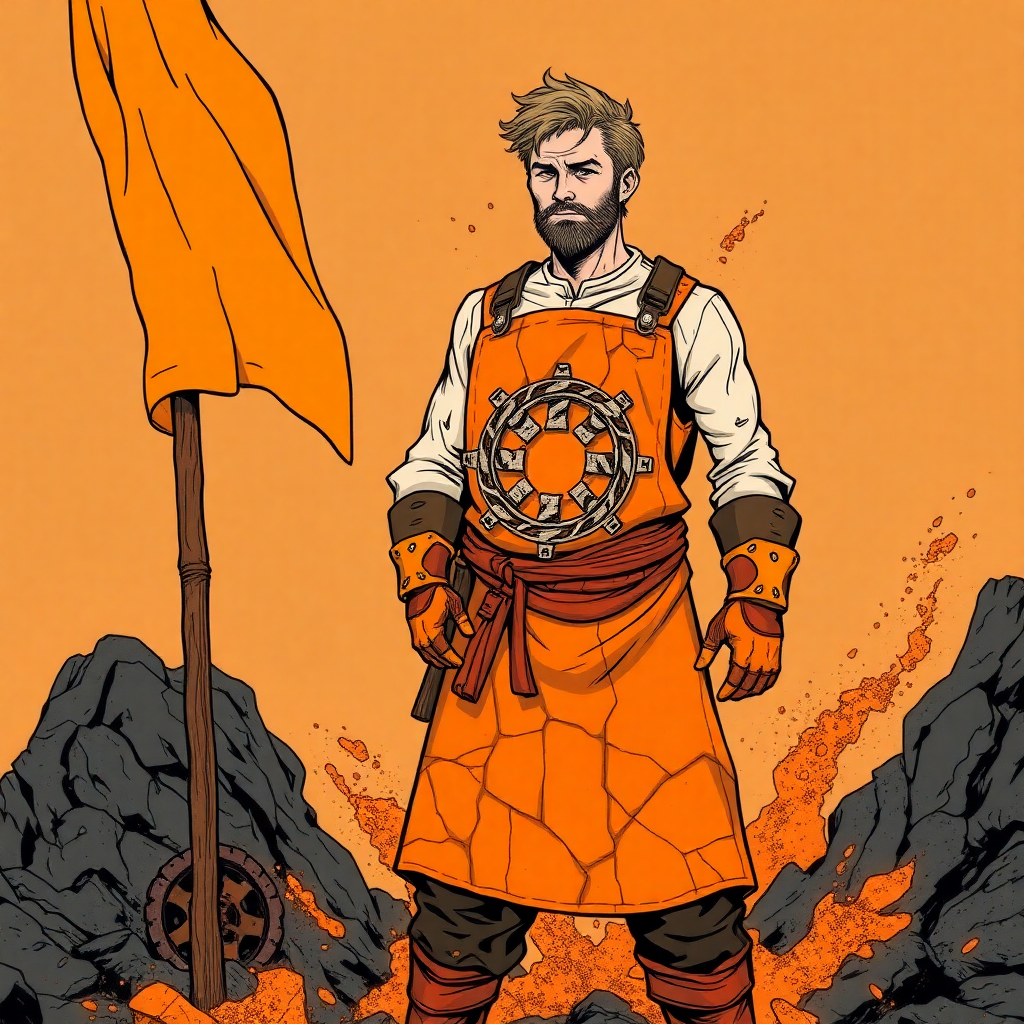
Spillward Crannock, age ten, White, Bergen County born, had planned to spend his Thursday afternoon very quietly chipping at an old gear he’d found behind his grandfather’s shed. Instead, he stepped onto the path, felt something thrum up through the soles of his sneakers like a low current, and accidentally drew a half-pound of cadmium out of the soil and into his right shin. It sat there, neutralized and harmless, until his leg started glowing faintly orange through his jeans. He really, really wished it hadn’t done that.
Part Two: The Investigation
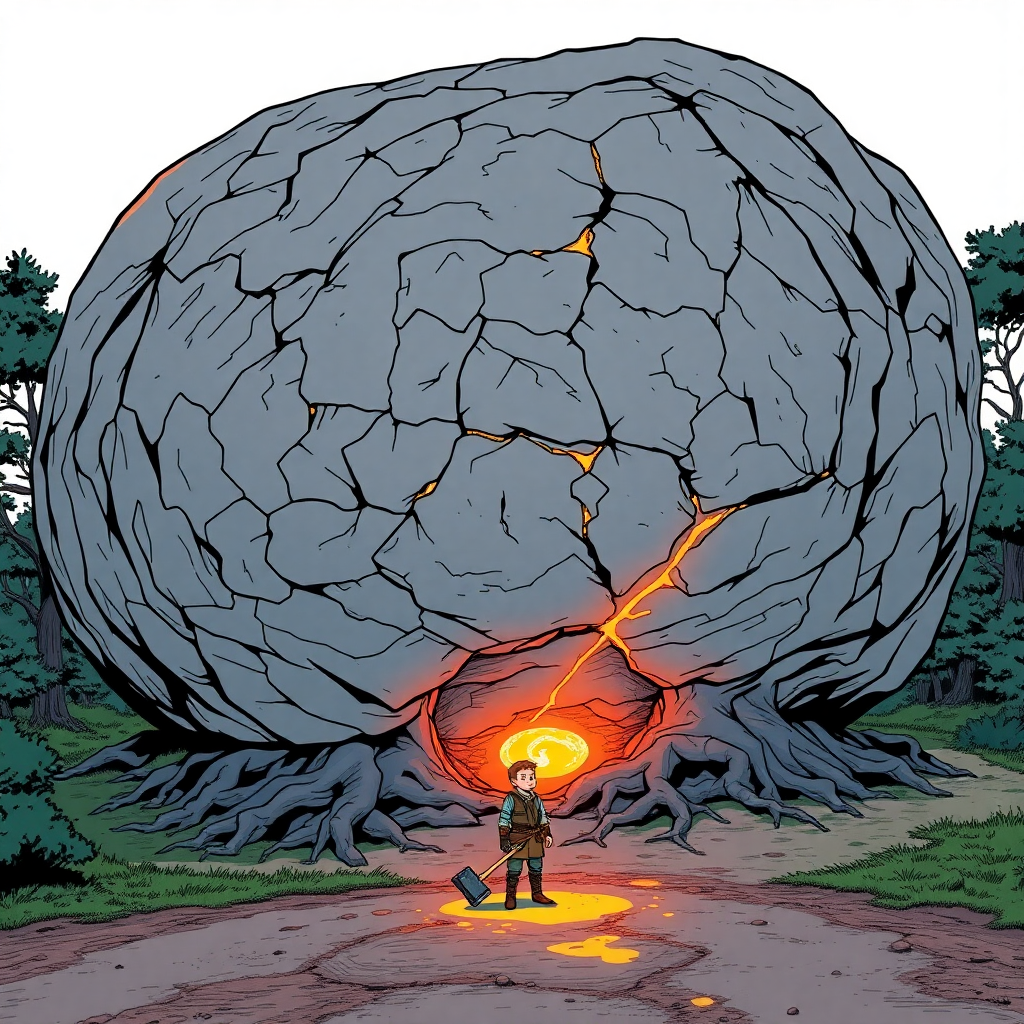
He followed the root bulges northeast toward the big granite boulder — the Glen Rock itself, a glacial erratic the size of a Buick, planted at the corner of Rock Road since the last Ice Age and treated by the town with the reverence usually reserved for founding fathers and good parking spots. The roots had circled it three times. Tight. Deliberate.
Walt Pinney, a retired parks surveyor who spent his afternoons eating a sandwich on the bench nearest the boulder, looked at the root-cage and said only: “Sinaloa pattern.” Then he handed Spillward a crumpled hand-drawn map of the old Crannock clan routes through the Saddle River valley — Walt had been holding onto it for eleven years, he explained, in case one of the kids showed up glowing.
Spillward pressed his hand to the boulder’s granite face and pulled a slug of old industrial solvent up through forty feet of subsoil in under three seconds, neutralizing it into something that smelled faintly of clean river water. The roots twitched. They knew. Further up the path, a stand of ornamental cherries had pushed entirely through the park fence and were actively threading branches through the slats of the maintenance gate.
He found a boot print in the churned soil — small, narrow, expensive. Next to it: a pattern of tiny runners, the kind strawberry plants throw out to colonize new ground, but moving too fast to be natural, still visibly creeping.
Part Three: The Pivot
The roots weren’t overgrowth. They were a map — and they were filling in a grid. Spillward crouched over Walt’s hand-drawn chart and matched the root lines to the old Crannock clan boundaries along the Saddle River: the same parcels his family had stewarded for three generations, drawing contaminants out of the soil so the borough never had to admit the contamination was there.
Cindervane was redrawn those boundaries herself — in root and branch and bark — staking the Crannock parcels for the Vane clan before the spring assessment. Oh. Of course it was them. The Vane clan had been furious since 1987, when the last Crannock patriarch quietly cleaned a plume of trichloroethylene off a lot the Vanes had nearly purchased for a sum that would have made them the wealthiest landholders in Bergen County. They’d been waiting for a Crannock too young to know what they were doing.
Part Four: The Reckoning
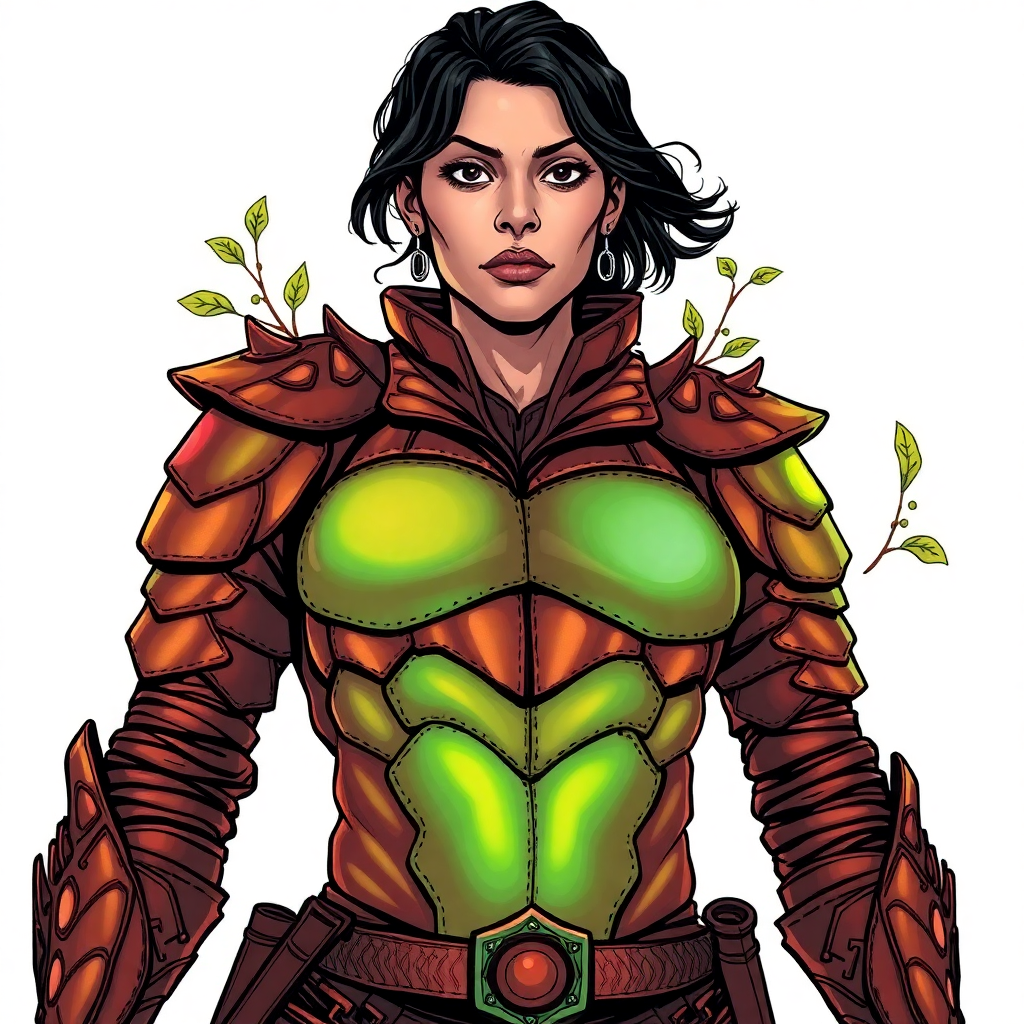
Spillward found her at the far end of the park, near the footbridge over the Saddle River. Luciana Vane — late thirties, sharp-eyed, wearing a coat that cost more than most people’s property tax bills — stood with both palms against a riverside willow, her dark wizard’s robes shimmering with a deep ivy-green light at every seam. The tree obeyed her completely. Six others nearby were already bending toward the Crannock boundary line.
She spoke without turning around. “You’re early. They usually send someone older.”
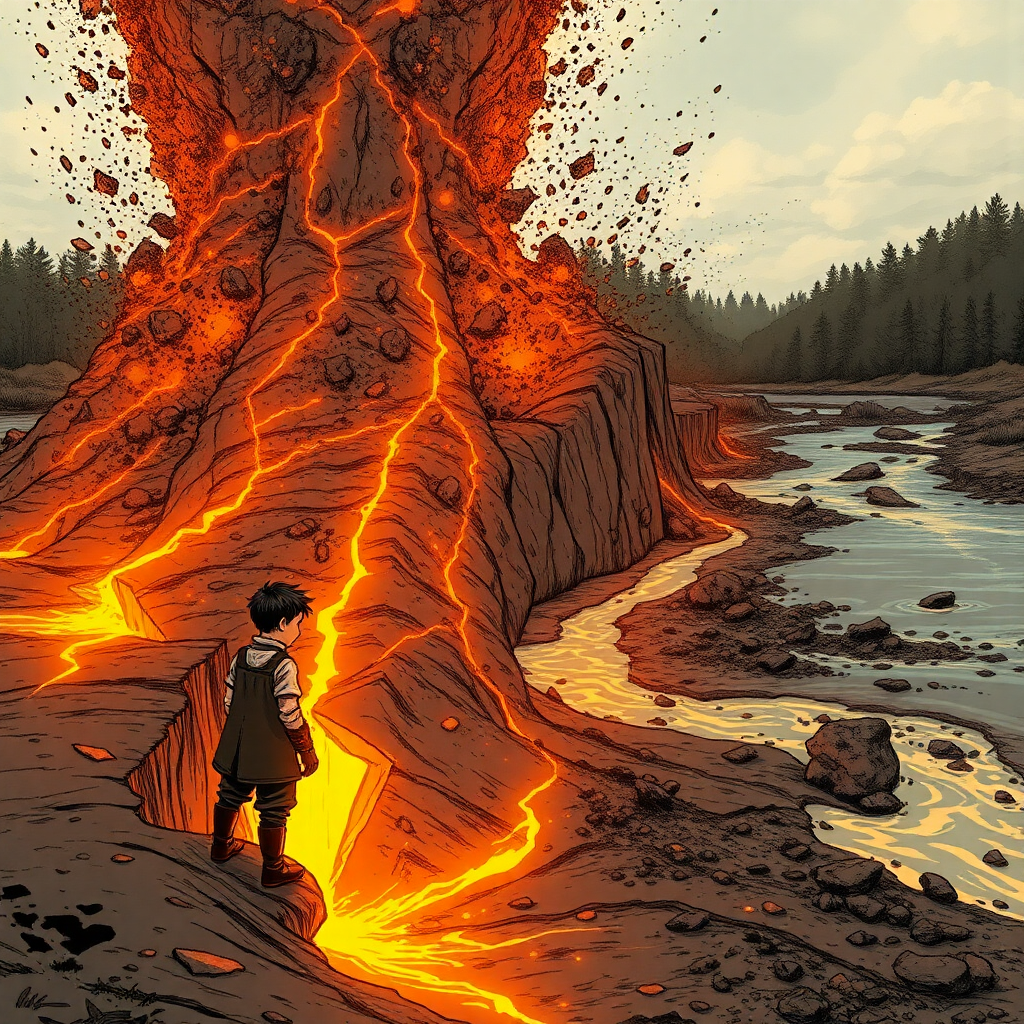
The willow drove a root directly at Spillward’s feet. He stepped aside, pressed both hands to the muddy riverbank, and simply started pulling. Not at the roots — at what was feeding them. The Saddle River’s floodplain carried decades of accumulated runoff from the old industrial belt to the south: chromium, lead, VOC traces. Luciana’s accelerated growth needed soil richness. Spillward took the richness out. He neutralized the contamination in a long bright pull, clean water seeping up through the bank, and the roots slowed — then stopped — then began, reluctantly, to retract.
Luciana turned around. Her expression was the precise face of a person recalculating. “That’s not in the clan histories,” she said.
“Neither am I,” said Spillward. His shin had stopped glowing, at least.
She vanished into the tree line at a pace that was technically a walk but covered ground suspiciously fast, a runner of new growth marking her path along the riverbank until it reached the edge of the park and simply — stopped.
Part Five: The Resolution
By Friday morning the roots had retracted, the walking path was mostly intact, and the borough’s parks crew returned from wherever they’d been, having apparently had a very long coffee. The Glen Rock stood where it always had, unmoved by ice ages and Vane clan roots alike.
Walt Pinney ate his sandwich. He did not seem surprised by any of it.
Spillward walked the park perimeter once, pulling out what the borough didn’t know was there, leaving the soil genuinely clean beneath streets that had always looked it. The Vane clan would file something in the spring. They always filed something in the spring. The contamination that had given the Crannocks their purpose — and the Vanes their grievance — ran deeper than any root Luciana could direct. That was, Spillward reflected, probably a metaphor. He wished it were a simpler one.
Sources
- Athlete of the Week – Nutley’s DeJianne has Raiders in first place
- Belleville boys volleyball starts 6-0, earns state ranking
- In bloom: NY and NJ cherry blossoms are objectively the best in the nation
- Nutley’s DiPiano is named NJWCA State Coach of the Year
- Glen Rock, New Jersey — Wikipedia
- U.S. Census Bureau, American Community Survey 5-Year Estimates (2022)