

Part One: The Cold Open
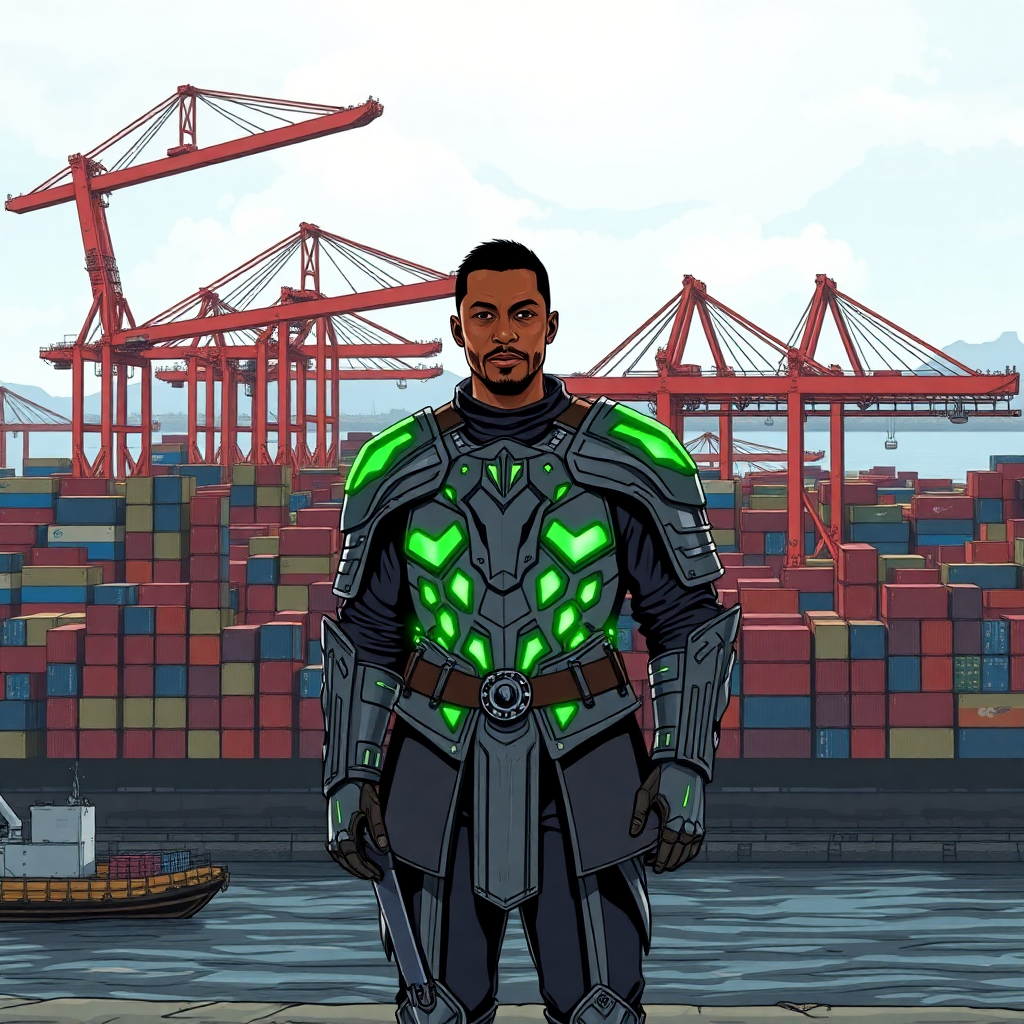
Marcus Spillward was halfway through a container manifest at Port Newark–Elizabeth when the ground hiccuped.
Not an earthquake — Newark had no fault lines worth mentioning. This was a pressure thing: the tarmac buckled upward in a slow, deliberate ridge near Berth 46, and three loading cranes swayed like they’d forgotten what standing still meant. The Passaic, already murky with decades of industrial memory, pushed backward against its own current. A longshoreman dropped his coffee. Nobody had answers, and the port authority’s radio chatter dissolved into pure, eloquent profanity.
Marcus set down his clipboard. His tongue tasted copper. That was new.
Part Two: The Investigation
The copper taste meant the river was wrong — Marcus had learned that much from his grandmother, who’d called it the family sensitivity and refused to elaborate further. He followed the taste south along the waterfront, past the rusted dock infrastructure and the container stacks, until Branch Brook Park’s cherry tree roots were somehow visible through the pavement cracks, reaching toward underground water that wasn’t where it used to be.
He stopped at the old Newark Aqueduct Survey marker near the Raymond Boulevard underpass — a squat iron post that city engineers had long ago stopped caring about — and found it vibrating. Not from traffic. From below.
Old Vera Mabunda, who ran the waterfront salvage kiosk and claimed to know every bolt ever pulled from Newark Bay, watched him crouch over it. “Dredgewall’s been down there,” she said, without being asked. “Felt his hands on the pressure two nights ago. Water in my basement came up slow and wrong — not flooding, steering.”
Marcus had no idea who Dredgewall was. Vera handed him a laminated municipal survey card — the kind nobody printed anymore — and the name Ranjit Mirchandani was stamped on it in faded red ink, alongside a decommissioned Essex County water authority badge.
He googled the badge number. The county had quietly voided it eighteen months ago, after the aquifer reports started contradicting each other.
A manhole cover near the Passaic River bridge popped six inches into the air, hung there, then settled back down. The water table was being played like an instrument.
Part Three: The Pivot
Marcus sat on a dock piling and looked at the survey card. Ranjit Mirchandani. The Mirchandani Clan — waterworks engineers who’d mapped every aquifer vein under Newark’s industrial wards in the 1970s, and who’d never forgiven the port authority for buying the land above them, sealing the underground channels, and cutting the clan’s access to what they considered their rightful inheritance.
The aquifer pressure manipulation wasn’t random vandalism. Ranjit was steering the underground water table to push up through the container terminal’s foundation — slowly, invisibly — until Port Newark–Elizabeth’s berths became structurally untenable and the land reverted to contested status.
Old grudge. New engineering. Of course it was him.
Part Four: The Reckoning
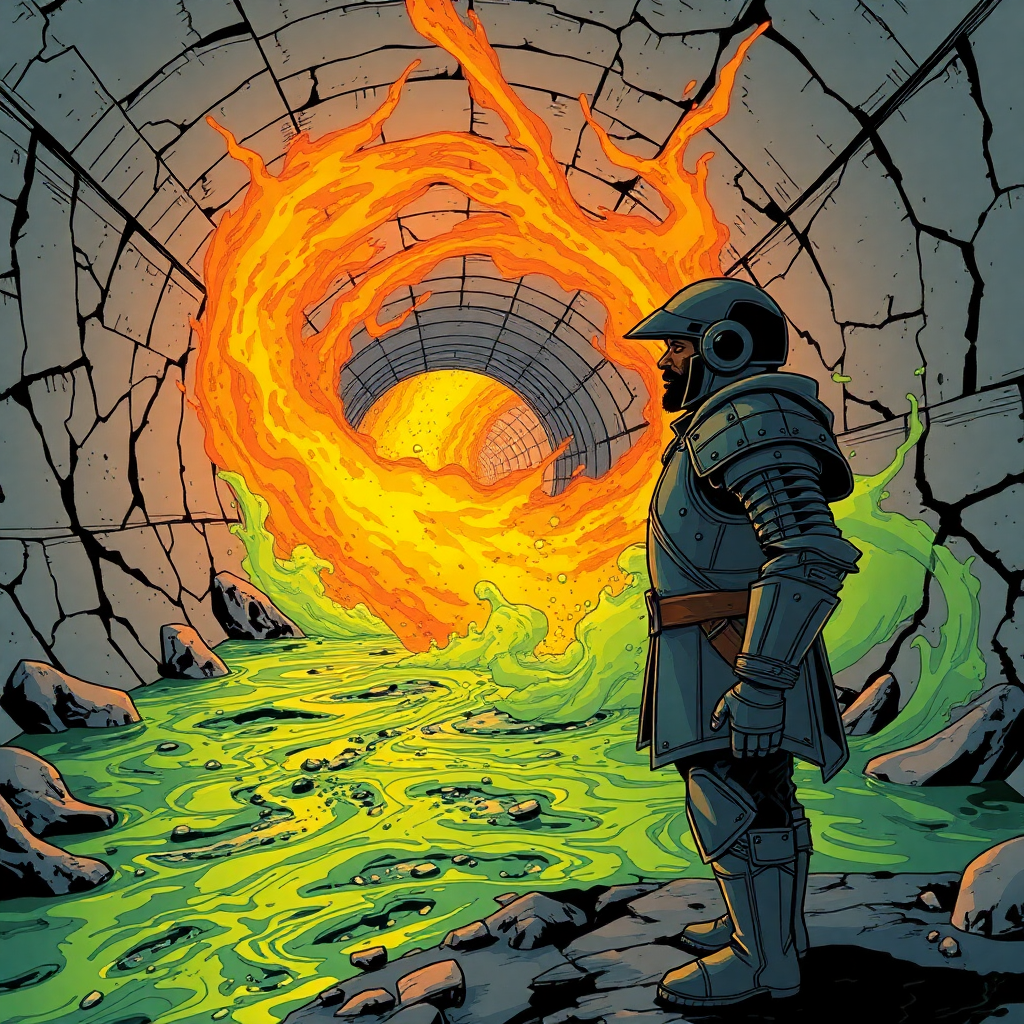
Marcus found Ranjit Mirchandani in the maintenance tunnel beneath Berth 46, both palms pressed flat against a dripping concrete wall, eyes closed, moving water through bedrock the way a conductor moves a string section. The dark clan armor — corroded water-authority blue, layered in crystalline mineral deposits that had built up like stalactite plate — caught Marcus’s flashlight and threw it back wrong.
Ranjit opened one eye. “You’re a Spillward. I wondered when the port would throw up a Spillward.”
Marcus had no prepared speech. What he had was the copper taste flooding his mouth, and the knowledge that the contaminated Passaic water surging up through the tunnel floor — heavy metals, benzene, fifty years of petrochemical argument — was his to metabolize.
He exhaled.
The tunnel filled with clean air, sharp and strange as the first breath after a long illness. The toxic cocktail Ranjit had been using as hydraulic fluid — pollution as leverage — neutralized the moment Marcus pulled it through himself. The pressure dropped. The aquifer settled. Ranjit’s hands slipped from the wall, his instrument suddenly silent, and he stumbled backward into an ankle of very ordinary, very harmless water.
“You just drank the mechanism,” Ranjit said, sounding personally offended.
“I know,” Marcus said. His mouth tasted clean for the first time in his life. It was deeply uncomfortable. “Go home.”
Ranjit went — but not before Marcus noticed the survey card in his coat pocket was identical to Vera’s. He’d had a copy all along. That wasn’t the only tunnel on the map.
Part Five: The Resolution
Port Newark–Elizabeth reopened Berth 46 the following morning, engineers baffled by the spontaneous structural recovery and quietly grateful not to file the paperwork. The Passaic ran a shade less opaque than usual — just a shade — and one monitoring station downstream flagged an anomalous clean-water reading that the county attributed to sensor error.
Marcus returned Vera’s laminated card. She already had a new one waiting.
The aquifer maps were still out there, and Ranjit Mirchandani was a man who understood patience better than most. Newark had been built above a clan feud older than its own port, and the water table, Marcus was learning, had a very long memory.
Sources
- My Hero Academia Concert World Tour Announces U.S. Tour Dates
- Reviewer Goes Scorched Earth On Springsteen’s ‘Hypocritical’ Anti-Trump Concert
- Bruce Springsteen Shredded By Hometown Paper for Anti-Trump Concert: ‘Hypocritical Crap. Profiteering over Legitimate Protest’
- My Hero Academia Officially Announces Special 2026 Comeback
- ‘A Storm in Our Nation!’ Cory Booker Turns the Volume up to 11 in Call for ‘Foot Soldiers’ to Fight Back Against Trump
- Sombr Covers An Old-School Radiohead Classic During Coachella’s Second Weekend
- $150 train tickets and closed stations; FIFA and New Jersey’s feud
- NJ’s new congresswoman Analilia Mejia is a darling of the left — and comparisons to socialist Zohran Mamdani are already flowing
- Trump’s sacrilege Truth Social post: Letters to the Editor — April 18, 2026
- NJ Transit officially announces exorbitant $150 round-trip train tickets to World Cup games
- Newark, New Jersey — Wikipedia
- U.S. Census Bureau, American Community Survey 5-Year Estimates (2022)