
TERMINAL: Origin of the Hudson Line
Part One: The Last Train Home
The 11:47 out of Hoboken Terminal is never on time.
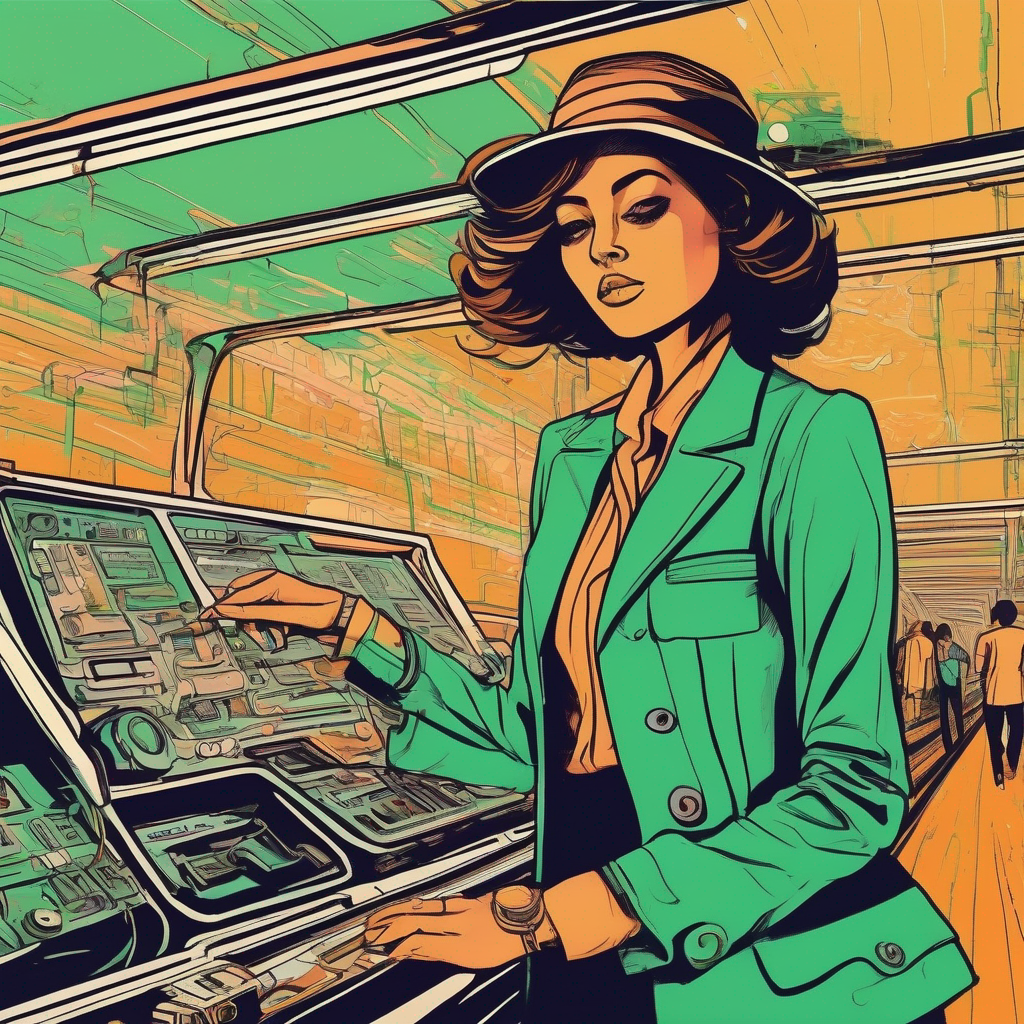
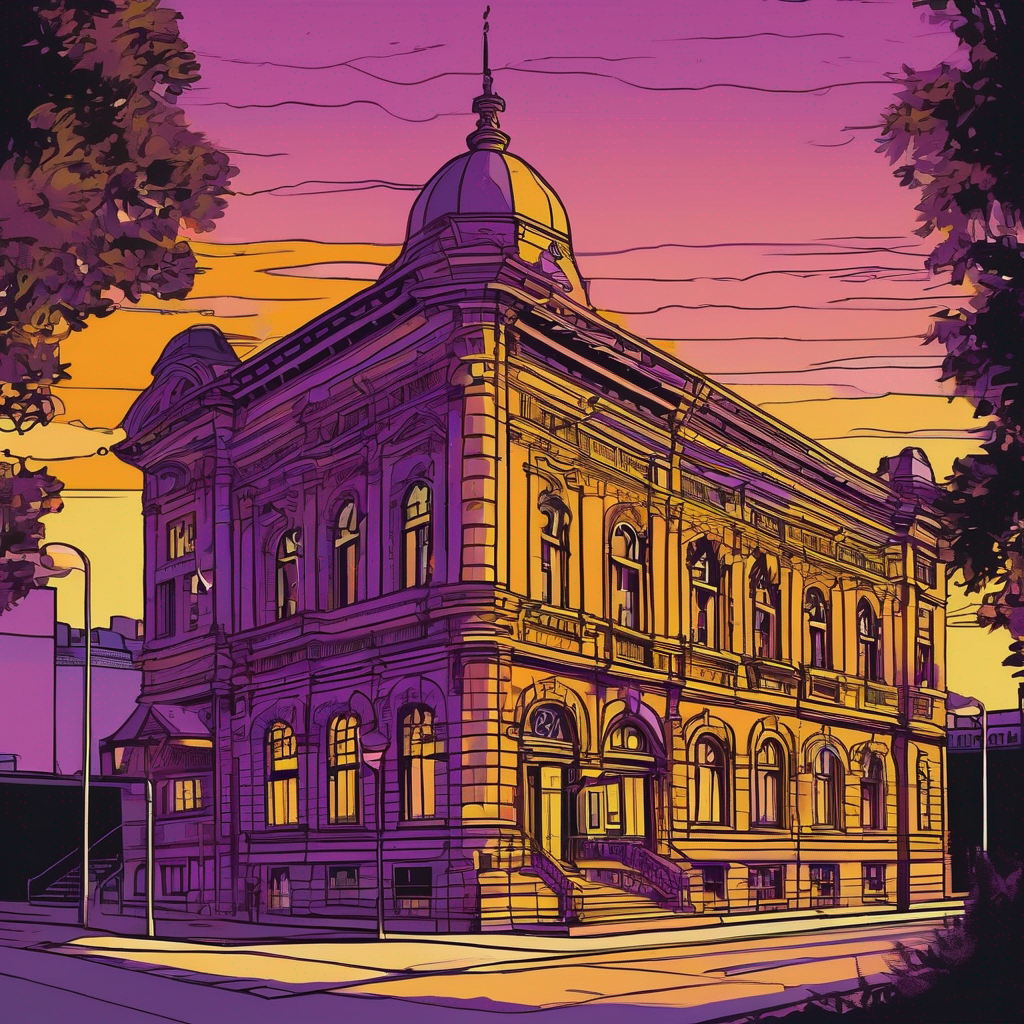
Marisol Vega knows this the way she knows the smell of diesel and river salt, the way she knows the groan of the old ferry slips at night, the way she knows every crack in the tile mosaics beneath the Terminal’s great copper-roofed headhouse. She has worked the information booth at Hoboken Terminal for eleven years — eleven years of redirecting commuters, calling delays, memorizing the capillary map of every rail line bleeding outward from this single, magnificent point. NJ Transit, PATH, the light rail, the ferry. All roads, in a certain sense, lead here.
It is a Tuesday in late March when everything changes.
The Terminal is quiet at this hour — a cathedral hush settling over the grand waiting room, its arched windows throwing pale rectangles of Hudson County moonlight across the marble floor. A few stragglers. A man asleep on a bench near the old lunch counter. Two college students from Stevens dragging roller bags toward the PATH gates. Marisol is finishing her shift, pulling on her coat, when she hears the sound: not a crash, not a boom, but something older — a resonant, subsonic thrum, like the building itself is drawing a breath.
She follows it to the lower concourse, down past the ferry terminal doors, down to a maintenance corridor she has walked a hundred times. The thrum is stronger here. The old tile walls are vibrating.
And then the floor opens up.
Part Two: Beneath the Waterfront
What Marisol falls into is not a sinkhole. She understands this even as she’s falling — a Transit engineer’s daughter, she understands infrastructure the way others understand music. The cavity beneath her is too deliberate, its walls too smooth. It is a chamber, and it is old. Colonial old. The stone is Dutch, she thinks — the rough-cut traprock of the Pavonia settlement, sealed and forgotten beneath two centuries of landfill, rail bed, and ambition.
At the center of the chamber, something pulses.
It is the shape of a rail switch — the iron fork that sends a train left or right, toward one future or another. But it is enormous, taller than she is, and it is alive, threaded with bioluminescent ore that glows the particular blue-green of the Hudson at dawn. Carved into its base, in Dutch and in what she will later learn is Unami Lenape: Hupokàn. The place of the tobacco pipe. The place where paths divide.
Marisol reaches out. She cannot explain why. The commuter in her, maybe — the instinct to switch the track, keep things moving, get everyone home.
The iron is warm. And when her palm makes contact, eleven years of transit maps, eleven years of arrivals and departures, eleven years of standing at the convergence point of half a million daily journeys — it all conducts through her like current through a third rail.
She doesn’t scream. She becomes.
Part Three: The Topology of Motion
The doctors at Christ Hospital in Jersey City find nothing wrong with her. Of course they don’t.
What has changed in Marisol Vega cannot be measured in blood panels. She feels it first on her walk home along Sinatra Drive, the waterfront glittering on her left, the Manhattan skyline a circuit board of light across the river. She is aware of every person on the move. Not telepathy — something more structural. She feels the vectors. The man on the bicycle on River Street, trajectory and velocity like a line on a schematic. The PATH train thundering beneath her feet on its way toward Journal Square. The ferry cutting across the river. Every moving thing connected to every other moving thing, and Marisol at the center, the switch, the hub.
She can redirect it.
She tests this carefully, the way a methodical person tests anything: in small increments, with controls. She is, after all, a transit professional. She discovers that she can instantaneously translocate herself along any active transit corridor — blinking from the 14th Street light rail stop to the ferry terminal to the PATH platform at Christopher Street in Manhattan as fast as thought. She discovers she can extend this to others: touch someone and carry them along any line she chooses. She discovers she can generate kinetic force — the accumulated momentum of ten thousand daily commuters, compressed into a directed pulse that hits like a freight train.
And she discovers, when she stands at the Terminal’s main concourse at rush hour and listens, that she can feel the city’s movement as a living thing — sense disruption, danger, the sudden stillness of someone who should be moving.
She thinks of her mother, who rode the bus to her hospital job in Union City every morning for thirty-two years. She thinks of the 2016 train crash, the one that shook this whole building, the one that people here still carry in their shoulders. She thinks about what it means to be a hub — to be the place where everyone passes through.
She decides she will be that. But she will also be the safety switch.
She calls herself TERMINAL.
Part Four: The War on the Waterfront
The threat, when it comes, is dressed in development permits.
Hargrove Meridian Partners — a real estate consortium operating out of a glass tower in Jersey City — has been quietly acquiring air rights along the Hoboken waterfront for eighteen months. On paper, it’s mixed-use luxury development. In practice, their project architect, a man who calls himself LEVELER in the encrypted messages Marisol intercepts through the Terminal’s old communications infrastructure, has something more absolute in mind.
Leveler — real name unknown, a former structural demolitions engineer who lost his license after a catastrophic collapse in Bayonne — believes that Hoboken’s density is its pathology. Too many people crammed into one square mile, moving in patterns he describes, in his manifesto, as “the disease of interdependence.” His plan: collapse the transit infrastructure at its root, force a mass exodus, and let Hargrove Meridian rebuild the waterfront as a sealed, controlled enclave accessible only to those who can afford not to need a train.
He has a device. It is not a bomb in the conventional sense. It is a resonance disruptor — engineered to send a precise subsonic frequency through the Terminal’s foundation, destabilizing the same colonial stone chamber that transformed Marisol, triggering a cascading collapse of the rail concourse during morning rush hour.
He has chosen a Thursday. One hundred and twelve thousand daily users pass through this building.
Part Five: Switch Position
Marisol feels it before the device activates — a wrongness in the vibration beneath the Terminal floor, a frequency that runs counter to everything living and moving. She is already inside the building when Leveler triggers the disruptor from a maintenance access point beneath the Hudson Place approach ramp. She goes straight down through the concourse, through the lower level, through the old ferry slip foundations, moving along a transit line that exists only in the building’s bones.
The fight is brief and brutal and very loud.
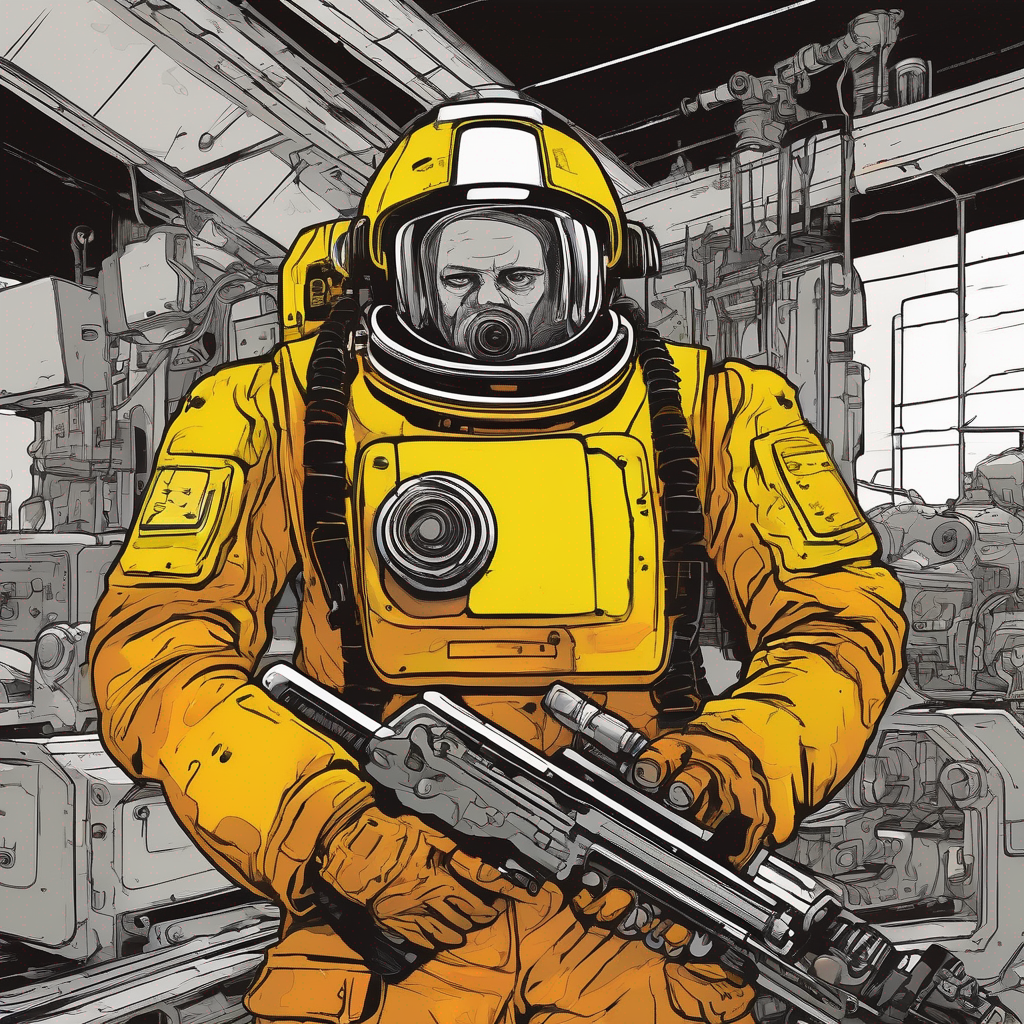
Leveler is not superpowered — but he is precise, armored in a retrofit exosuit built from repurposed rail-switching machinery, and he knows the Terminal’s structural vulnerabilities the way a surgeon knows a body’s fault lines. He hits hard and strategically. Marisol bleeds from a gash above her left eye before she finds her footing.
What saves her — what saves everyone — is the thing she has always been good at: reading the network. She stops fighting him directly. She reroutes. Every kinetic blow he throws, she switches the track on — redirecting his own momentum back through the chamber’s geometry, using the old Dutch stone walls as a transit corridor, bouncing his force in directions he didn’t calculate. It is less like a fight and more like managing a very angry, very dangerous commuter who keeps trying to get on the wrong train.
When it is over, Leveler is pinned beneath a collapsed section of his own exosuit, and the resonance disruptor is dark. The Terminal above is intact. The 7:52 to Secaucus Junction departs two minutes late, which is, by any measure, basically on time.
Epilogue: The Hub
Marisol Vega returns to the information booth the following Monday.
No one at NJ Transit knows what happened beneath the building. The incident report cites a minor seismic irregularity and a power fluctuation. There is a brief item in the Hudson Reporter, below the fold.
She answers questions about track changes, transfer points, and ferry schedules. She does it well. She has always done it well.
But now, when the Terminal breathes its diesel-and-river breath around her, when the morning crowd flows through the grand arched doors and disperses outward across every line — she feels each of them. Each vector. Each life in motion, heading somewhere that matters to them.
She is the hub. She is the switch.
She is Terminal, and Hoboken is her platform.
End of Issue #1.