THE SILENCER: Origin of Theodore Crayne
Part One: The Shore That Memory Built
The boardwalk has always been a negotiation between the sea and the living.
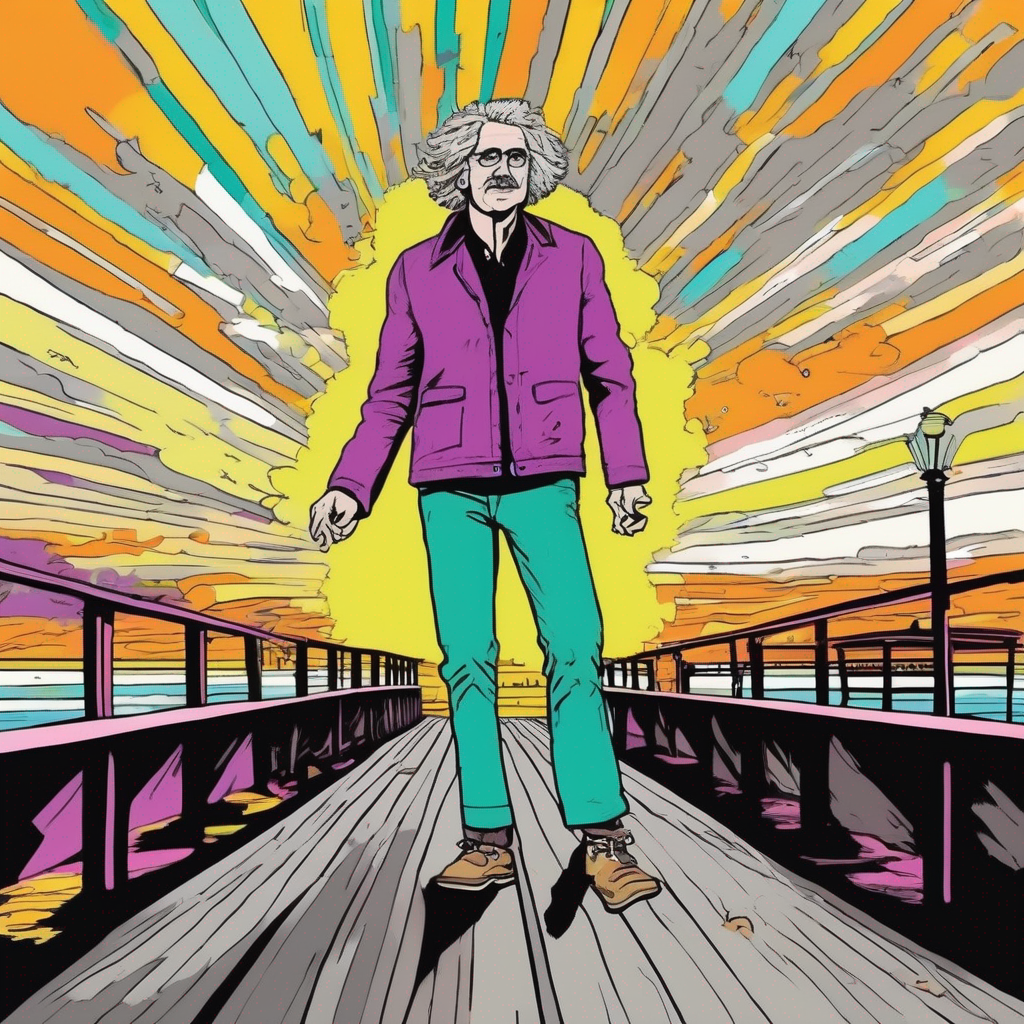
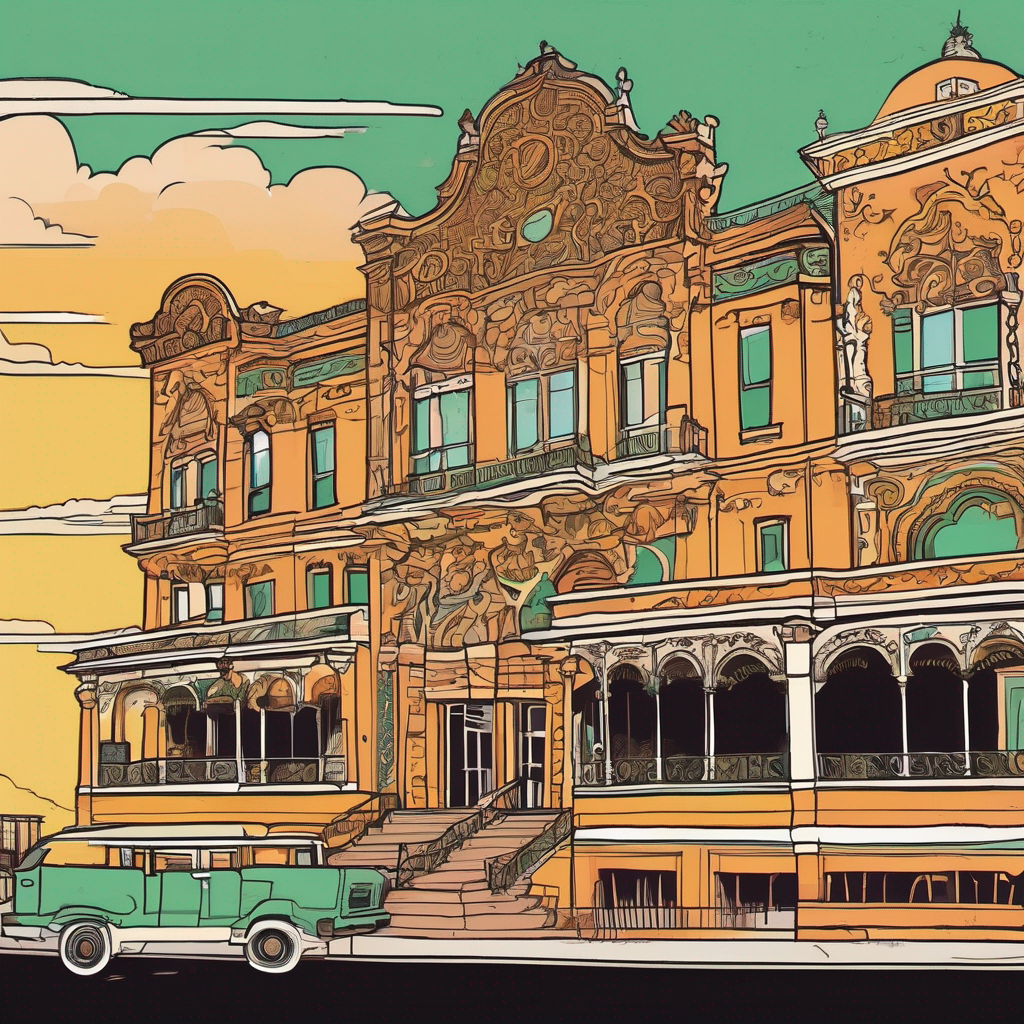
Theodore Crayne understands this better than anyone. He has walked the planks of Asbury Park’s boardwalk since he was seven years old, his small hand swallowed in his father’s enormous grip, the salt wind coming off the Atlantic like a promise. Back then, the Convention Hall stood like a cathedral at the edge of the world — its twin towers rising above the beach, its ornate Spanish-Baroque facade catching the morning light in shades of honey and rust. His father, a concrete contractor from Neptune City, would stop and stare at it every time. That building, he would say, is why this place matters.
But Theodore also watched what happened when things stopped mattering.
Through the 1970s and ’80s, Asbury Park didn’t just decline — it collapsed. The race riots of 1970 had cracked the city open along fault lines that had always been there, and the years that followed poured salt into those wounds. Storefronts shuttered. Hotels became flophouses. The grand Palace Amusements — that gaudy, glorious temple of rides and neon and the painted Tillie face grinning from its facade — rotted quietly while the city government argued and developers circled and nothing, nothing, nothing got done.
Theodore watched all of it. He catalogued it. He wrote it down in composition notebooks he still keeps in a fireproof safe in his Rumson office: dates, addresses, names of properties, names of owners who let things fall apart. He was not a cruel boy. He was a precise one. And precision, he told himself, was a form of love.
He put himself through Rutgers on construction management scholarships and a work-study placement with a Freehold engineering firm. He earned his MBA at night while swinging a hammer during the day. By thirty-two, he had founded Crayne Capital Redevelopment with a single flip in Red Bank and a vision that felt, to him, entirely righteous: Someone has to save these places. It might as well be me.
Part Two: The Gospel of Revitalization
By the early 2000s, Crayne Capital was a Shore County institution.
Theodore had helped shepherd the early wave of Asbury Park’s comeback — boutique hotels near the beachfront, renovated storefronts along Cookman Avenue, mixed-use residential developments east of the rail line. He attended every city council meeting. He shook every hand. He smiled in every groundbreaking photo holding an oversized ceremonial shovel, and the smile was genuine, because he genuinely believed in what he was building.
He told the story at cocktail parties and community forums: Asbury Park had been left for dead. Now look at it. The Stone Pony still standing on Ocean Avenue, the music still pouring out its doors on summer nights. The Convention Hall restored. The beach — once abandoned, trash-strewn, forgotten — named one of the best in the world. We did this, he would say, spreading his hands. People who believed in this place.
What he did not say — what he was only beginning to understand — was that we had always been a carefully edited pronoun.
The artists, the musicians, the LGBTQ community that had moved into Asbury Park during its hollow years and built something fierce and original and alive out of the rubble — they had done it without him. They had done it despite people like him. And now, as property values climbed, as the weekend crowds thickened on Cookman and the cocktail bars multiplied, Theodore watched their rent notices arrive and their murals get painted over and their venues get quietly purchased by holding companies whose parent companies traced back, eventually, to Crayne Capital.
He told himself it was economics. He told himself the city needed tax revenue. He told himself that sentiment was not a business plan.
But the truth — the truth he locked in the same fireproof safe as his composition notebooks — was simpler and uglier: the voices that had kept Asbury Park alive were now inconvenient to the Asbury Park he wanted to own.
Part Three: The Frequency of Opposition
The device came out of a failed acoustic engineering contract.
A Holmdel-based defense subcontractor called Meridian Waveworks had been developing directional sound-cancellation arrays for military crowd-dispersal applications — systems that could flood a specific acoustic space with perfectly calibrated anti-phase waveforms, neutralizing any sound produced within a targeted radius. When federal procurement funding dried up, the project was shelved. The prototype hardware sat in a storage facility off Route 9 for three years.
Theodore Crayne purchased the intellectual property and hardware assets in a bankruptcy auction for less than the cost of a Shore home’s closing fees.
His first use of it was modest, almost experimental. A community forum at the Asbury Park High School gymnasium, called to oppose Crayne Capital’s proposed acquisition of a historic music venue block on the south end of the boardwalk. Two hundred residents packed the bleachers. Advocates and musicians and longtime tenants stood at the microphone and spoke about displacement, about cultural erasure, about what the city would become when the last independent venue was gone.
Theodore had positioned a Meridian prototype unit — compact, indistinguishable from an HVAC access panel — inside the building’s mechanical room that afternoon. He activated it from his phone during the open comment period. One by one, the microphones went dead. Ambient sound flattened to a strange, pressurized hush. People spoke and couldn’t hear themselves. The moderator looked confused. The crowd grew uneasy. The meeting dissolved without a vote.
Standing in the parking lot afterward, Theodore Crayne felt something he had not felt in years.
Control.
Not the thin, negotiated control of zoning hearings and city council relationships. Not the control you purchased with campaign contributions and was always, always one election cycle away from evaporating. Absolute control. The sound of opposition — literally, physically — gone.
He went back to his Rumson office and began designing the next version himself.
Part Four: The Architecture of Silence
Over the following eighteen months, Theodore Crayne remade himself into something he had no name for yet.
He hired three acoustical engineers away from a Princeton University research lab under non-disclosure agreements that cost him more than the original IP acquisition. He built a private R&D facility in a converted industrial space in the Shark River Hills. He spent weekends there himself, learning the physics of sound cancellation with the same obsessive precision he had once applied to zoning maps and property surveys.
The final system — what his engineers called the Crayne Array — was a marvel of miniaturization. A suite of distributed emitters, each the size of a smoke detector, that could be embedded in a building’s infrastructure. A wearable command interface built into a custom-tailored suit jacket. A directional handheld variant — sleek, black, resembling an expensive architect’s drafting tool — for field use. And a signature effect he hadn’t anticipated but had come to prize: at maximum output, the Array didn’t merely cancel sound. It produced a secondary resonance effect — a deep subsonic pressure wave that induced disorientation, short-term memory disruption, and an overwhelming impulse to leave a space immediately.
He called the frequency the Undertow.
Word spread through City Hall — carefully, selectively — that Theodore Crayne had become someone you did not oppose in public. Community meetings near his development sites ended in confusion. Activist coalitions found their organizing momentum inexplicably evaporating after events where Crayne had been present. A local music journalist who had been investigating Crayne Capital’s boardwalk acquisitions submitted a rambling, incoherent final draft to her editor and quit the paper two weeks later, convinced she was experiencing early-onset neurological symptoms.
Theodore told himself the Undertow was humane. Nobody got hurt. Nobody bled. They just — went quiet. They went home. They stopped fighting something that was, in his estimation, inevitable.
The Shore was always a negotiation between the sea and the living. Theodore Crayne had simply decided to be the sea.
Part Five: The Sound That Cannot Be Cancelled
She appears for the first time at the Convention Hall.
Crayne Capital has announced — without a public hearing, through a discretely worded press release on a Friday evening — a “landmark adaptive reuse proposal” for the southern Convention Hall arcade, converting the last stretch of independent music-facing retail space into a luxury hospitality enclave. By Saturday morning, the boardwalk outside is full of protesters. By Saturday afternoon, they are silent — confused, scattering, the fight going out of them like air from a punctured lung.
By Saturday evening, the lights in the Convention Hall’s upper arcade windows begin to pulse.
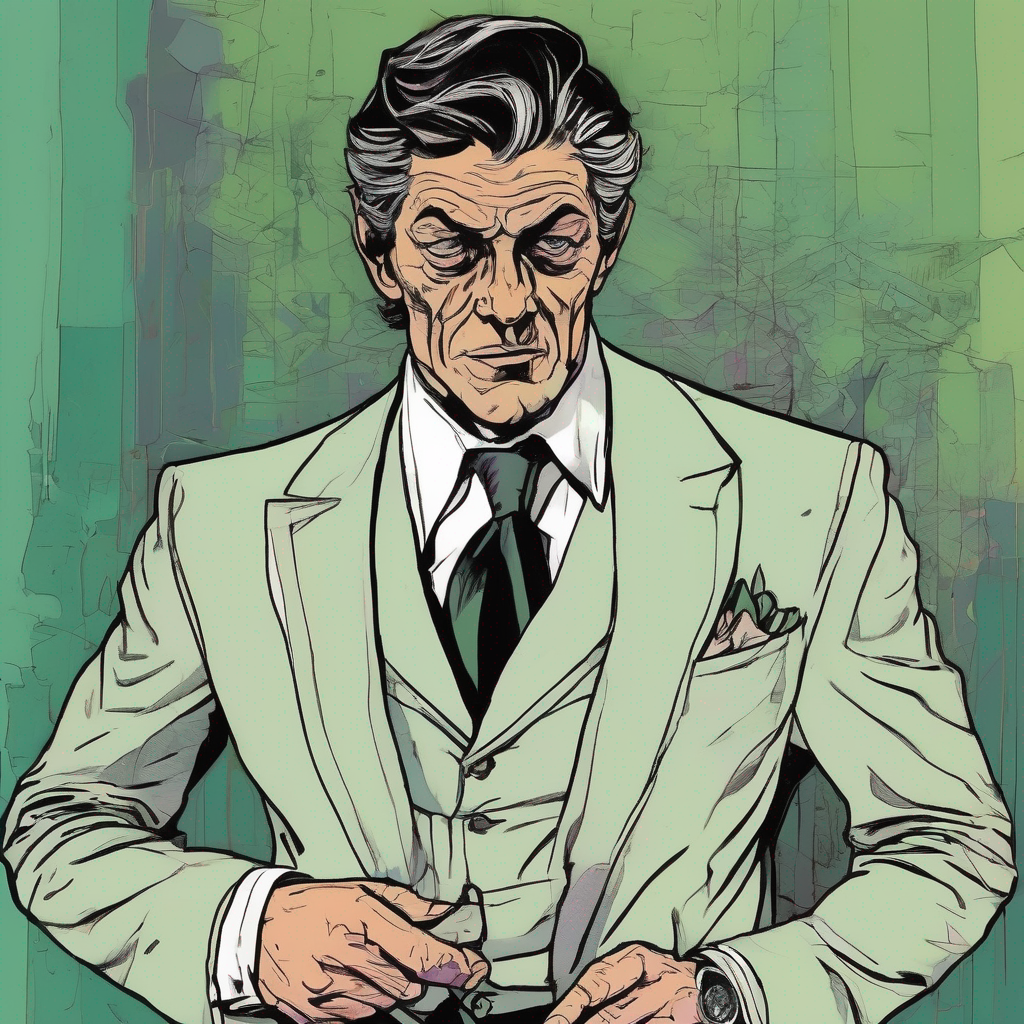
Theodore Crayne is standing on the boardwalk in his gray Meridian-lined suit, the handheld Array at his side, watching the crowd dissolve, when he hears it. Not sound exactly — not at first. A counter-pressure. Something pushing back against the Undertow from inside the building’s own bones, as if the Convention Hall itself has remembered every concert, every rally, every voice that ever echoed through its vaulted ceilings, and is returning them all at once.
The windows of the arcade blaze white-gold. The boards beneath his feet hum.
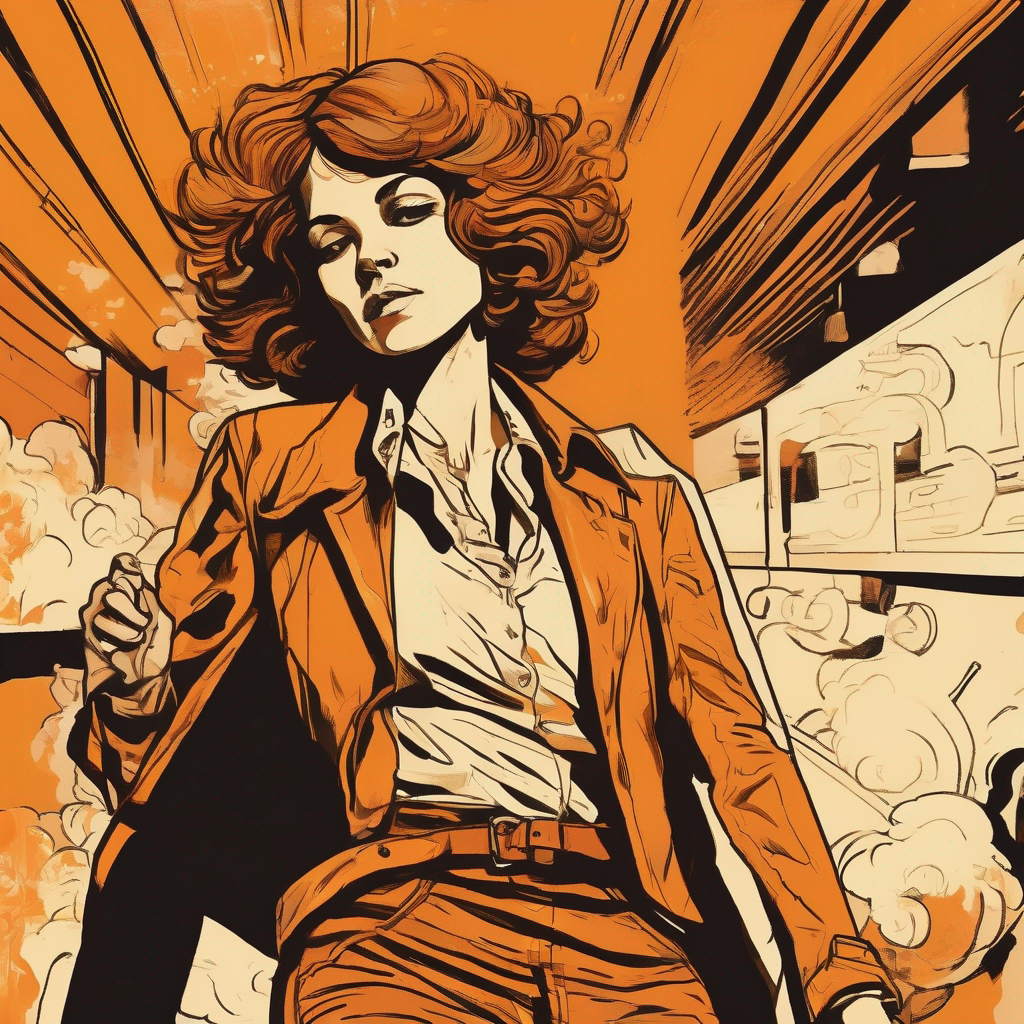
She steps out through the main arcade entrance — and Theodore Crayne sees her clearly for the first time. The figure the city will come to know as Resonance: her costume the deep burnt-orange and cream of old concert posters, her silhouette haloed in visible sound waves that ripple the air around her like heat off summer asphalt, the twin bracers on her forearms crackling with stored acoustic energy.
She looks directly at him.
The Array in his hand emits its maximum output. The Undertow rolls outward across the boardwalk.
It does not reach her.
Her braces absorb it — convert it — and when she opens her mouth, the sound that comes out carries every frequency his device attempted to erase, amplified and returned. Not as a weapon. As a reclamation. Theodore feels the pressure wave hit his chest like a bass note from a speaker stack at close range, and staggers backward, and the Undertow dies.
The protesters on the boardwalk look up. They look at each other. They begin, one by one, to find their voices again.
Theodore Crayne straightens his jacket. He looks at the Convention Hall — at its twin towers dark against the April sky, at the Atlantic beyond it, at the lights of the city he has spent his life remaking in his own image — and feels, for the first time in eighteen months, something he cannot engineer away.
He feels afraid.
Good, he thinks, cold and precise as a blueprint.
Fear is just a problem that hasn’t been solved yet.
He pockets the Array. He turns. He walks back toward his car on Ocean Avenue without hurrying, because Theodore Crayne has never run from anything in his life, and he is not about to start.
But Resonance watches him go from the top of the arcade steps, and the sound of the ocean behind her is very loud, and it is not cancellable, and it has never been cancellable, and the city — for this one moment on a cold April boardwalk — is alive again with the sound of its own name.