Tidemark of the Hackensack
Part One: The Man Who Watched the Water
Marcus Delaine has been reading rivers his whole life.
Born in the Greenville neighborhood, son of a longshoreman and a school nurse, Marcus grew up watching the Hudson from the decks of the NY Waterway ferry that his father sometimes rode to work before the port jobs dried up. He learned early that water doesn’t care about property lines or zoning ordinances or the ambitions of developers — water finds the lowest point and settles there, patient and indifferent as time. His father called it the river’s memory. Marcus called it the truth.
He spent thirty-eight years with the Jersey City Office of Municipal Infrastructure, the last sixteen as Chief Stormwater Engineer. He knows every aging culvert beneath Newark Avenue, every undersized drain collar in the South Ward, every place where the century-old pipe network groans under the weight of a city that grew faster than anyone planned for. He has walked the full 30.7 miles of waterfront in every season. He has stood at Port Jersey at 2 a.m. during nor’easters, watching the surge come in off the Upper New York Bay like a moving wall, and he has felt, in the soles of his boots, the inadequacy of everything humans have built to hold it back.
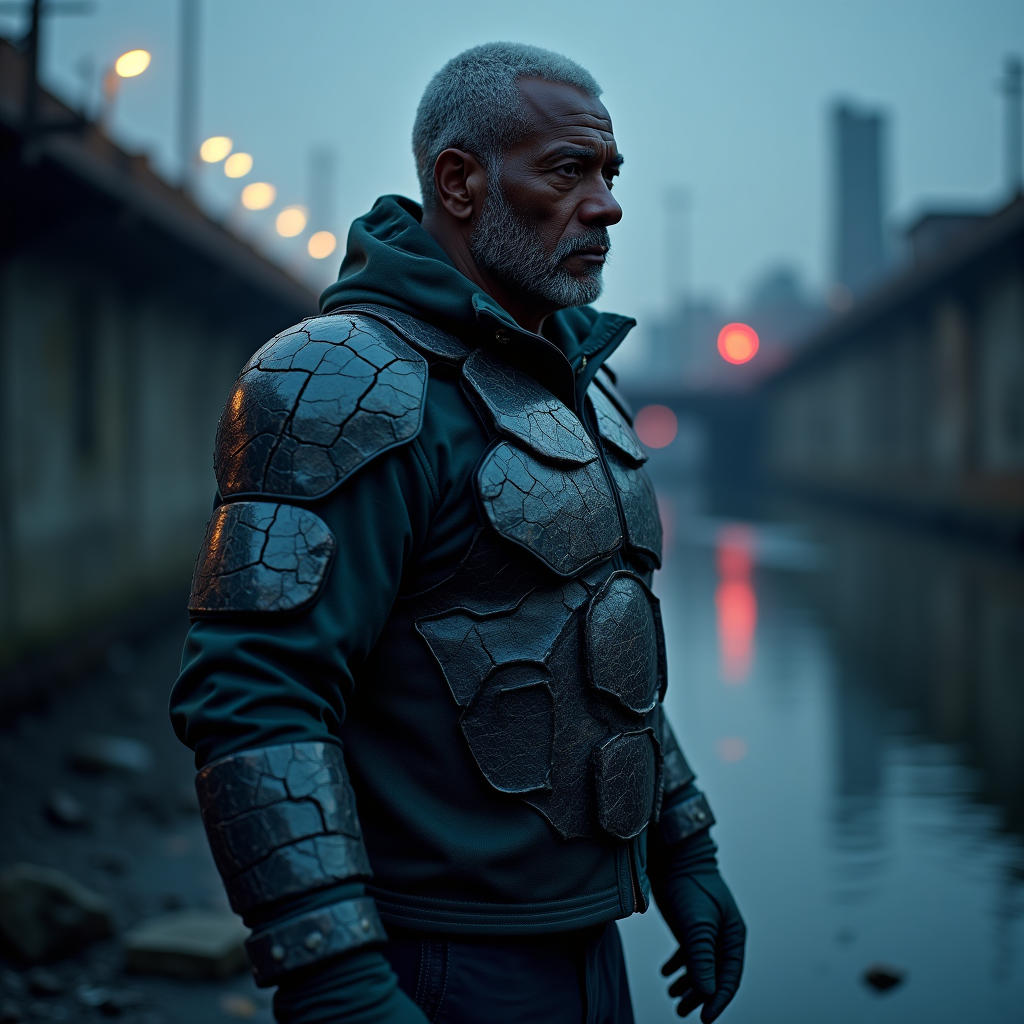
Now sixty-four, recently retired, Marcus Delaine is a broad-shouldered man with close-cropped silver hair and the careful, deliberate movements of someone who spent decades working near water that could kill you. He still carries a tide chart in his jacket pocket out of habit. His neighbors on Bramhall Avenue know him as the man who showed up with sandbags before the last three floods — always before the alerts, always before anyone else knew it was coming.
No one has asked him how he knows. He isn’t sure he could explain it.
Part Two: The Spill Beneath Tonnelle
The incident at the North Bergen freight yard — a derailment near Tonnelle Avenue that spilled an unidentified chemical compound into the secondary drainage channel — sends a plume of contaminated runoff south through the intermodal rail corridor and into the Hackensack River’s industrial bank on the Jersey City side. Marcus gets the call at 5:47 in the morning from an old colleague at the municipal yard. He drives his truck down to the Hackensack waterfront before the emergency teams arrive.
The air smells of something he can’t name — not petroleum, not solvent, not any industrial signature he recognizes from three decades of field work. It has a mineral sharpness, almost geological, like the inside of a struck flint. The drainage channel along the old freight spur runs dark with it, and where the contaminated water meets the river, the surface catches the early light and refracts it wrong — prismatic, fractured, like oil but deeper, as though the light itself is being pulled into the liquid and held.
Marcus wades in to the knee before he stops himself.
Later, he will not be able to account for what happens in the next four minutes. The water rises around him — not the river, but the runoff in the drainage channel — and moves against the current. He will say it moved toward him. He will say he felt the geology beneath his feet like a second skeleton, the strata of shale and glacial till and ancient Newark Basin bedrock humming against the soles of his boots like a tuning fork struck at the frequency of the earth itself. And the light — the Newark Bay light, the haze-filtered industrial murk of it — collapsed into perfect clarity around him for a radius of thirty feet, as though every photon had been given a direction and a purpose.
He stumbles back to the bank. He sits on a concrete barrier for twenty minutes, breathing.
Then he drives to the Home Depot on Route 440 and buys more sandbags, because that is what Marcus Delaine does.
Part Three: The Geometry of Containment
It takes him three weeks to understand what he has become, and another month to believe it.
He doesn’t experiment dramatically. He’s an engineer. He takes notes. He goes back to the Hackensack corridor at low tide, stands at the edge of the old freight spur, and extends his right hand over the drainage channel. The water responds to the geometry of his intent — not his emotion, not his urgency, but the precise mental blueprint of where it should go. He redirects a four-foot channel of stormwater runoff around a drain collar in 11.3 seconds. He writes that down.
The seismic sense is subtler. Beneath the PATH train corridor, beneath the Holland Tunnel approaches, beneath the bedrock of a city built on top of a port built on top of a marshland built on top of geological upheaval, there are fault lines — minor, largely dormant, but present. He can feel them the way you feel a conversation happening in the next room: not the words, but the rhythm, the tension, whether someone is about to raise their voice. When he sends a focused pulse downward — a controlled micro-tremor, precisely tuned — he can feel the earth’s own stress release harmlessly into the substrata, like pressing a thumb against a bruise to keep it from spreading.
The light is the strangest gift. Standing on the waterfront at Exchange Place, looking out across Newark Bay toward Bayonne and the port cranes, he can feel the full spectrum of visible light the way a musician hears a chord — every frequency separate and readable. The industrial haze, the particulate scatter, the polluted murk that turns the bay into a brown smear by noon — he polarizes it away in layers, each wavelength redirected, until the water runs blue and the Manhattan skyline across the Hudson stands crisp and impossible as a postcard. His neighbors think it’s the weather changing. It is not the weather.
He chooses no name for himself. The waterfront workers who start to notice him — the man who walks the Hackensack bank before the storms, who stands in the surge and doesn’t go under — call him the Tidemark. The line the water won’t cross. He accepts this.
Part Four: The Architecture of Erasure
His name is Farouq Nassim, and he arrived in Jersey City in 1987 from a city he no longer names.
He made his money in real estate acquisition — specifically in what the industry calls value extraction: buying distressed municipal infrastructure, allowing it to degrade precisely to the threshold of condemnation, then acquiring the land beneath it for development. In Hudson County, where the zoning politics run hot and the infrastructure is old and the development pressure from Manhattan spillover is enormous, this model has made him extraordinarily wealthy.
The shuttered hospital on Palisade Avenue is only the most visible piece. Farouq’s holding company — registered under four layers of shell entities — owns seventeen parcels across the South Ward, the Greenville waterfront, and the old industrial stretch of the Hackensack corridor. For years he has worked with a kind of quiet patience, the patience of a man who understands that city systems fail slowly and that failure can be managed.
But Farouq Nassim is not only a developer. The chemical spill at the Tonnelle freight yard was not an accident. The compound — synthesized over eleven years in a private research facility he funds through a university endowment — was designed to do precisely what it did to Marcus Delaine, with one crucial difference: in Farouq, it worked differently.
He calls himself Nullshard of the Palisades. The name reflects his gift: he does not create or redirect — he cancels. Specifically, he cancels the propagation of energy through physical media. Sound, seismic vibration, electromagnetic radiation — he can introduce what engineers call destructive interference at a systemic scale. A building’s structural resonance silenced until its own weight cracks it apart. A tunnel’s load-bearing harmonics cancelled until the arch fails. A neighborhood’s electrical grid flattened to dead silence.
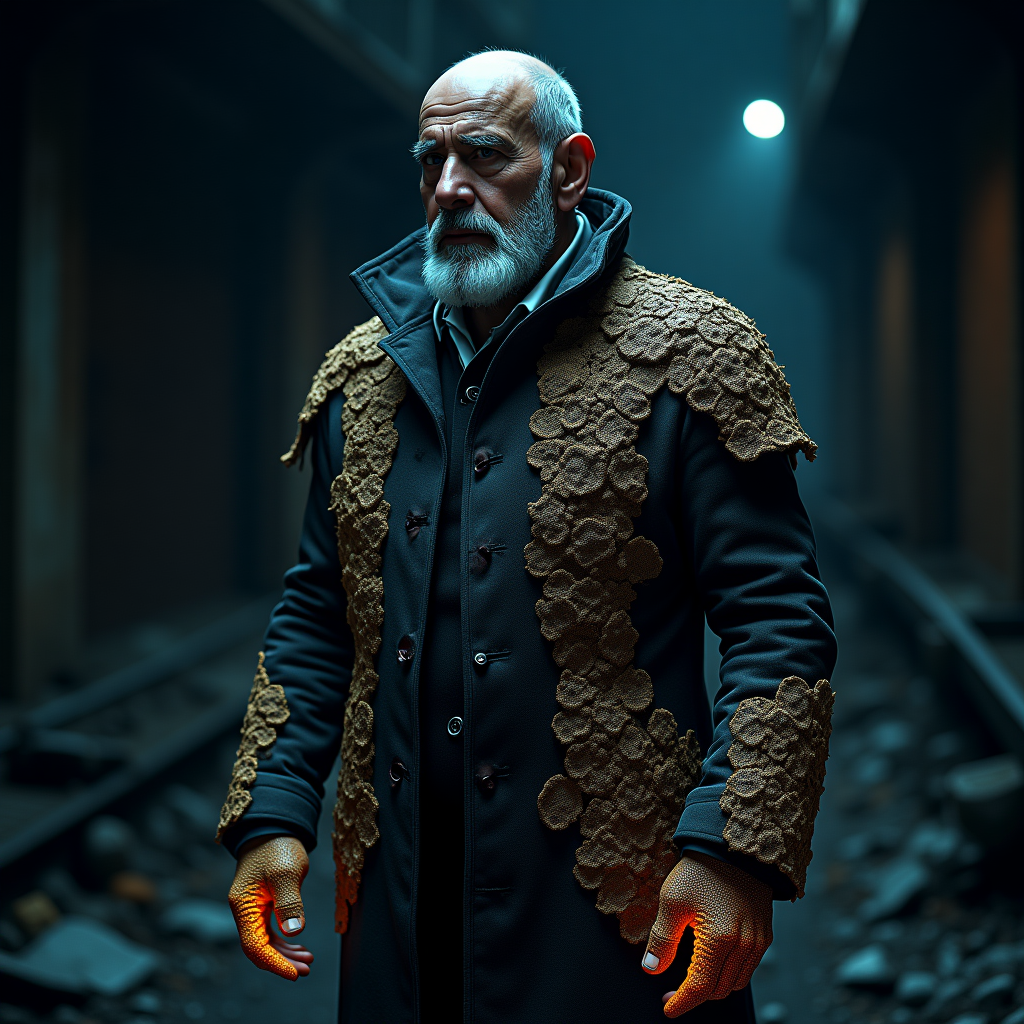
He is in his early seventies, lean and deliberate, with deep-set eyes and a white beard cropped close to a sharp jaw. He dresses in charcoal and black — fine wool, no ostentation, the wardrobe of a man who has already won everything he intends to win quietly. He moves with the unhurried precision of someone who has spent decades making irreversible decisions and living with them comfortably.
His theory is elegant: if the city’s infrastructure fails completely — if the tunnels crack, if the port seizes, if the power grid goes dark across the Hudson County waterfront — the land becomes worthless to everyone except the one entity with the capital and the political connections to rebuild it. Him. What he intends to build in place of Jersey City’s dense, diverse, aging, magnificent mess is something curated, gated, and enormously profitable.
He did not expect the compound to produce Marcus Delaine. He views this as a containment problem.
Part Five: The Line the Water Holds
The confrontation comes on a Thursday evening in April, during a nor’easter that pushes six-foot surge up through the Upper New York Bay and into every drainage corridor in Hudson County.
Nullshard of the Palisades moves through the Hackensack industrial corridor like a deliberate silence — wherever he walks, the sound of the storm dims, the emergency radio signals cut to static, the floodwater warning sirens flatten and die. He is heading for the geological weak point beneath the old freight spur, the place where a sustained destructive pulse aimed at the fault line beneath the PATH corridor would send a crack through three miles of underground infrastructure and collapse the oldest section of the stormwater network in a single catastrophic event. In the resulting chaos, seven South Ward blocks would flood to the second story within four hours.
Marcus Delaine is already there.
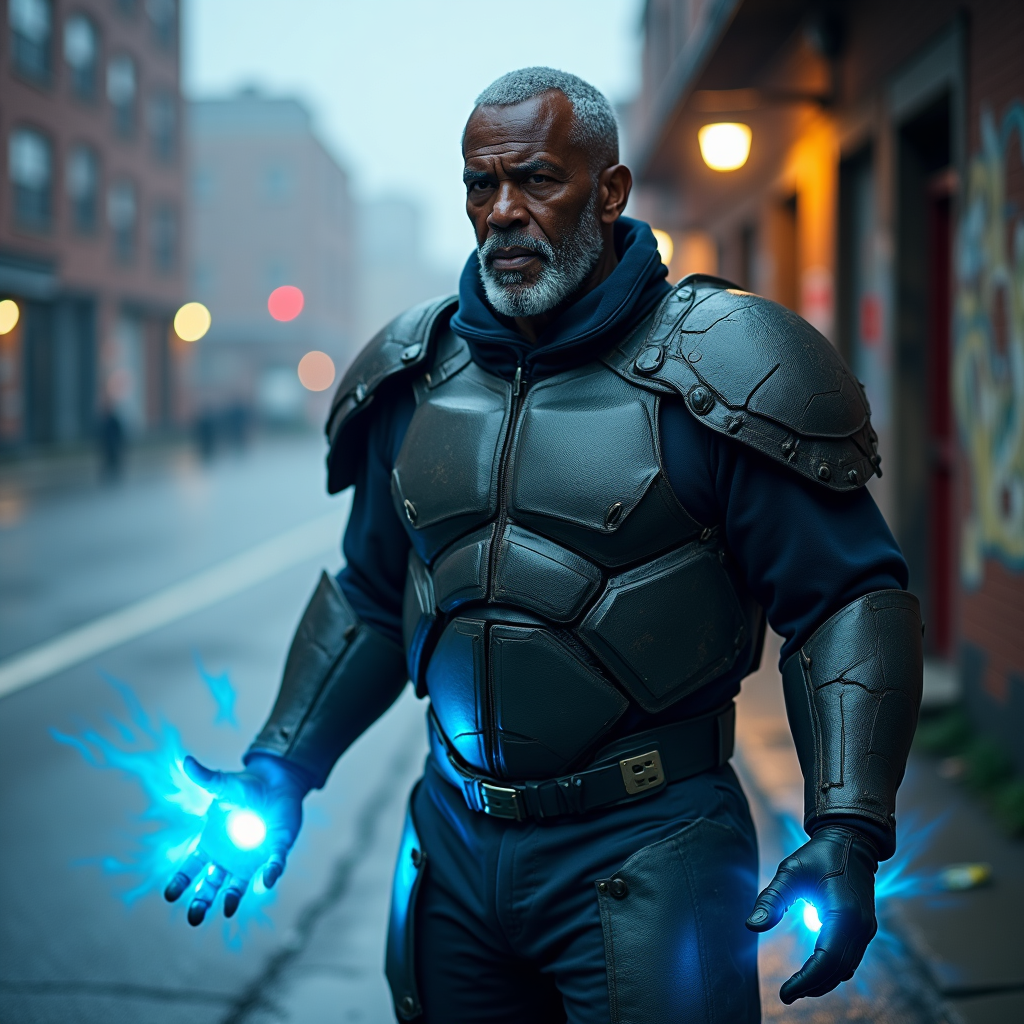
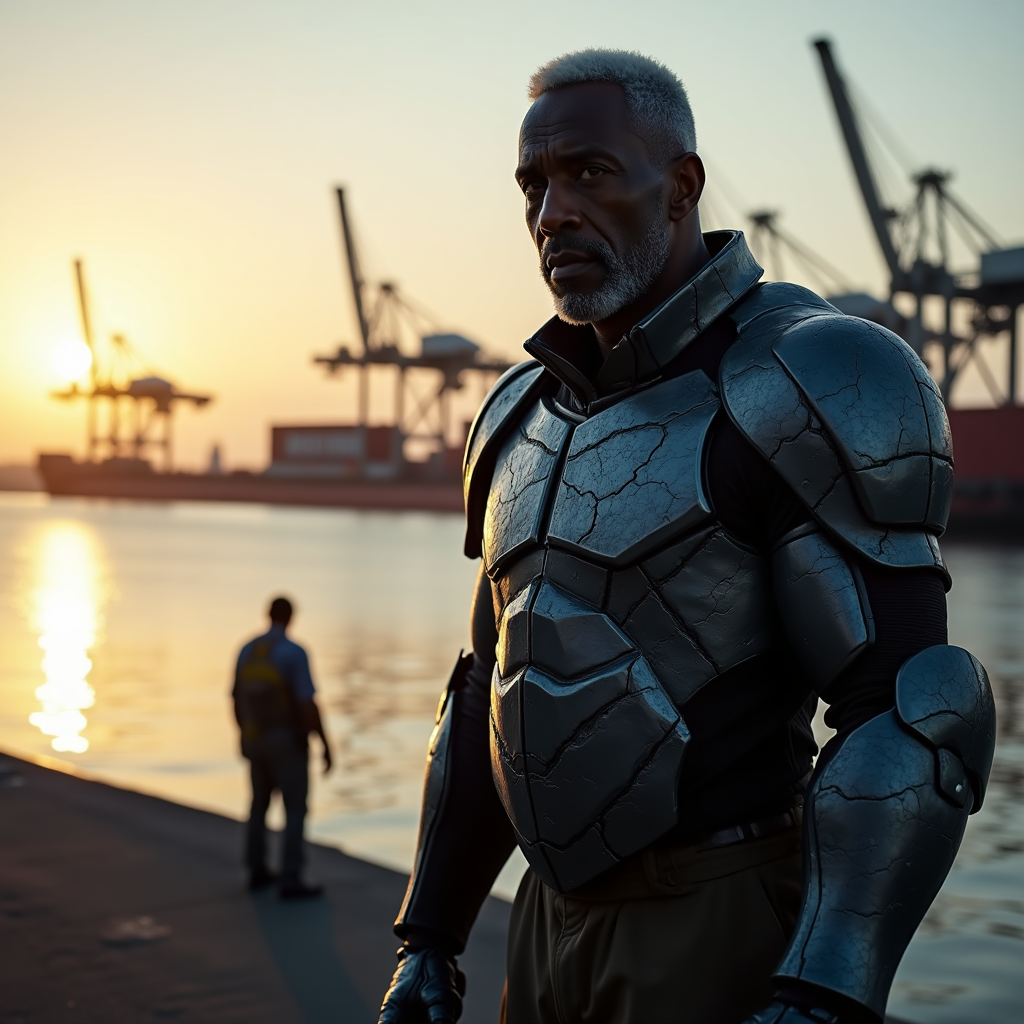
He stands at the edge of the drainage channel in the driving rain, his clothing restructured by the geological force that has been remaking him since Tonnelle — basalt plates fused over the shoulders of what was a municipal work jacket, volcanic rock layered across his chest and arms in dense segmented armor, deep fissures across the stone surface of his face glowing a cold harbor-blue against the dark. He is the Tidemark, and the water is holding behind him like a crowd that recognizes authority.
He sends the first gesture downward — a deep seismic pulse into the bedrock, the fault line’s tension released in six precise increments that scatter the stress harmlessly east into the bay substrate. The ground trembles for 1.3 seconds and then settles, the PATH corridor intact.
Nullshard raises both hands and introduces his silence. The rain seems to stop around him — not falling, but cancelled, each drop’s kinetic energy erased mid-descent. He is old and enormously controlled and his power is surgical. You can’t protect all of it, he says. His voice is flat and very calm. The city is already failing. I’m only accelerating the geometry.
Marcus thinks of his father on the ferry. Of the tide chart in his jacket pocket, half-buried now in volcanic stone. Of every undersized drain collar he ever filed a report about and watched get deprioritized in the budget cycle. Of thirty-eight years of watching the city choose, every time, to defer the cost of its own survival.
I know exactly how it’s failing, Marcus says. I’ve been writing the reports since before you bought the first parcel.
He opens the full spectrum — every wavelength across the bay, polarized and redirected, flooding the industrial corridor with a light so complete that the haze burns away and the Palisades stand clear across the river and the crane lights of Port Jersey throw hard shadows through the rain. Nullshard’s destructive interference requires precision targeting; the light disrupts his calibration, the environmental signal-to-noise ratio suddenly too complex to cancel cleanly.
In that window — six seconds of luminous, clarified storm — Marcus redirects the full Hackensack surge. Every channeled cubic foot of nor’easter runoff, bent south and east in a controlled arc, routed through the containment channels and away from the South Ward with a gesture that takes everything he has. The drainage network holds. The fault line holds. The PATH corridor holds.
Nullshard retreats into the industrial dark, his power intact, his plan deferred. He is a patient man. He has always been a patient man.
Marcus Delaine stands in the rain at the edge of the Hackensack River and watches the water go where he told it to go.
The tidemark holds.
For now, the tidemark holds.