
Frequency: The Origin of Vesper Crane
Part One: The Language of Strata
There is a kind of person who hears the world differently from birth — not in metaphor, but in fact. Vesper Crane has always heard it.
Growing up in a rented half-house off Whitehorse-Mercerville Road, the child of a civil surveyor father who left when Vesper was nine and a mother who processed zoning appeals for Mercer County until her eyes gave out, Vesper learned early that the land beneath Hamilton Township was not still. It groaned in winter when the frost crept down through the clay. It shifted in summer along the creek corridor where the Assunpink carved its patient way south. At night, lying flat on the basement floor of that half-house, Vesper could feel the NJ Transit diesel line two miles east like a second heartbeat — not unpleasant, exactly, but insistent. A reminder that everything was in motion. Everything was frequency.
No one thought this was unusual. Vesper didn’t tell anyone.
They were a quiet child, precise and observant, the kind who filled graph-paper notebooks with hand-drawn cross-sections of imaginary geological formations at age eleven. At Hamilton High they were the student nobody quite remembered in the hallway but who destroyed every earth science exam. They went to Rutgers on a merit scholarship, studied geotechnical engineering, then graduate work in acoustic subsurface modeling — a niche so specific that their doctoral advisor once joked there were perhaps forty people on earth who genuinely understood what Vesper Crane was trying to do.
Vesper found this comforting rather than lonely.
The thesis was titled Passive Resonance Conductivity in Precambrian Basement Rock and Its Relationship to Quaternary Sediment Distribution in the Inner Coastal Plain. It was, in the estimation of the three-person committee, brilliant and possibly unpublishable in any journal that expected a general readership. Vesper accepted this without apparent distress. The point was never publication. The point was knowing.
What the thesis documented — cautiously, in the careful language of academic geology — was that certain ancient stone formations beneath central New Jersey, including a significant network running beneath the Assunpink watershed in Hamilton Township, were functioning as natural acoustic waveguides. Vibration introduced at one point in the network traveled, with remarkable fidelity, to other points miles away. The formations were, in effect, a geological telegraph system that had been in place since before the first human being set foot in the Delaware Valley.
No funding body wanted to touch it. Vesper shelved the findings and took a contract position with Corveaux Infrastructure Solutions because Corveaux did subsurface work in central Jersey and their equipment library was the only way to keep collecting data.
That was fourteen years ago.
Part Two: The Map Beneath the Map
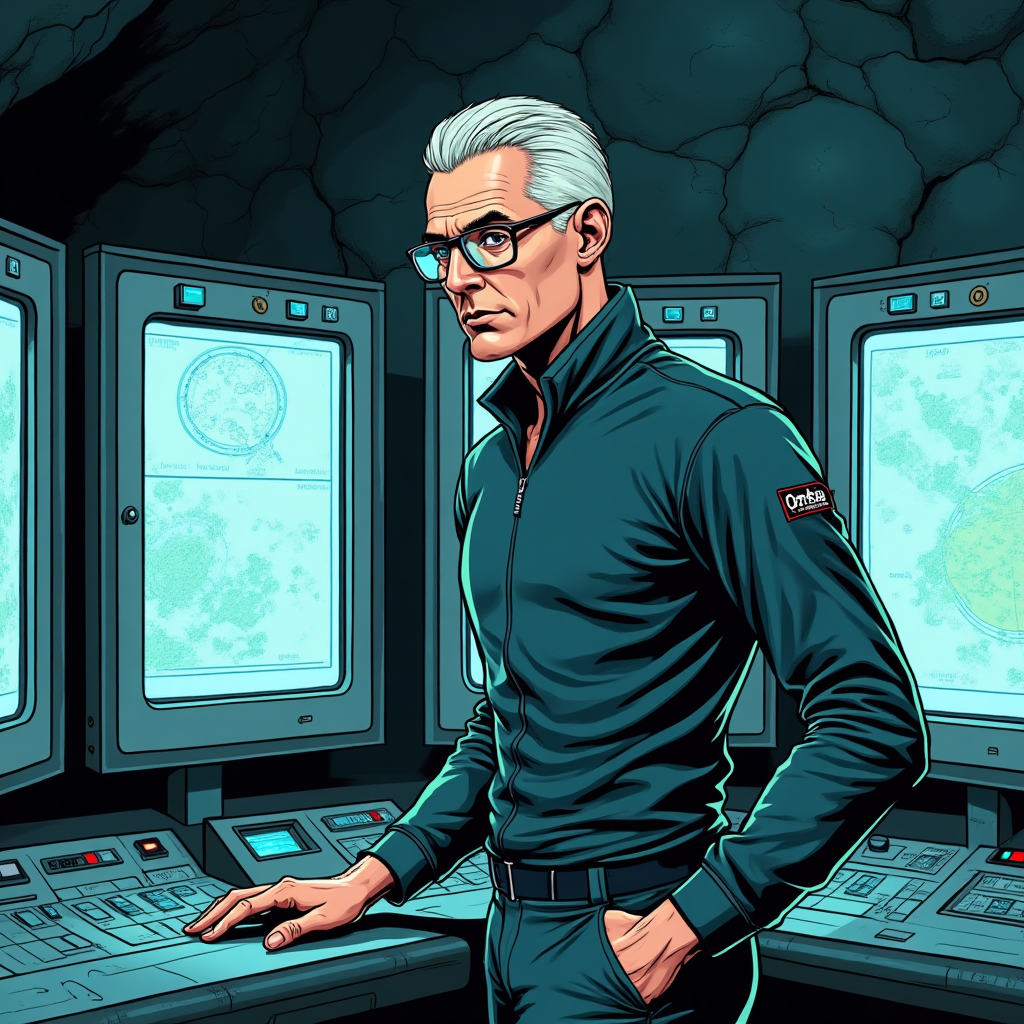
The work Vesper does for Corveaux is competent and unremarkable — bore surveys, soil stability assessments, right-of-way feasibility reports for utility contracts. They are reliable, efficient, and do not require managing. Their supervisor, a florid man named Dalton Pryce who golfs on Fridays and drinks at the Whitehorse Tavern on Thursdays, has never once looked closely at Vesper’s secondary data sets.
This is an arrangement that suits everyone.
For fourteen years, underneath the work Corveaux pays for, Vesper has been completing the map. Weekends, early mornings, late evenings — a private survey of the resonance network beneath Hamilton Township, conducted with instruments calibrated far beyond any commercial standard. The network is more extensive than the thesis suggested. It runs beneath the old canal corridor, beneath the Saxton Cultural Grounds, beneath the heritage mill site, beneath the Assunpink greenway for nearly eight miles. It connects, through a deep conglomerate ridge, to similar formations in Robbinsville and the northern edge of Bordentown.
It is, Vesper has concluded, the most significant unrecognized geoacoustic formation on the eastern seaboard.
And Hamilton Township is slowly burying it.
Not out of malice — Vesper grants this. The subdivisions creeping toward the creek corridor, the light industrial parks along Klockner, the endless acres of impervious surface compressing the clay and damping the signal: none of this is deliberate erasure. It is simply the accumulated weight of people treating land as inventory. Treating geology as a foundation for parking structures rather than as a living system with its own logic.
Vesper has watched the signal degrade for fourteen years. They have numbers. They have graphs. They have a model that predicts, with 94% confidence, that within fifteen years the mechanical noise load of continued development will permanently disrupt the network’s conductivity.
And they have decided they will not permit this.
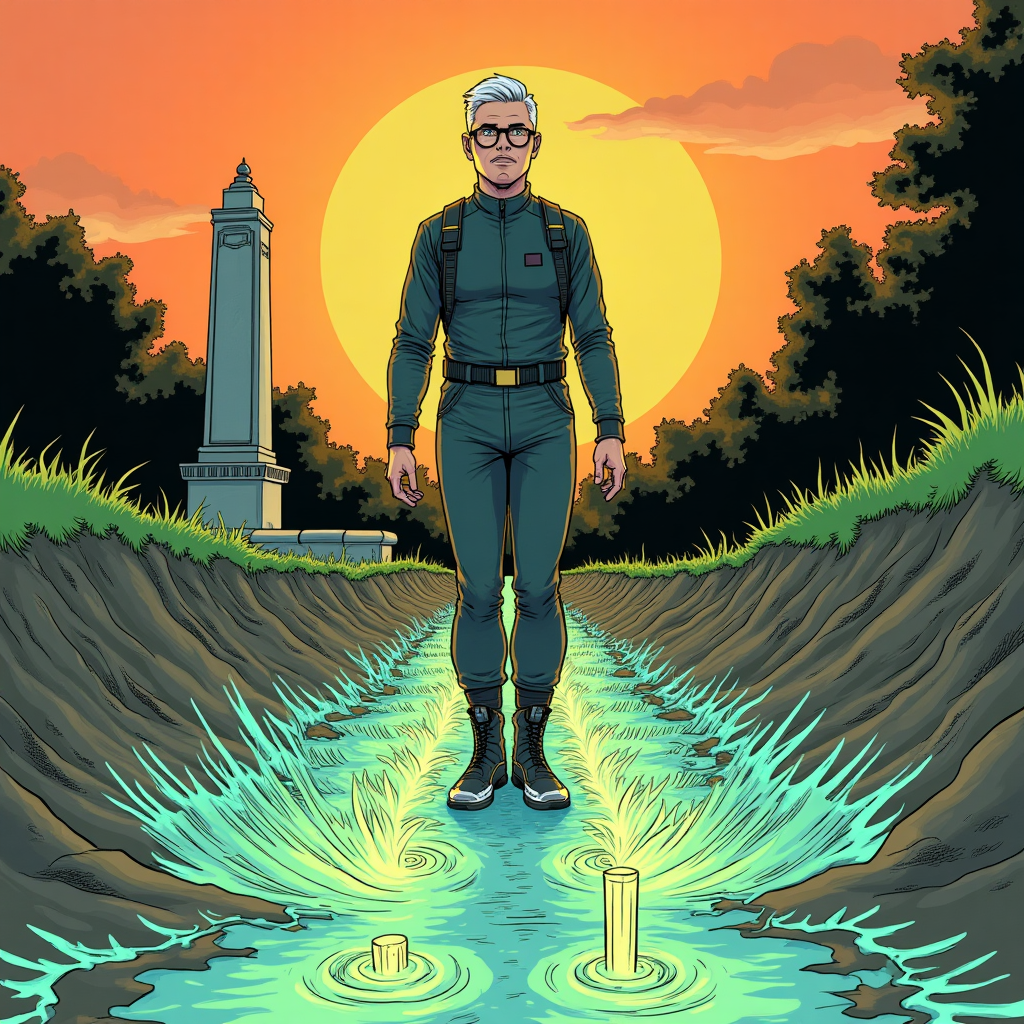
The plan takes shape the way good engineering always does — backward from the desired outcome. The resonance network must be preserved. To preserve it, the land above it must be kept undeveloped. The land is currently protected by environmental designations that, under state statute, lapse automatically if the surface is determined to be geologically unstable. Controlled subsidence events — small, precise, surgical — would trigger those lapses. Once the parcels are destabilized and deprotected, Vesper has structured a holding arrangement through Corveaux’s subsidiary network that would allow the land to be acquired quietly, the development pressure removed, and the network to recover.
The families who use the Assunpink greenway would be displaced. The heritage site would be closed. The Saxton Cultural Grounds — the mill monument, the storytelling circles, the creek-side interpretive paths — would be gone.
Vesper knows this. They have accounted for it.
It is, they have decided, an acceptable cost. The network is older than the heritage site. It is older than the township. It is older than the families who call this place home. Some things matter at a scale that makes sentiment irrelevant.
This is where Vesper Crane is wrong. They do not know it yet.
Part Three: The Accident of Proximity
The fiber-optic contract is the mechanism — a legitimate Corveaux project that gives Vesper sanctioned access to the Saxton site with heavy equipment and no questions. The bore head is real. The cable route is real. What’s not on the permit is the secondary drill running a hundred meters east, aimed precisely at the deepest node in the resonance network — a point Vesper has been trying to reach for three years.
On the Wednesday of the second week, the bore head hits the node.
Vesper is monitoring from the equipment station when it happens — a spike on every sensor simultaneously, a sound that is less heard than absorbed, moving through the soles of Vesper’s steel-toed boots, up through the legs, into the chest cavity, resonating against the sternum like a bell struck from the inside.
The readouts go white. Every instrument maxes and clips. Vesper stands very still in the blue light of the equipment screens, breathing carefully, waiting for their vision to clear.
When it does, something is different.
Not immediately apparent. Not dramatic. It takes four days for Vesper to catalog what has changed: they can feel the network now without instruments. Not metaphorically — physically. The resonance map they spent fourteen years constructing with sensors and software is simply present in their body, a proprioceptive awareness of the formation beneath their feet the way a person senses their own skeleton. They know where the nodes are. They can feel the signal degradation in the western spur like a bruise. They can feel, on the Tuesday after the accident, a new frequency entering the network from the south — rhythmic, purposeful, and deeply strange.
Something else was changed by the bore strike.
Something, or someone.
Vesper does not yet know what. They file it as a variable and continue working.
Part Four: The Cost of Efficiency
The confrontation with the maintenance worker — Kaya Okahandja, twenty-eight, the percussion instructor who walks the site paths before sunrise — is the first indication that Vesper’s plan has a complication they did not model.
Vesper tells her what they tell everyone: mechanical vibration, forty-eight hours, dissipation guaranteed. Crane means it when they say it. They are not lying. They simply do not consider Kaya Okahandja a variable worth modeling.
This is a failure of attention that will prove costly.
In the weeks that follow, as Vesper prepares the six emitter nodes for installation, the new frequency in the network grows stronger and more precise. It is not mechanical. It is not geological. It is — and Vesper finds themselves using a word they have never once used in a technical context — intelligent. Responsive. It moves through the formation the way a trained musician moves through a difficult passage: with intention, with memory, with something that functions like understanding.
Vesper recalibrates every sensor. The readings don’t change.
On the night they run the unauthorized secondary survey at the far edge of the Saxton site, Vesper becomes certain: the frequency is coming from Kaya Okahandja. The bore strike changed them both. Vesper got the map. Kaya got the voice.
For one night — a long, strange night in a company van parked off Klockner Road with every screen lit and the network singing quietly beneath the chassis — Vesper Crane sits with the full weight of what this means.
There is a person who is now part of the thing Vesper has spent their life trying to protect. A person with roots in this land that go back further than Vesper’s instruments can measure. A person who teaches children the rhythms her grandmother taught her, who walks these paths in the dark because she loves them, who pressed her palms to the ground and was answered.
Vesper thinks about this for one night.
And then they proceed.
Because the plan is correct. The math is correct. Sentiment is not a variable. The network is older than all of them, and it will outlast all of them, and if the cost of saving it is the loss of a heritage site and the conflict with one transformed groundskeeper, then that cost must be paid.
This is the moment Vesper Crane becomes a villain. Not at the bore strike. Not in the planning. Here, in the van, choosing efficiency over witness — choosing the map over the person who can hear it breathe.
Part Five: The Node That Speaks Back
The emitters activate at 5:47 AM on a Saturday in April, the morning of the spring heritage festival, the sky going pale orange over the Assunpink and the parking lot off Klockner Road still empty and silent.
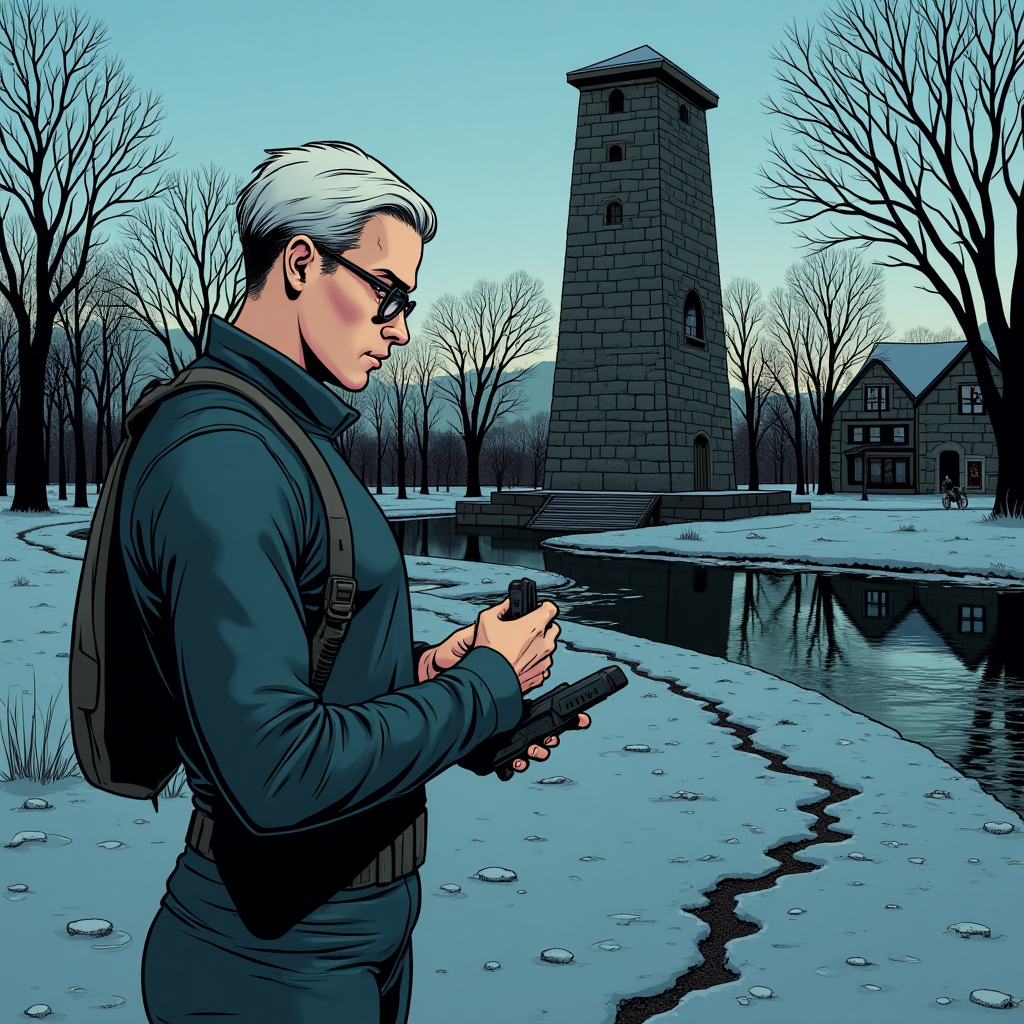
Vesper stands between the millstone monument and the east drainage culvert, remote activation console in hand, and watches the network respond on their internal awareness like a chord being struck. The subsidence sequence will take ninety seconds per node. Four nodes remain. By the time the first families arrive at nine o’clock, the geologic record will be written and irreversible.
Then Drumline arrives.
Vesper has run scenarios involving law enforcement intervention. Physical confrontation. Equipment sabotage. They have not fully run the scenario in which the opposing force is also connected to the network — in which the land itself is an active participant in the conflict and has, in some meaningful sense, already chosen a side.
“You absorbed a localized event,” Vesper says, watching Kaya crouch at the edge of the gravel path. The words are accurate. They are also, Vesper will later understand, precisely the wrong frame. You do not absorb a conversation. You join one.
What happens next is not an explosion. It is not a battle in any cinematic sense. It is a frequency duel conducted entirely through the geology of Hamilton Township, in the language of vibration, and Vesper Crane — who has studied this language for twenty years — loses to someone who learned it in the womb.
The tëme mënëk pattern moves through the formation like a key turning in a lock that Vesper never knew was there. The emitters do not break. They simply go quiet, their mechanical pulses met and nullified by a counterfrequency so precisely matched that Vesper’s own body — still tuned to the network — feels it as a correction rather than an attack. A tuning fork brought to pitch after years of being slightly, stubbornly flat.
Vesper lunges for the console. Kaya is already there.
The iron equipment case transmits the vibration before Vesper’s hands complete the reach — every screen dark, every circuit open, fourteen years of field data and four months of installation engineering rendered inert in a single harmonic strike.
Hamilton Township Police arrive at 6:23 AM. Vesper does not resist. There is nothing left to activate.
In the back of the patrol car, waiting on Klockner Road while the festival families begin arriving in the parking lot, Vesper Crane presses one hand against the cold steel of the door panel. Through it, very faintly, they can still feel the network below. The signal is clean now — cleaner than any readout they have taken in years, the interference of the emitters gone, the formation resonating at its natural frequency in the April morning.
It is, Vesper thinks, the sound of the earth speaking.
They wanted to save this. They were not wrong about its value. They were wrong — catastrophically, irreparably wrong — about what it would cost, and who had the right to decide.
The network does not belong to the person who mapped it.
Vesper understands this now, in the only way understanding ever really comes: too late, and at the precise moment when nothing can be undone.