


Part One: The Cold Open
The S.S. Atlantus had been dissolving into Sunset Beach for eighty-nine years without complaint. Ellie Ashbourne, age ten, had been dissolving into a bag of Cape May Diamonds for roughly forty-five minutes, sifting the quartz pebbles near the waterline while her mother argued with a parking meter up the hill. Then the light went out.
Not a cloud. Not dusk. Just — out. A cold, sourceless dark pooled across the beach from the direction of the sunken concrete hull, swallowing the afternoon like ink dropped in water. Ellie’s hand went hot without warning, the sand under her fingers fusing into a small, perfect disc of glass. She stared at it. “That,” she said, “was not me.”
Part Two: The Investigation
Ellie showed the glass disc to Old Gregor at the Cape May City Rail Terminal, where he ran a peculiar booth selling nautical maps and unsolicited opinions. He was a Forgeman’s Clan elder, though he’d never been forthcoming about that, and he recognized the disc the way a dentist recognizes a cavity.
“Ashbourne blood,” he said, rotating it toward the light that still existed on the terminal side of town. “You’ve woken up.”
The darkness had an edge to it — a precise, deliberate perimeter that stopped at the rail platform’s old brass lamps as if property lines had been drawn in the air. Ellie followed the shadow-border east down Beach Avenue, past the Carroll Villa, past shuttered ice cream stands, until she reached the Atlantus site where the concrete hull jutted from the surf like a half-digested secret. A young woman in expensive layered clothing — long dark coat over rich fabrics, ledger tucked under her arm, the hem of something shimmering at her cuffs — stood on the breakwater. She was pointing at the hull. A surveyor’s tripod stood behind her. A man in waterproof trousers was drilling something into the base of the ruin.
The light around her was completely gone. The drill was chewing through the Atlantus like a letter opener through a lease.
Gregor caught up, breathing hard. He’d told Ellie — before they left the terminal, as promised — about the Siltward Brokers: a clan who once held the salvage contracts for Cape May’s entire harbor. In 1934, the Forgeman’s Clan had opposed their bid to strip the Atlantus for aggregate, arguing the hull was a natural breakwater. The Brokers lost. They’d been settling that account ever since, in installments.
“She’s drilling anchor points,” Gregor said, reading the ledger she’d left open on the tripod. “She’s going to sell development rights over the hull site. Claim it’s derelict. But she needs the light gone so no one photographs the work.”
Part Three: The Pivot
The darkness was the deed. Ellie understood it now — the light suppression wasn’t cover for the drilling, it was the argument. No light, no witnesses, no record. A century-old salvage grudge, paid out in a notarized contract over a concrete carcass that still belonged, technically and spiritually, to the sea.
“Oh,” said Ellie. “Of course it’s her.”
Part Four: The Reckoning
Ellie walked into the dark. It was the consistency of cold felt — pressure without substance — and where the broker stood, the world had been reduced to shapes and the scratch of a pen.
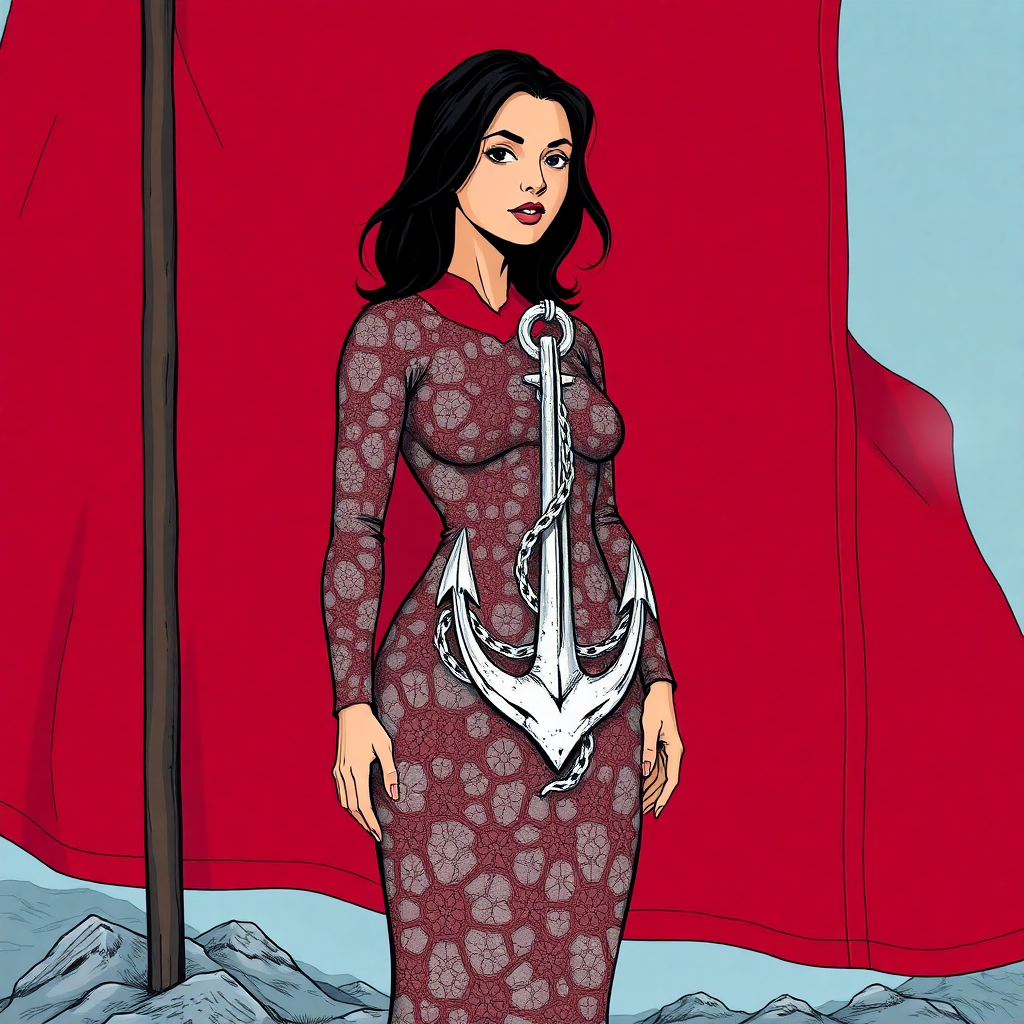
The broker — Nadia Delvaine of the Siltward Brokers, early twenties, black hair sharp against the collar of her coat — raised one hand and pressed the darkness forward like a wall. The light died another ten feet. The surveyor scrambled back, suddenly unsure where the water was.
Ellie planted both feet in the wet sand and let the heat come.
It came the way it always would: from somewhere below the sternum, scorching and certain, climbing her arms to her palms. The sand around her feet turned dark, then glossy. She pressed her hands into the hull of the Atlantus — cold salt concrete, barnacled and crumbling — and pushed.
The heat moved through the hull like a tide running backward. Mineral-dense concrete liquefied and re-fused, the drilled anchor points filling, sealing, knitting shut in a seam of crude glass. The shoreline lit up amber from within — bioluminescence by accident, the ship glowing from the inside for the first time in nine decades. The darkness shattered against it.
Nadia snapped the ledger shut. “This is a legal matter,” she said, with remarkable composure for someone illuminated by a ten-year-old’s structural welding project.
“The hull disagrees,” said Ellie.
Nadia pocketed the ledger, pulled her coat straight, and walked into the surf as if this were a planned exit — stepping into a dinghy Ellie hadn’t seen in the dark. She was gone before the glow faded.
Part Five: The Resolution
By the time Ellie’s mother found her, the Atlantus was sealed, glowing faintly at the waterline, and roughly fifteen percent more structurally sound than it had been that morning. The surveyor had abandoned his equipment. Gregor had quietly pocketed the drill.
Sunset Beach got its name back before sunset.
The Forgeman’s Clan and the Siltward Brokers had been at this since 1934. One glass-fused hull would not end it. But it was, Gregor told Ellie on the walk back to the rail terminal, a very good start for a Tuesday.
Ellie kept the glass disc. It caught the last light beautifully, which felt like the point.
Sources
- S.S. Atlantus: Cape May’s Concrete Ship
- Adorable missing wallaby found safe after escaping NJ zoo
- Marketing A Luxury Home In Longport NJ The Right Way
- Here are America’s most and least educated ZIP codes
- Possible cause revealed in ‘12- to 14-alarm’ warehouse fire in leafy NJ town that left police without power: ‘Staring into hell’
- Man arrested in NJ Chick-Fil-A mass shooting was on probation for gun charge
- The Next Shift: The Fall of Industry and the Rise of Health Care in Rust Belt America 9780674259836 - DOKUMEN.PUB
- Athlete of the Week – Nutley’s DeJianne has Raiders in first place
- Belleville boys volleyball starts 6-0, earns state ranking
- Cape May, New Jersey — Wikipedia
- U.S. Census Bureau, American Community Survey 5-Year Estimates (2022)