

Part One: The Cold Open
The smell hit Lucía Merán before she even crossed Market Street.
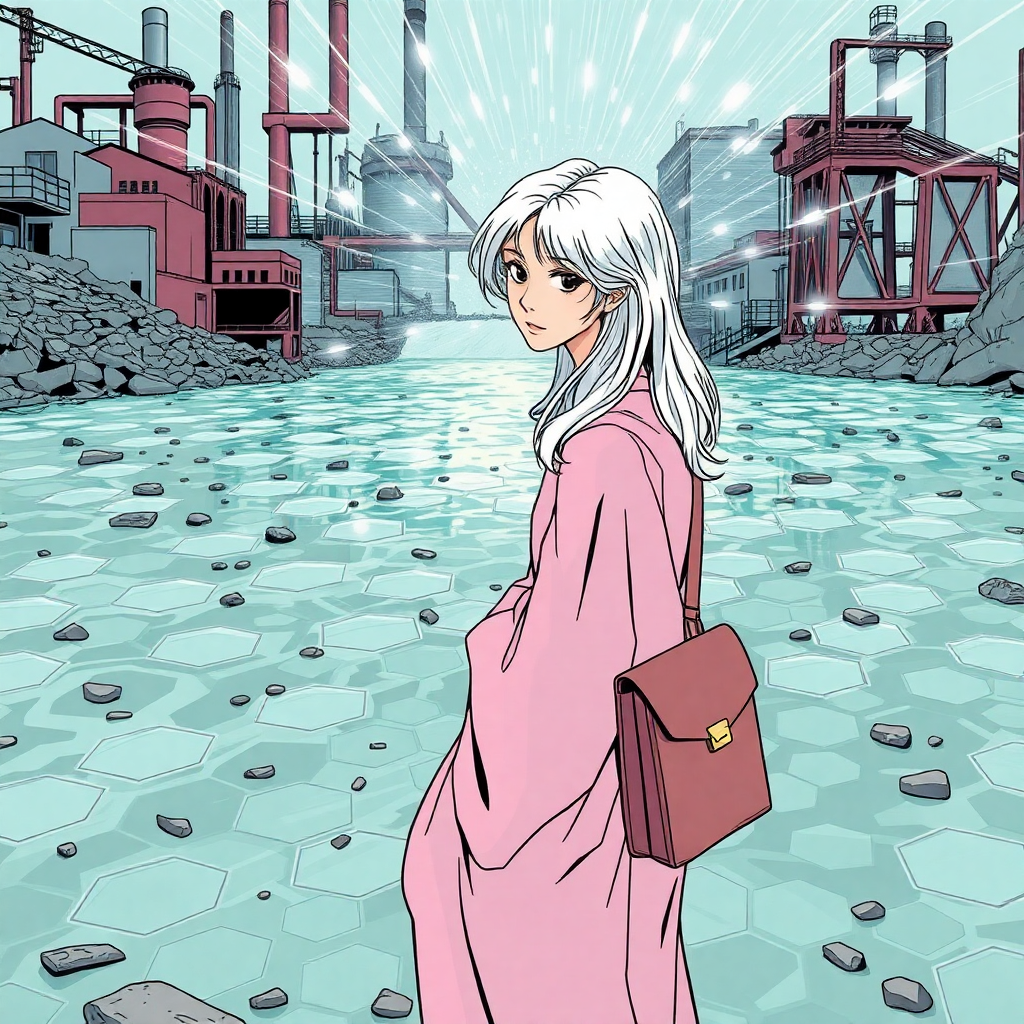
It was Saturday morning, she had a history project due Monday, and the Passaic River was doing something wrong. Not the usual wrong — not the old familiar industrial-rust wrong that every Patersonian had long accepted as background radiation. This was active wrong. Her nose prickled. Her fingertips went warm. Three blocks from the Great Falls, a dead bloom of something grey-green was spreading across the river’s surface near the old mill channels, and the pigeons on the railing had all turned to face upstream like they were waiting for a sermon.
Lucía wrote “come back later” in her notebook and went to investigate, because apparently that was her life now.
Part Two: The Investigation
Her grandmother — Abuela Ros, who knew more about Paterson’s underground history than she let on at Sunday dinners — had told Lucía two things in the last month: that white hair before fourteen meant the Río Meridian bloodline had chosen her, and that she should stay away from anyone who smelled like a forge fire on a cold day.
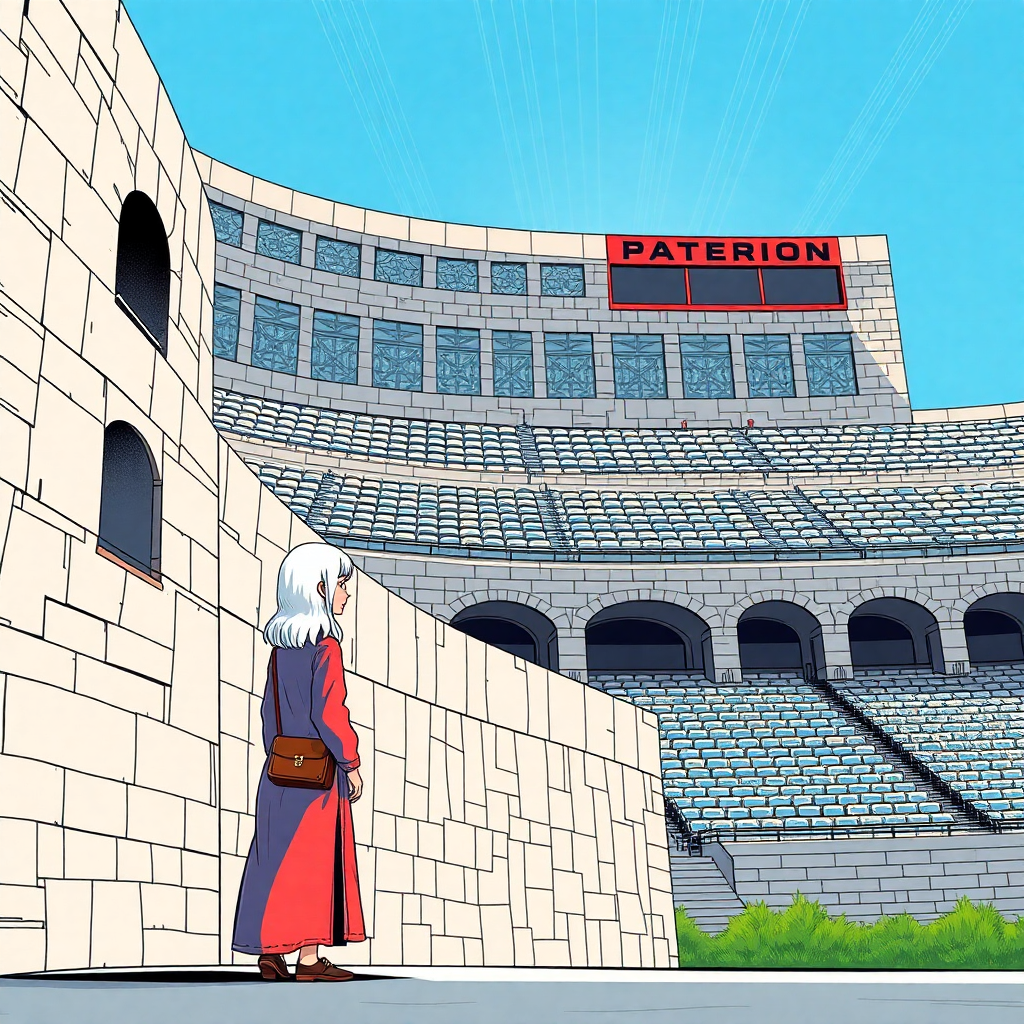
At the Hinchliffe Stadium overlook, Lucía pressed her palm to the stone retaining wall. A pulse came back like sonar — microbial colonies blooming downstream, something forcing the contamination to concentrate rather than disperse. Not natural runoff. Engineered. She traced the signal upstream along the raceway channels of the old Silk District, her notebook open, cataloguing in shorthand the way Abuela Ros had taught her: origin point, concentration, spread vector.
She found the answer baked into the sluice gate at the northern mill channel: the iron had been melted and resealed, the gate fused shut at forge temperature, cutting off the river’s natural dilution flow. Water that should have moved was sitting. And sitting water in Paterson’s old mill corridor — layered with a century of dye chemicals, heavy metals, and industrial memory — was a biological time bomb.
She checked her notes. She’d sketched a woman in a long coat near the gate twenty minutes ago without thinking. She checked her sketch. She’d also drawn, in the margin, a ledger.
Oh, thought Lucía.
Part Three: The Pivot
The Seda Clan — her clan — had run the silk inspection houses along the millrace in the 1890s, certifying which dyeworks were safe and which were poisoning the river. In 1902, a mill operator named Vilar had his entire operation shut down by a Merán inspector, losing his fortune and his family’s legacy in a single week.
The Vilar line had never forgiven it.
And Corrosiel Vilar, currently fusing shut every sluice gate on the northern millrace with her bare hands, was settling the account in person, in iron, a hundred and twenty-four years later.
“Of course it’s the Vilars,” Lucía said, to no one, and broke into a run.
Part Four: The Reckoning
Corrosiel stood at the final gate, her palms glowing copper-orange at the center, heat shimmer rising off her tailored coat like she’d stepped out of a crucible. She was unhurried. She had the composed posture of someone who had been planning this since before Lucía was born — because she had.
“You’re a child,” Corrosiel said, not unkindly.
“I’m the inspector,” Lucía said.
She put both hands on the river wall and pushed everything she had downstream. The pathogen bloom reversed — she felt each colony as a specific, nauseating note, and she neutralized them in sequence, her white hair lifting in a glow that was less dramatic and more like a very aggressive cleanse cycle. The water cleared. Pressure built behind the fused gates.
Corrosiel turned up the heat. The iron began to breathe orange.
Lucía stopped fighting the gate. She neutralized the microbial layer inside the metal itself — the rust-and-bacteria matrix Corrosiel’s heat needed to grip. The iron went cold and brittle in one specific stressed point. The gate blew open from river pressure alone, sending a sheet of water across the walkway and soaking both of them completely.
Corrosiel looked at her ruined coat. She looked at Lucía.
“This isn’t over,” she said, with great dignity, and walked away dripping.
Part Five: The Resolution
The Great Falls kept falling. The river ran cleaner than it had in a week. A parks department worker found the fused sluice gates the next morning and filed a report attributing the damage to “thermal vandalism,” which Lucía thought was actually a pretty accurate description.
Abuela Ros dried Lucía’s notebook page by page without comment, then handed her a laminated card with a list of all the surviving Vilar properties in Passaic County.
“For your history project,” she said.
The Seda Clan’s work, it turned out, was never really finished. Neither was the homework.
Sources
- How boxing’s ‘Hammer Hands’ carries North Jersey grit into Vegas fight
- The Best Car-Free Spring Hikes Near New York City
- Monday Morning Update 5/4/26
- 50 things to know with 50 days until the World Cup comes to New Jersey
- Vacation rental bookings in 2026 World Cup host cities skyrocket up to 58% during
- Former Rutgers standout named St. Joseph Regional (NJ) boys basketball coach
- Lyndhurst boys volleyball off to a strong start
- NJ shooting kills 1, injures 3 as bullets fly near 13-year-old’s birthday party
- Here are America’s most and least educated ZIP codes
- Possible cause revealed in ‘12- to 14-alarm’ warehouse fire in leafy NJ town that left police without power: ‘Staring into hell’
- Paterson, New Jersey — Wikipedia
- U.S. Census Bureau, American Community Survey 5-Year Estimates (2022)