
Part One: The Cold Open
The warehouse on the edge of the Montrose Park district had been burning since dawn, and the fire had taken out three city blocks’ worth of electrical infrastructure with it — including, apparently, the entire South Orange Police Department’s backup power grid. By the time Diane Merritt-Calvo pulled her Volvo into the Seton Hall parking lot that Tuesday morning, half the campus was already running on generator fumes and institutional hope. Her laptop wouldn’t connect. The parking gate was frozen open. And a campus pigeon — a notoriously stupid bird — was walking in confident circles as if it had just made a very important decision. She would have thought nothing of it, except that the pigeon wasn’t walking in circles. It was being rolled, slowly, by something invisible that kept nudging it from behind.
Part Two: The Investigation
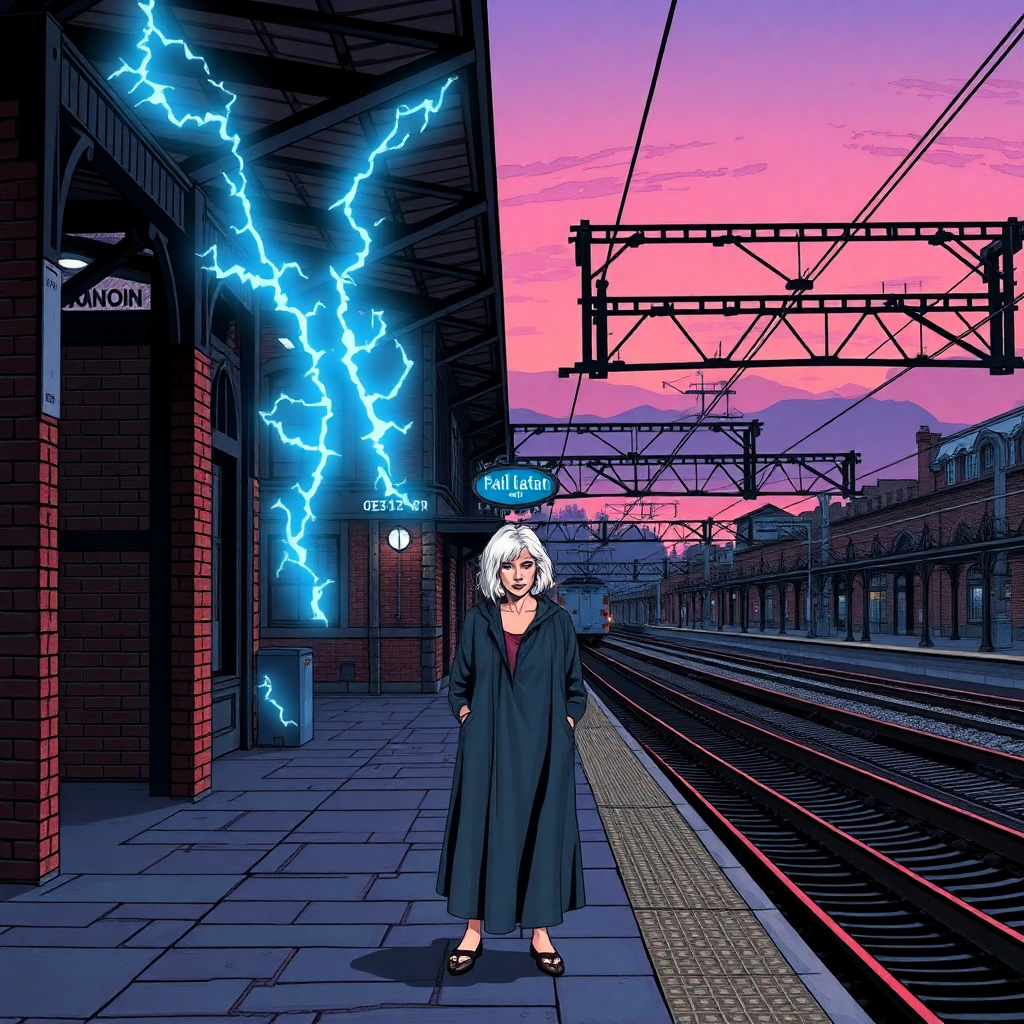
Diane worked in Seton Hall’s Archives, which meant she knew more about South Orange’s civic skeletons than was strictly comfortable for a woman who still had to shop at the DeCicco’s on South Orange Avenue. She followed the nudge-marks in the pigeon’s trajectory — a faint pressed-flat trail in the grass, as if momentum itself had been carefully redirected — northeast toward Mountain Station.
At the station, old Fernanda Pereira was sitting on a bench with her walking frame tipped over, looking confused. “It just — went,” she said. “I pushed off the railing and nothing happened. Like I forgot how.” Her cane was leaning at the wrong angle, its energy apparently elsewhere.
Diane found faint kinetic displacement traces — she knew them now, the way you know your own handwriting — along the platform toward the Rahway River footpath. Someone had been harvesting momentum. Small, ambient, unnoticed. Trickling it somewhere.
She was taking notes when the Archives’ emergency backup binder slid off her arm of its own accord. She grabbed the railing. The railing shoved her sideways. She sat down hard on the platform. That would bruise tomorrow.
Part Three: The Pivot
The warehouse fire. Of course. The fire hadn’t just knocked out police power — it had been used to knock out police power. Which meant whoever set it had needed a window. And if you needed a window in South Orange, what you needed was for the electromagnetic backbone of Seton Hall’s network-connected security archives to go briefly, conveniently dark.
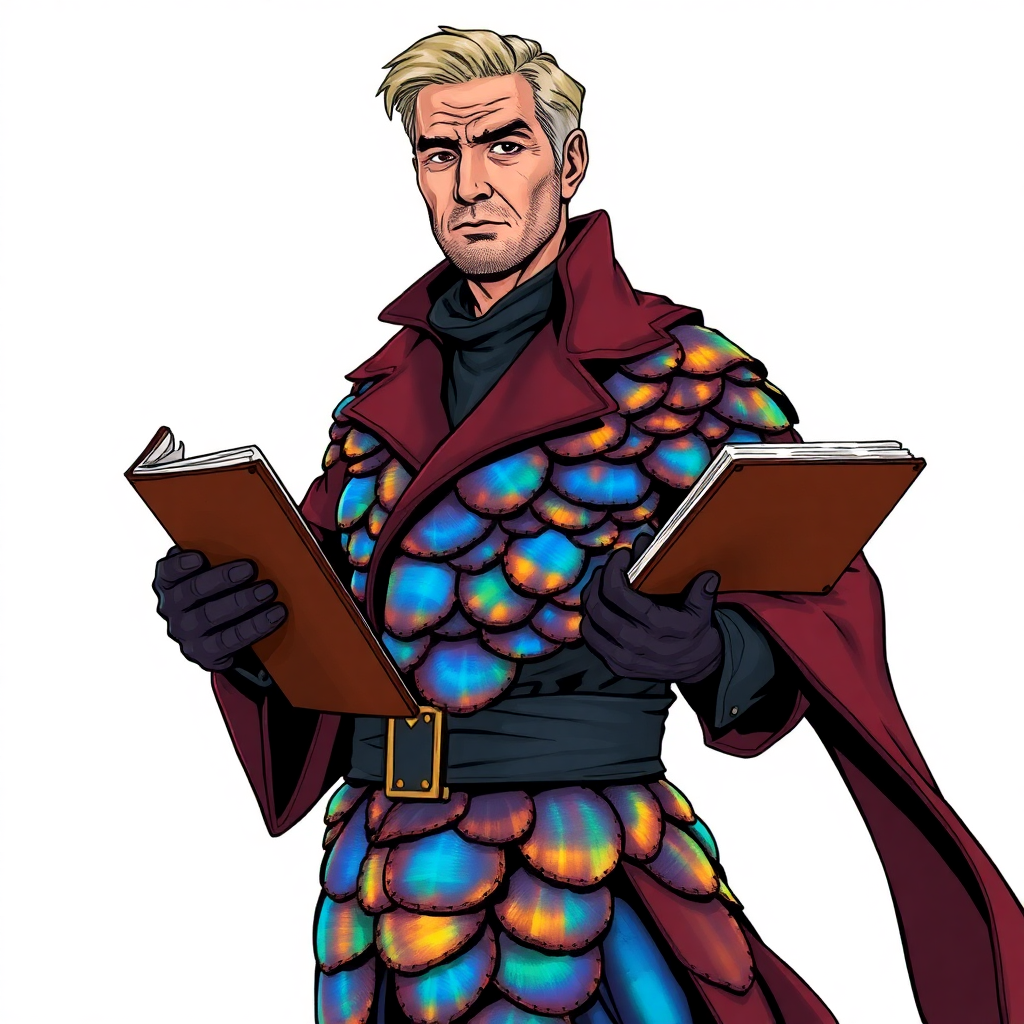
Because buried in those archives was the original Meridian Clan patent — filed 1893, stolen 1893, filed again under a different name by the Ashbourne family. The same Ashbourne family whose descendant, Rohan Ashbourne-Vik, had been circling South Orange for three years in expensive merino wool and a ledger under his arm.
“Oh,” said Diane, standing up from the platform. “Of course it’s him.”
Part Four: The Reckoning
She found Rohan Ashbourne-Vik in the Eugene V. Kelly Carriage House — once a clan stronghold, now technically a municipal heritage site, currently in the process of being very quietly broken into. His blonde hair was immaculate. His ledger was open. He was absorbing the kinetic force of the bolt-cutter with one gloved hand, redirecting it cheerfully into the padlock, which then shattered from the inside.
“Ms. Merritt-Calvo,” he said, without turning around. “The Archives told me you’d checked the manifest. Disappointing.”
“That patent belongs to the Meridian Clan,” Diane said. Her hands were humming. She’d been in range of Seton Hall for twenty minutes, and the charge was building whether she wanted it to or not.
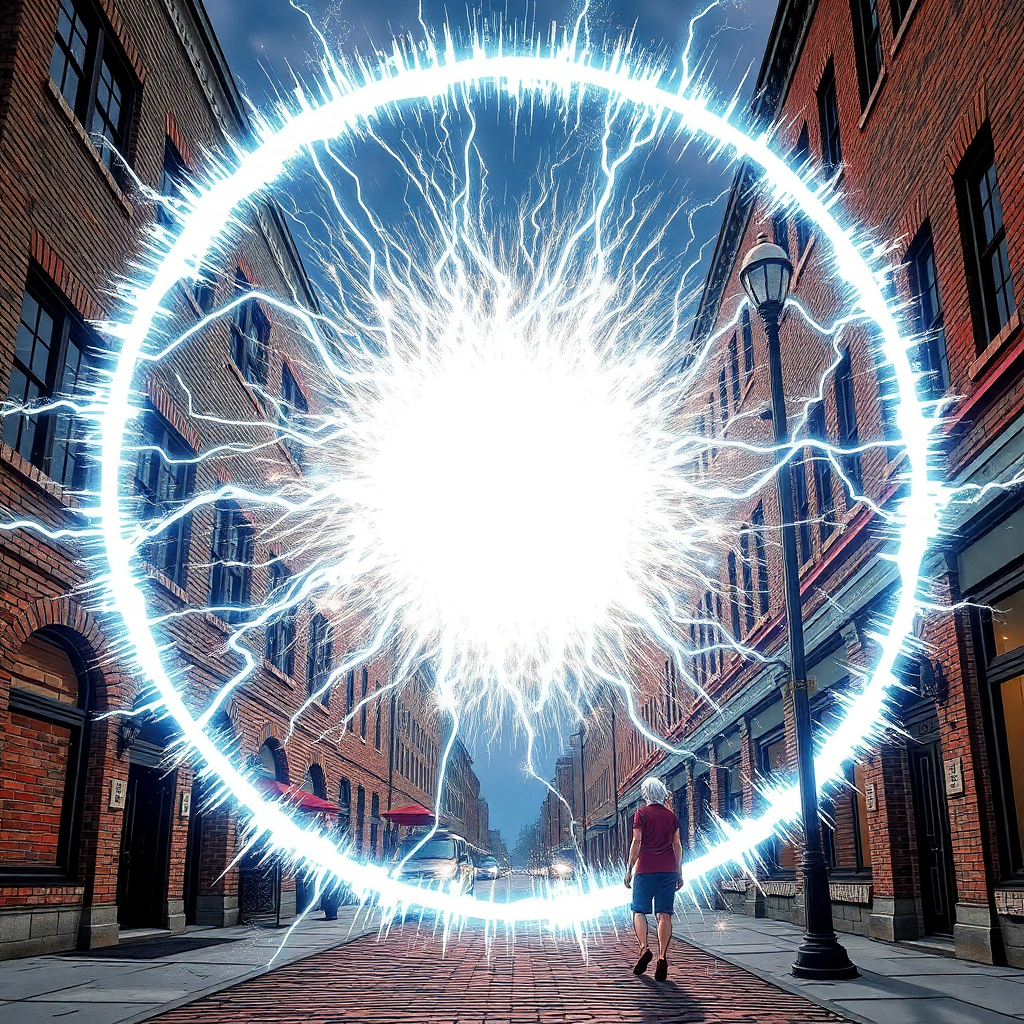
He turned and pushed — not physically, but kinetically, a wave of redirected force that should have sent her straight into the carriage house wall. Instead the pulse hit first. The EMP cracked out from her hands in a white-blue ring that had nothing to do with her intentions and everything to do with the electricity singing through the air above South Orange Avenue. His absorbed momentum scattered uselessly. His ledger flew open. Every page with the forged 1893 filing fluttered loose into the evening air like a municipal snowstorm. The emergency generator on the block beeped in protest and rebooted.
Rohan Ashbourne-Vik looked at the papers floating away and straightened his collar with the dignity of a man who has lost a round but intends to dispute the scoring. “I’ll be in touch,” he said, and left at a pace that was technically a walk.
Part Five: The Resolution
The Carriage House was fine. The patent pages were retrieved from the Rahway River footpath by a confused Parks volunteer who assumed it was litter. The police got their power back by noon. Seton Hall’s wi-fi blinked on just in time for fourth-period lectures, and the campus pigeon resumed walking normally, apparently recovered from whatever had happened to its sense of direction.
Diane sat in the Archives with a cold coffee and the original Meridian patent — dry, intact, and finally where it belonged.
The Ashbourne family had been trying to collect on 1893 for one hundred and thirty-three years. She suspected Rohan would not be deterred by one floating ledger and a singed merino sweater.
She bookmarked the patent. She would need to read the rest of the file.
Sources
- Richie Moriarty Arrives on Set With Cinnamon Rolls
- Stewart Copeland Announces New Dates for “Have I Said Too Much” Tour
- Meet the City’s Most In-Demand Mohel
- Here are America’s most and least educated ZIP codes
- Possible cause revealed in ‘12- to 14-alarm’ warehouse fire in leafy NJ town that left police without power: ‘Staring into hell’
- Man arrested in NJ Chick-Fil-A mass shooting was on probation for gun charge
- The Next Shift: The Fall of Industry and the Rise of Health Care in Rust Belt America 9780674259836 - DOKUMEN.PUB
- Athlete of the Week – Nutley’s DeJianne has Raiders in first place
- Belleville boys volleyball starts 6-0, earns state ranking
- South Orange, New Jersey — Wikipedia
- South Orange Official Events Calendar
- U.S. Census Bureau, American Community Survey 5-Year Estimates (2022)