Part One: The Cold Open
Stewart Copeland’s spoken-word tour van had parked outside the South Orange Performing Arts Center for forty minutes, engine running, and had not moved once. This would have been unremarkable except that the van was pointed downhill on Sloan Street and its parking brake had been engaged — and then, apparently, absorbed. The van simply sat there, inert, all its forward potential bleached out of it like color from old fabric. The driver stepped out to investigate and immediately fell over, as though the momentum of his own walk had been gently removed.
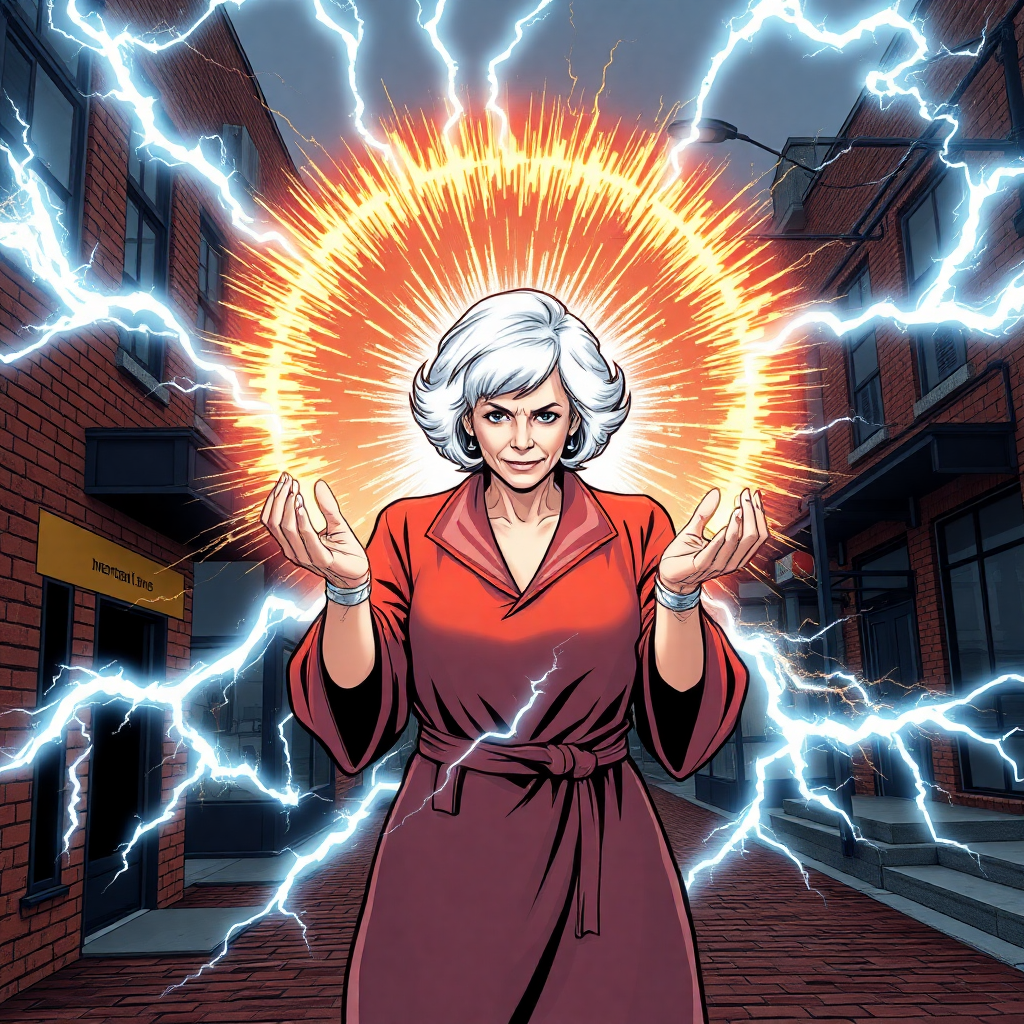
Diane Merritt-Calvo, watching from the SOPAC courtyard with a cold coffee, felt the familiar iron hum behind her sternum. Something was pulling at the electromagnetic field. She’d felt that specific wrongness once before, on a night that ended with forged documents floating in the Rahway River.
He was back.
Part Two: The Investigation
She found Fernanda Pereira at her usual bench near the Baird Library, watching a city maintenance crew puzzle over a pallet of scrap metal that had simply ceased rolling. Fernanda didn’t look surprised. “He’s at the reservoir,” she said, before Diane had opened her mouth. “South Mountain. Something about water pressure.”
Diane took Scotland Road up toward Montrose Park, and the signs multiplied: a cyclist coasting downhill who had inexplicably stopped mid-coast, feet hovering; a construction dolly frozen mid-tip, its load of concrete blocks suspended at an impossible angle. Rohan Ashbourne-Vik wasn’t hiding. He was practicing. Or worse — warming up.
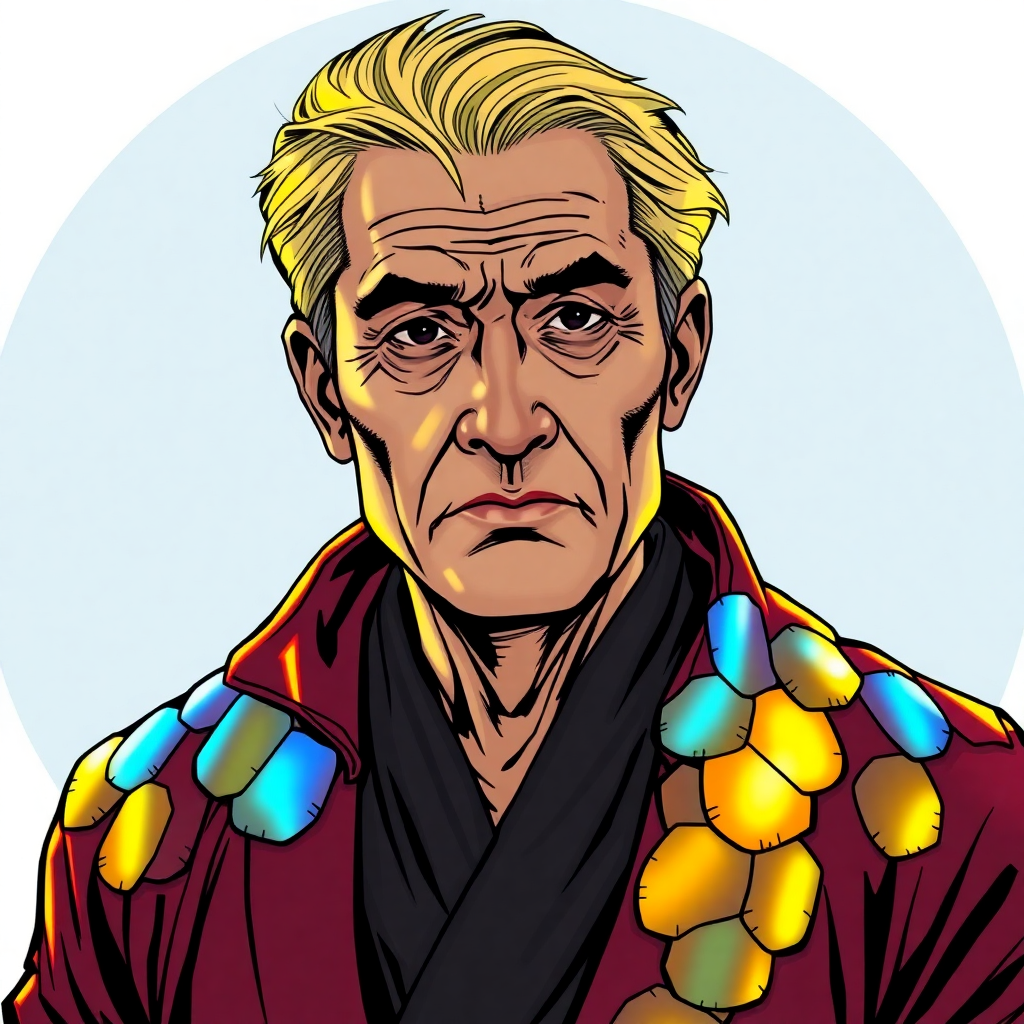
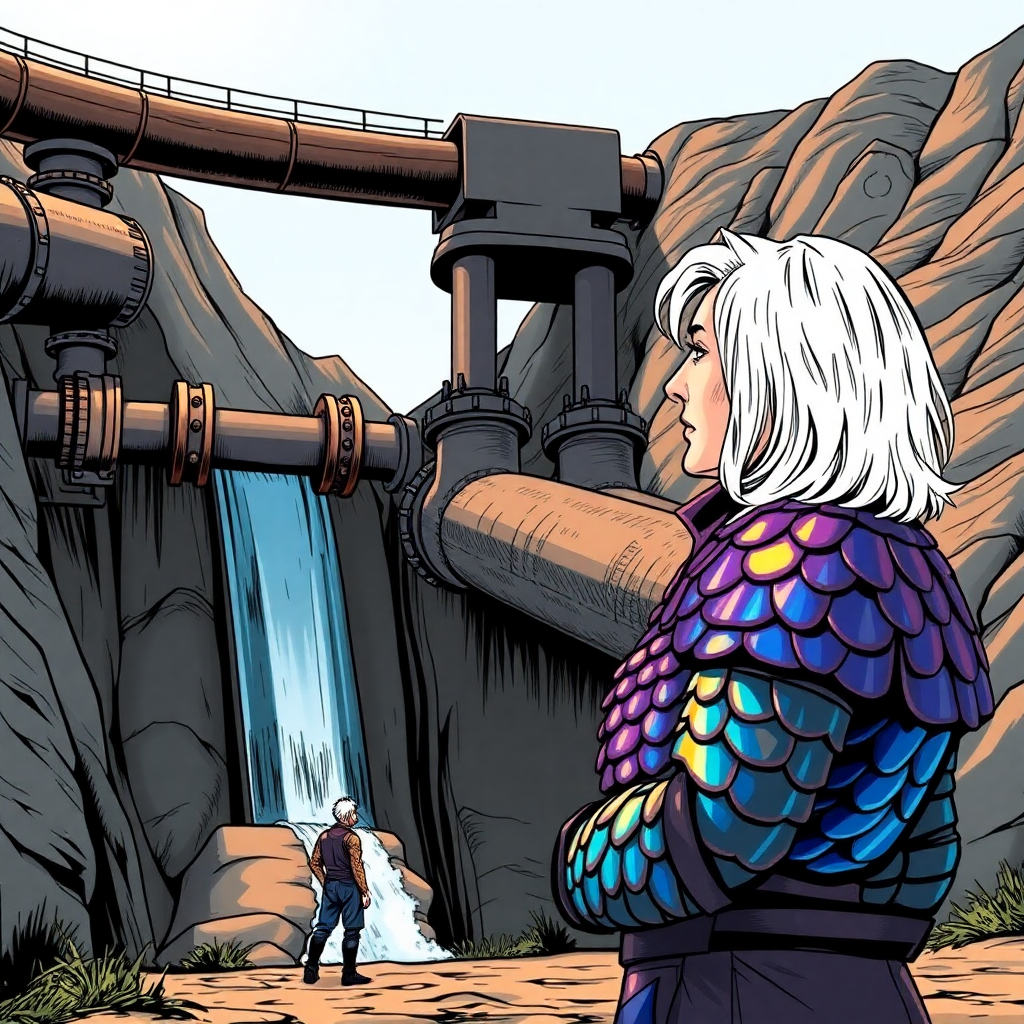
She found him at the South Mountain Reservation’s water intake valve, the old municipal infrastructure point where Essex County’s reservoir pressure was managed through a series of iron gate valves older than the Meridian Clan itself. He had one hand on the primary wheel. The chitin plates across his forearm pulsed with stored bronze light.
“The patent,” she said, “is still in the alcove.”
“I know,” he said, pleasantly. “I don’t need the patent anymore.”
Part Three: The Pivot
He’d needed it for standing. Legal standing, historical standing, the kind of standing that lets you walk into a bank and say this was ours first. But Rohan had spent the weeks since the Carriage House on something more direct: if the Meridian Clan’s power was electromagnetic — if it ran on current and charge — then the answer wasn’t documentation. It was infrastructure. The reservoir pressure fed the Rahway intake. The intake fed the grid’s grounding network. The grounding network fed the relay station’s descendant architecture that still, quietly, ran beneath Seton Hall’s sub-basement.
He wasn’t stealing the patent. He was going to drain the source.
“Oh,” said Diane. “Of course.”
Part Four: The Reckoning
She sent the pulse first — a hard white-blue arc from both palms that cracked across the valve housing and lit the intake manifold like a struck bell. It should have knocked him back twenty feet. Rohan simply opened his hands. The kinetic force of the pulse hit his chitin plates and stopped, absorbed into the iridescent bronze-dark surface like water into sand. He stood completely still. The stored energy in his armor doubled, tripled, sheened from deep blue into blinding gold.
“That’s been building since the Carriage House,” he said, and released it.
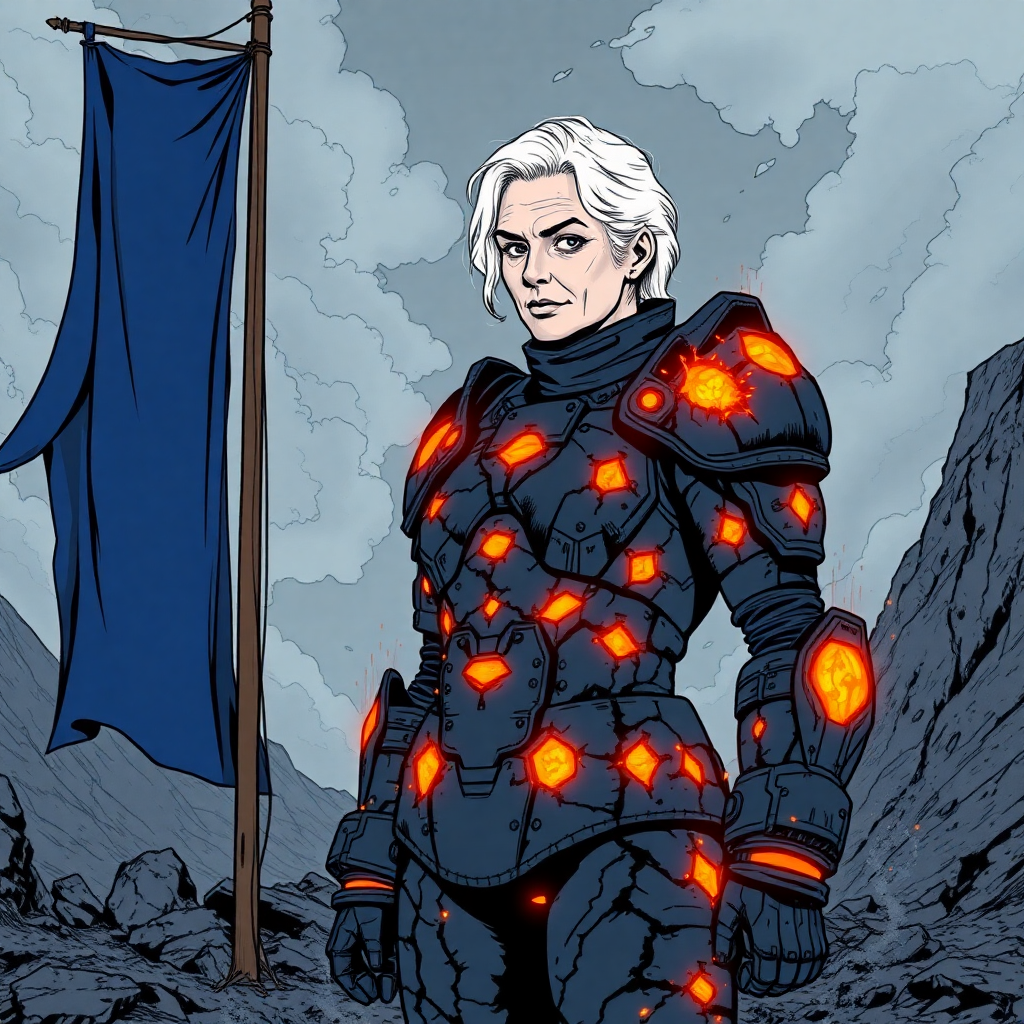
The concussive wave took Diane off her feet and into the reservoir embankment with enough force to crack the basalt panels at her left shoulder. The electromagnetic field around her guttered — not out, but low, a candle in a wind tunnel. She pushed back with everything she had, forcing current through the intake pipes, shorting the gate valves, trying to buy seconds. But his absorption was faster than her output. Every joule she spent fed him.
He turned the primary valve. The pressure dropped across the intake network. Deep beneath Seton Hall, in the sub-basement relay architecture no one had looked at in forty years, a grounding node went dark.
Diane felt it like a pulled tooth.
She ran.
Part Five: The Resolution
The South Mountain water supply was rerouted through the secondary intake by morning, and Essex County Utilities issued a brief statement about routine pressure testing. The Rahway grid’s grounding anomaly would take weeks to diagnose, longer to repair — if the technicians could even find what they were looking for.
Rohan Ashbourne-Vik drove back through South Orange at dawn, chitin armor quiet beneath his coat, a small bronze-lit smile on his face. One relay node down. Eleven to go.
Diane sat in the Baird Library parking lot with Fernanda, drinking bad vending-machine coffee and pressing an ice pack to her shoulder. “He doesn’t need the patent,” she said again, mostly to herself.
Fernanda handed her a second bad coffee. “No. Now he just needs time.”
Sources
- Richie Moriarty Arrives on Set With Cinnamon Rolls
- Stewart Copeland Announces New Dates for “Have I Said Too Much” Tour
- Meet the City’s Most In-Demand Mohel
- Here are America’s most and least educated ZIP codes
- Possible cause revealed in ‘12- to 14-alarm’ warehouse fire in leafy NJ town that left police without power: ‘Staring into hell’
- Man arrested in NJ Chick-Fil-A mass shooting was on probation for gun charge
- The Next Shift: The Fall of Industry and the Rise of Health Care in Rust Belt America 9780674259836 - DOKUMEN.PUB
- Athlete of the Week – Nutley’s DeJianne has Raiders in first place
- Belleville boys volleyball starts 6-0, earns state ranking
- South Orange, New Jersey — Wikipedia
- South Orange Official Events Calendar
- U.S. Census Bureau, American Community Survey 5-Year Estimates (2022)