
Part One: The Cold Open
The vanity plate controversy had done what vanity plate controversies always do in Princeton: consumed every oxygen molecule in the Nassau Street corridor and left no room for anything else. Edmund Forgewright stood outside the Motor Vehicle satellite office on Witherspoon Street, holding a parking citation he absolutely did not deserve, while the woman ahead of him argued loudly about expressive freedom with a clerk who had clearly stopped listening in 2019.
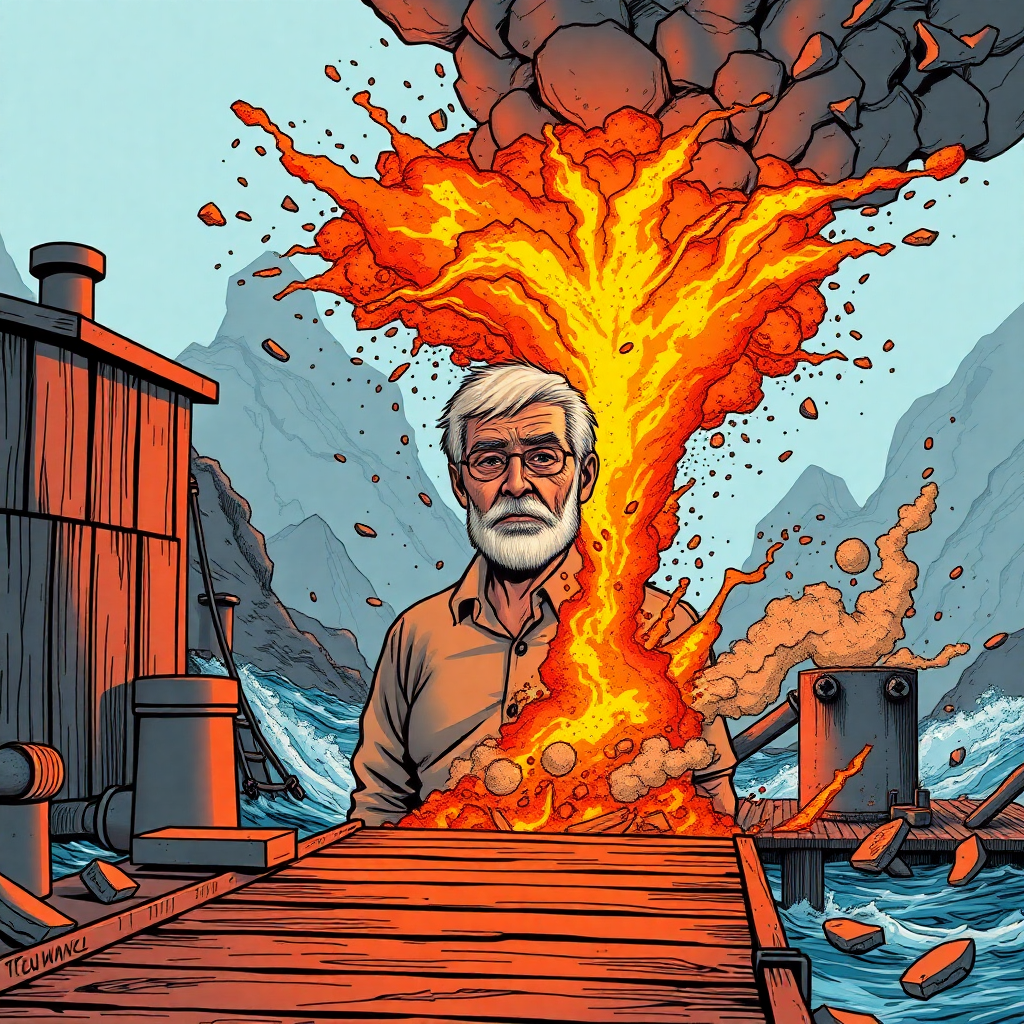
Then the building’s HVAC unit exploded off the wall.
Not with fire — with heat. A superheated exhaust column punched straight up from the rooftop condenser like a fist, blistering the paint off the brick in a six-foot radius. Edmund looked at his hand. The basalt plates along his forearm were glowing faintly — which meant the heat outside was already exceeding what his body expected. Something was running very, very hot nearby, and it wasn’t him.
Part Two: The Investigation
He followed the thermal trace up Witherspoon to Paul Robeson Place, where a second HVAC unit — this one bolted to the back of the municipal building — had shed its housing entirely, venting captured industrial heat in a focused column that was quietly cooking the exterior stonework from the outside in.
Edmund pressed a gauntleted palm to the brick. Too organized for mechanical failure. The heat had directionality.
At the Princeton Public Library two blocks north, a reference librarian named Cristóbal — who had been pressing microfilm records of the 1893 Mercer County Patent Registry into Edmund’s hands for three years — waved him frantically past the stacks to a back study room. On the table: a map of the Princeton campus, overlaid with red-marked buildings. Every building that used original fired ceramic components from Forgewright kilns. Every one of them was heating up from the inside.
“She’s not going after the data this time,” Cristóbal said.
The Ashvane Codex had described the move once, in a chapter Edmund’s grandmother had annotated in red: when leverage fails, erase the evidence of the debt itself. Deva Ashvane wasn’t falsifying a survey. She was destroying the physical proof that Forgewright ceramic work had built this campus. The original kiln-stamp marks — pressed into load-bearing components in 1887, 1891, 1893 — were the only material record that the Forgewright Clan had ever existed here at all. Cook the stones, and the marks vitrify. The debt becomes unreadable. The theft of 1893 becomes, in the physical record, a thing that never happened.
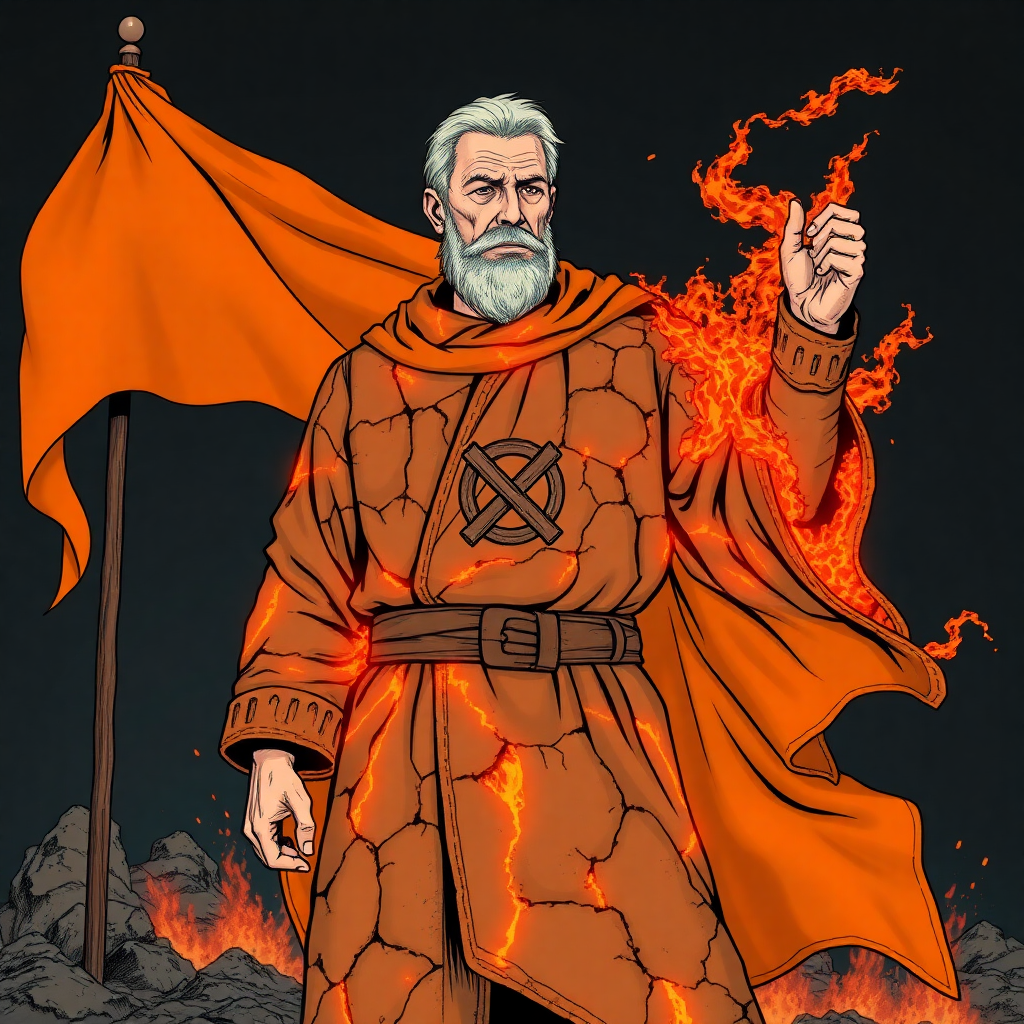
Edmund closed the codex. His forearms were running orange at every seam.
Part Three: The Pivot
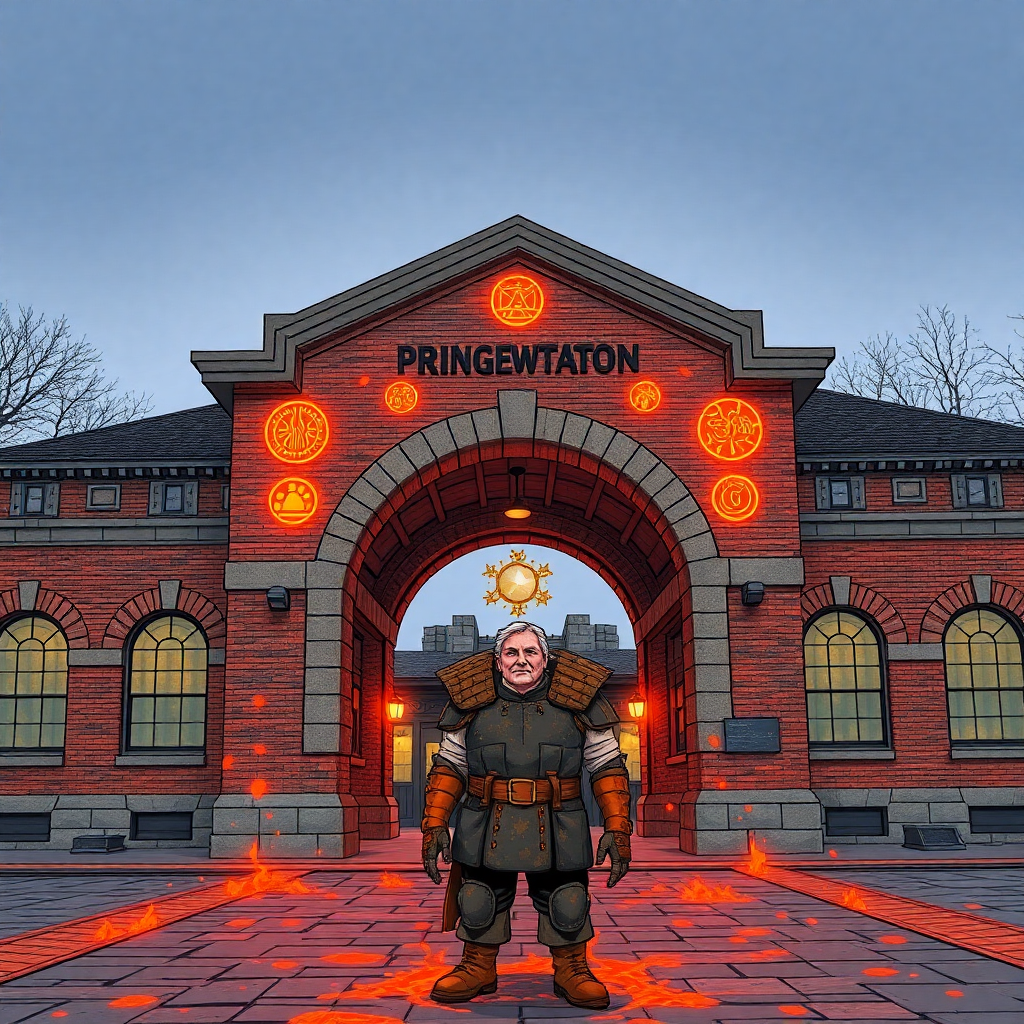
He found her at the old Princeton Station on University Place — the 1918 depot building, brick-and-limestone, a dozen original Forgewright ceramic load-bearing tiles still mortared into the platform archways. She had three industrial exhaust capture units arrayed in a triangle, their intake cowls drinking heat from the surrounding air, their output focused on the archway above the main platform entrance like a kiln running in reverse.
The 1893 patent — his grandmother’s annotated copy had named it clearly — described a compression process that hardened ceramic under precise heat. Deva had spent eight months learning to weaponize the inverse: flood the same ceramic with unfocused captured exhaust, and the stamp impressions soften and close. Erase in sixty seconds what it took three generations to press in.
She looked at him with the calm, diagnostic attention he had come to recognize. Reading his joints, his pulse, his temperature differentials. Looking for a flaw.
“You’re running too hot,” she said, with the particular satisfaction of someone who had prepared for this. “At full output, you’ll crack the archway yourself.”
She was not wrong.
Part Four: The Reckoning
Edmund did not go full output.
He went precise.
He had spent seventy-three years learning what the kilns had known: that controlled temperature is a craft, not a bludgeon. He placed both palms flat on the platform tiles — basalt gauntlets cracking along every seam, molten orange light pooling at his fingertips — and ran a heat gradient under Deva’s exhaust column. Not against it. Through it. He threaded forge-temperature into the ceramic lattice, below the surface temperature she was attacking, and re-hardened the stamp marks from the inside out while her captured exhaust spent itself on the surface layer.
She felt the shift in the tiles before she understood it. Her diagnostic power read materials as readily as bodies — she could sense the thermal pattern changing, feel the stamps rehardening beneath her focused column, and the realization crossed her face like a phase change.
She redirected. Turned the three exhaust units on him directly, capturing and concentrating every BTU his armor radiated, feeding it back as a focused column. The pressure was extraordinary. The basalt plates along his chest began to genuinely crack — not glow, crack — stress fractures opening in the cooled rock as superheated captured exhaust hammered the surface. He felt it as pressure first, then as something older, a structural warning the clan bloodline had apparently inherited along with the kiln.
Edmund reached into the leftmost exhaust unit with a tendril of forge-heat and detonated the intake manifold.
The unit died. He did the same to the second. The third Deva grabbed by hand, swinging it around as a focused nozzle — but without the other two units feeding it, the column dropped to a sustained burn rather than a pulse weapon, and Edmund walked through it with his forearms crossed in front of his face, cracking and glowing, trailing ash, until he was close enough to press one palm flat against the housing.
He did not destroy it.
He fused it. Sealed every moving part, every valve, every intake louver, in a single sustained temperature spike that turned the machine into a very heavy piece of sculpture. And then, with the other hand, he pressed the clan seal — the compression mark, the Forgewright kiln stamp, the one the Ashvane Concern had stolen and sold in 1893 — into the housing while the metal was still soft.
Deva Ashvane stood in the cooling air of Princeton Station’s main platform, between three destroyed machines, surrounded by the faint smell of fired ceramic and old debt, and found that her diagnostic sense had gone completely quiet. Not suppressed. Quiet. Every practitioner in the Ashvane Codex who had tried to read a Forgewright kiln worker’s internal state and met forge-heat in return had reported the same thing: the signal simply stopped.
She had gambled on his age. On cracked joints and a cautious hand.
Cristóbal arrived with two members of the Mercer County Clan Tribunal, who had apparently been waiting in the parking structure since Tuesday. They had paperwork. They had the 1893 patent registry, the annotated codex, and a formal accounting of compounded debt across five generations. Deva looked at the paperwork, looked at Edmund, and did the diagnostic calculation that had served her family for 133 years.
For the first time, the numbers did not come out in her favor.
The Tribunal’s binding took twelve minutes. Her power didn’t break — it was contained, sealed under clan law in the same way the exhaust units had been sealed, accessible only under Tribunal supervision for purposes that didn’t include land development fraud. She did not fight it. She was, to her credit, professional about the whole thing.
Edmund sat down on a platform bench and looked at his hands. The basalt plates along both forearms were cracked through in three places each, stress fractures from the exhaust column that would take weeks to close. His chest plate had a six-inch fissure running diagonally across the left side. He was going to be sore in ways that were probably worth mentioning to someone, at some point, after he had finished sitting down.
Part Five: The Resolution
Cristóbal handed him a coffee from the station kiosk — still hot, possibly because everything within twenty feet of Edmund was still hot — and sat down beside him.
The kiln-stamp marks in the platform archway were intact. Rehardened, cleaner than before. 133 years of Forgewright ceramic work, still legible in the bones of the building, undeniable in the record.
The Tribunal filed the patent accounting the following week. The Ashvane Concern’s assets sufficient to cover the compounded debt came to approximately one undeveloped parcel of lakeshore property at Carnegie Lake, which was quietly transferred to the county land trust by Thursday.
Edmund’s grandmother had written, in the margin of the codex’s final chapter, in the particular handwriting she used when she was trying not to sound sentimental: press the mark while the metal is still willing.
He’d managed that, at least.
The crack in his chest plate caught the afternoon light coming through the station’s tall windows and glowed faintly orange, which a passing commuter photographed and posted online under the caption wild day at Princeton Station before the Tribunal’s memory-adjacent field protocols quietly discouraged further inquiry.
The feud was over.
The coffee was good.
The parking citation remained, as far as anyone could tell, completely valid.
Sources
- 10 Comedy Shows That Will Keep You Hooked From Start to Finish
- ‘PILOT’ tax breaks have long spurred NJ development. Should they help schools, too?
- Vile NJ vanity plate appearing to target Trump yanked over a year after being approved: ‘This isn’t funny’
- A citizen scientist’s survey provides insights into the movements of Atlantic and Gulf states’ populations of Black Skimmers (Rynchops niger)
- House Dem frontrunner’s connections to ‘Blind Sheikh’ terrorist trial resurface and draw GOP fire
- The Battle at the Beach (N.J.) 2026 releases revised schedule
- Noom Names “Power of Habit” Author Charles Duhigg as Advisor, Releases New Research Linking GLP-1 Success to Habit Formation
- June 6: Cryptids and Paranormal Festival
- 10 Heaviest TV Episodes of the Last 10 Years, Ranked
- NJ-12 Progressive Candidate Forum
- Princeton, New Jersey — Wikipedia
- U.S. Census Bureau, American Community Survey 5-Year Estimates (2022)