Part One: The Cold Open
The Bradford pear trees on Washington Street had bloomed three weeks early, and nobody could explain why — except that the blossoms were singed at the edges, curling brown like paper held too close to a stove. Gus Lockshore was trying to ignore this while arguing with his metrocard at the Hoboken Terminal turnstile. He was seventy-two years old. He had a cardiologist appointment in fifteen minutes. The metrocard won.
Then a wall of heat rolled off the platform like someone had opened an industrial oven, and every Bradford pear on the block dropped its flowers simultaneously — a cascade of toasted white petals settling across the NJ Transit concourse like the world’s worst wedding.
Part Two: The Investigation
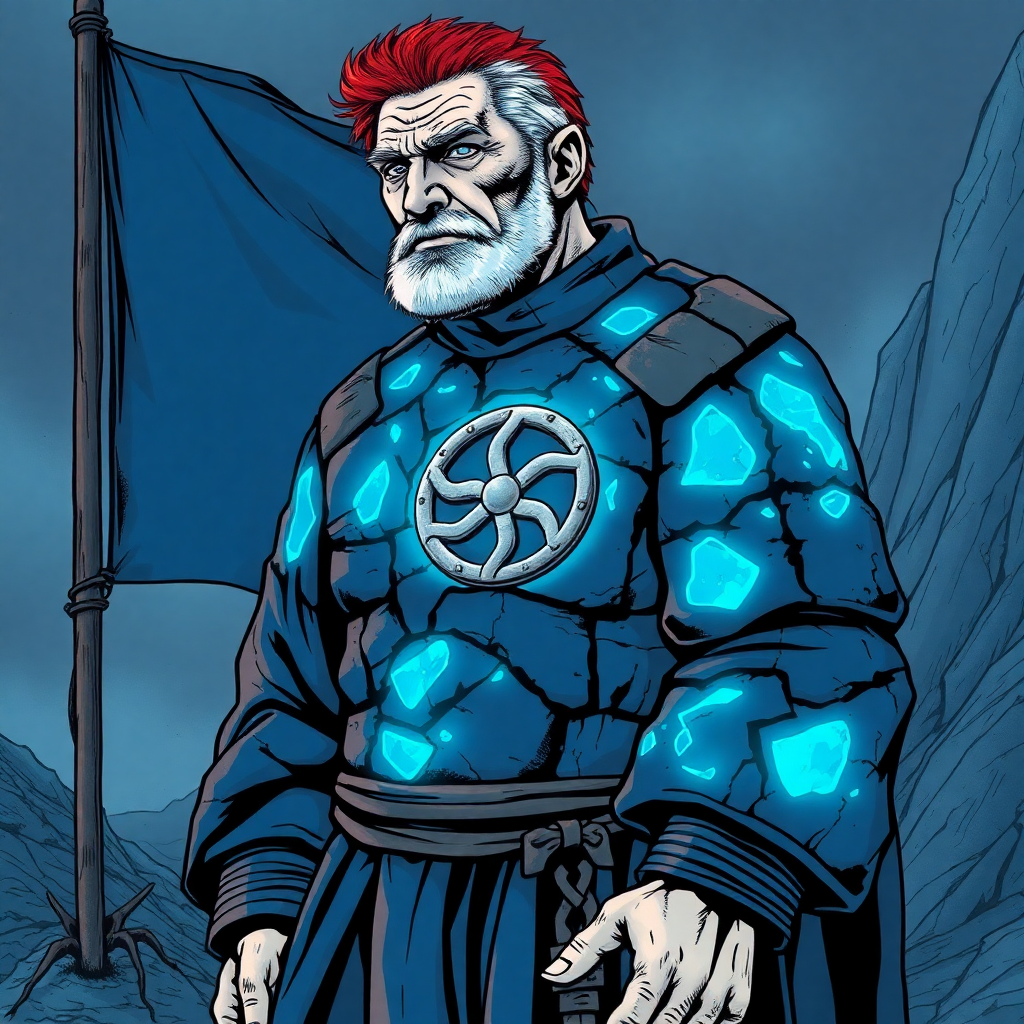
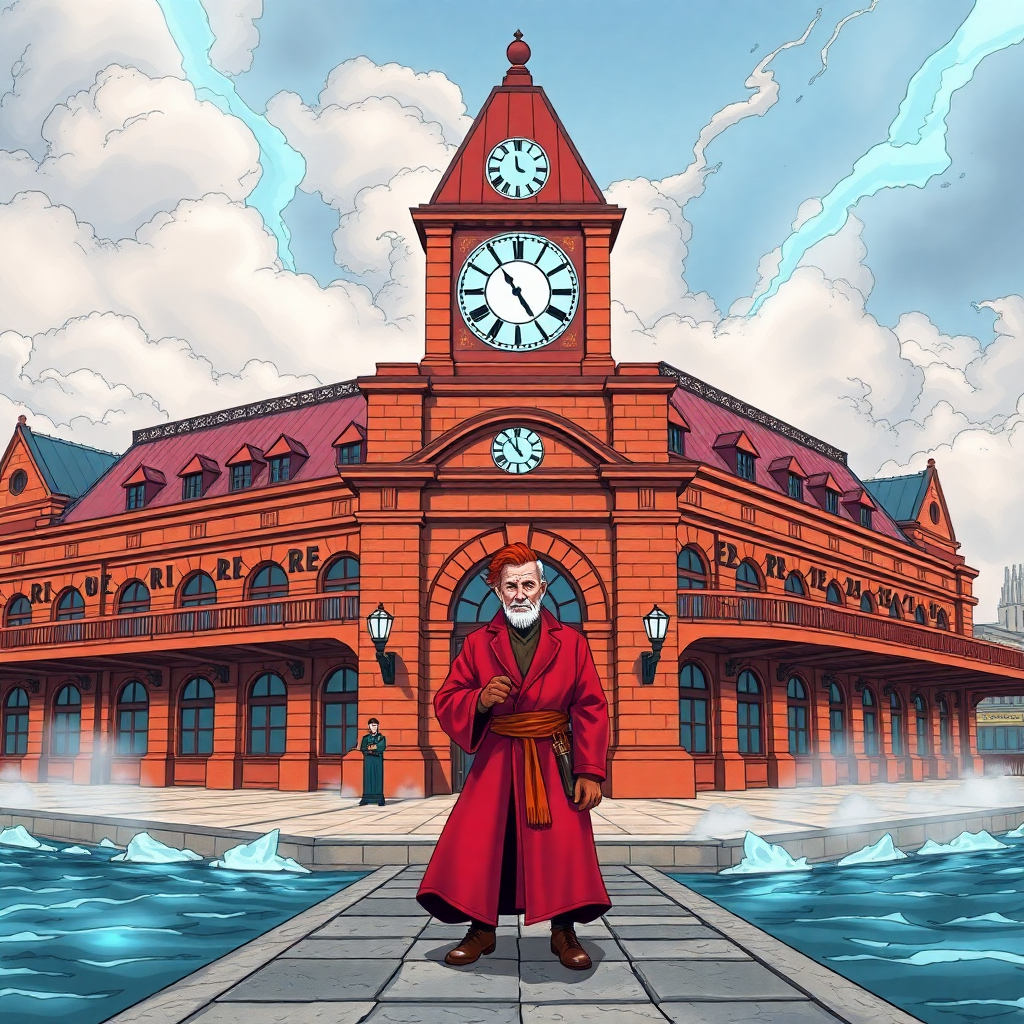
Gus had lived in Hoboken since before the yuppies, the crypto bros, and the artisanal pickle shops. He knew the Terminal’s bones — the 1907 ferry slips, the vaulted copper ceiling, the clock tower that had watched three generations of Stevens Institute students miss their trains. He also knew, in the way old men know things they’d rather not, that his family had managed atmospheric pressures along this waterfront since before Colonel Stevens ever drove a survey stake.
He pressed his palm to the Terminal’s iron railing and felt it: wrong heat, forge heat — not summer, not mechanical, but something ancestral and furious rising from below the platform.
Dolores Vega at the newsstand knew something. She always did. “Mija came through here an hour ago,” Dolores said, nodding toward the ferry slip. “Smelled like a steel mill. Left a scorch mark on my Daily Record display.” Gus looked. The rack holding the boxing story about Julian Rodriguez — North Jersey Grit — had been melted clean through.
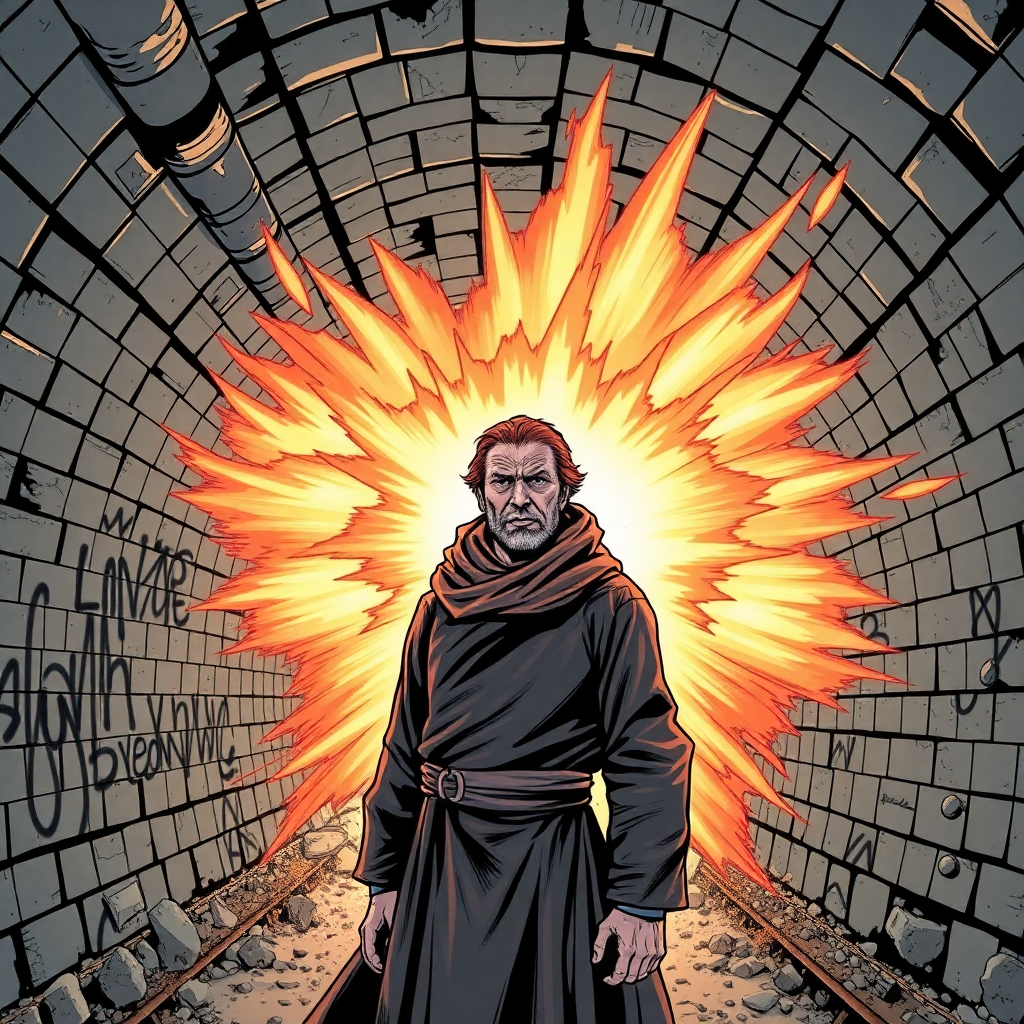
He followed the burn marks to the old Erie Lackawanna freight tunnels beneath the terminal. The temperature rose forty degrees in twenty feet. His blood pressure cuff, clipped to his belt, beeped a quiet protest. He told it to mind its business.
Part Three: The Pivot
The freight tunnels hadn’t been used since 1987. But the Stevens family had sealed something down here in 1893 — a pressure-anchor, a clan artifact forged by the Lockshore line to stabilize the entire Hudson waterfront against subsidence. The Ashvane Furnace Clan had wanted that anchor. Had been denied the patent. Had watched the Lockshores license it to the Terminal Authority while their own foundry on Observer Highway sank into the mud and closed.
Gus stopped walking.
“Oh,” he said. “Of course it’s her.”
Mara Ashvane was down here to melt the anchor. Literally. And she had the power to do exactly that.
Part Four: The Reckoning
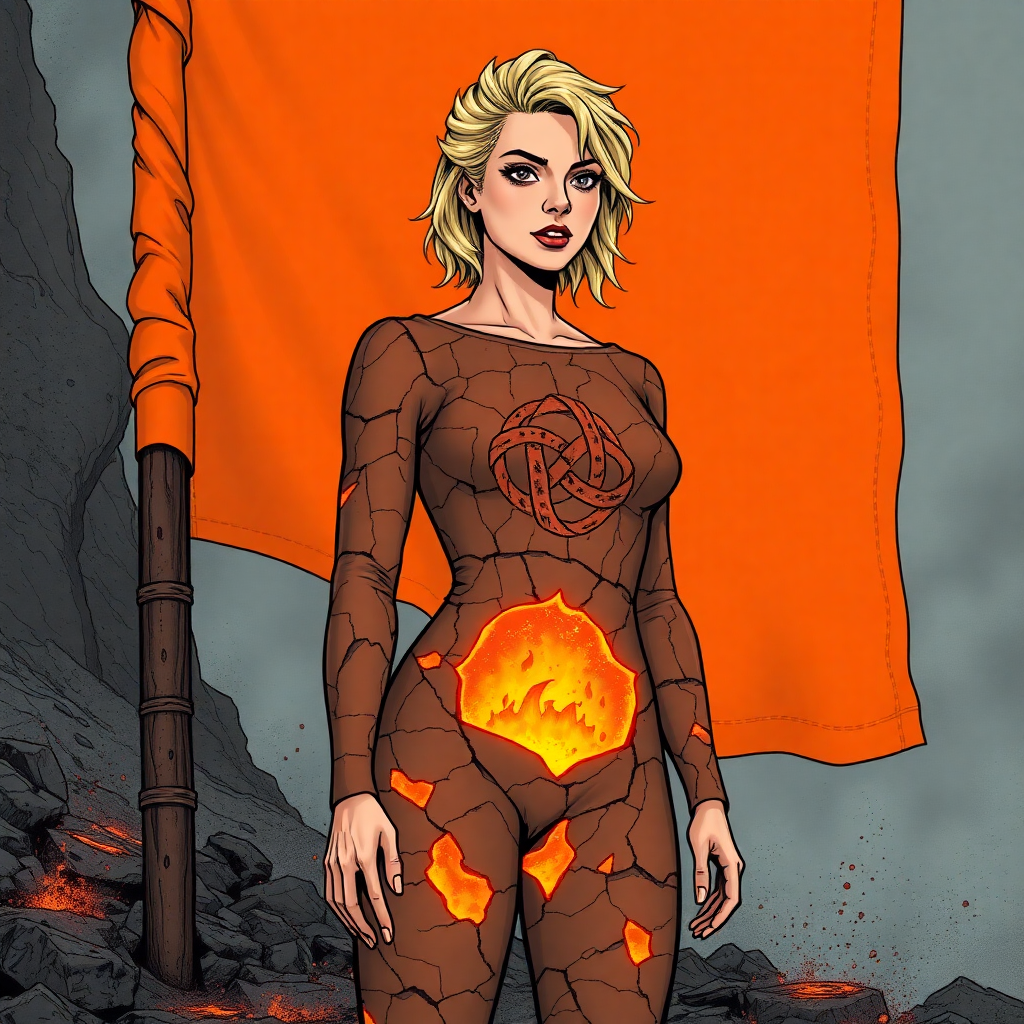
She was standing over the pressure-anchor — a squat iron disc bolted into the bedrock — when Gus found her: early twenties, blonde hair pulled back tight, wearing a fireproof vest that was already glowing orange at the seams. Forge-heat radiated from her hands in visible waves, the iron disc beginning to sag at its edges like a pat of butter on a griddle.
“Hundred and thirty years,” Mara Ashvane said, not turning around. “Your family took the patent. My family took the water.” Her palms were amber-bright, the temperature in the tunnel climbing past what a human being had any business generating.
Gus didn’t argue history on an empty stomach. He put both hands on the tunnel ceiling and pushed.
The localized pressure front hit the tunnel like a door slamming shut — a sudden dense high-pressure wall that compressed the superheated air into a hard cold column, dropping the temperature forty degrees in three seconds. Mara’s forge-heat scattered sideways, cracking tile, scorching old freight graffiti, but missing the anchor entirely. The pressure differential hit her like a standing wave; she staggered, blonde hair whipping horizontal in the manufactured gale, and her footing broke on the wet stone floor.
The anchor held. The disc was warped but intact — one good weld would fix it.
Mara caught the tunnel wall, breathing hard, heat fading from her hands to a dull copper glow. She looked at the anchor, then at Gus, then at the ruin of her vest.
“I’ll be back,” she said, with the matter-of-fact certainty of someone who had already rescheduled once.
“I know,” said Gus. “I’ll be here.”
His blood pressure cuff beeped again. He really had missed that cardiologist appointment.
Part Five: The Resolution
By noon, the Terminal clock tower was back to its ordinary business of making commuters anxious. The Bradford pears on Washington Street had been swept up by a very confused parks crew. The pressure-anchor sat in the bedrock where it had sat since 1893, slightly scorched and entirely stubborn — much like the man who’d defended it.
Gus Lockshore bought a coffee from Dolores, who did not ask questions, because she had been selling newspapers in Hoboken long enough to know that some mornings simply were what they were. The clan feud between the Lockshores and the Ashvane Furnace line was older than the Terminal, older than the ferry slips, older than every high-rise currently blocking someone’s Hudson River view.
It would outlast the coffee, too. But the coffee was very good.
Sources
- How boxing’s ‘Hammer Hands’ carries North Jersey grit into Vegas fight
- ‘PILOT’ tax breaks have long spurred NJ development. Should they help schools, too?
- Chris Troyano sets North Arlington hits record, tops 100 hit mark
- Quality of antenatal and delivery care and postnatal care use: A multi-country observational study of 400,000 births
- After holding its nose for decades, NJ finally bans stinky Bradford pear tree
- Athlete of the Week – Kearny’s Butler throws perfect game, gets three hits
- Owner of closed Jersey City hospital floats a return, but NJ officials are skeptical
- First Look: Jennifer Lopez and Brett Goldstein’s Netflix Rom-Com Sets a Summer Premiere Date
- Here are America’s most and least educated ZIP codes
- Possible cause revealed in ‘12- to 14-alarm’ warehouse fire in leafy NJ town that left police without power: ‘Staring into hell’
- Hoboken, New Jersey — Wikipedia
- U.S. Census Bureau, American Community Survey 5-Year Estimates (2022)