Part One: The Cold Open
The Bradford pear trees were gone — finally banned by the state, hauled off Washington Street in flat-bed loads — and for three days Hoboken smelled like nothing at all, which felt like a miracle. Then the smell came back anyway, rising from the storm drains along Park Avenue in thin copper threads that made Gus Lockshore’s eyes water as he walked his usual morning route past Pier A Park.
The grass along the waterfront was scorched in long arcs — not burnt, exactly, but seared, the way a soldering iron leaves a line. The bio-electric field traces of Mara Ashvane’s forge-heat. She hadn’t finished with Hoboken.
Dolores Vega was already waiting at her newsstand on Hudson Street, arms folded, reading glasses pushed up into silver-streaked hair. “She was here last night,” Dolores said, before Gus could open his mouth. “Pier A, two a.m. I saw the glow from my window.”
Gus looked at the scorched arcs. They formed a pattern — a circle, thirty feet across, centered on the iron access hatch to the old Ashvane freight tunnel junction. Of course they did.
Part Two: The Investigation
The Pier A warehouse had been a working ferry terminal before the Port Authority mothballed it in 1960, and it still smelled like diesel and salt. Gus pried the access hatch with a harbor master’s key he’d carried since 1978 and dropped into the maintenance tunnel below, where the Raritan aquifer pressure hummed through the bedrock like a second heartbeat.
He felt Mara’s heat before he saw her work. The tunnel walls were slick with condensation that had flash-evaporated and re-condensed in repeating rings — a bioelectric signature, the residue of someone who’d been reading the underground pressure nodes one by one, mapping them. She’d been down here long enough to chart every load-bearing seam in Hoboken’s infrastructure. The pressure-anchor at the Terminal wasn’t her target anymore.
He called Dolores from the tunnel. Bad signal, but enough. “She’s not going back to the Terminal,” he said. “She’s mapped the whole aquifer junction. She wants the confluence point.”
Dolores was quiet for a moment. “Under Pier A itself?”
“Under the whole north waterfront,” Gus said. The tunnel groaned around him — not from pressure, but from heat. She was already here. He dropped the phone and ran.
Part Three: The Pivot
He came up through the secondary access shaft into the Pier A warehouse’s lower level and understood in an instant what she’d planned. The old Ashvane patent application — the one the Lockshore clan had allegedly filed three weeks earlier in 1893 — had included a second claim: a distributed pressure-relief network spanning the entire Hudson waterfront, not just the Terminal anchor. Mara hadn’t been trying to destroy the Terminal disc to erase evidence.
She’d been using the disc’s pressure map to locate the master node. The one the Lockshores had quietly licensed to the Port Authority in 1894 and then buried under two feet of pier concrete.
She was going to collapse it — every pressure junction simultaneously — and let the waterfront subside into the river.
“Oh,” Gus said, to the empty warehouse. “Of course it’s her.”
Part Four: The Reckoning
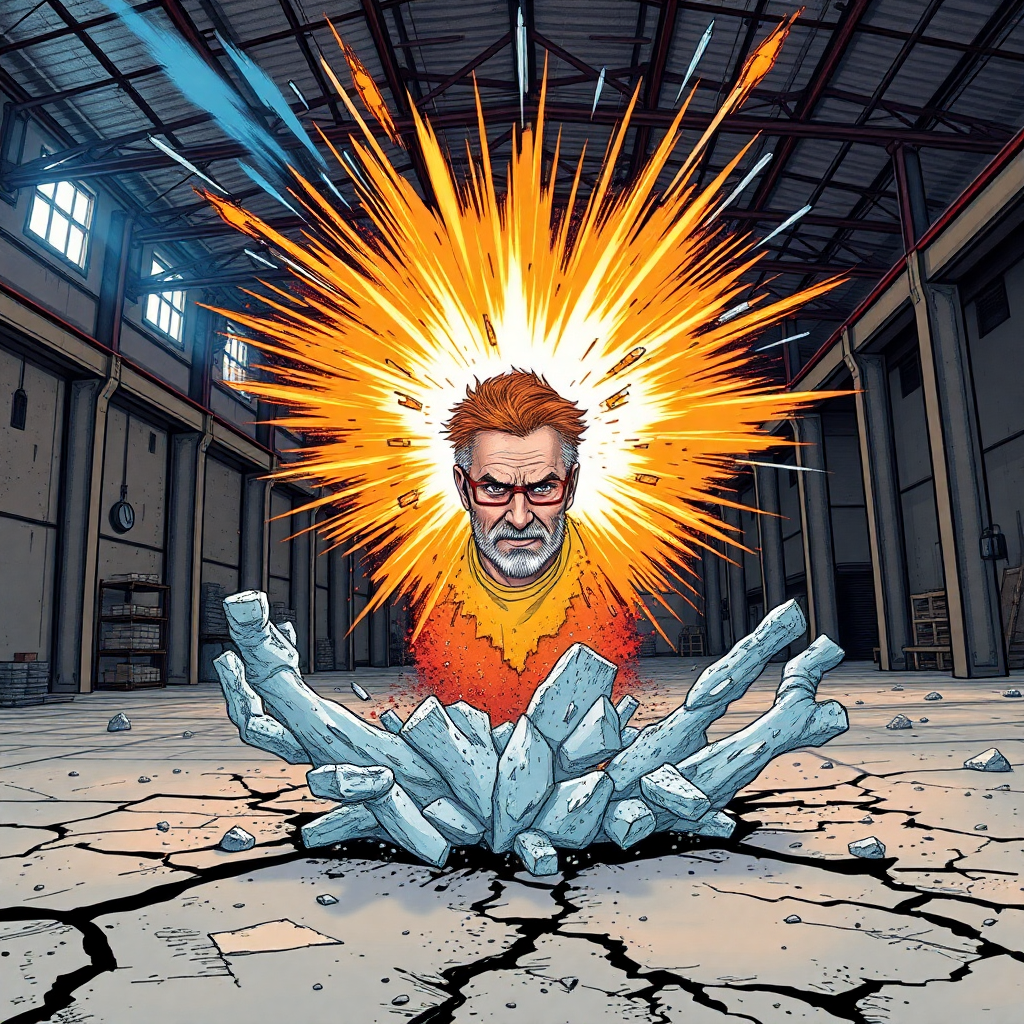
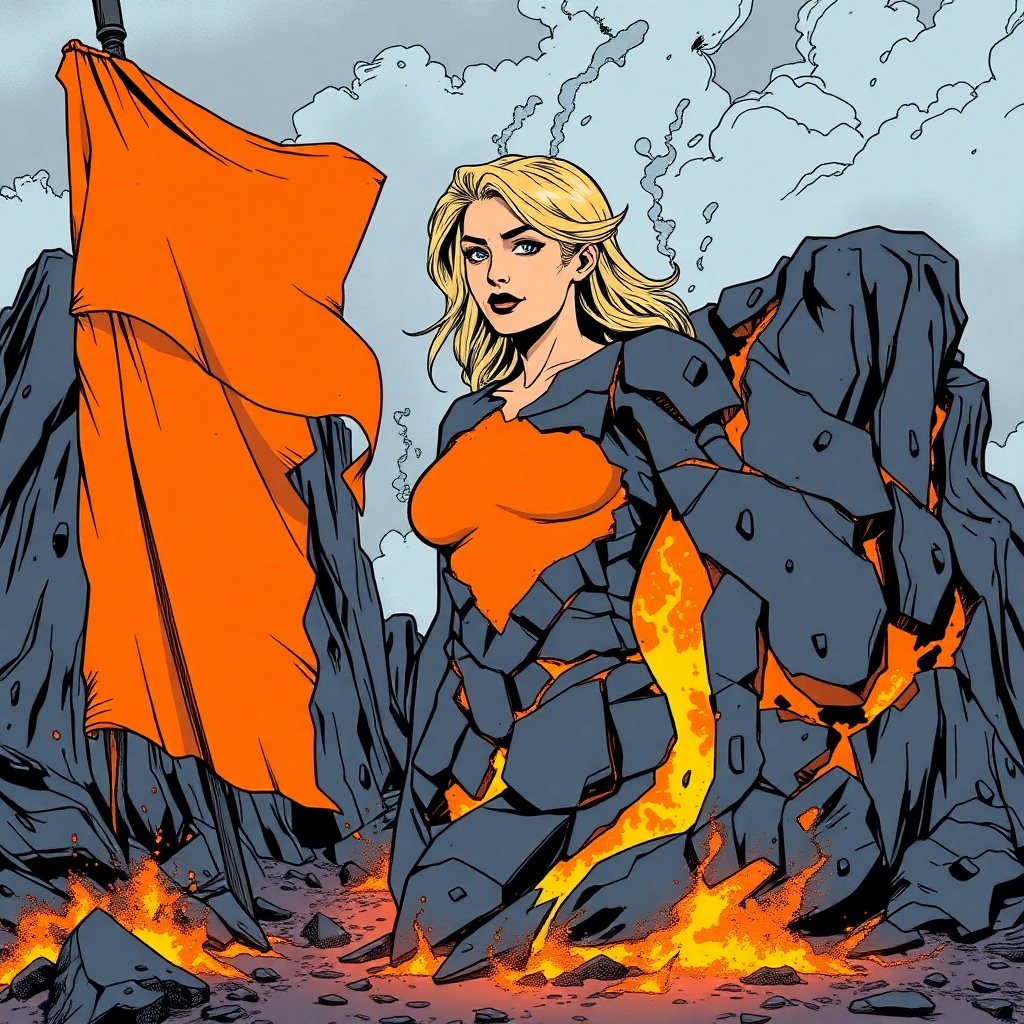
Mara Ashvane stood at the center of the warehouse floor, palms down on a cracked concrete pad, forge-heat radiating in visible amber waves that buckled the air around her. The concrete beneath her hands had turned the color of old brick. She looked up at Gus without surprise.
“You’re too late,” she said. “The confluence cracks in four minutes.”
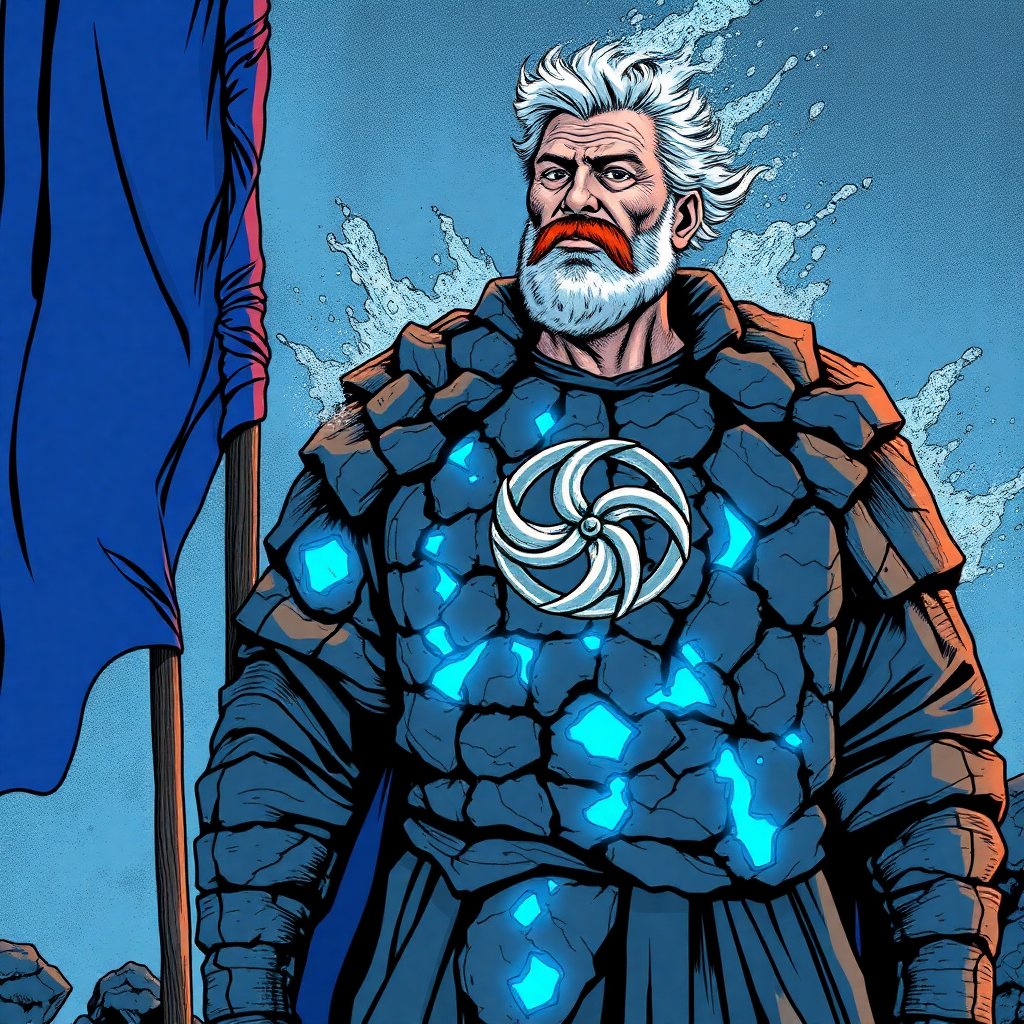
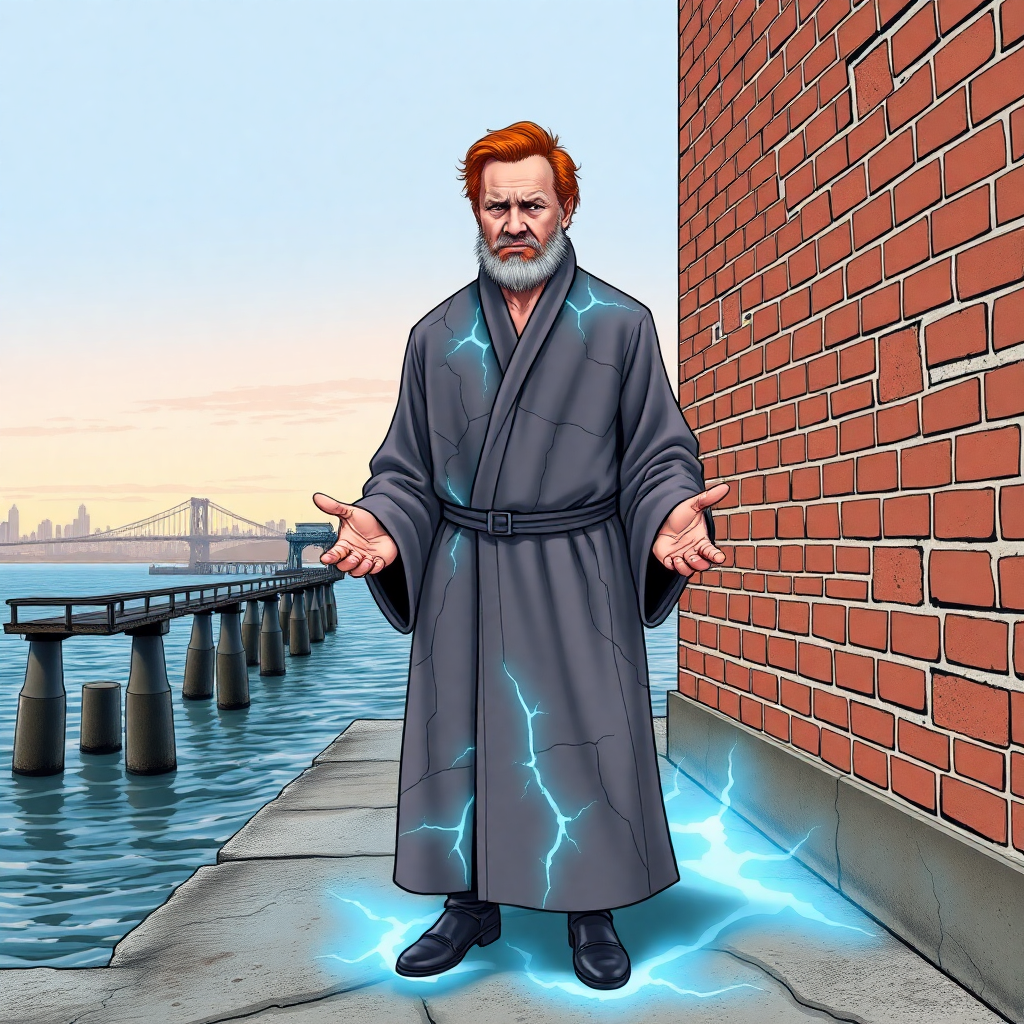
Gus felt the aquifer below them thrumming under enormous subterranean stress — her heat had weakened the cap-rock at the junction. He went down to one knee on the warehouse floor and pressed both hands flat to the concrete. The basalt fissures in his robes blazed glacial blue-white, every crack splitting open with cold light.
He pushed.
The pressure front built from the bedrock up — not a wave, but a column, a pillar of compressed aquifer force driving upward through fractured stone. It met Mara’s heat at the confluence node and the warehouse floor buckled once, violently, and then held. The amber glow fractured. Mara stumbled backward, hands losing contact with the pad, and the forge-heat scattered — not dissipated, but broken, her bioelectric read on the pressure map severed.
She tried to reconnect. Gus pushed again, harder, and sealed the confluence cap-rock with three hundred pounds of artesian pressure per square inch. The floor cracked in a perfect ring around the pad. Mara’s feet left the ground.
When she landed — eight feet back, against the iron wall — the clan binding activated. The Lockshore clan had registered it with Hudson County Clerk’s office in 1901, a legal instrument that predated the county’s current filing system by sixty years: any member of the Ashvane Furnace Clan who attempted a second act of sabotage against Lockshore infrastructure would be sealed under clan law from all access to load-bearing geology within Hudson County. Every pressure node, every aquifer junction, every bedrock seam — gone to her touch, permanently, her forge-heat reading nothing but dead stone.
Mara felt it happen. The amber light went out of her hands. She stared at her palms for a long moment and said nothing.
Gus sat down heavily on the buckled concrete. The blue-white light in his fissures dimmed to a faint pulse. His left shoulder ached in a way it hadn’t yesterday, and he suspected it wouldn’t stop.
Part Five: The Resolution
Mara Ashvane left Hoboken in a Port Authority vehicle at half past nine. The confluence node held. Pier A stood undamaged above the sealed cap-rock, its iron bones intact against the morning sky and the river smell and the distant sound of someone’s radio playing Sinatra on a barge.
Dolores brought Gus a coffee and a cruller and sat next to him on the warehouse steps without asking if he was all right, which was the kindest thing anyone had done for him in years.
“Is it over?” she asked.
Gus looked at his hands. The basalt fissures had gone quiet — just rock, just old pressure, just the aquifer breathing beneath the city the way it always had. “For this generation,” he said. “Ask me again in thirty years.”
Dolores handed him the cruller. “I’ll put it in the calendar.”
Sources
- How boxing’s ‘Hammer Hands’ carries North Jersey grit into Vegas fight
- ‘PILOT’ tax breaks have long spurred NJ development. Should they help schools, too?
- Chris Troyano sets North Arlington hits record, tops 100 hit mark
- Quality of antenatal and delivery care and postnatal care use: A multi-country observational study of 400,000 births
- After holding its nose for decades, NJ finally bans stinky Bradford pear tree
- Athlete of the Week – Kearny’s Butler throws perfect game, gets three hits
- Owner of closed Jersey City hospital floats a return, but NJ officials are skeptical
- First Look: Jennifer Lopez and Brett Goldstein’s Netflix Rom-Com Sets a Summer Premiere Date
- Here are America’s most and least educated ZIP codes
- Possible cause revealed in ‘12- to 14-alarm’ warehouse fire in leafy NJ town that left police without power: ‘Staring into hell’
- Hoboken, New Jersey — Wikipedia
- U.S. Census Bureau, American Community Survey 5-Year Estimates (2022)