
Part One: The Cold Open
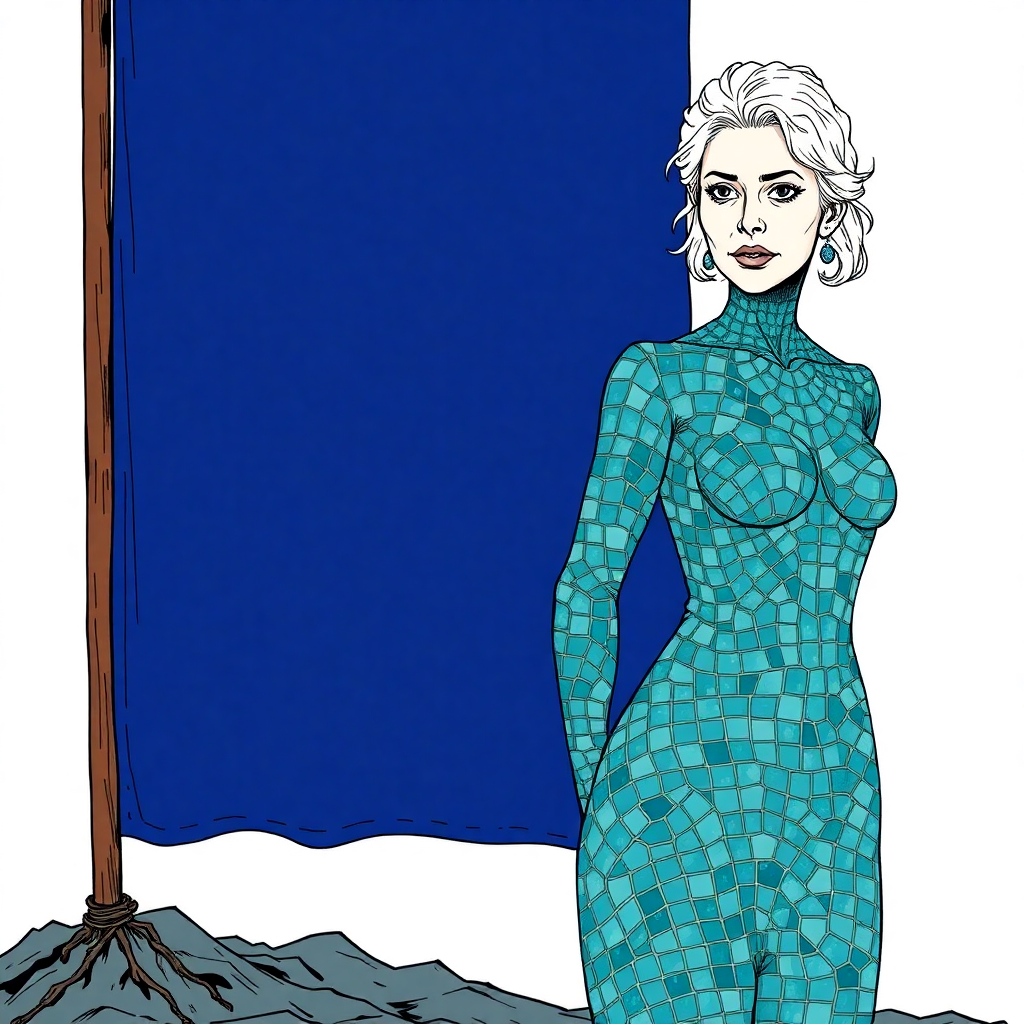
The Shore Conference softball tournament bracket had just gone live on the Asbury Park Press website when every well pump from Cookman Avenue to the boardwalk dropped fifteen pounds of pressure simultaneously. Elena Marisol Tidewell was on her third cup of coffee and her second deadline when her pen—the one she kept behind her ear like a talisman—began humming against her skull like a tuning fork pressed to wet sand. The aquifer was talking, which meant somebody was messing with it, which meant her plans for the day were ruined.
Part Two: The Investigation
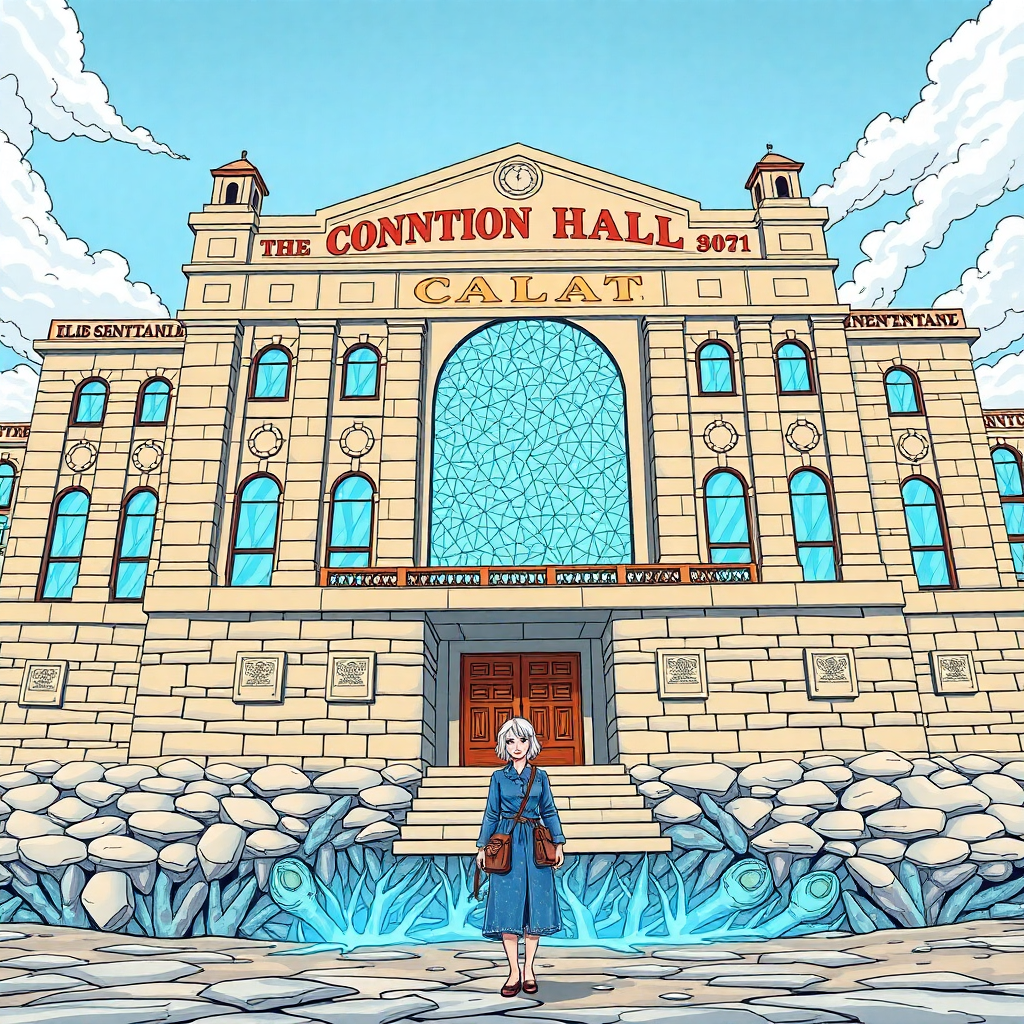
She followed the pressure drop west along Main Street, her legal pad tucked under one arm, pausing at the Asbury Park Convention Hall to press her palm to the sandstone foundation. A pulse answered—something was wrong beneath the Cohansey layers, deep in the clay-sealed fractures that fed the city’s wells. The water wasn’t missing. It was being rerouted.
She found the first clue at the old boardwalk pump house: a thick coil of bindweed had forced itself through the cast-iron grate overnight, its tendrils slick with a yellowish resin that smelled like turpentine and overripe figs. Nobody grew bindweed in salt air unless they helped it along.
Elena flagged down Dottie Kern—the Parks Department’s unofficial historian, who knew every pipe and post since 1893—outside Asbury Lanes. Dottie took one look at the resin and went pale. “That’s Ashenbrook compound,” she said. “Old clan recipe. They called it the Strangler.” She pressed a folded index card into Elena’s hand before backing away at remarkable speed for a woman in orthopedic sandals. On the card, in faded pencil: Ashenbrook — Corsair bloodline — do not let him touch the valve manifold at the beach.
Elena’s pen hummed harder.
Part Three: The Pivot
The softball tournament. Twenty-five teams, twenty-five buses, twenty-five sets of parents all running taps and flushing toilets by seven a.m. across Monmouth County—the single highest single-morning freshwater draw of the spring season. The date wasn’t coincidental. Corwin Ashenbrook hadn’t just chosen today; he’d needed today. The surge demand would mask the pressure drop while his botanical compound silently colonized the aquifer intake manifold beneath the beachfront. By noon, saltwater intrusion would be irreversible.
Elena looked at the bindweed resin on her fingers. Of course it’s him.
The Ashenbrook Corsairs had lost their waterfront processing lease in 1922 when the Tidewells’ pressure surveys rerouted the city’s water infrastructure—inadvertently killing the brackish-water botanical trade the Corsairs had run for forty years. The grudge was exactly that old, and Corwin had apparently been saving it for a sunny Tuesday.
Part Four: The Reckoning
Elena found him at the beachfront valve manifold below the boardwalk’s northern pavilion—a young man with red-brown skin and startling red hair, crouched over an iron access hatch, feeding a vine of synthesized botanical compound into the pipe joint with the focused patience of someone who had rehearsed this moment for years. He wore full clan armor: dark plate crusted with iridescent chitin-shell panels at the shoulders and forearms, each joint seeping that same yellowish Strangler resin.
“Elena Tidewell,” he said, without looking up. “Right on schedule. Shame.”
He snapped the vine and the compound bloomed—a wall of spiked botanical growth surging up through every sand crack between the hatch and her feet, laced with paralytic resin. The boardwalk planks split. Tourists scattered with their funnel cakes.
Elena dropped to one knee and pressed both palms flat to the sand.
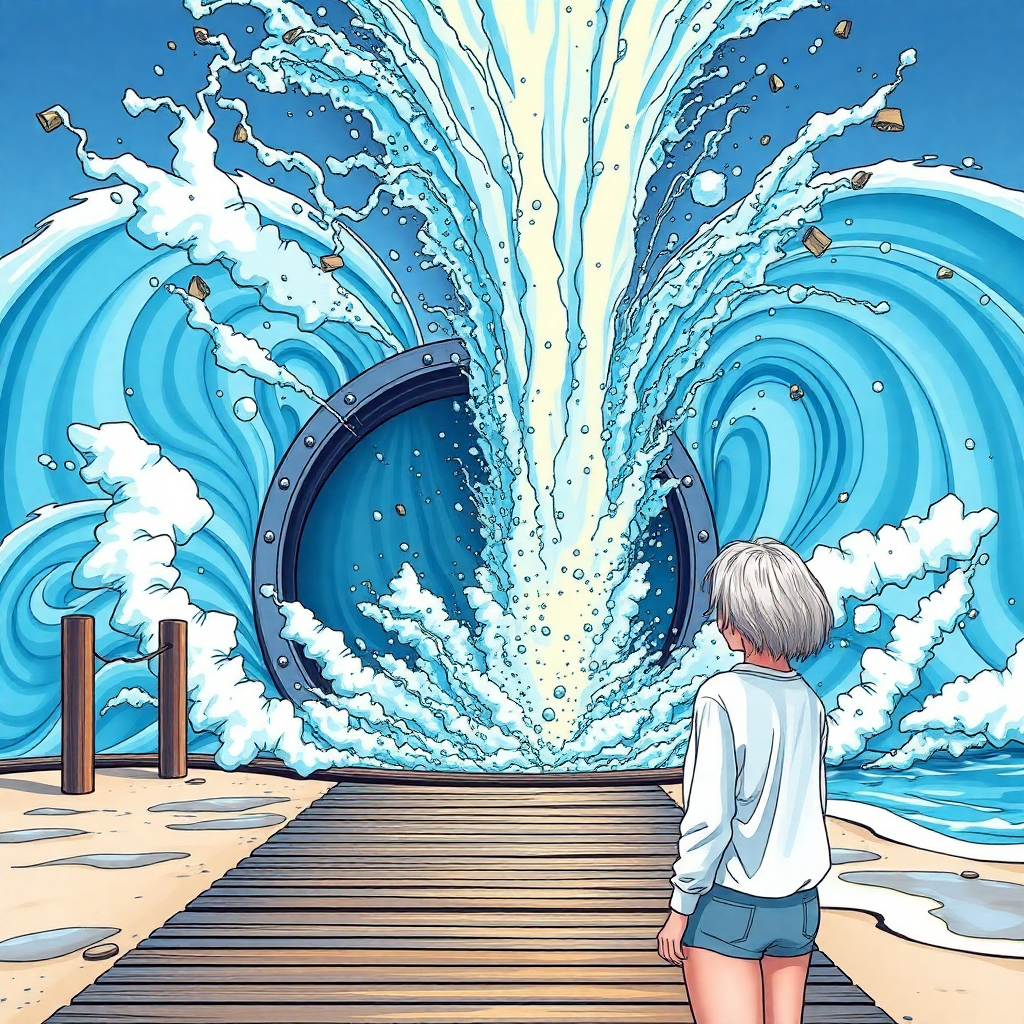
The Cohansey answered her like an old friend who had been waiting by the phone. She found the pressure differential in under two seconds—a massive hydraulic column forty feet down—and shoved. The aquifer surge hit the manifold from below with enough force to flush every strand of Ashenbrook compound straight up and out through the access hatch in a spectacular geyser that drenched Corwin from his red hair to his resin-slicked boots.
The Strangler vines went limp in salt-flushed sand. The pressure readings across Cookman Avenue normalized with an audible sigh from the pipes.
Corwin stood in the fallout, dripping, the iridescent armor patchy and dimmed. He looked at her for a long moment. “1922 was a theft,” he said.
“I know,” said Elena. She meant it.
He turned and walked north along the waterline and didn’t stop.
Part Five: The Resolution
By ten a.m., every well pump from the boardwalk to the edge of Ocean Township was back to full pressure, the shore conference tournament proceeded without incident, and the split boardwalk planks were cordoned off with orange cones the Parks Department pretended had always been there. Dottie Kern left a fresh index card taped to Elena’s door: He’ll be back in dry season.
Elena filed the Strangler vine in a manila folder labeled Pending and poured her fourth cup of coffee. The aquifer hummed—content, for now—beneath the sand that had been voted one of the best beaches in the world by people who had no idea what was keeping it that way.
Sources
- 25 teams are in the softball Shore Conference Tournament. Seedings, schedule
- NJ ex-fireman ‘ready for war’ when he launched into violent rampage triggered by breakup: prosecutors
- Koyo Premiere New Single & Music Video “Barely Here” From Brand New Album
- Shore boys volleyball Junior Player of the Year poll from Alliance Orthopedics
- Nonpoint Premiere New Single & Lyric Video “Is It” From Upcoming New Album “The Last Word”
- Lucy Dacus Unveils Reflective New Single “Planting Tomatoes”: Stream
- Where to Find Tickets to the Strokes’ 2026 Reality Awaits Tour
- 2 Jersey Shore BMX scene trailblazers stoked for new X Games League
- VOTE Who was the Shore Conference’s top baseball player for Week 3?
- Jackson High School merger helped two track & field stars take off
- Asbury Park, New Jersey — Wikipedia
- U.S. Census Bureau, American Community Survey 5-Year Estimates (2022)